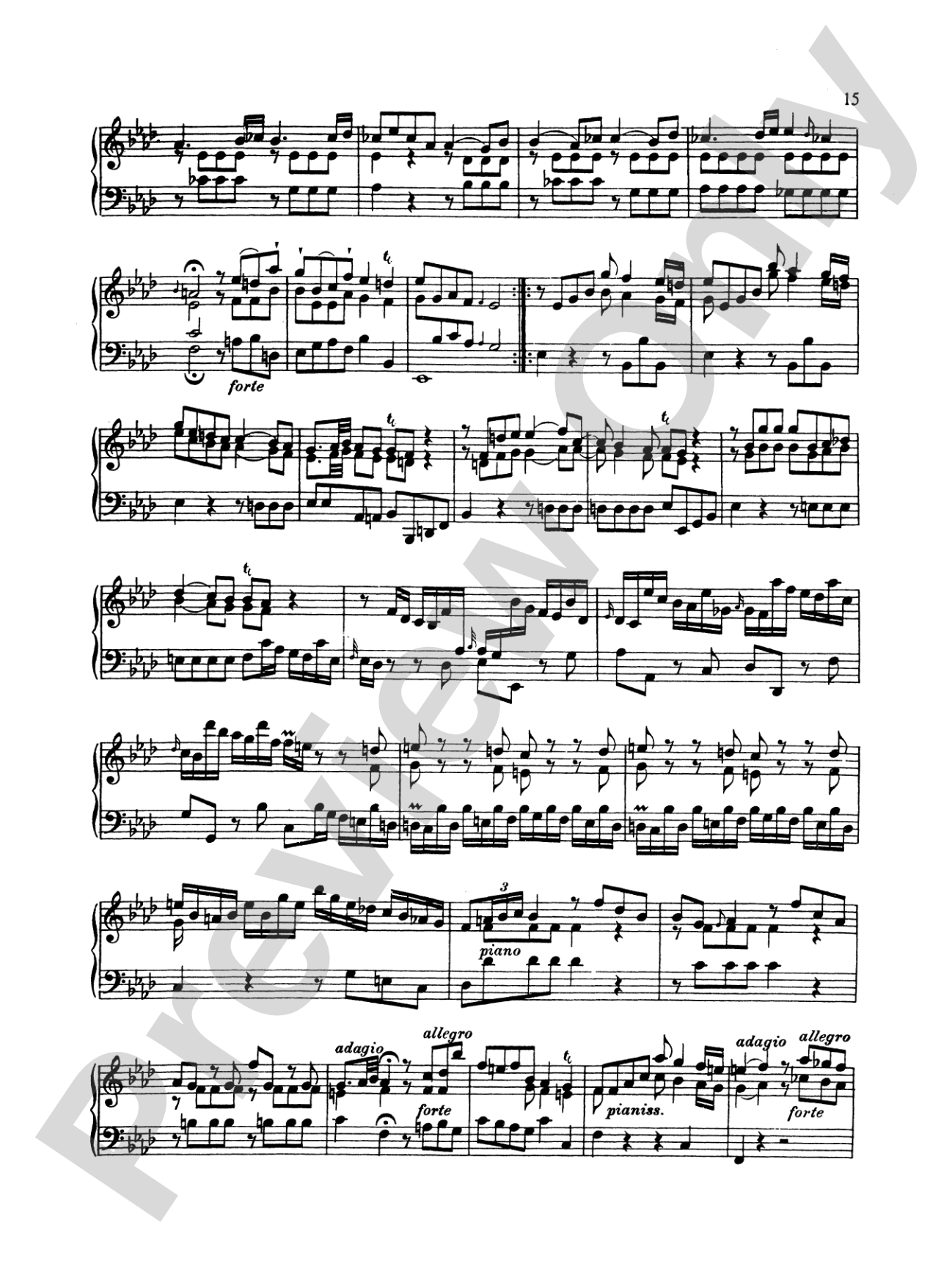
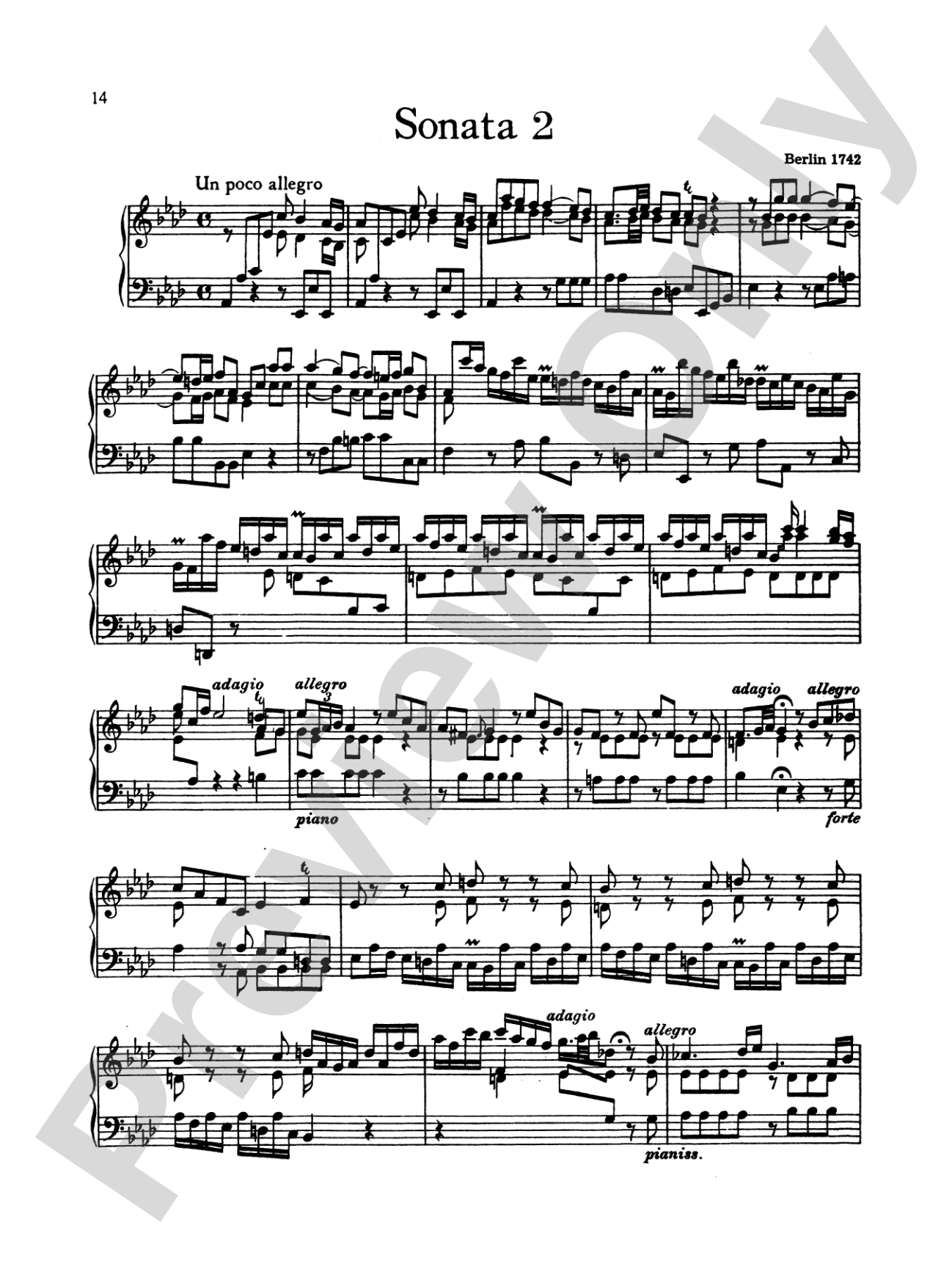
Bach: The Württenburg Sonatas (Complete) Sheet Music Preview

Bach: The Württenburg Sonatas (Complete)

By Carl Philipp Emanuel Bach

Item: 00-PC-0003908

Digital Download
$0.99
Description
Contents: No. 1 in A Minor * No. 2 in A-Flat Major * No. 3 in E Minor * No. 4 in B-Flat Major * No. 5 in E-Flat Major * No. 6 in B Minor.

Don't just read it, hear it, play along with it, and watch your students grow with it. In MakeMusic Cloud, Bach: The Württenburg Sonatas (Complete) comes alive with professional accompaniment, adjustable tempo, and built-in practice tools that turn solo practice into real progress.

Sample Audio
No sample audio found.
Sample Video
Additional Details
Series: Kalmus Edition
Publisher: Alfred Music
Page Count: 56
SKU: 00-PC-0003908

More about this title

About the Composer: Carl Philipp Emanuel Bach

Carl Philipp Emanuel Bach (1714-1788) was the most celebrated of Johann Sebastian Bach's sons and a towering figure in the transition from Baroque to Classical style. As a keyboard virtuoso and prolific composer, he fundamentally shaped how composers approached the keyboard, moving away from the dense counterpoint of his father's generation toward a more expressive, galant aesthetic that emphasized melodic clarity and emotional directness.

Why we love this

These six sonatas showcase C.P.E. Bach's genius for blending structural rigor with expressive spontaneity, making them endlessly rewarding to teach and perform. The set spans six different keys and six distinct musical characters, so you can program them individually or in themed pairs without repetition. They sit at the sweet spot between technical challenge and musical accessibility, demanding serious pianists but never feeling academic or cold.

What to expect

These sonatas inhabit an intimate world of shifting moods and unexpected harmonic colors. One moment they unfold with elegant, galant grace; the next, they surprise with surprising chromaticism or a sudden shift in register that feels almost modern. The writing throughout breathes, with plenty of space for the pianist to shape phrases and respond to the music's subtle emotional turns.

Who it's for

Advanced high school and college pianists ready to engage with keyboard literature that demands both technical security and interpretive maturity. These sonatas appeal equally to musicians exploring Baroque-to-Classical transitional repertoire and to those preparing recital programs that value historical depth and emotional range.

How to get the most out of it

  • Treat the opening movements as conversations between ideas rather than displays of virtuosity. C.P.E. Bach's melodies invite rubato and subtle dynamic shaping to bring out the interplay between voices.
  • Pay attention to the figured bass notation and harmonic rhythm in slow movements; they often suggest where the phrasing should breathe and where tension should linger.
  • The closing Rondo or minuet movements often contain unexpected harmonic turns. Honor these surprises with slight agogic emphasis rather than rushing through them.
  • Use the pedal sparingly in the first movements to maintain the clarity C.P.E. Bach expected from the keyboard; save fuller sonorities for inner phrases and slow movements where they serve the emotional arc.

How to use it

Program individual sonatas as contrasting concert pieces rather than performing the entire set at once; their different keys and characters allow strategic placement alongside Romantic or contemporary works. The earlier sonatas work well in student recitals or early-season concerts, while the later ones suit more sophisticated programming alongside Scarlatti or early Beethoven.

Skills your students will build

  • Navigating harmonic chromaticism and unexpected tonal shifts in Classical-era keyboard writing
  • Distinguishing and executing two distinct keyboard styles: contrapuntal transparency and galant homophonic texture
  • Shaping long lines through rubato and dynamic nuance without disturbing metric clarity
  • Understanding the relationship between figured bass and harmonic progression
  • Reading and interpreting the ornamentation and articulation conventions of the C.P.E. Bach era

You May Also Like