Bach: The Well-Tempered Clavier (Volume II) (Ed. Carl Czerny) Sheet Music Preview

Bach: The Well-Tempered Clavier (Volume II) (Ed. Carl Czerny)

By Johann Sebastian Bach / ed. Carl Czerny

Item: 00-PC-0013341

Digital Download
$0.99
Description
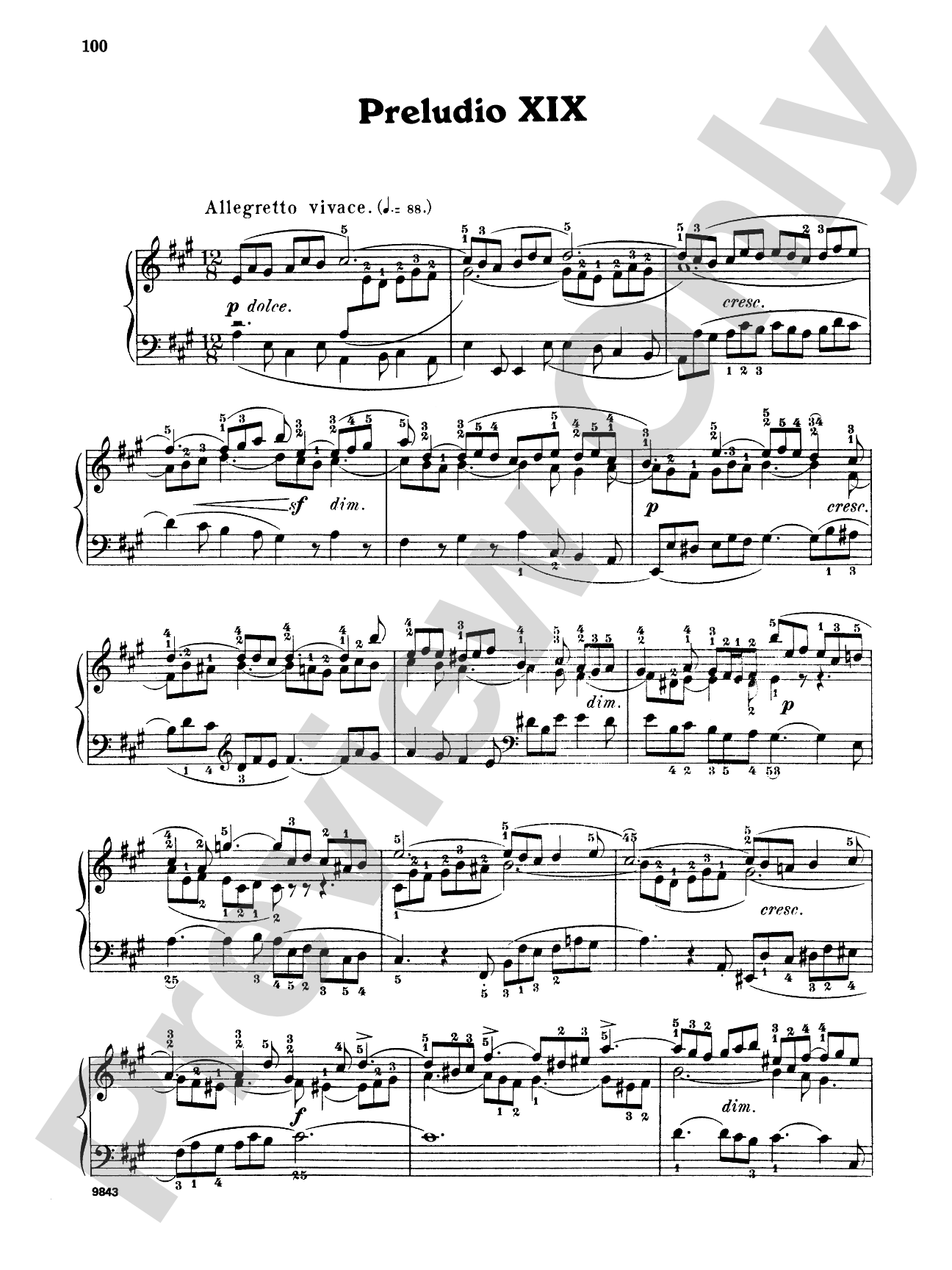
Edited by Carl Czerny, this collection of the 24 Preludes and Fugues of Johann Sebastian Bach's 2nd Volume of the Well-Tempered Clavier features editorial dynamics, tempo indications, fingering and performance notes. 131 pages.

Don't just read it, hear it, play along with it, and watch your students grow with it. In MakeMusic Cloud, Bach: The Well-Tempered Clavier (Volume II) (Ed. Carl Czerny) comes alive with professional accompaniment, adjustable tempo, and built-in practice tools that turn solo practice into real progress.

Sample Audio
No sample audio found.
Sample Video
Additional Details
Series: Kalmus Edition
Publisher: Alfred Music
Page Count: 136
SKU: 00-PC-0013341

More about this title

About the Composer: Johann Sebastian Bach

Johann Sebastian Bach (1685-1750) stands as a towering figure in Western music history, synthesizing the contrapuntal mastery of the Renaissance with the emerging harmonic language of the Baroque. His systematic exploration of musical form and harmonic possibility laid the foundation for centuries of compositional practice that followed. Bach's prolific output across keyboard, vocal, and instrumental genres reveals a composer driven by both intellectual rigor and profound spiritual conviction.

Why we love this

Czerny's editorial hand transforms the Well-Tempered Clavier into a genuinely playable score for contemporary pianists without sacrificing the music's architectural integrity. The added fingerings and performance guidance make these monumental works accessible to serious students who might otherwise approach them hesitantly, while the clear notation and thoughtful tempo indications honor Bach's counterpoint rather than obscure it.

What to expect

The Well-Tempered Clavier unfolds as a series of intimate conversations between two minds in dialogue; each prelude opens a harmonic world before the fugue locks it into crystalline form. Moving through 24 keys, you encounter Bach's inexhaustible invention: preludes that shimmer with gentleness or drive with kinetic energy, fugues that build monumental architecture from a single musical idea.

Who it's for

Advanced pianists preparing for conservatory repertoire, music students building comprehensive knowledge of keyboard literature, and teachers seeking an authoritative, playable edition of Bach's foundational works. This volume serves serious students who have moved beyond simplified arrangements and are ready to engage with Bach's full contrapuntal complexity.

How to get the most out of it

  • Treat each hand's line as a complete voice with its own phrasing arc; resist the urge to submerge inner voices in service of a melodic top line.
  • Use Czerny's fingering suggestions as a launching point rather than gospel; your own hand size and finger strength may require adjustment, but his choices reveal harmonic and contrapuntal logic worth understanding first.
  • Establish a steady tactus before tackling the more intricate fugues; Bach's music reveals its structure more readily when the pulse is secure and unwavering.
  • Practice the preludes and fugues as separate learning projects before pairing them; each form demands different interpretive choices and technical approaches.

How to use it

Feature individual prelude-and-fugue pairs within a Bach-centered recital to showcase the scope of his keyboard writing across different harmonic territories. These works also serve as foundational repertoire for piano students preparing jury examinations or conservatory auditions, where demonstrating command of Bach's style and period is essential.

Skills your students will build

  • Independent voice leading and voice independence across both hands
  • Fugal structure recognition and articulation of subject entries
  • Baroque ornamentation and articulation appropriate to the period
  • Harmonic analysis of chromatic modulation and tonal structure
  • Sustained rhythmic control in complex polyphonic textures
  • Interpretive decision-making within a notated score with editorial guidance

You May Also Like