
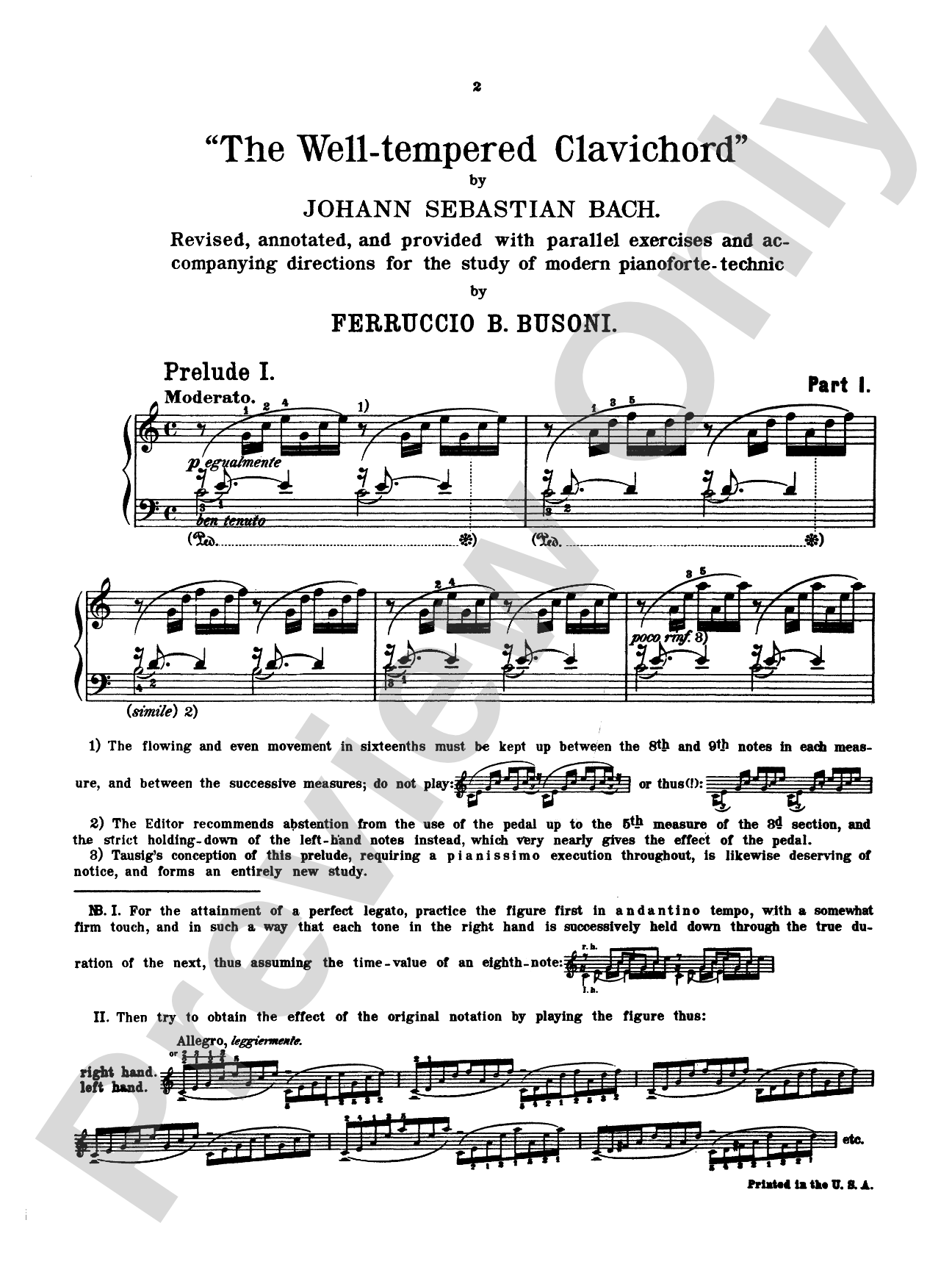

Bach: The Well-Tempered Clavier (Book I, Nos. 1-8) (Ed. Feruccio Busoni)
By Johann Sebastian Bach / ed. Ferruccio Busoni
Item: 00-PC-0004887
$0.99
Pickup currently not available
Description
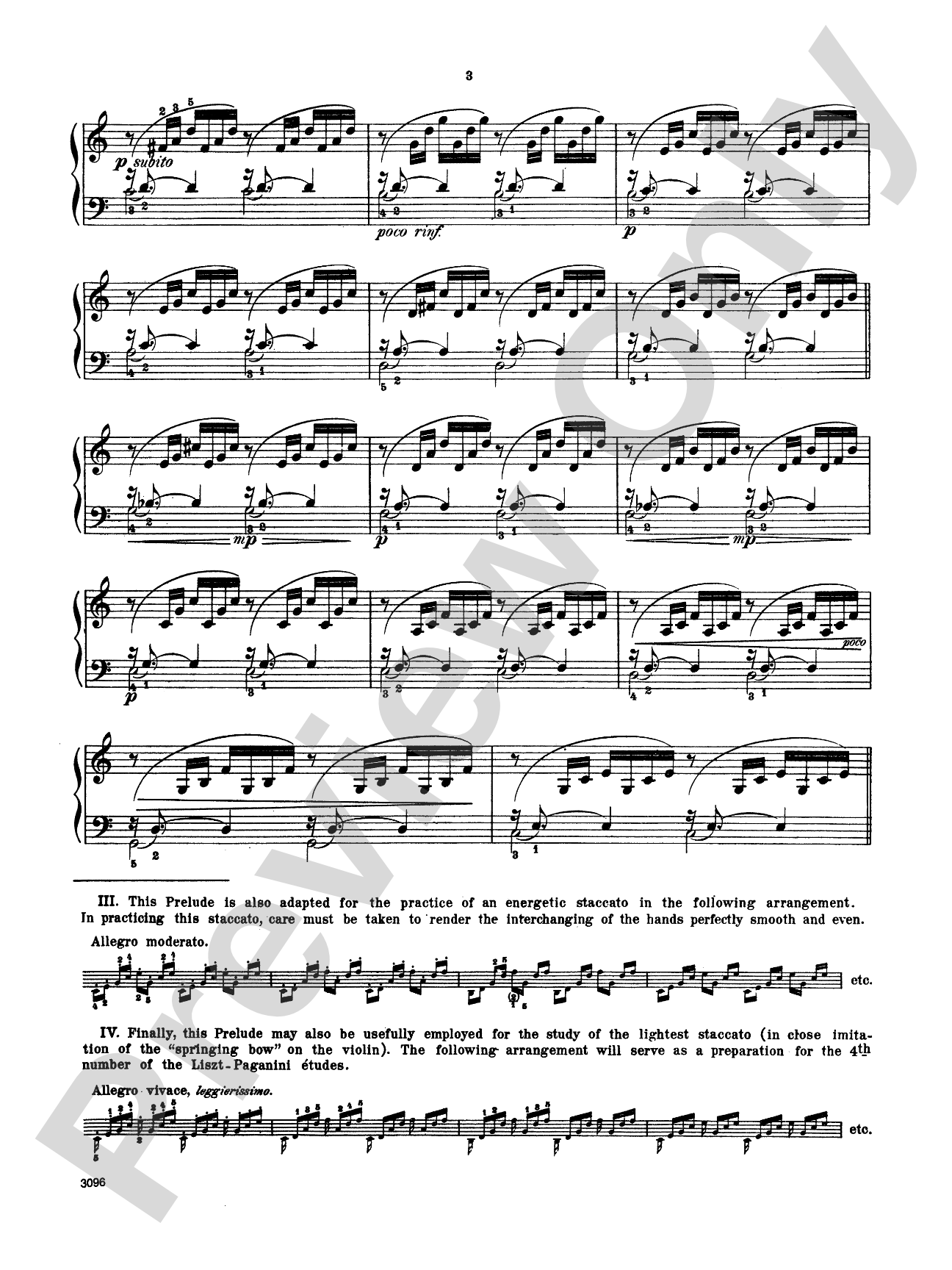
This edition of Johann Sebastian Bach's famous keyboard work "The Well-Tempered Clavier" was edited by Ferruccio Busoni, who also added historical information and a large number of performance notes that will relate to piano performance. Contains Preludes and Fugues 1-8 from Volume One, 53 pages.


Don't just read it, hear it, play along with it, and watch your students grow with it. In MakeMusic Cloud, Bach: The Well-Tempered Clavier (Book I, Nos. 1-8) (Ed. Feruccio Busoni) comes alive with professional accompaniment, adjustable tempo, and built-in practice tools that turn solo practice into real progress.
Open in the Player
Jump straight in and assign it today.
Start Your Free Trial
Open this title and explore the full library in minutes.
Sample Audio
No sample audio found.
Sample Video
No sample videos found.
Additional Details
Series:
Kalmus Edition
Publisher:
Alfred Music
Page Count:
56
SKU:
00-PC-0004887
More about this title
About the Composer: Johann Sebastian Bach
Johann Sebastian Bach (1685-1750) stands as one of music's most systematically rigorous composers. Working primarily in Leipzig as Cantor of St. Thomas Church, he synthesized German Baroque counterpoint, Italian harmonic language, and French dance forms into works of astonishing architectural clarity. His output spans sacred cantatas, concertos, suites, and keyboard works that established principles of harmonic logic and voice leading still taught in conservatories today.
Bach's keyboard works occupy a special place in his legacy. The Well-Tempered Clavier, composed across two volumes, demonstrates the viability of equal temperament tuning by presenting fugues in all major and minor keys. For pianists and harpsichordists alike, these works remain foundational texts: they demand absolute clarity of counterpoint, control of independent voices, and the technical facility to sustain long lines across multiple registers.
Why we love this
Busoni's editorial hand brings exceptional clarity to these eight foundational Preludes and Fugues. His performance notes address the specific demands of the modern piano, translating Bach's keyboard idiom into practical guidance for contemporary pianists rather than leaving interpretation entirely to chance. This edition makes the architectural precision of Book I accessible without sacrificing the intellectual rigor these works demand.
What to expect
These eight Preludes and Fugues unfold with mathematical inevitability wrapped in genuine musical warmth. Each prelude establishes a single compositional principle (flowing figurations, arpeggios, hand-crossing patterns) that the ear grasps immediately, while each fugue weaves its subject through voices with the precision of a fugal argument in counterpoint class. The overall arc builds from the serene opening of C major through the darker territories of E minor and F major, inviting the pianist to inhabit worlds of increasing contrapuntal complexity.
Who it's for
Pianists preparing for examinations, conservatory entrance auditions, or serious recital programming will find this edition invaluable. Advanced students and professional pianists benefit from Busoni's annotations, which clarify the historical context and technical approach without imposing unnecessary romanticism. Teachers seeking a well-edited starting point for introducing students to Bach's systematic exploration of all keys will appreciate the accuracy and pedagogical thoughtfulness here.
How to get the most out of it
- Approach each prelude as a study in voice independence. Even in rapid passagework, maintain awareness of the harmonic foundation so accompanying figuration never drowns out structural voices.
- In the fugues, establish clear registration before beginning. Decide which hand will claim the subject each time it enters, and honor those decisions throughout so listeners track the argument easily.
- Use Busoni's historical notes and fingering suggestions as a starting point, not a prescription. Test his recommendations against your hand size and technique, then adapt as needed.
- Shape phrases across the natural breathing points of fugal entries rather than stopping at bar lines. Momentum through structural repose points creates forward motion without rushing.
How to use it
Program one prelude-and-fugue pair as an intermission work or opening statement on a mixed recital; these pieces carry weight without demanding an entire program. In a Bach-focused concert, the eight pieces frame an evening beautifully, their cumulative exploration of key areas creating narrative arc. For teaching contexts, introduce students to one pair at a time as they develop the technical and musical maturity to sustain Bach's counterpoint.
Skills your students will build
- Reading and executing contrapuntal texture across multiple independent voices
- Sustaining long melodic lines while maintaining harmonic clarity in accompaniment
- Recognizing and tracking fugal subject entries across key areas
- Applying historical performance practices and articulation approaches to Baroque keyboard writing
- Managing hand independence and clarity in rapid figurations and arpeggiated passages
- Understanding equal temperament through lived experience in all major and minor keys