

Bach: The Musical Offering and The "Goldberg Variations" (Miniature Score)
By Johann Sebastian Bach
Item: 00-PC-0002676
$6.95
Pickup currently not available
Description
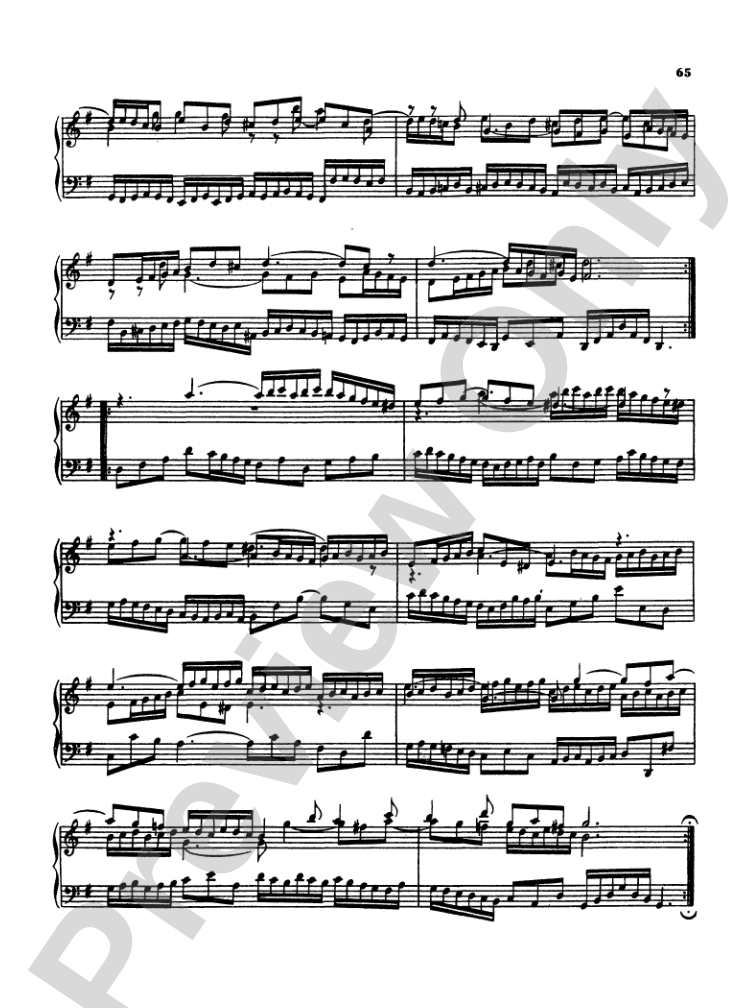
The Musical Offering dates from a visit of Bach to the court of Frederick II in Berlin, where his son Carl Philip Emmanuel was Court-Kapellmeister. The King (himself a composer maily for flute) gave Bach a theme suitable for a fugue. This was at once elaborated by him into a 3 part fugue. Later on Bach developed this with his own themes and fugues and dedicated the work to the King(Opfer---Offering). The instruments are mostly not indicated and left to players to decide upon.
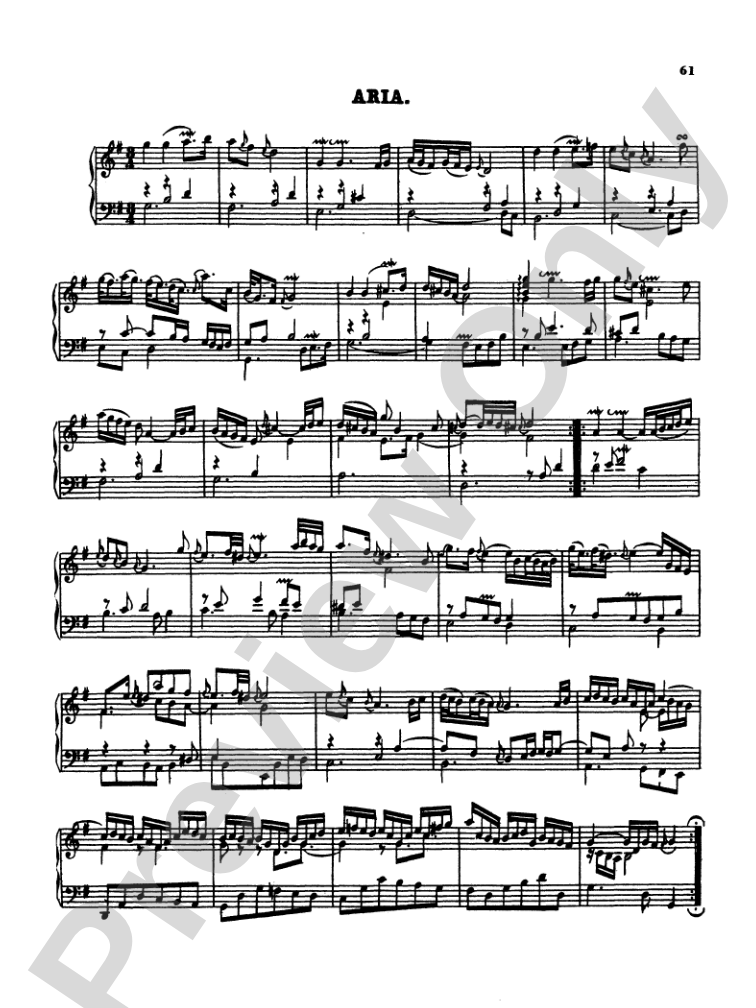
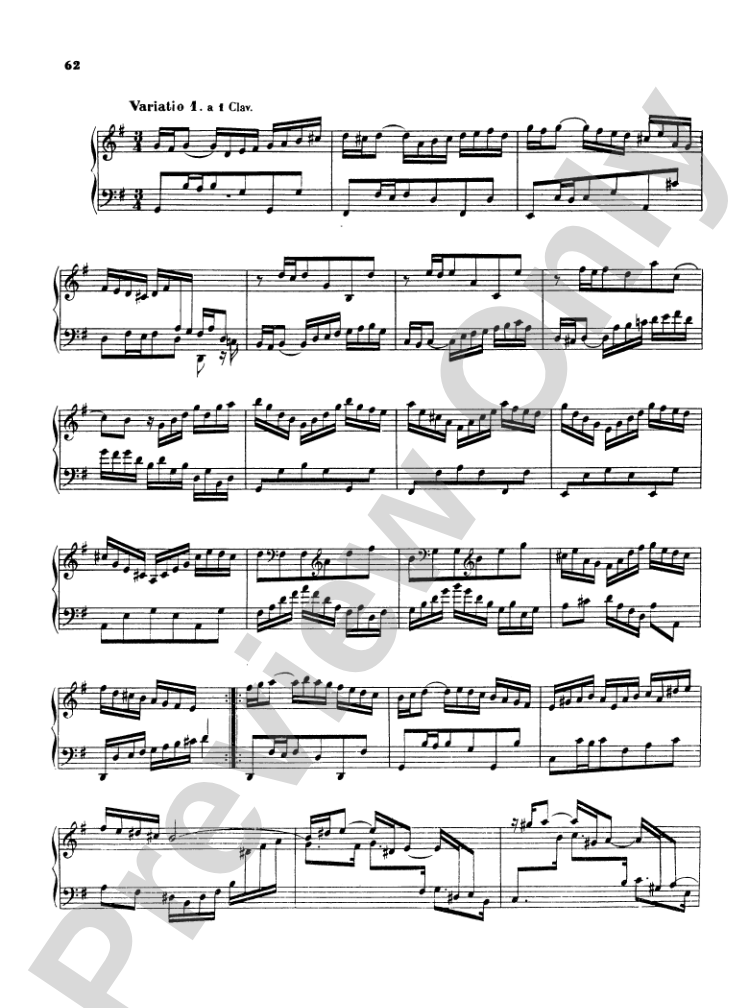
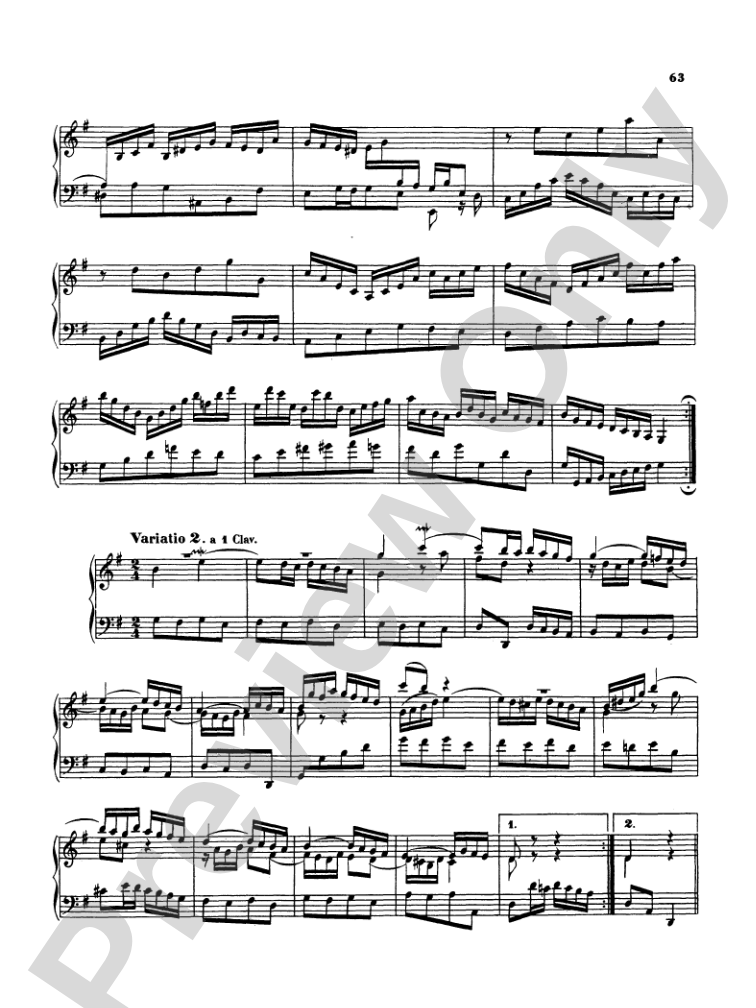
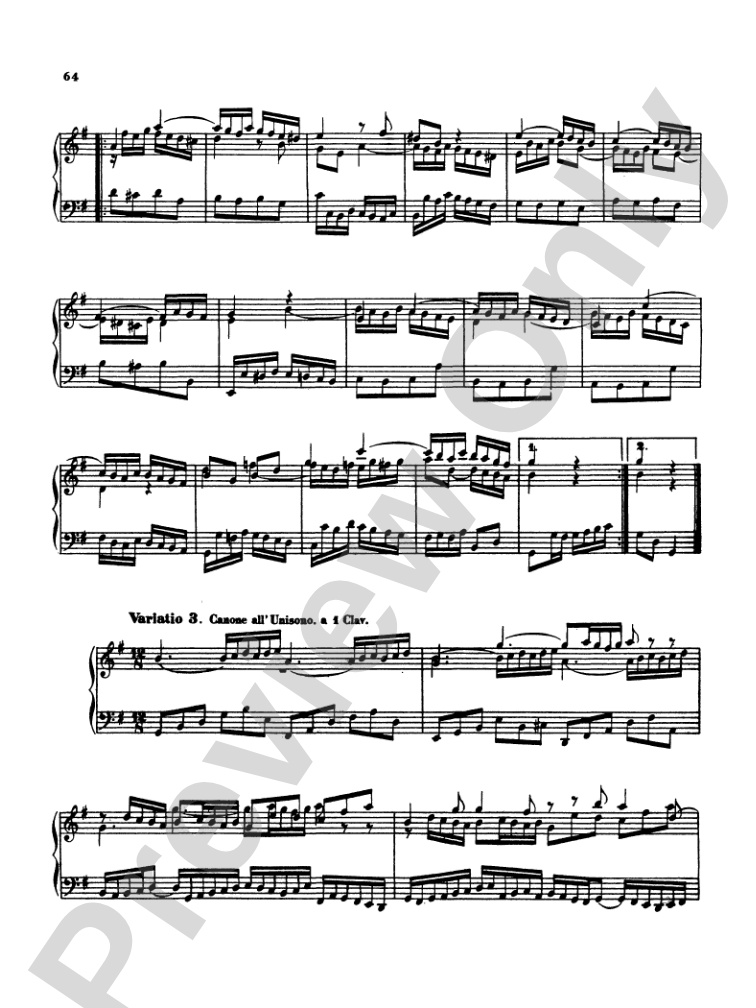
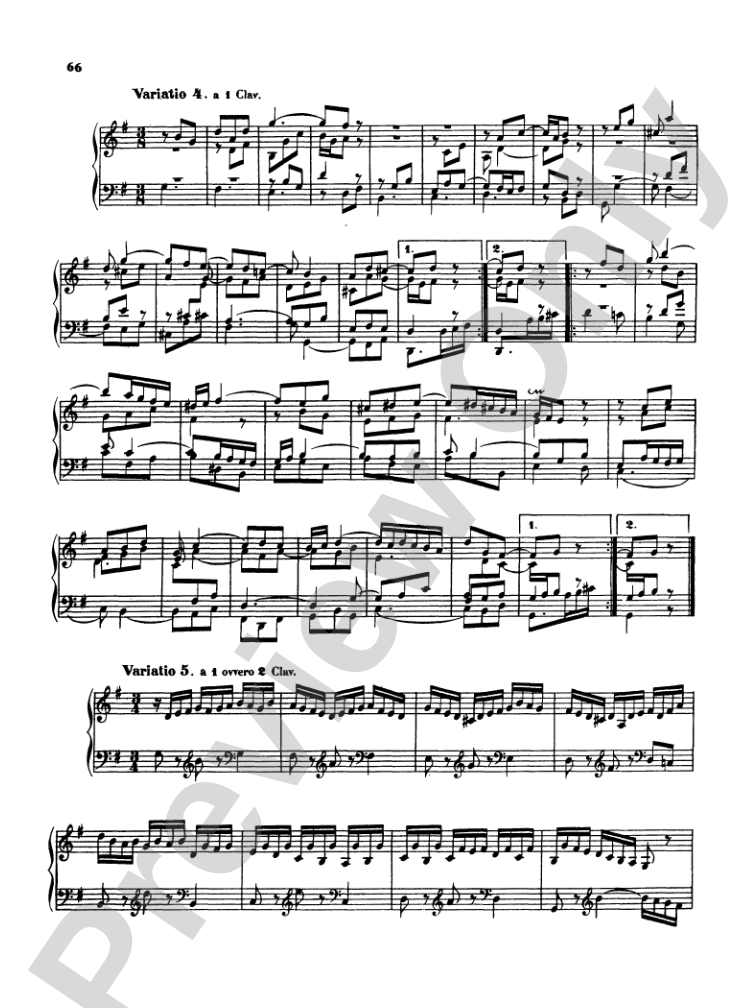
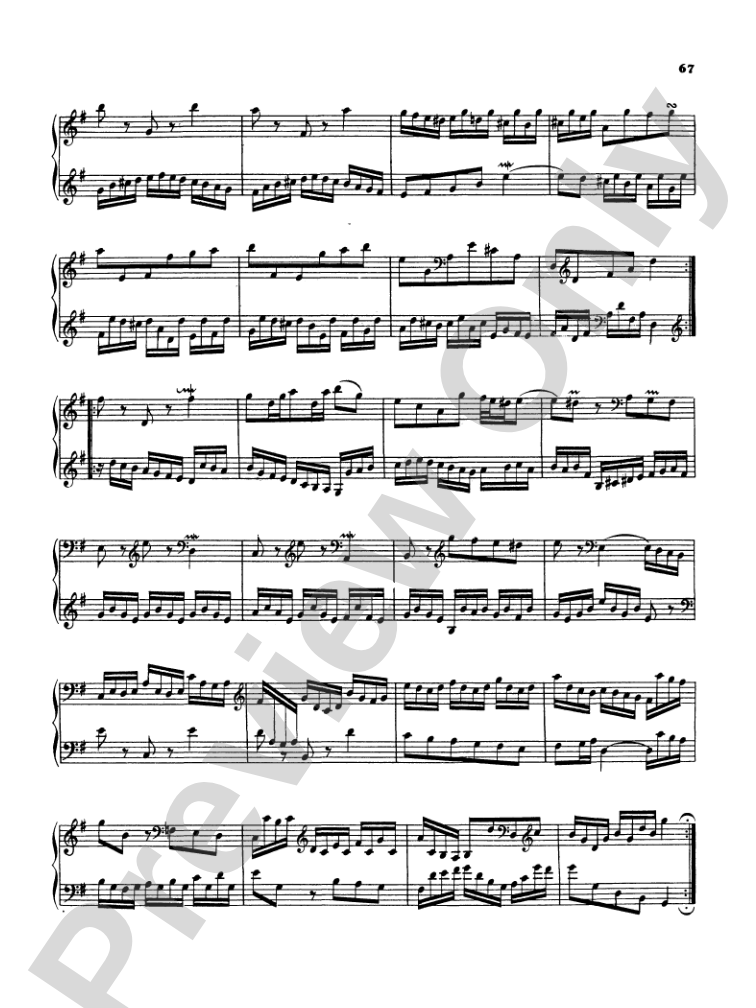
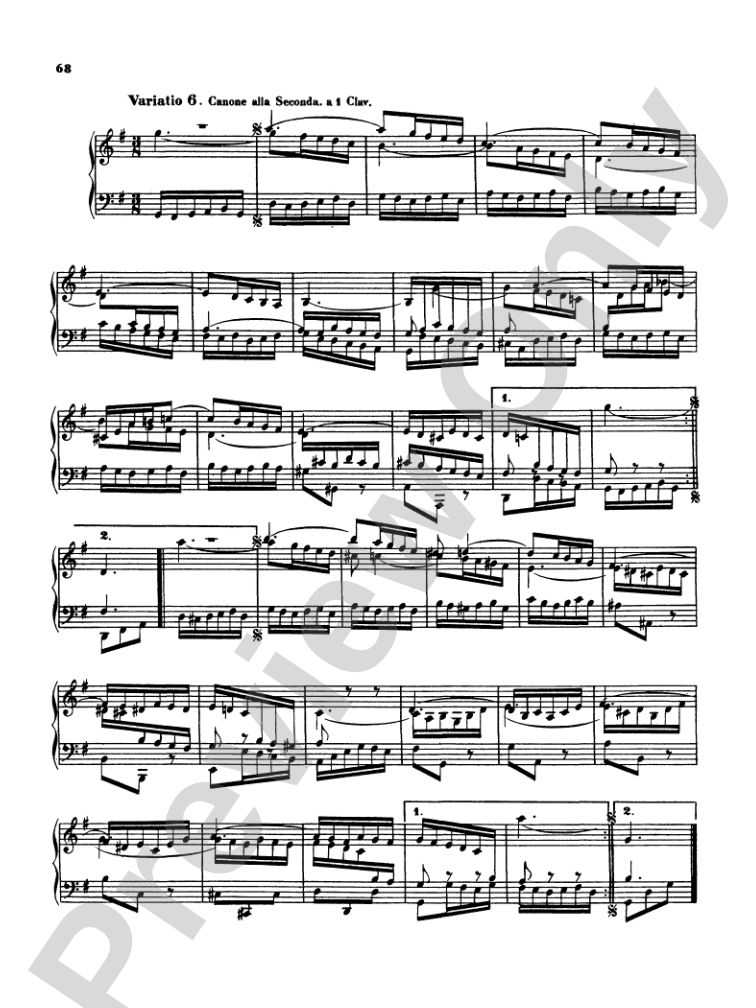
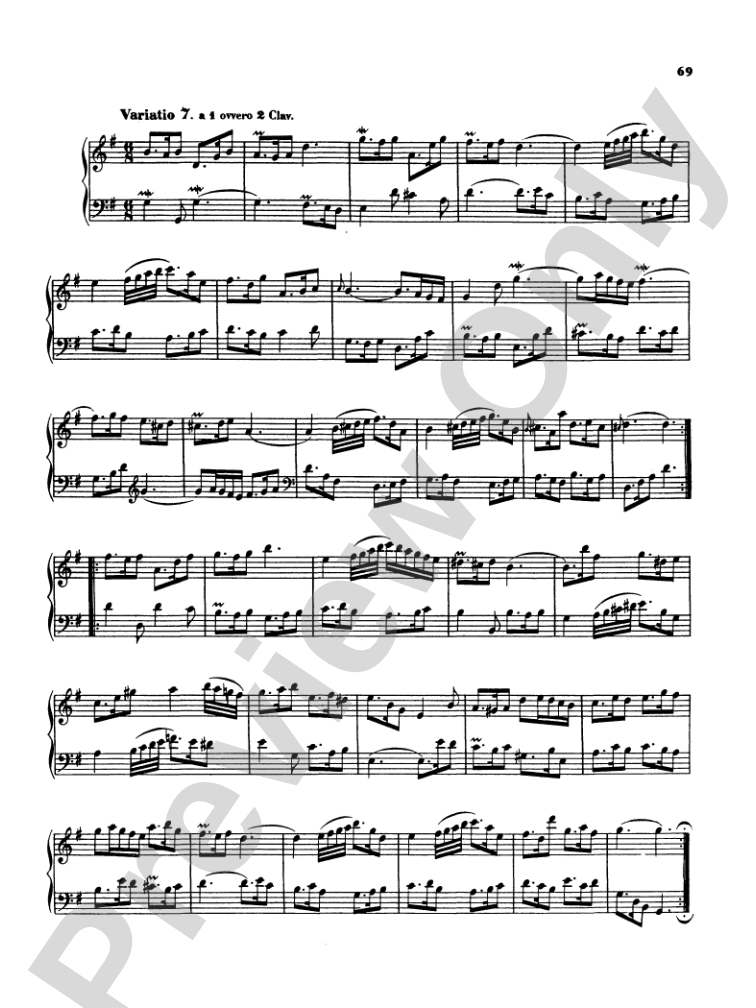
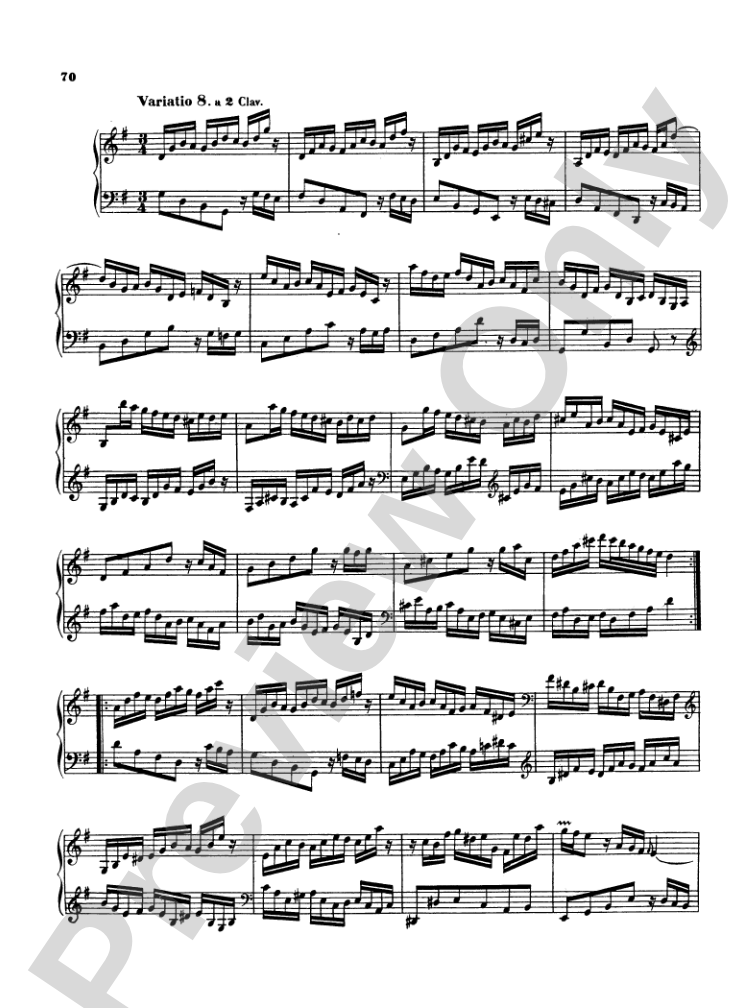
The Goldberg Variations date from 1742 and were named after Bach's pupil Johann Gottlieb Goldberg who was a chamber musician to one Count Keyserling. The count suffered from insomnia and had Goldber relax him with music to fall asleep. Goldberb commissioned the Aria with 30 Variations from Bach. Thus we owe this most magnificant of variation-works to an aristocrat's physical failing.


The Goldberg Variations date from 1742 and were named after Bach's pupil Johann Gottlieb Goldberg who was a chamber musician to one Count Keyserling. The count suffered from insomnia and had Goldber relax him with music to fall asleep. Goldberb commissioned the Aria with 30 Variations from Bach. Thus we owe this most magnificant of variation-works to an aristocrat's physical failing.
Don't just read it, hear it, play along with it, and watch your students grow with it. In MakeMusic Cloud, Bach: The Musical Offering and The "Goldberg Variations" (Miniature Score) comes alive with professional accompaniment, adjustable tempo, and built-in practice tools that turn solo practice into real progress.
Open in the Player
Jump straight in and assign it today.
Start Your Free Trial
Open this title and explore the full library in minutes.
Sample Audio
No sample audio found.
Sample Video
No sample videos found.
Additional Details
Series:
Kalmus Edition
Publisher:
Alfred Music
Page Count:
112
SKU:
00-PC-0002676
More about this title
About the Composer: Johann Sebastian Bach
Johann Sebastian Bach (1685-1750) stands at the apex of Baroque keyboard writing and contrapuntal mastery. His works for keyboard have shaped centuries of musical training and repertoire, from the Well-Tempered Clavier to the Goldberg Variations. Bach's ability to balance mathematical rigor with profound expressivity makes his music endlessly rewarding for pianists willing to engage deeply with its architecture and voice-leading.
Bach's visit to Frederick II's court in 1747 produced The Musical Offering, a set of canons and fugues built from a theme given by the King himself. The Goldberg Variations, completed in 1742, emerged from a different court circumstance: composed to help a nobleman's insomnia, this thirty-variation cycle became one of the most significant variation sets in all music. Both works showcase Bach's systematic exploration of musical possibilities and remain central to understanding keyboard technique, harmonic language, and the art of variation.
Why we love this
These two monumental works sit at opposite ends of Bach's keyboard legacy: one a structured exploration of court favor and compositional rigor, the other an intimate yet architecturally vast meditation on a simple aria. Studying them together in a single miniature score offers pianists unparalleled insight into how Bach could write both with formal constraint and boundless imagination. Directors programming adult or advanced student recitals gain immediate access to repertoire of genuine historical and musical substance.
What to expect
The Musical Offering presents architecture that feels both playful and austere; Bach accepts a theme from royalty and transforms it into something grander than its origin, with the rigor of a master craftsman. The Goldberg Variations, by contrast, begin with deceptive simplicity (an elegant aria) then unfold into a cosmos of keyboard figurations, dances, canons, and counterpoint. Together, they trace the full arc of Bach's keyboard language: from constraint to freedom and back again.
Who it's for
Advanced pianists, music students in theory or history courses, and performers preparing recitals that require genuine intellectual and technical substance. This miniature score serves pianists who want to understand Bach's keyboard writing at its most sophisticated and teachers seeking score study materials for piano pedagogy or Baroque performance practice.
How to get the most out of it
- Approach the Goldberg Variations as a suite rather than a marathon. Programming a selection of variations (perhaps the Aria plus variations in contrasting styles) is entirely valid and often more rewarding than attempting all thirty.
- In The Musical Offering, allow the keyboard to realize what would historically have been distributed across multiple instruments. The absence of specified instrumentation is intentional; your role is to clarify the three-part counterpoint through voicing and articulation.
- Use the miniature score format to study the complete architecture before committing any section to memory. Bach's logic becomes visible on the page and makes the music far easier to internalize at the keyboard.
- Pay attention to Bach's figured bass notation and implied harmonies. The keyboard writing is densely contrapuntal, and understanding how each voice contributes to harmonic movement prevents the music from becoming muddled.
How to use it
The Goldberg Variations work beautifully as the centerpiece of a recital devoted to Baroque keyboard music or as a stand-alone program spanning multiple styles and keyboard techniques. The Musical Offering fits naturally alongside other Bach works of similar period or as part of a concert exploring court music and the relationship between composer and patron. Both can anchor programs for intermediate to advanced pianists seeking repertoire that will hold up to years of study.
Skills your students will build
- Counterpoint involving three or more simultaneous voices
- Figured bass realization and harmonic analysis in Baroque style
- Variation technique across thirty distinct formal shapes
- Ornamentation and articulation appropriate to Baroque keyboard writing
- Score study and architecture analysis at large scale
- Hand independence and clarity of voice-leading at the keyboard