
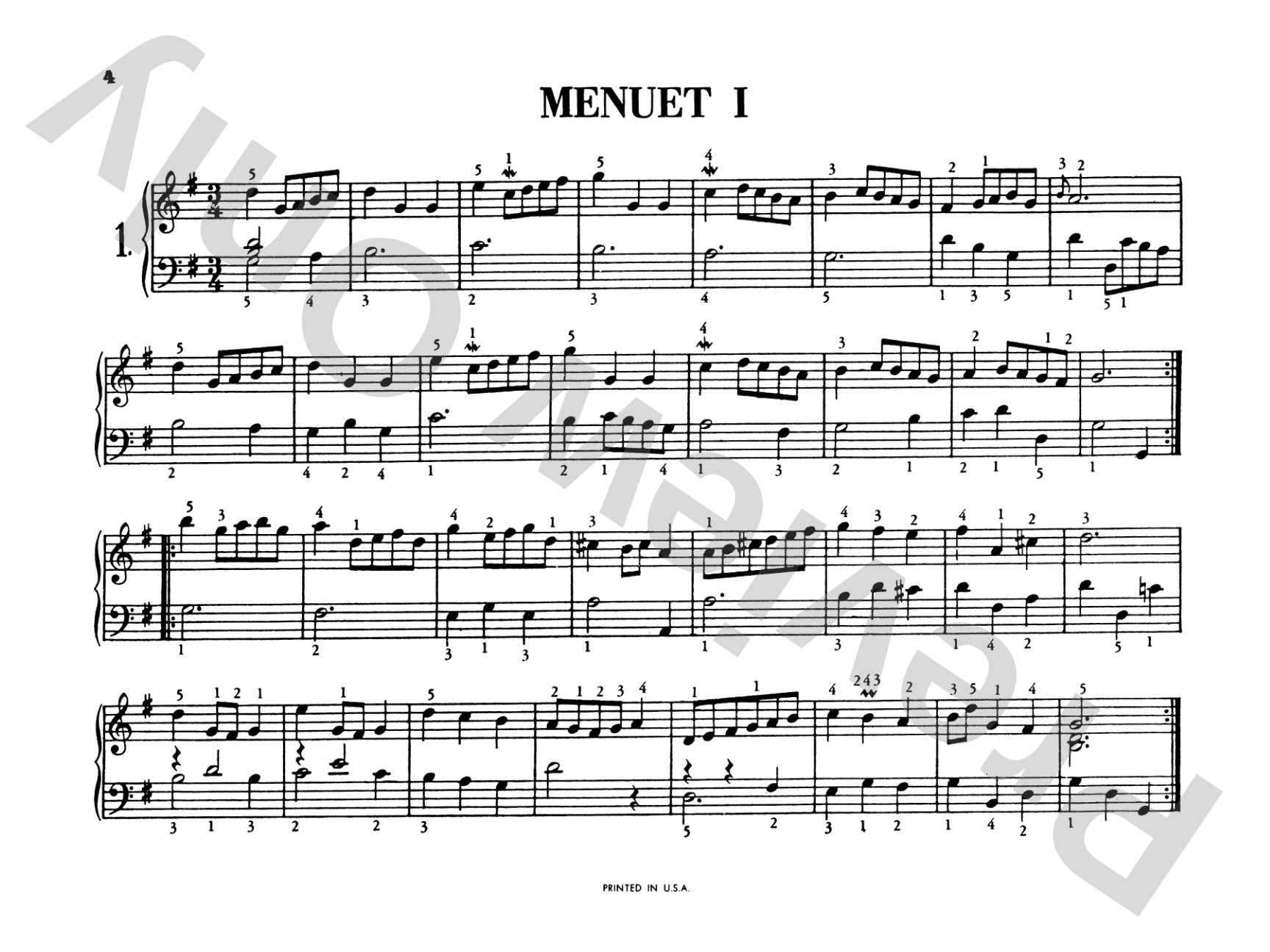

Bach: The First Bach Book (Fing. Alexander Lipsky): Piano Comb Bound Book
By Johann Sebastian Bach / fing. Alexander Lipsky
Level: Easy
Item: 00-PK-0002857

$9.99
Pickup currently not available
Buy Extra Parts (Digital PDF Download)
Parts Added to Cart!
Related Items
The First Bach Book: Piano Comb Bound Book |
$9.95
|
View |
Description
This collection includes Menuets, Musettes, Marches, a Bourée, a Polonaise and eight Preludes. The comb binding creates a lay-flat book that is perfect for study and performance.


Don't just read it, hear it, play along with it, and watch your students grow with it. In MakeMusic Cloud, Bach: The First Bach Book (Fing. Alexander Lipsky): Piano Comb Bound Book comes alive with professional accompaniment, adjustable tempo, and built-in practice tools that turn solo practice into real progress.
Open in the Player
Jump straight in and assign it today.
Start Your Free Trial
Open this title and explore the full library in minutes.
Sample Audio
No sample audio found.
Sample Video
No sample videos found.
Additional Details
Series:
Kalmus Edition
Publisher:
Alfred Music
Page Count:
36
SKU:
00-PK-0002857
More about this title
About the Composer: Johann Sebastian Bach
Johann Sebastian Bach (1685, 1750) stands as the foundational figure of Western keyboard music. His systematic approach to composition, exploring harmonic possibilities, counterpoint, and technical demands across every genre he touched, established the blueprint that composers still follow today. For pianists, Bach's works represent the essential training ground where finger independence, voice leading, and musical architecture become second nature.
Bach's output was staggering in scope and intentionality. He wrote keyboard music not as an afterthought but as a core part of his mission to demonstrate what was possible within strict compositional rules. His suites, inventions, and preludes have trained generations of musicians to hear multiple lines simultaneously and to understand that constraint breeds creativity.
Why we love this
This collection strips away the intimidation factor many pianists associate with Bach and offers accessible, genuinely musical pieces that reward careful attention. The variety of dance forms keeps students engaged across a full practice session, and the comb binding makes it practical for daily use without the frustration of pages flipping shut. Lipsky's fingerings are thoughtful and historically informed, guiding early pianists toward a natural hand position rather than forcing modern comfort onto Baroque idioms.
What to expect
These miniatures possess a refined elegance rooted in 18th-century dance conventions, yet they breathe with directness and clarity. Each piece balances formal structure with genuine melodic charm, offering the satisfying sense of playing real music rather than exercises.
Who it's for
Young pianists in their first years of study who are ready to move beyond simplified teaching pieces and encounter authentic Baroque repertoire. Teachers seeking repertoire that teaches fundamental principles of harmony, phrasing, and voice leading without overwhelming beginning players.
How to get the most out of it
- Observe the articulation implied by phrasing marks rather than relying on the sustain pedal; Bach's clarity depends on clean note separation and voice independence.
- Shape each melodic line as though singing it, allowing natural breathing points to guide your phrasing rather than playing in rigid four-bar blocks.
- Pay attention to the relationship between melody and bass line in pieces like the Menuets; they often engage in a conversation that becomes apparent only when both parts receive equal voice.
- Work hands separately until the independence of each hand's rhythmic and harmonic function is clear, then blend them with attention to the primary melodic strand.
How to use it
Standalone recital pieces for young pianists preparing their first solo performance opportunity, or in pairs as concert filler between more substantial works. Early-level student recitals benefit from the variety and historical legitimacy these pieces bring to a mixed program.
Skills your students will build
- Voice independence and awareness of bass line as a harmonic anchor
- Baroque articulation and phrasing conventions
- Understanding of Baroque dance forms and their metric characteristics
- Hand position and finger independence at a natural tempo
- Recognition of harmonic function through analysis of cadences and phrase structure
- Sight-reading fluency in Baroque notation and ornamentation