

Bach: Soprano Arias from Church Cantatas, Volume I (Sacred) (German/English)
By Johann Sebastian Bach
Item: 00-PC-0011281
$0.99
Pickup currently not available
Description
Titles include:


- Auch mit gedämpften, schwachen Stimmen from Cantata No. 36 (And Though with Muted, Feeble Voices)
- Die Armen will der Herr unarmen from Cantata No. 186 (The Lord Gives Love, and Grants His Blessing)
- Es halt' es mit der blinden Welt from Cantata No. 94 (He Who Holds Nought within His Soul)
- Gerechter Gott, ach, rechnest du from Cantata No. 89 (Oh, Righteous God, Pray, Count Aright)
- Gott versorget alles Leben from Cantata No. 187 (God Provides for All the Living)
- Höchster, was ich habe from Cantata No. 39 (Great One, What I Treasure)
- Hört, ihr Augen, auf zu weinen from Cantata No. 98 (Stop, You Sad Eyes, Stop Your Weeping)
- Ich bin vergnügt in meinem Leiden from Cantata No. 58 (I Do Rejoice in All My Sorrow)
- Ich ende behende mein irdisches Leben from Cantata No. 57 (Now Quickly I End All My Earthly Existence)
- Ich nehme mein Leiden mit Freuden auf mich from Cantata No. 75 (I Carry My Sorrow with Joy in My Heart)
- Ich will auf den Herren schaun from Cantata No. 93 (I Will Look upon the Lord)
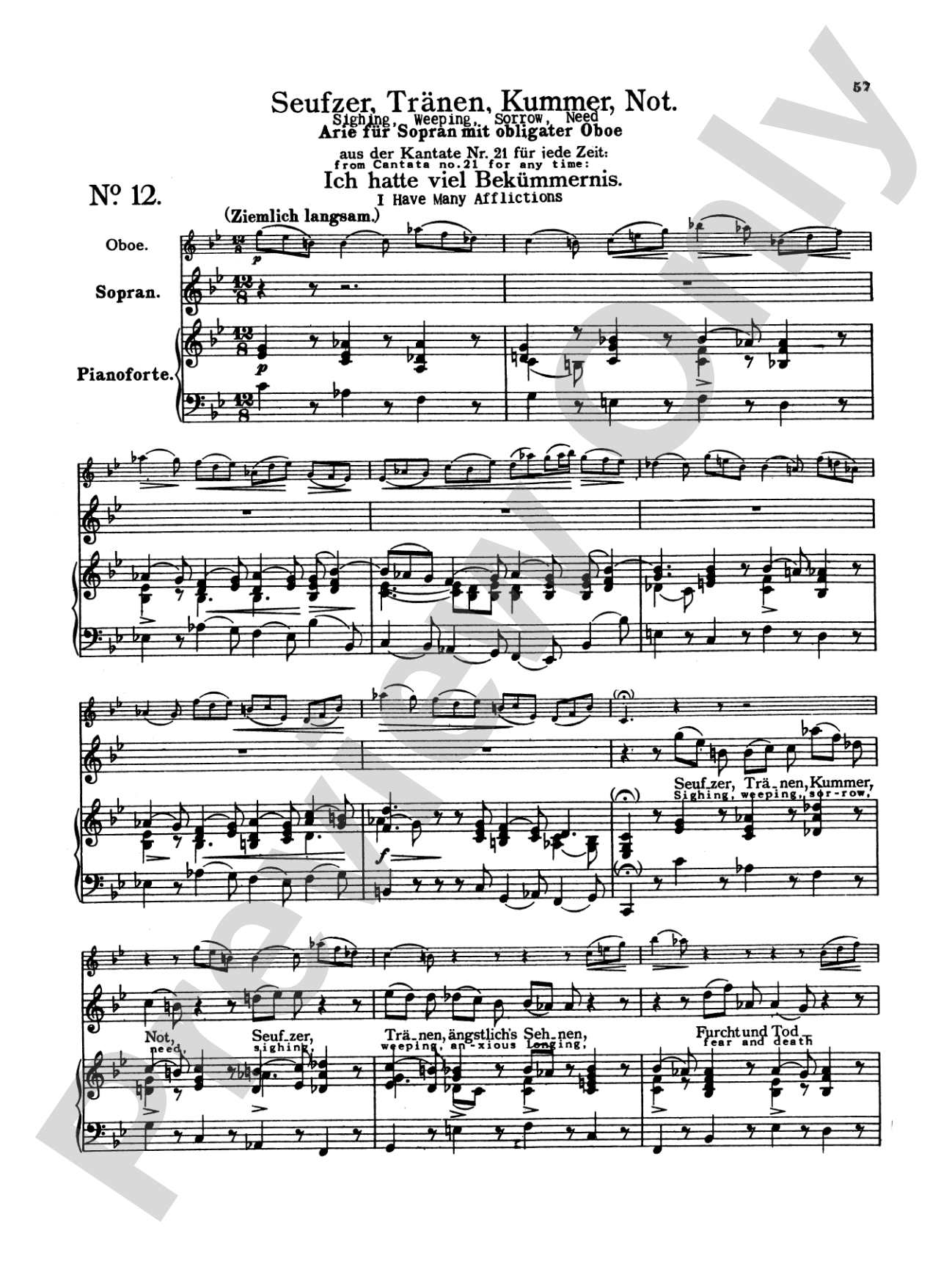
- Seufzer, Tränen, Kummer, Not from Cantata No. 21 (Sighing, Weeping, Sorrow, Need)
Don't just read it, hear it, play along with it, and watch your students grow with it. In MakeMusic Cloud, Bach: Soprano Arias from Church Cantatas, Volume I (Sacred) (German/English) comes alive with professional accompaniment, adjustable tempo, and built-in practice tools that turn solo practice into real progress.
Open in the Player
Jump straight in and assign it today.
Start Your Free Trial
Open this title and explore the full library in minutes.
Sample Audio
No sample audio found.
Sample Video
No sample videos found.
Additional Details
Series:
Kalmus Edition
Publisher:
Alfred Music
Page Count:
104
SKU:
00-PC-0011281
More about this title
About the Composer: Johann Sebastian Bach
Johann Sebastian Bach (1685-1750) composed over 200 cantatas during his tenure as Kapellmeister in Weimar and later as Cantor of St. Thomas Church in Leipzig. These sacred works represent the apex of Baroque vocal writing, combining Italian operatic forms with German Lutheran theology and contrapuntal mastery. Bach's cantatas were composed for specific liturgical occasions and biblical texts, making them both devotional statements and technical showcases for the voices and instruments available to him.
Why we love this
These soprano arias sit at the intersection of accessibility and artistic depth. Each aria is complete and performable on its own, making them ideal for recital programming, voice competitions, or concert selections without requiring the full cantata. The collection spans a range of affective states—from lamentation to joy to spiritual resignation—giving sopranos genuine interpretive choices while the underlying Bach harmony and counterpoint reward both singer and listener with architectural beauty.
What to expect
Each aria opens a small window into spiritual introspection. The melodies move with the naturalness of speech set to music; they don't soar aimlessly but follow the contours of their texts as if discovering the melody for the first time. Beneath the voice lies a harmonic world of surprising tenderness, sudden color, and unflinching honesty about suffering and faith.
Who it's for
Soprano soloists preparing recital repertoire, voice students building a foundation in Baroque sacred music, and choral directors seeking high-quality solo material for concert performances or competitions. The German and English texts make these accessible to singers in different traditions while honoring Bach's original language.
How to get the most out of it
- Attend to the German text first, even if you're singing the English translation. The natural word stress and vowel colors of German will inform your phrasing and articulation in ways that feel inevitable rather than imposed.
- Balance transparency with legit tone in the slower passages. These arias sit in the realm of intimate prayer; overblown singing obscures the harmonic language Bach built underneath the vocal line.
- Let the harmonic rhythm guide your breath and phrase architecture. Bach rarely wastes a chord change, and resting on strong harmonic moments (rather than on the text alone) creates natural architecture.
- Work with a pianist who understands continuo practice. The keyboard part is not mere accompaniment; it's a conversation partner that shapes the aria's emotional trajectory.
How to use it
Program these arias as standalone recital pieces or group them thematically (arias about consolation, arias about joy, arias about patience) for a unified concert experience. They pair beautifully with instrumental Bach or with Baroque works by his contemporaries, and a single aria can serve as a powerful encore or as part of a Bach-focused service of lessons and carols.
Skills your students will build
- Baroque melodic phrasing and the relationship between text stress and musical accent
- Reading figured bass notation and collaborating with a continuo player
- Sustained singing in the soprano register without force or tension
- German diction and its musical implications for articulation and resonance
- Interpretation of da capo form and the art of ornamentation in the repeated section
- Understanding harmonic language and how to shape phrasing around chord changes rather than arbitrary breath points