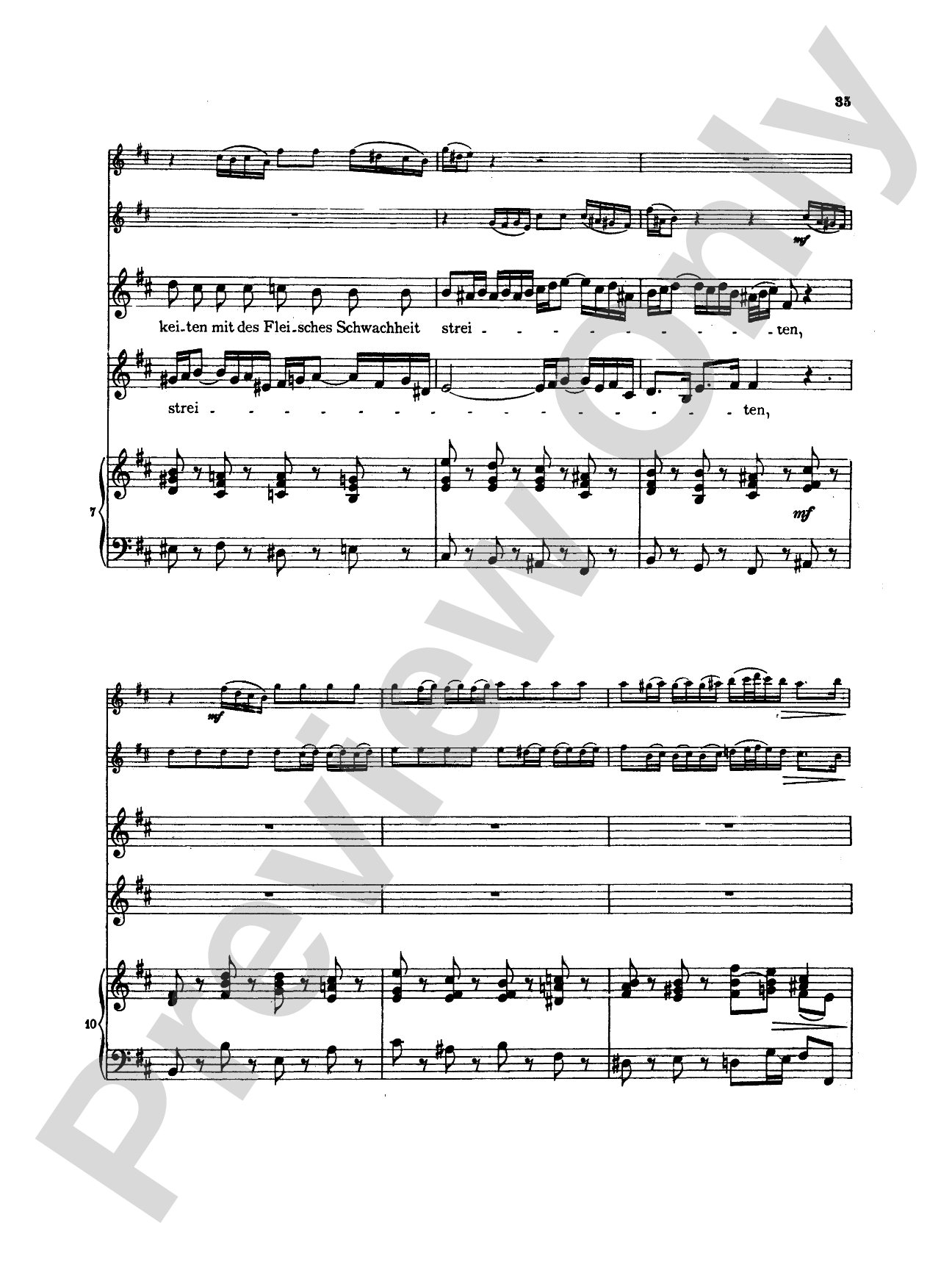
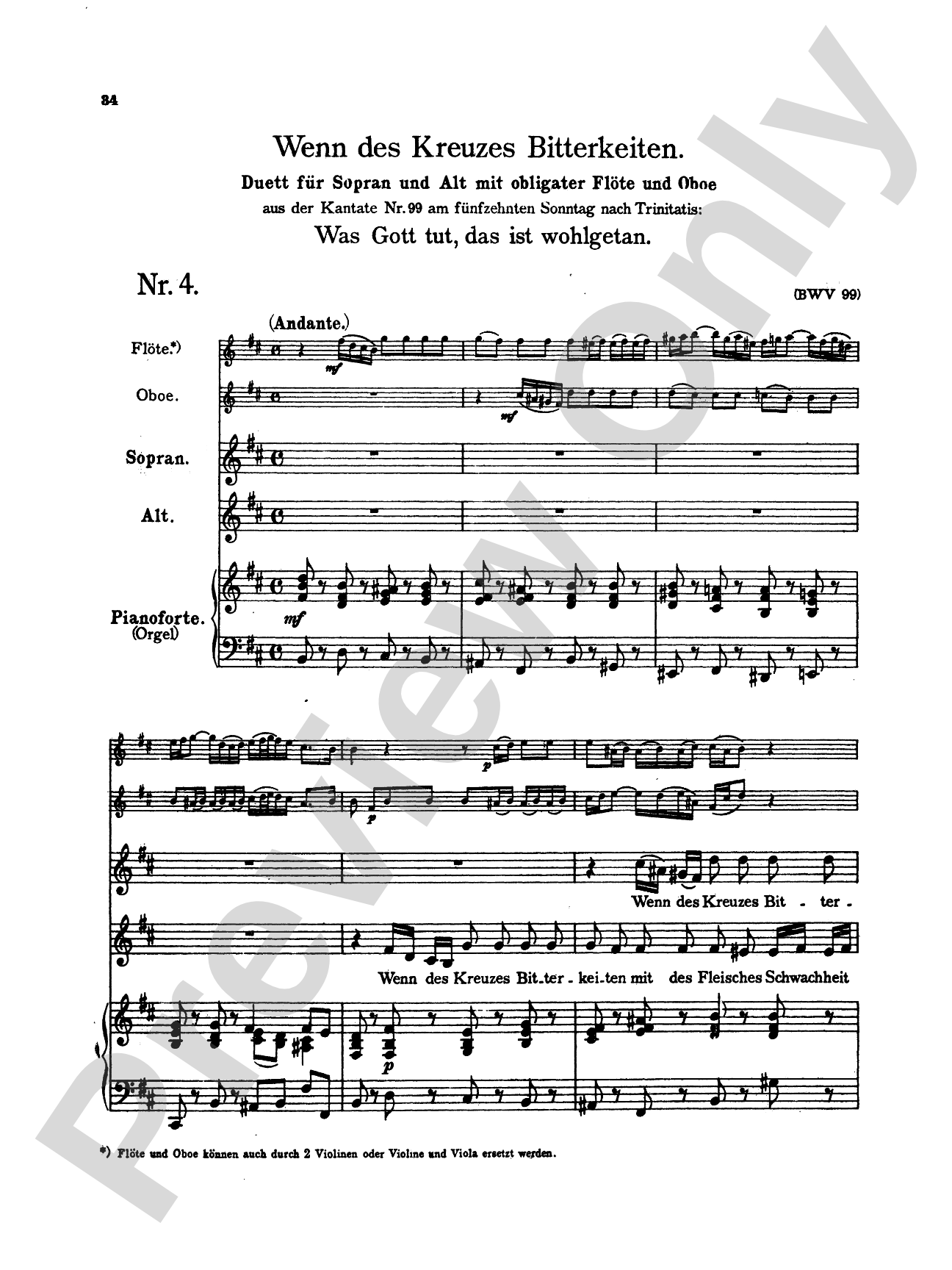
Bach: Soprano and Alto Arias, Volume II (German) Sheet Music Preview

Bach: Soprano and Alto Arias, Volume II (German)

Duets for Soprano and Alto with Obbligato Instruments and Piano or Organ with German Text (Full Score)

By Johann Sebastian Bach

Item: 00-PC-0011417

Digital Download
$2.99
Description
A collection of songs for Soprano and Alto voice, composed by Johann Sebastian Bach.

Don't just read it, hear it, play along with it, and watch your students grow with it. In MakeMusic Cloud, Bach: Soprano and Alto Arias, Volume II (German) comes alive with professional accompaniment, adjustable tempo, and built-in practice tools that turn solo practice into real progress.

Sample Audio
No sample audio found.
Sample Video
Additional Details
Series: Kalmus Edition
Publisher: Alfred Music
Page Count: 72
SKU: 00-PC-0011417

More about this title

About the Composer: Johann Sebastian Bach

Johann Sebastian Bach (1685-1750) shaped the musical language of the Baroque era and left a legacy that defined composition itself. His work across all genres—fugues, concertos, suites, and vocal music—established principles of counterpoint, harmonic language, and structural design that remain foundational to music education today. Bach's sacred vocal works, including his cantatas and arias, represent the height of his craft: intricate, expressive, and deeply human despite their technical sophistication.

For singers and voice teachers, Bach's arias offer something rare: music that demands both technical precision and interpretive depth. These works train the ear in harmonic complexity while requiring singers to navigate baroque ornamentation, text expression, and the relationship between melody and accompaniment. Teaching or performing Bach is teaching musical literacy itself.

Why we love this

This collection gives singers direct access to Bach's soprano and alto arias without requiring them to purchase full cantata scores or arrange their own excerpts. The Kalmus Edition layout is clean and readable, making these pieces accessible for both recital preparation and studio work. Bach's arias at this vocal range showcase the brilliance of his melodic writing while remaining performance-ready for intermediate to advanced singers.

What to expect

Bach's arias balance mathematical precision with emotional depth. You'll encounter moments of soaring lyricism alongside intricate passagework that rewards careful, intelligent practice. The German texts ground these pieces in direct human expression, whether you're singing words of devotion, doubt, or joy.

Who it's for

This collection serves soprano and alto singers preparing recital repertoire, voice students seeking substantial baroque material, and teachers building a library of Bach arias at intermediate-plus levels. It works equally well for classical voice training and for singers interested in historically informed performance.

How to get the most out of it

  • Study the continuo or piano reduction carefully to understand the harmonic language; Bach's accompaniment shapes the phrasing as much as the vocal line does.
  • Pay attention to text underlay and work slowly through any passages where the syllabic setting feels unfamiliar; baroque articulation differs from later styles.
  • Mark ornaments (trills, turns, mordents) clearly in your score and practice them separately at tempo before integrating them into the phrase.
  • Consider the dramatic context of each aria even when performing without the full cantata; Bach's arias tell specific emotional stories that guide interpretation.

How to use it

Program individual arias in voice recitals, either in groups of contrasting character or paired with works by Bach's contemporaries. This collection also serves teaching studios well, offering singers substantial material that develops baroque style and technical facility over multiple lessons and rehearsals.

Skills your students will build

  • Reading baroque ornamentation (trills, turns, mordents) and executing them with period-appropriate style
  • Navigating baroque harmonic language and understanding how accompaniment shapes phrasing
  • Singing in German with accurate diction and text expression in a baroque sacred context
  • Building sustained vocal lines over longer phrases typical of aria writing
  • Interpreting elaborate passagework with clarity and musicality

You May Also Like