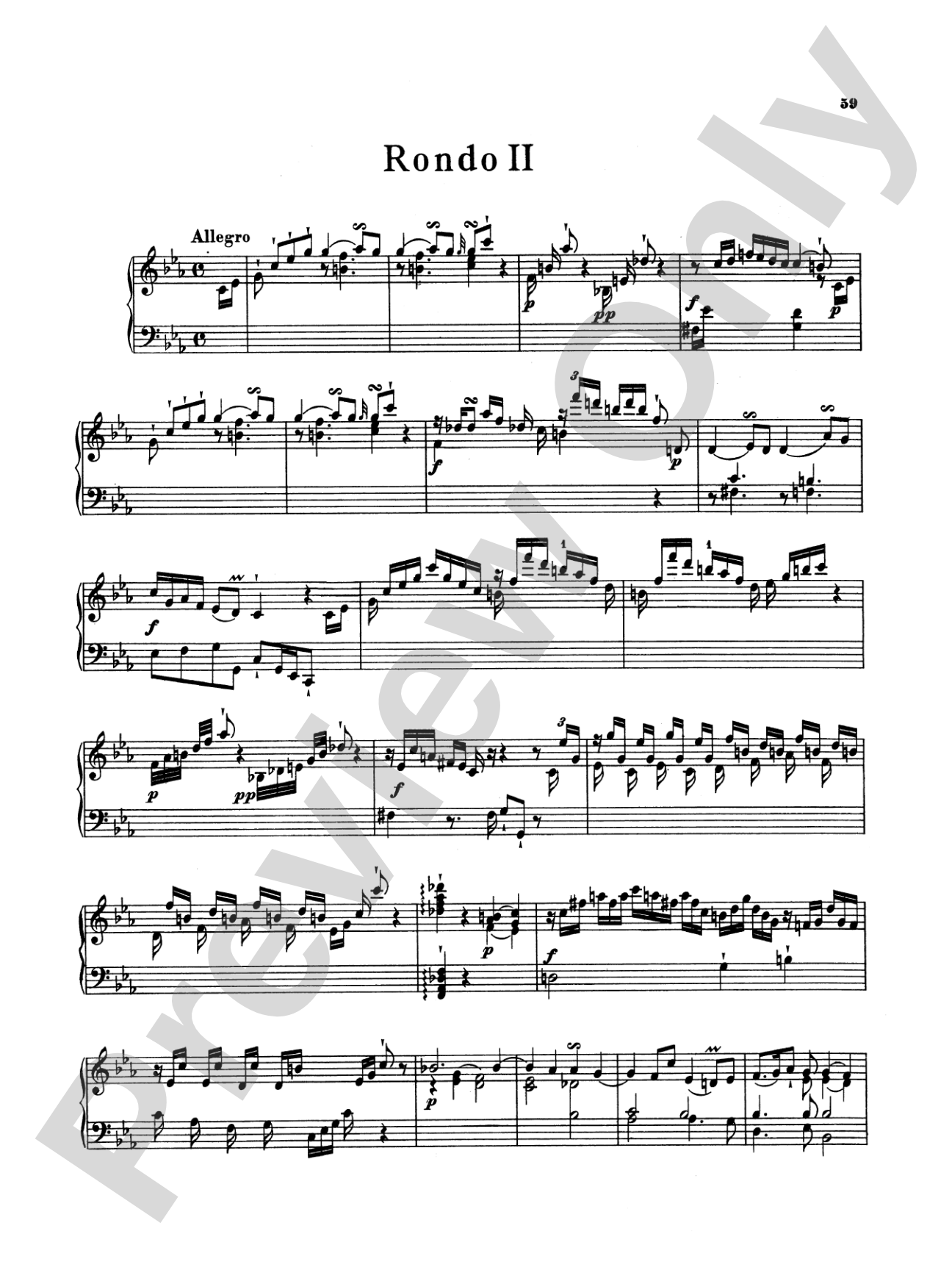
Bach: Sonatas, Fantasias & Rondos (Volume II) Sheet Music Preview

Bach: Sonatas, Fantasias & Rondos (Volume II)

By Carl Philipp Emanuel Bach

Level: Intermediate / Advanced

Item: 00-PC-0004786

Digital Download
$0.99
Description
A collection of Intermediate / Advanced piano solos composed by Carl Philipp Emanuel Bach.

Don't just read it, hear it, play along with it, and watch your students grow with it. In MakeMusic Cloud, Bach: Sonatas, Fantasias & Rondos (Volume II) comes alive with professional accompaniment, adjustable tempo, and built-in practice tools that turn solo practice into real progress.

Sample Audio
No sample audio found.
Sample Video
Additional Details
Series: Kalmus Edition
Publisher: Alfred Music
Page Count: 108
SKU: 00-PC-0004786

More about this title

About the Composer: Carl Philipp Emanuel Bach

Carl Philipp Emanuel Bach (1714-1788) was a keyboard virtuoso and prolific composer who bridged the Baroque and Classical worlds. As the most ambitious of J.S. Bach's sons, he developed a highly personal style marked by expressive depth, harmonic boldness, and idiomatic writing for keyboard instruments. His keyboard works were widely circulated across Europe and influenced contemporary composers; his treatise on keyboard performance remains essential reading for understanding 18th-century interpretation.

C.P.E. Bach's sonatas, fantasias, and rondos showcase the "Empfindsamkeit" (sensitive style) that defined his compositional voice. These pieces demand both technical facility and emotional intelligence from performers, making them cornerstone works for pianists developing mature interpretive skills.

Why we love this

C.P.E. Bach's keyboard writing feels strikingly modern for its era, with dramatic key shifts, unexpected harmonic turns, and emotional range that engage pianists far more than his father's more systematic works. These intermediate-advanced pieces sit at the sweet spot where students can experience genuine compositional substance without drowning in technical demands, making them ideal for recital programming or exploring the Classical transition.

What to expect

These works balance intimate reflection with courtly elegance. The sonatas move between moments of tender lyricism and spirited passagework, while the fantasias embrace a more improvisatory character with sudden shifts in mood and texture. Rondos offer lighter relief, though even these are infused with the harmonic sophistication and emotional nuance that define C.P.E. Bach's voice.

Who it's for

This collection serves pianists moving from early intermediate to advanced repertoire who are ready for Baroque and Classical literature with genuine interpretive challenges. It works well for students preparing recital programs, competitive festival entries, or building confidence with works from the keyboard literature's foundational era.

How to get the most out of it

  • Treat harmonic surprises as expressive moments, not mistakes. Bach's unexpected modulations and chromatic passages are compositional choices designed to evoke specific emotional responses.
  • Shape longer melodic lines with the same attention to phrase architecture you'd apply to vocal music. These sonatas often sing more than they display.
  • Pay close attention to articulation markings and ornament indications. They are integral to the "sensitive style" aesthetic, not decorative extras.
  • Allow the slower movements room to breathe. The lyrical passages benefit from thoughtful use of the sustain pedal and careful voice leading in both hands.

How to use it

Feature a single sonata or fantasia as a bridge between Baroque and Classical concert programming, or pair multiple movements from this volume to create a substantial recital section. These pieces also work well in mixed-era piano recitals where you want intermediate-advanced students to demonstrate interpretive maturity without jumping directly into the Romantic period.

Skills your students will build

  • Interpreting Baroque-Classical ornamentation and articulation markings
  • Voice leading and hand independence across multiple textural layers
  • Managing harmonic modulation and unexpected key relationships
  • Balancing technical passagework with expressive, song-like phrasing
  • Reading and performing 18th-century keyboard conventions

You May Also Like