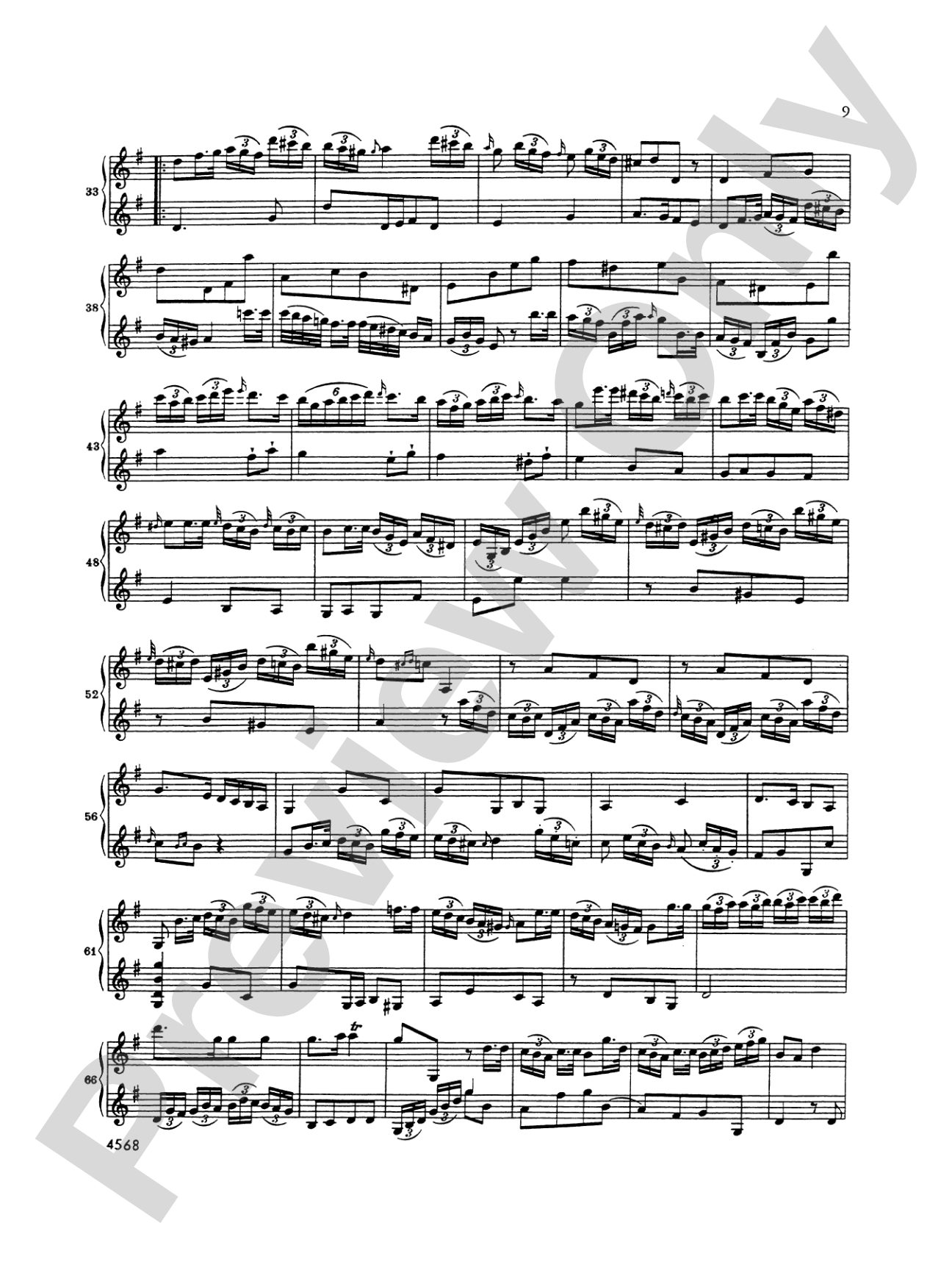
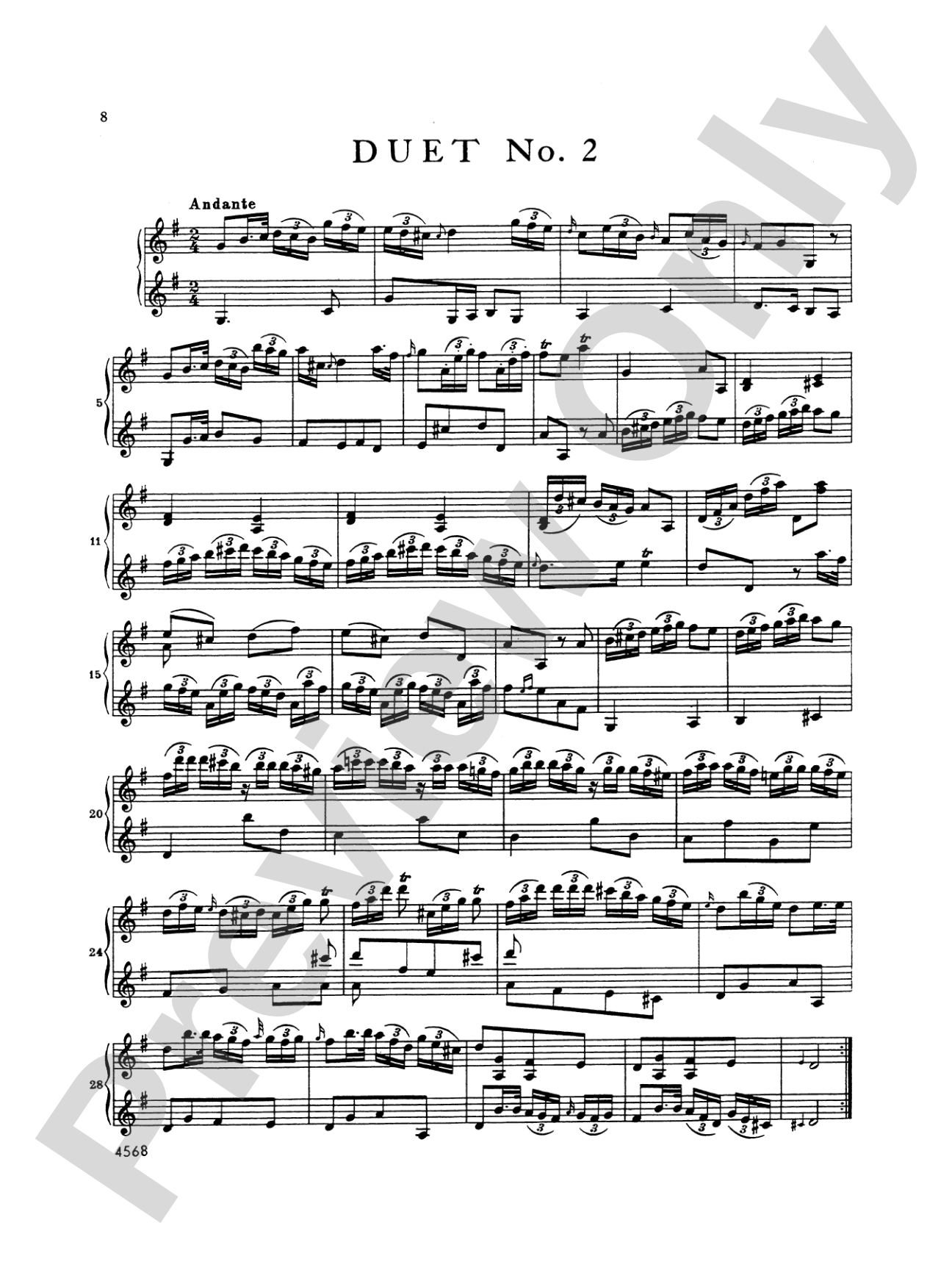
Bach: Six Duets, Volume I Sheet Music Preview

Bach: Six Duets, Volume I

By Johann Christian Bach

Item: 00-PC-0010732

Digital Download
$1.99
Description
Nos. 1-3

Don't just read it, hear it, play along with it, and watch your students grow with it. In MakeMusic Cloud, Bach: Six Duets, Volume I comes alive with professional accompaniment, adjustable tempo, and built-in practice tools that turn solo practice into real progress.

Sample Audio
No sample audio found.
Sample Video
Additional Details
Series: Kalmus Edition
Publisher: Alfred Music
Page Count: 20
SKU: 00-PC-0010732

More about this title

About the Composer: Johann Christian Bach

Johann Christian Bach (1735–1782) was the youngest surviving son of J.S. Bach and became one of the most influential composers of the Classical era. He spent his formative years in Italy and London, where he helped establish the piano as a concert instrument and shaped early Classical style through his symphonies, concertos, and chamber works. His music bridges the ornate Baroque language of his father with the elegant clarity that defined the emerging Classical period.

Bach's duets and other chamber works were written partly as pedagogical pieces for talented amateur musicians of his time. They showcase his gift for writing singable, balanced lines that challenge both players without requiring virtuosic display, making them enduring teaching and performance repertoire for students developing musical maturity.

Why we love this

These duets inhabit a rare middle ground: formally sophisticated enough to reward serious musical attention, yet written with genuine care for the capabilities of developing violinists. Bach's melodic writing invites singers-not-players, and the two-part texture demands genuine partnership rather than one voice accompanying another. They sit perfectly in the curriculum for advanced high school and pre-college students preparing for chamber competition or simply expanding their acquaintance with the Classical chamber repertoire beyond the usual suspects.

What to expect

The musical language is poised and conversational; two equally cultured voices discussing ideas in turn, occasionally overlapping. There's formality without stiffness, ornamentation that feels natural rather than decorative, and a directness of expression that feels remarkably modern. These are works that reward listening as intently as playing.

Who it's for

These duets suit advanced intermediate to early advanced violinists working toward chamber performance skills and deeper familiarity with Classical repertoire. They're equally valuable for students preparing for solo and ensemble competitions, as well as for experienced amateurs seeking elegant, musically substantial material that doesn't demand the virtuosity of Romantic-era duets.

How to get the most out of it

  • Balance the voices by listening for the top note of each measure; Classical proportions shift the weight between parts frequently, and inattention creates an accidental hierarchy rather than equality.
  • Shape phrases through gentle dynamic swells rather than sudden terraces; Bach's syntax unfolds gradually, and overstatement disrupts his aesthetic.
  • Keep the accompaniment light and rhythmically settled even when it carries the harmonic foundation; resist the urge to push the secondary voice forward when it moves in steady note values.
  • Maintain a consistent tone color between the two players; if one violinist has a brighter or heavier sound, balance becomes nearly impossible regardless of dynamic management.

How to use it

Feature these duets on a chamber or recital concert alongside other Classical string works to create a coherent musical program that highlights Bach's refinement and melodic gift. They work particularly well as a bridge between standard pedagogy and serious solo repertoire, signaling to audiences that young players are moving toward maturity in their musicianship.

Skills your students will build

  • Equality and balance in two-part counterpoint
  • Classical phrase structure and formal architecture
  • Independent voice management without textural hierarchy
  • Sustained legit tone in middle register
  • Collaborative listening and ensemble blend
  • Interpretation of ornaments and articulation in Classical style

You May Also Like