
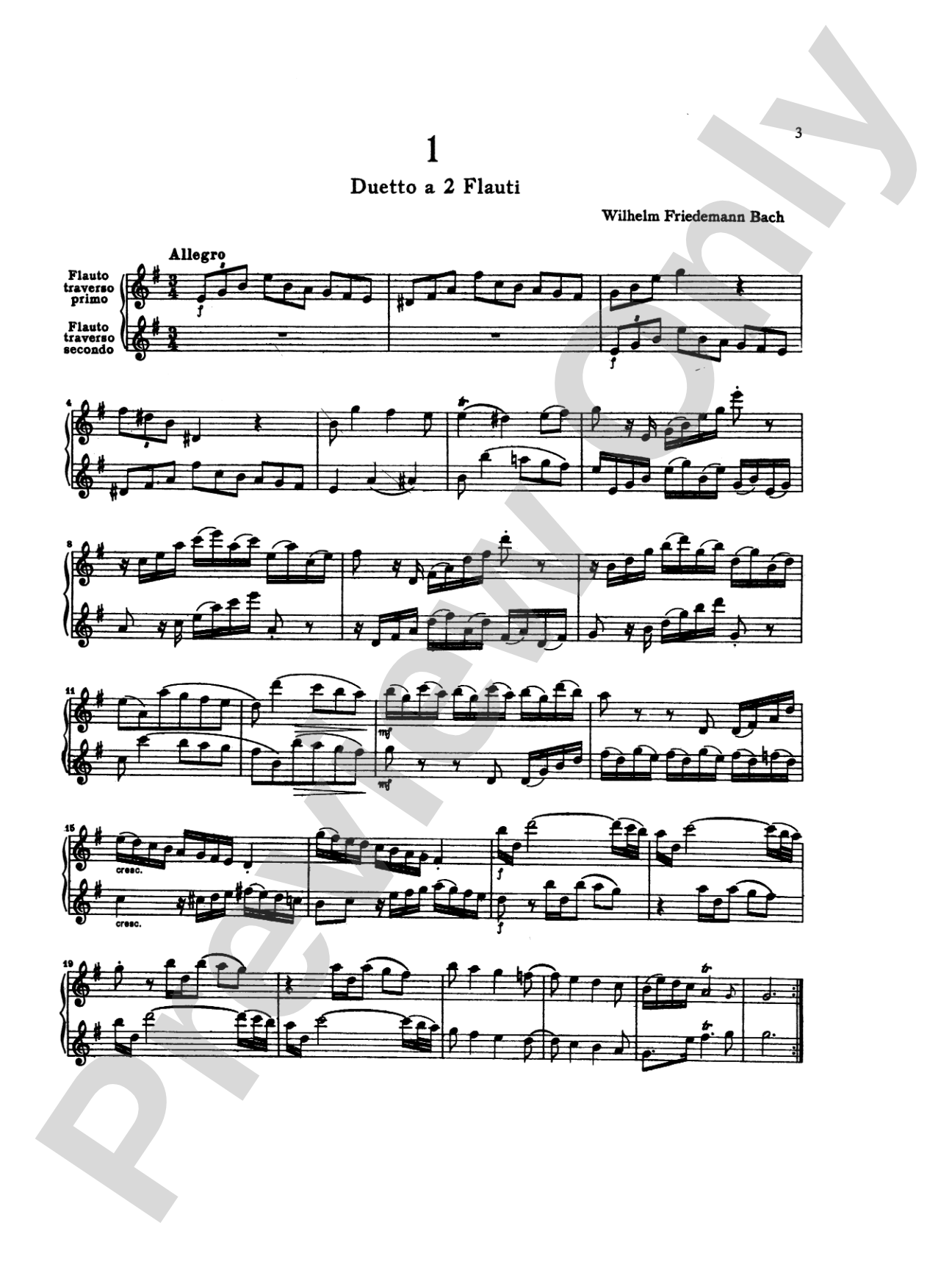
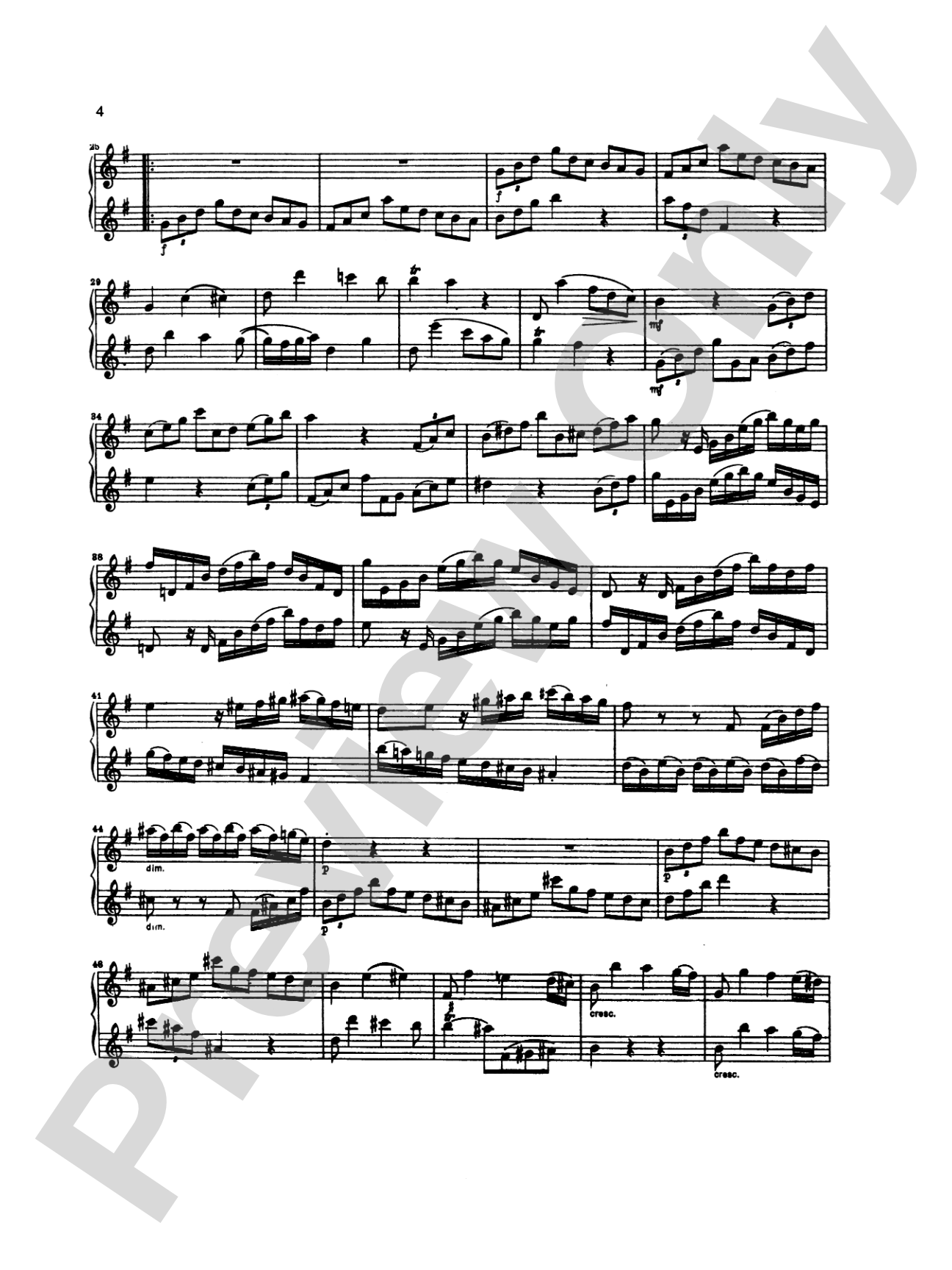
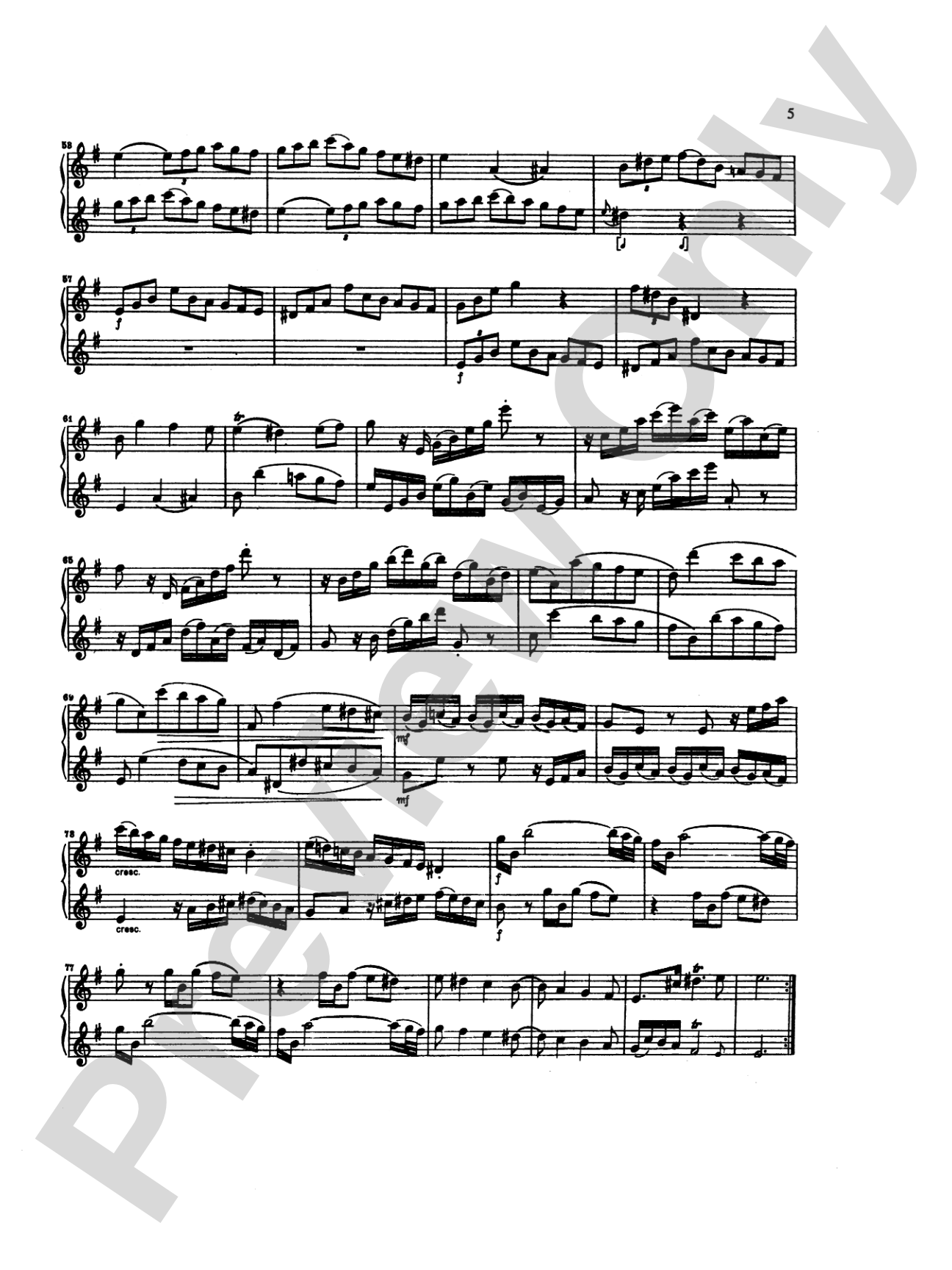
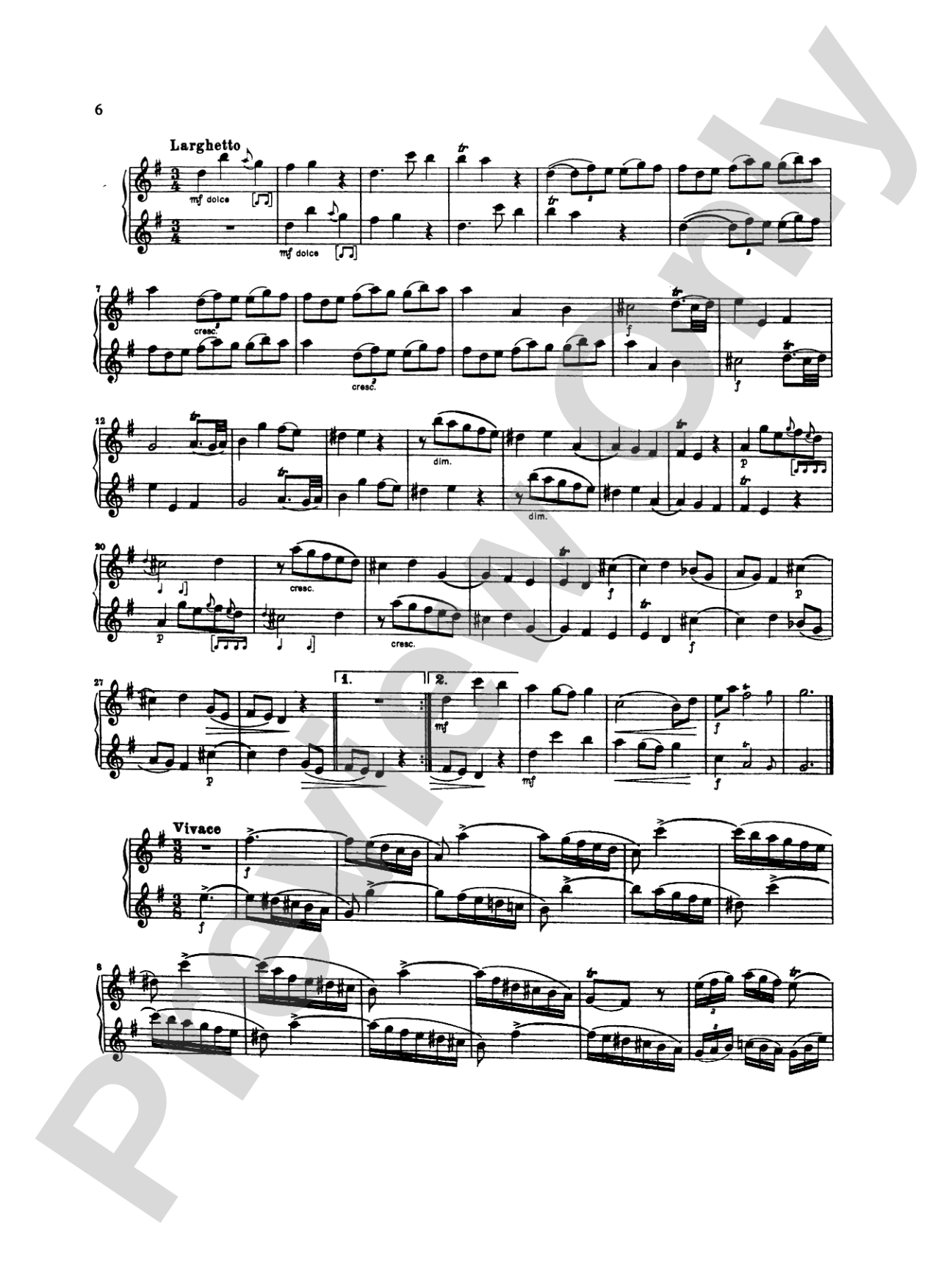
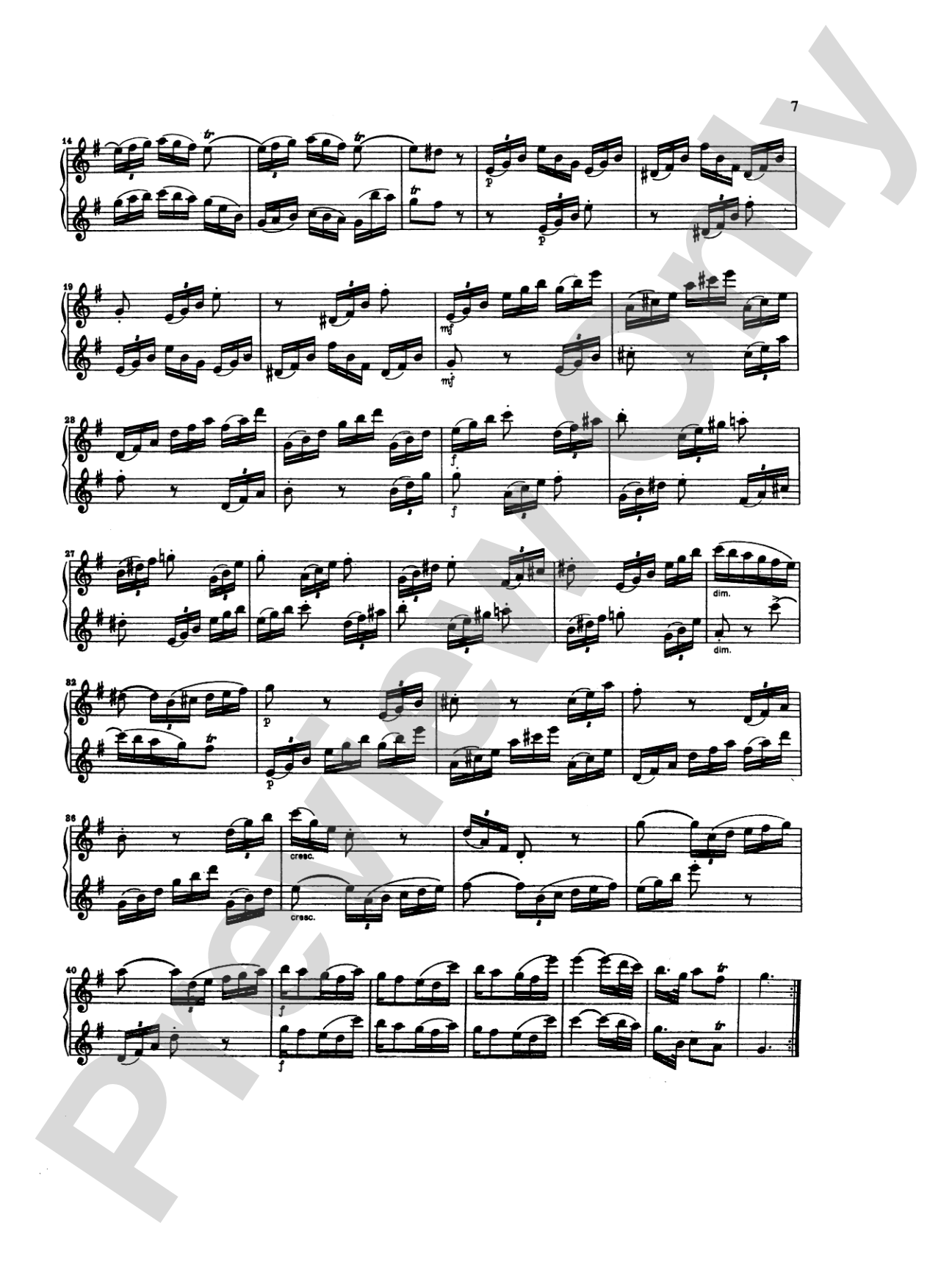
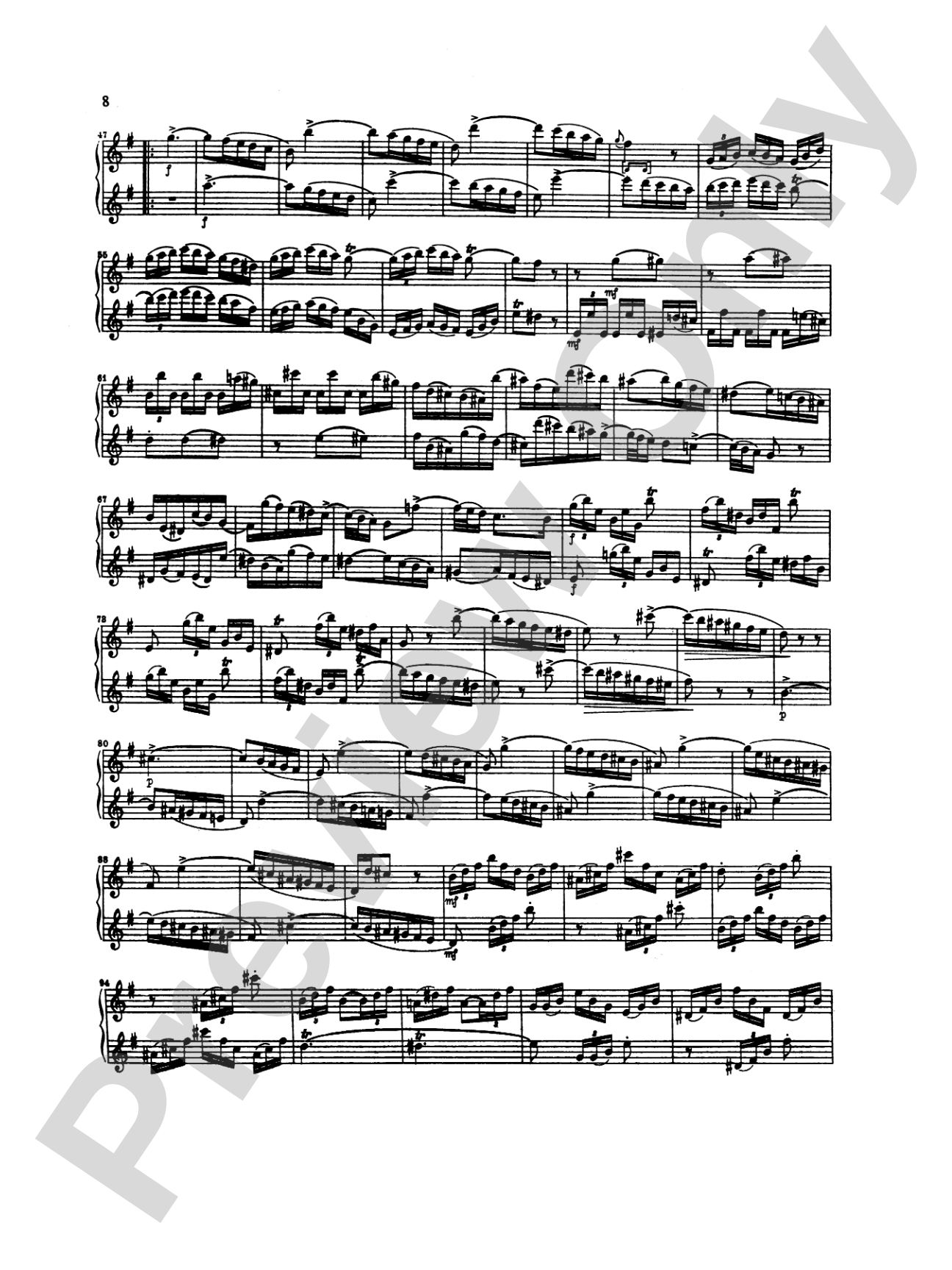
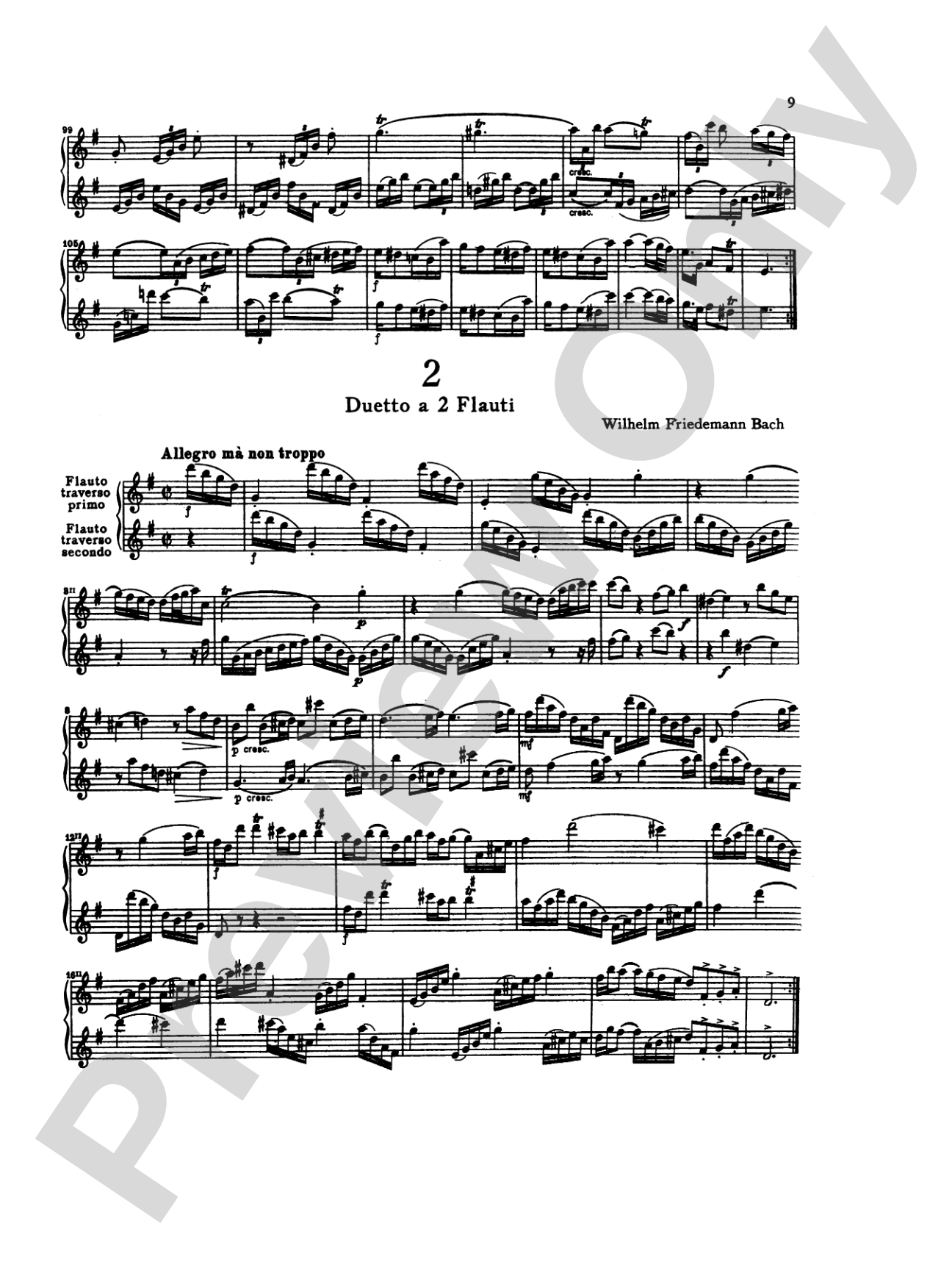

Bach: Six Duets: Flute Book
By Wilhelm Friedemann Bach
Item: 00-PK-0002741

$10.99
Pickup currently not available
Buy Extra Parts (Digital PDF Download)
| Product | Price | Quantity |
|---|---|---|
| Bach: Six Duets | $0.99 | |
| Bach: Six Duets | $0.99 | |
| Bach: Six Duets | $0.99 | |
| Bach: Six Duets | $0.99 | |
| Bach: Six Duets | $0.99 | |
| Bach: Six Duets | $0.99 |
Parts Added to Cart!
Related Items
Six Duets for Two Flutes: Flute Book |
$10.95
|
View |
Description
A cleanly printed edition of all six flute duets by Wilhelm Friedemann Bach, son of Johann Sebastian. Both parts are included in the book.
KALMUS EDITIONS are primarily reprints of Urtext Editions, reasonably priced and readily available. They are a "must" for students, teachers, and performers.


KALMUS EDITIONS are primarily reprints of Urtext Editions, reasonably priced and readily available. They are a "must" for students, teachers, and performers.
Don't just read it, hear it, play along with it, and watch your students grow with it. In MakeMusic Cloud, Bach: Six Duets: Flute Book comes alive with professional accompaniment, adjustable tempo, and built-in practice tools that turn solo practice into real progress.
Open in the Player
Jump straight in and assign it today.
Start Your Free Trial
Open this title and explore the full library in minutes.
Sample Audio
No sample audio found.
Sample Video
No sample videos found.
Additional Details
Series:
Kalmus Edition
Publisher:
Alfred Music
Page Count:
52
SKU:
00-PK-0002741
More about this title
About the Composer: Wilhelm Friedemann Bach
Wilhelm Friedemann Bach (1710-1784) was the eldest son of Johann Sebastian Bach and a significant composer in his own right. A virtuoso keyboard player and innovative orchestral composer, he bridged his father's Baroque style and the emerging Classical idiom, creating works that demonstrate sophisticated harmony and structural invention while remaining accessible to serious musicians.
Wilhelm Friedemann held prestigious posts in Dresden and Halle before moving to Berlin late in life. His instrumental duets, including these six flute works, showcase his gift for writing idiomatic chamber music that challenges performers while remaining engaging to ensemble partners.
Why we love this
These duets occupy a sweet spot between student capability and artistic substance. Performers get genuine compositional content from a major Baroque figure, not simplified exercises, while the two-part texture keeps technical demands reasonable and allows for focused collaboration on intonation and phrase shaping.
What to expect
Conversation between equals. Each line speaks with clarity and purpose, moving through Baroque counterpoint and Classical grace with directness and wit. The music unfolds logically yet maintains the harmonic surprises and melodic refinement that mark the Bach family's sound.
Who it's for
Flute duos working at the intermediate to early advanced level who want to tackle Bach family repertoire with real musical substance. These works suit duet competitions, chamber recitals, or collaborative practice between students in intermediate band or private lessons.
How to get the most out of it
- Establish a shared concept of vibrato before the first rehearsal. Wilhelm Friedemann's style benefits from consistent ornamentation choices, so decide together how (and how much) vibrato serves each phrase.
- Balance phrase weight between the two parts rather than defaulting to one part as 'melody' and one as 'accompaniment.' The dialogue often shifts, and equal presence in the sound keeps the texture alive.
- Attend closely to the figured bass tradition underlying these works. Even though you're playing a duet without continuo, understanding the harmonic function of each line reveals where to breathe and how to voice individual notes.
- Take time with transitions between sections. Wilhelm Friedemann's harmonic language can shift quickly, and small ritards at cadential points help the listener (and your partner) track formal structure.
How to use it
Program a single duet (or pair of duets) on chamber recitals to represent the Baroque period alongside larger ensemble pieces. Alternatively, assign one duet to a flute section or studio and work it up over several weeks as a focused chamber project that builds listening skills without requiring a conductor.
Skills your students will build
- Baroque ornamentation and phrasing conventions
- Intonation matching and balance in two-part texture
- Reading figured bass symbols and understanding harmonic function
- Dialogue-based phrase shaping and musical independence
- Stylistic distinction between Baroque and Classical elements within a single work