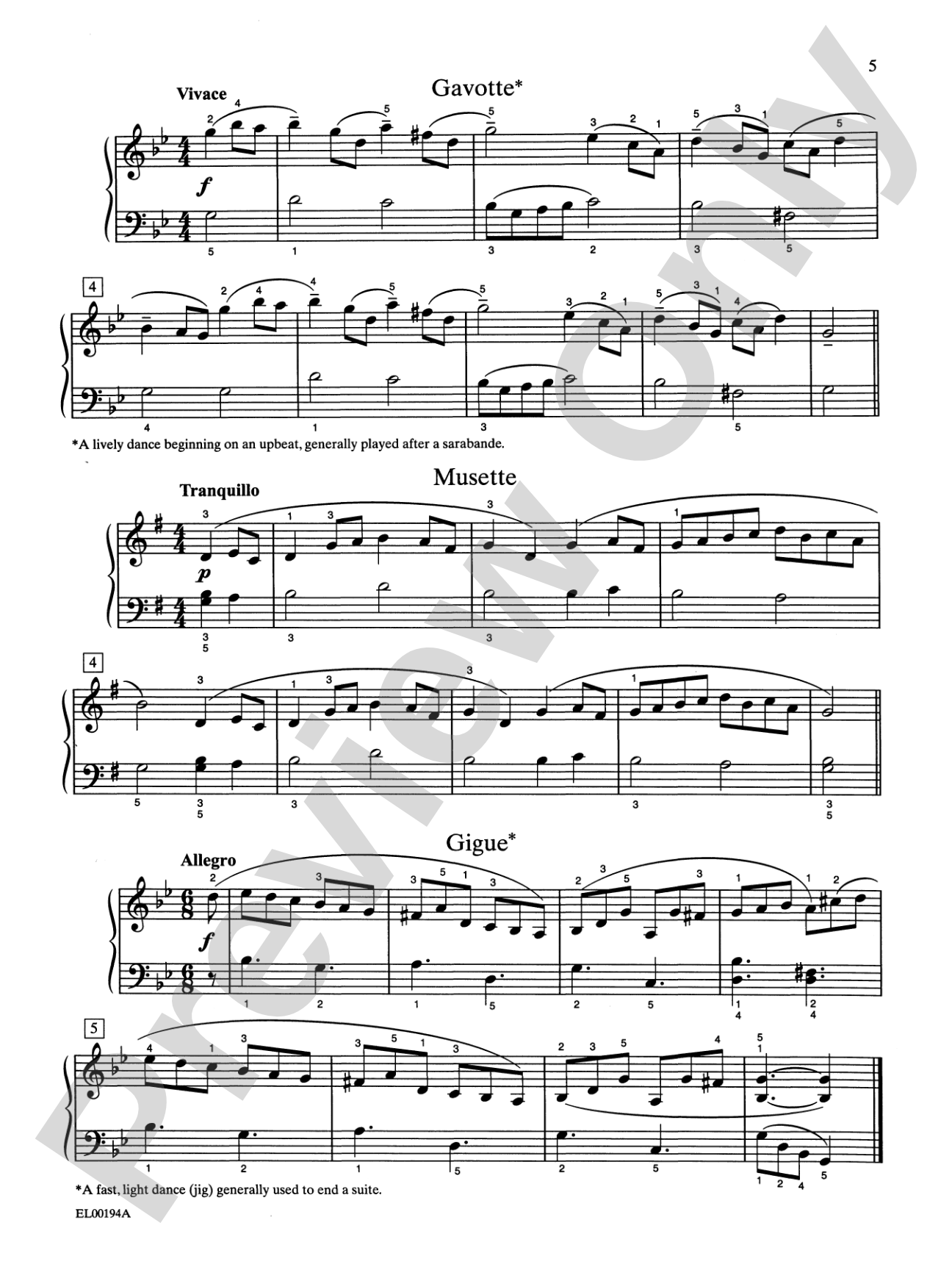
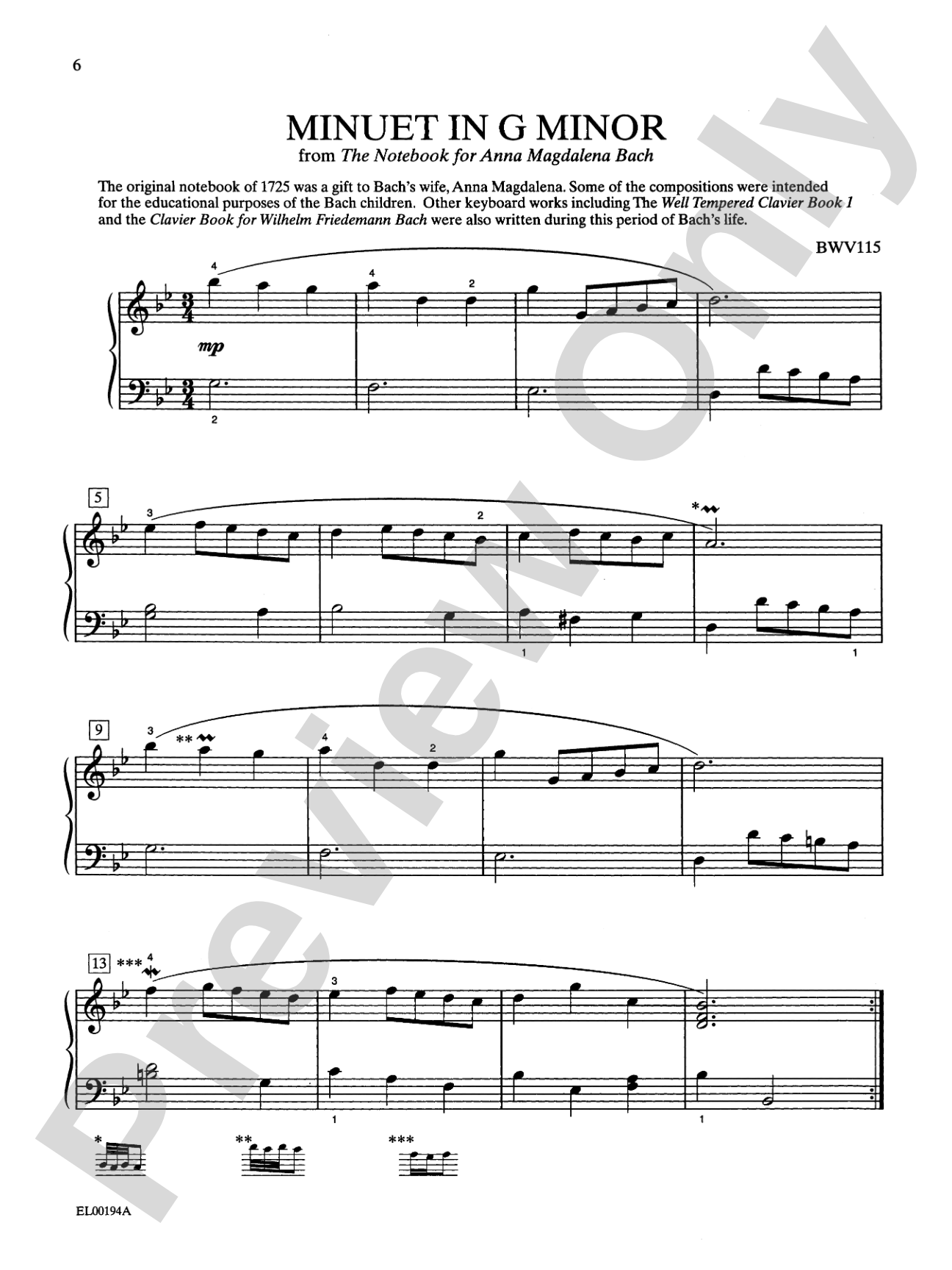
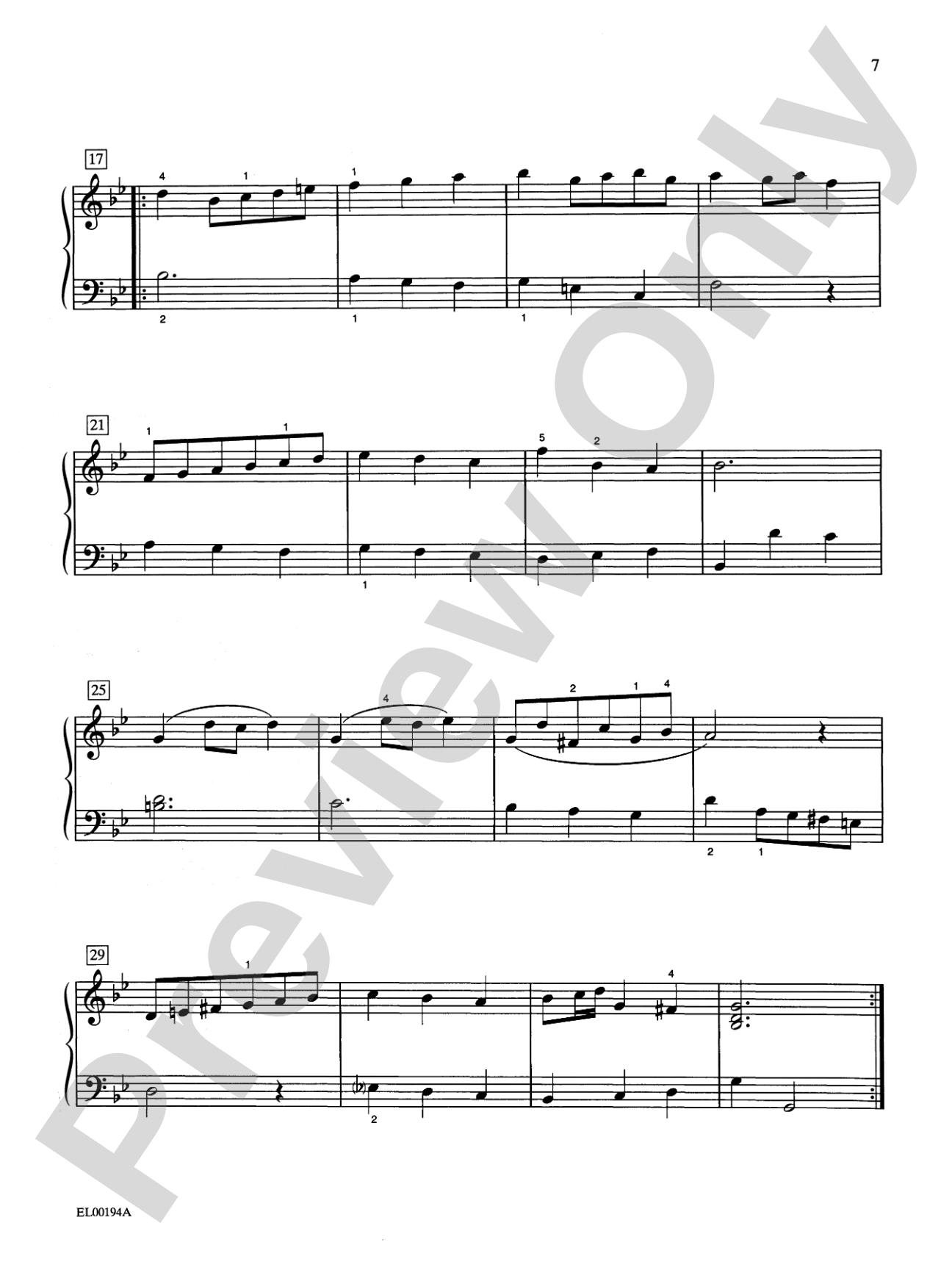
Bach-Schaum, Book Two: Based on Events and Episodes of Bach's Life: Piano
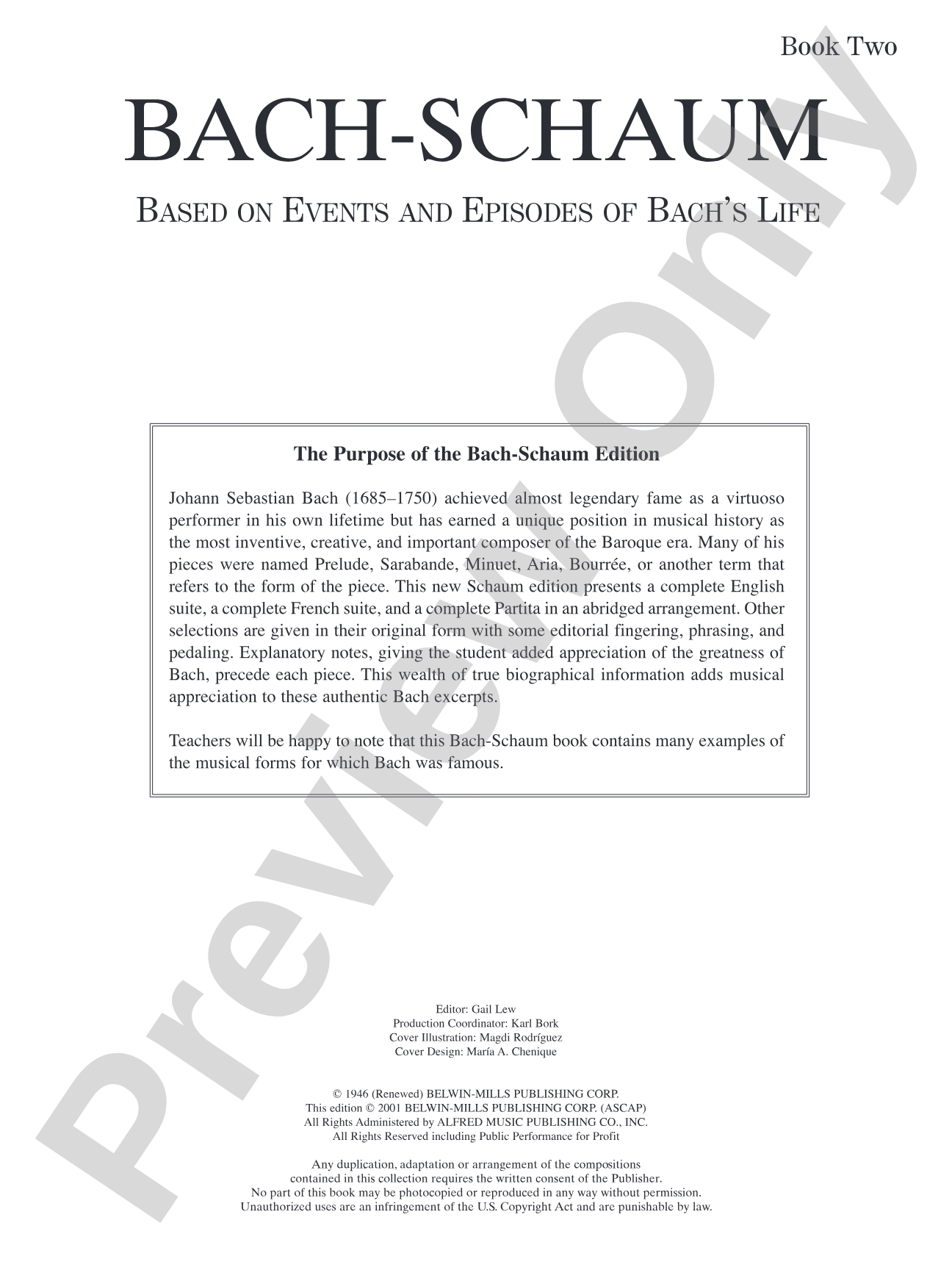
Based on Events and Episodes of Bach's Life
By Johann Sebastian Bach / arr. John W. Schaum
Item: 00-PB-0001890
Pickup currently not available
Related Items
Bach-Schaum, Book Two: Piano Book |
$6.95
|
View |
Description
Bach-Schaum, Book Two: Based on Events and Episodes of Bach's Life: Piano isn't in MakeMusic Cloud just yet...but it could be. Let us know you'd like to see it, and you'll help shape what comes next. In the meantime, start a free trial and dive into thousands of interactive titles your students can play along with today.
Tell us you want it.
Explore everything that's ready to play right now.
Sample Audio
Sample Video
Additional Details
More about this title
About the Composer: Johann Sebastian Bach
Johann Sebastian Bach (1685-1750) shaped Western music so fundamentally that centuries of composers learned by studying his work. A master of counterpoint, harmonic innovation, and structural architecture, Bach synthesized German, Italian, and French musical traditions into a unified language of extraordinary depth. His technical mastery never overshadowed his emotional directness; even his most complex fugues communicate with clarity and purpose.
For music educators, Bach represents both a summit and a gateway. His keyboard works in particular serve as the bridge between early repertoire and the concert hall, offering students a direct path to understanding how harmony, voice leading, and melodic logic function at the highest level. Teaching Bach teaches music itself.
Why we love this
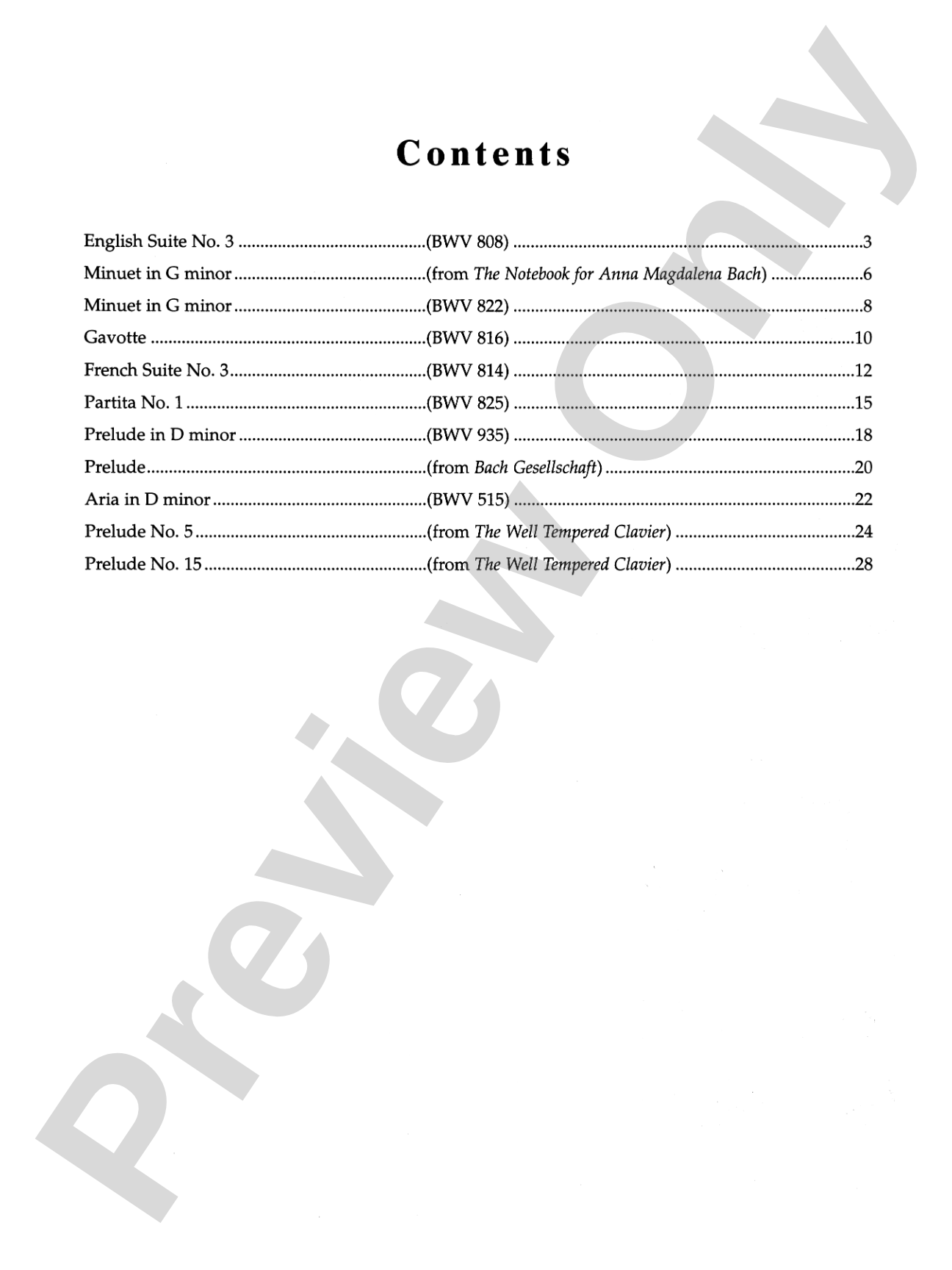
Schaum's curation here respects Bach's original writing while making it genuinely playable for advancing students. Pairing complete suites with shorter works from the Notebooks and Well-Tempered Clavier creates a natural arc from accessible to substantial, letting students experience Bach's range without overwhelming them. The biographical framing adds purpose; students aren't just learning pieces, they're touching the life of the composer who defined keyboard music.
What to expect
These pieces carry the orderliness and mathematical elegance of the Baroque, yet Bach never lets structure dominate emotion. You encounter moments of crystalline simplicity alongside passages of rich counterpoint. There's a formality to the dances and suites, but also an undeniable humanity in the smaller character pieces and Notebook works.
Who it's for
Intermediate to early advanced pianists (roughly Schaum level 4-5) who are ready to engage with Baroque counterpoint and formal structures. This collection also serves teachers seeking to transition students from method books into canonical repertoire while maintaining pedagogical coherence.
How to get the most out of it
- Approach the Minuet in G minor with clarity in the melody; let the accompaniment stay understated so listeners hear the shape of the line first.
- In the preludes from the Well-Tempered Clavier, establish your harmonic anchor early. Students often rush through the figured progressions; take time to feel each chord shift.
- Balance the dance rhythms in the suites by keeping the beat steady underneath; Baroque dance forms rely on rhythmic precision to convey their character.
- Distinguish texture between movements within each suite. If one movement is busy, the next should breathe more openly.
How to use it
Frame a recital segment around the biographical thread: open with a shorter, more familiar piece (the Minuet), then progress through one of the complete suites to show Bach's architectural thinking. The shorter preludes and arias work beautifully as solo items in a mixed program, or pair them with later composers working in Baroque forms to illustrate the tradition's influence.
Skills your students will build
- Two and three-voice counterpoint
- Harmonic analysis using figured bass principles
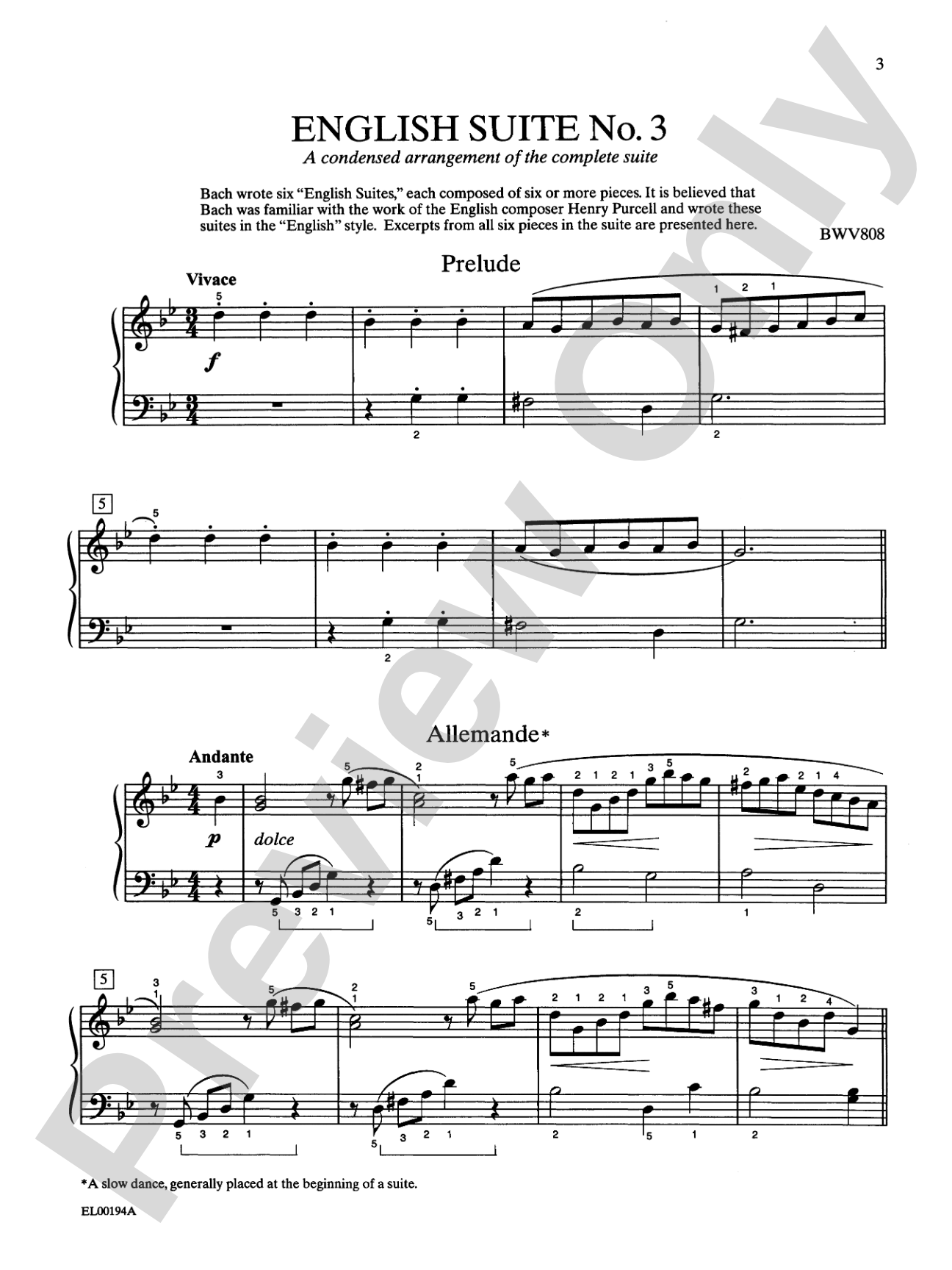
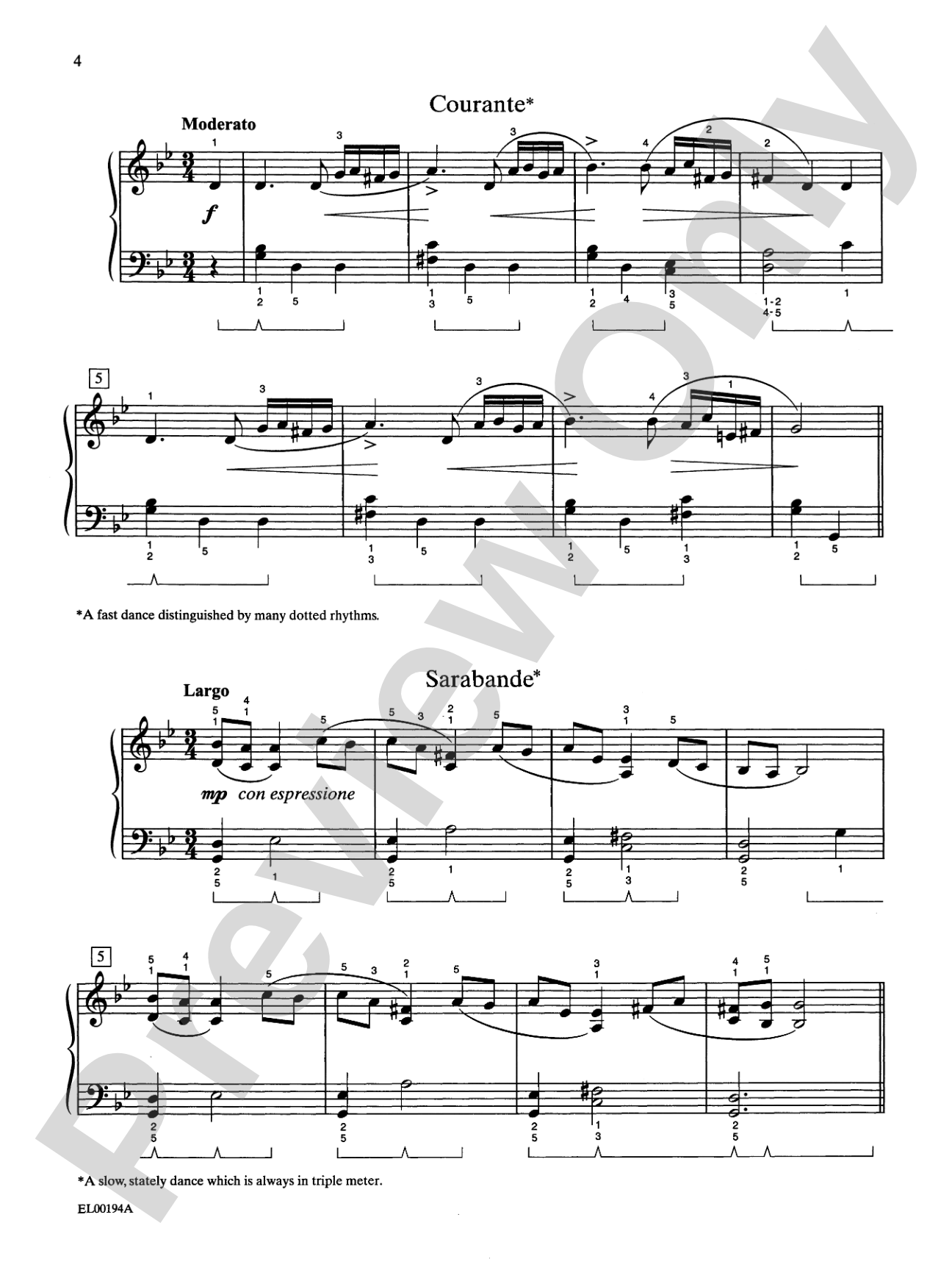
- Suite form (allemande, courante, sarabande, gigue structures)
- Partita and French suite organization
- Baroque ornamentation and articulation
- Voice independence and maintaining melodic lines across hand positions
- Pedal control for clarity in polyphonic texture