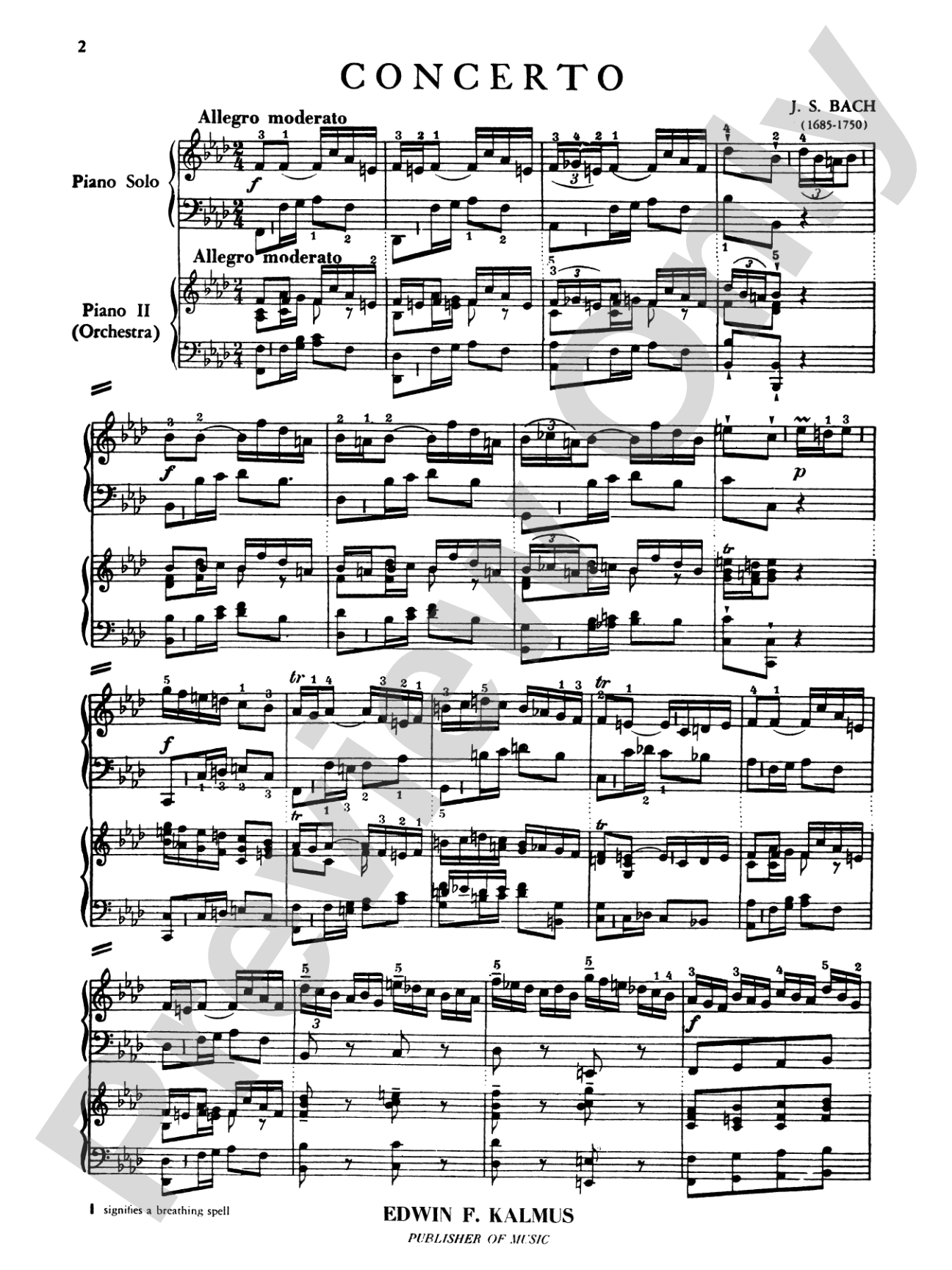
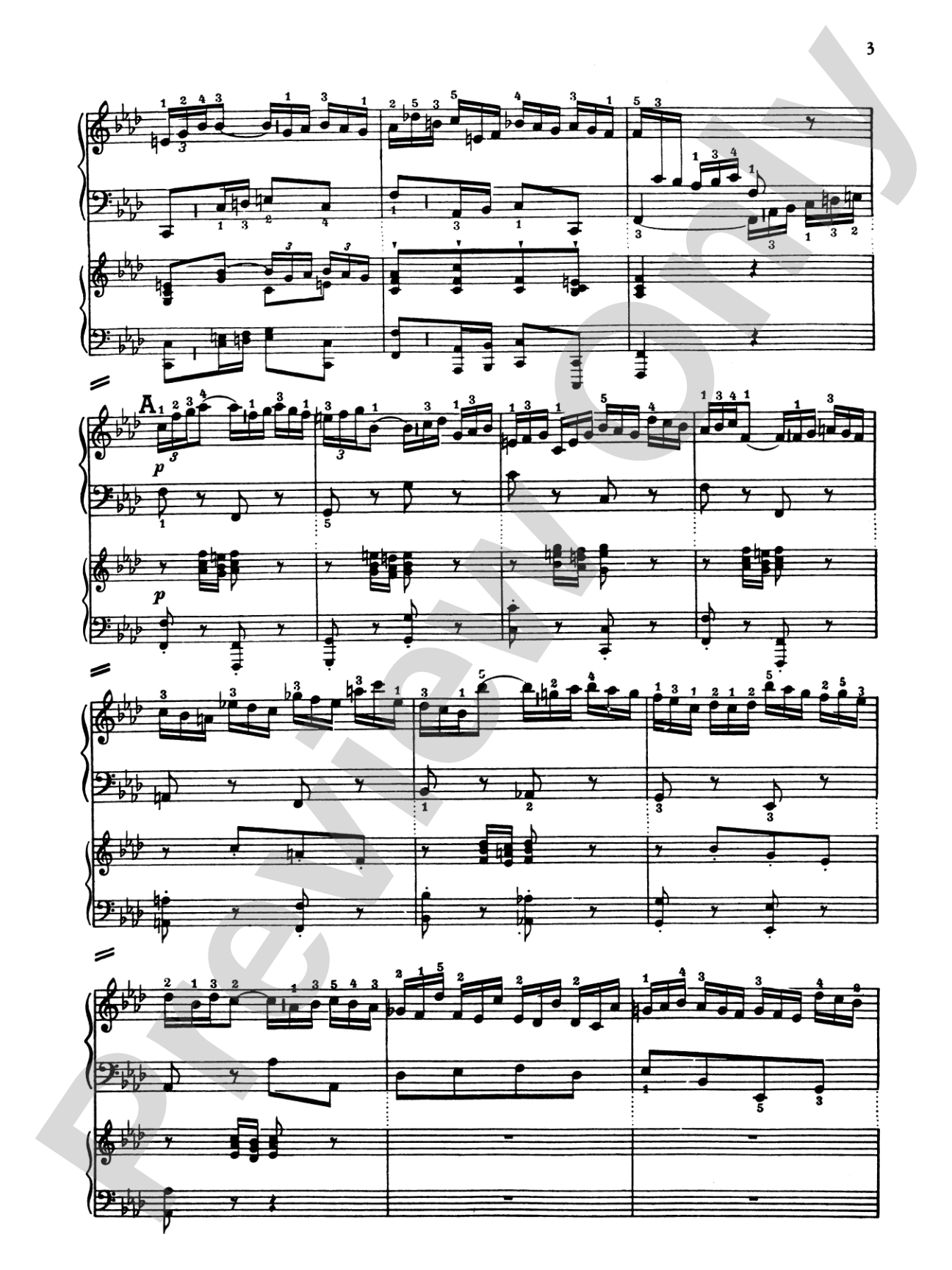
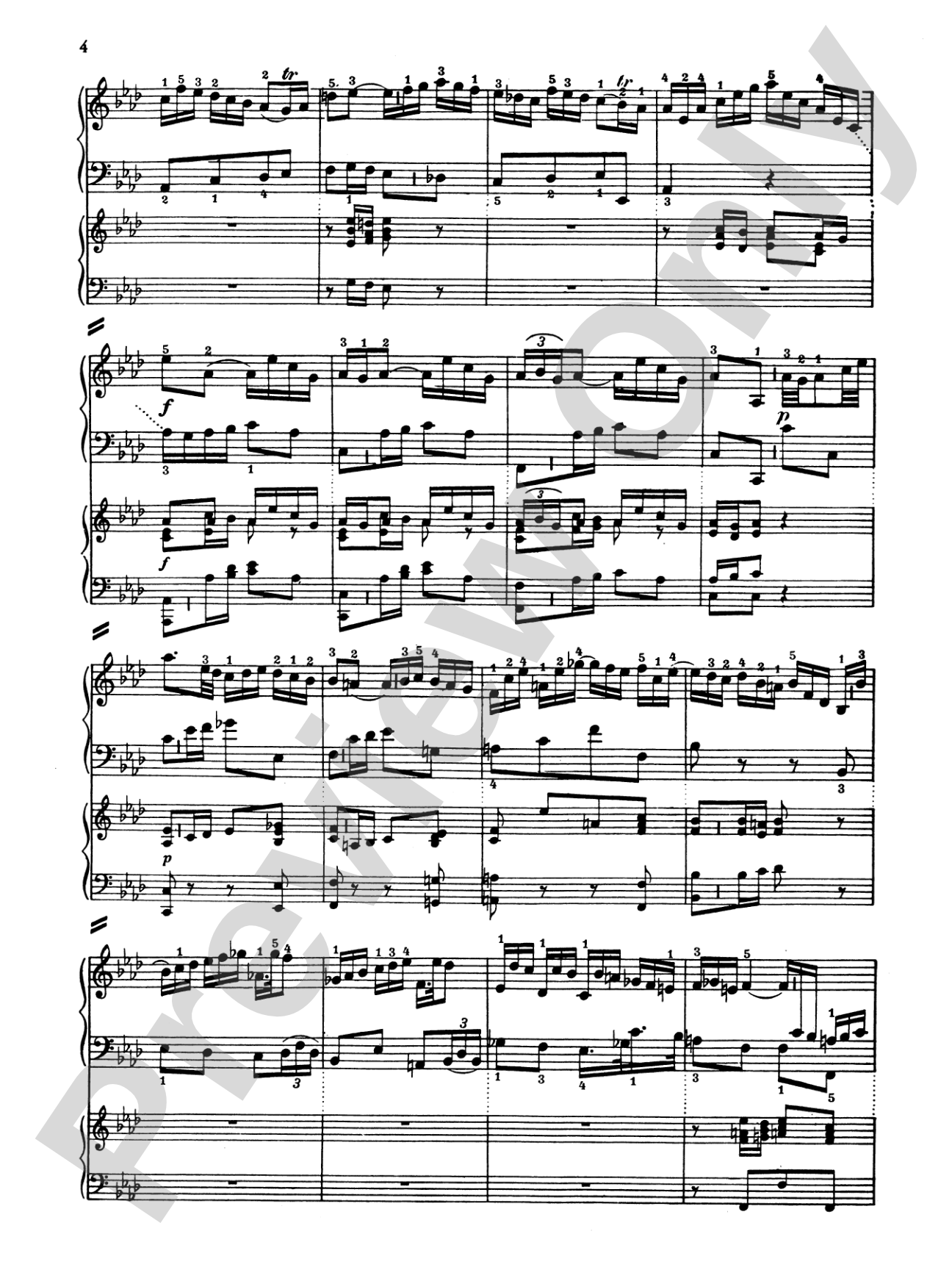
Bach: Piano Concerto in F Minor Sheet Music Preview

Bach: Piano Concerto in F Minor

By Johann Sebastian Bach

Level: Advanced

Item: 00-PC-0004277

Digital Download
$8.95
Description
Expertly arranged Piano Duet by Johann Sebastian Bach from the Kalmus Edition series. This Advanced Piano Duet (2 Pianos, 4 Hands) is from the Baroque era. 2 copies are required for performance.

Don't just read it, hear it, play along with it, and watch your students grow with it. In MakeMusic Cloud, Bach: Piano Concerto in F Minor comes alive with professional accompaniment, adjustable tempo, and built-in practice tools that turn solo practice into real progress.

Sample Audio
No sample audio found.
Sample Video
Additional Details
Series: Kalmus Edition
Publisher: Alfred Music
Page Count: 20
SKU: 00-PC-0004277

More about this title

About the Composer: Johann Sebastian Bach

Johann Sebastian Bach (1685-1750) stands as one of history's most prolific and inventive composers, creating works across every major genre of his era except opera. His mastery of counterpoint, harmonic innovation, and structural clarity established foundations that would influence Western music for centuries. Bach served in various capacities throughout his career, most notably as Kapellmeister at the court of Köthen and later as Cantor at St. Thomas Church in Leipzig, positions that drove him to compose constantly for both sacred and secular contexts.

Bach's keyboard works occupy a central place in the repertoire of any serious pianist. His compositions for keyboard display technical brilliance alongside intellectual rigor, demanding performers engage with multiple independent lines simultaneously while maintaining musical coherence. For educators and students, Bach's music remains essential not merely as historical artifact but as a living laboratory for understanding voice leading, harmonic function, and the expressive potential of polyphonic writing.

Why we love this

This arrangement gives advanced pianists access to one of the great Baroque concerto forms without requiring an orchestra. The two-piano setting preserves the brilliance of Bach's original keyboard writing while creating an intimate yet vibrant collaborative experience that holds audience attention through sheer musical substance.

What to expect

The F minor tonality lends gravity and introspection to Bach's writing, even as the keyboard figurations sparkle with Baroque energy. Trading of motifs between the two pianos creates conversation and forward momentum, while moments of full harmonic density showcase the richness two instruments can achieve when moving as a unified ensemble.

Who it's for

Advanced piano duoists preparing for recitals, competitions, or ensemble concerts will find this arrangement demanding and rewarding. The piece suits pianists with solid technique, mature musicality, and the collaborative rapport necessary to balance two independent but interlocking keyboard parts.

How to get the most out of it

  • Balance the outer parts clearly so melodic lines emerge above the harmonic foundation; resist the urge to color every note equally.
  • Work out the rhythmic relationships between the two pianos at a slow tempo first, establishing grid-like precision before adding interpretive nuance.
  • Shape the Baroque phrasing in long arcs rather than punctuating at bar lines; let harmonic rhythm guide your breathing and rubato.
  • Coordinate dynamics across both instruments so that one piano's inner voices don't mask the other's primary melodic material.

How to use it

Feature this as a centerpiece of a recital devoted to Baroque keyboard literature, pairing it with Bach's solo harpsichord works or other composers' keyboard concertos of the period. It also works well as an opener or closer on mixed repertoire concerts where the musical architecture and clarity of Bach's voice leading provide both gravitas and accessibility.

Skills your students will build

  • Executing rapid scalar and arpeggiated figurations with evenness and clarity
  • Sustaining independent melodic and harmonic voices across both hands and across two instruments
  • Coordinating ensemble balance and timing while maintaining individual pianistic control
  • Interpreting Baroque phrasing and articulation conventions in keyboard writing
  • Reading and performing polyphonic textures where three or more lines move simultaneously

You May Also Like