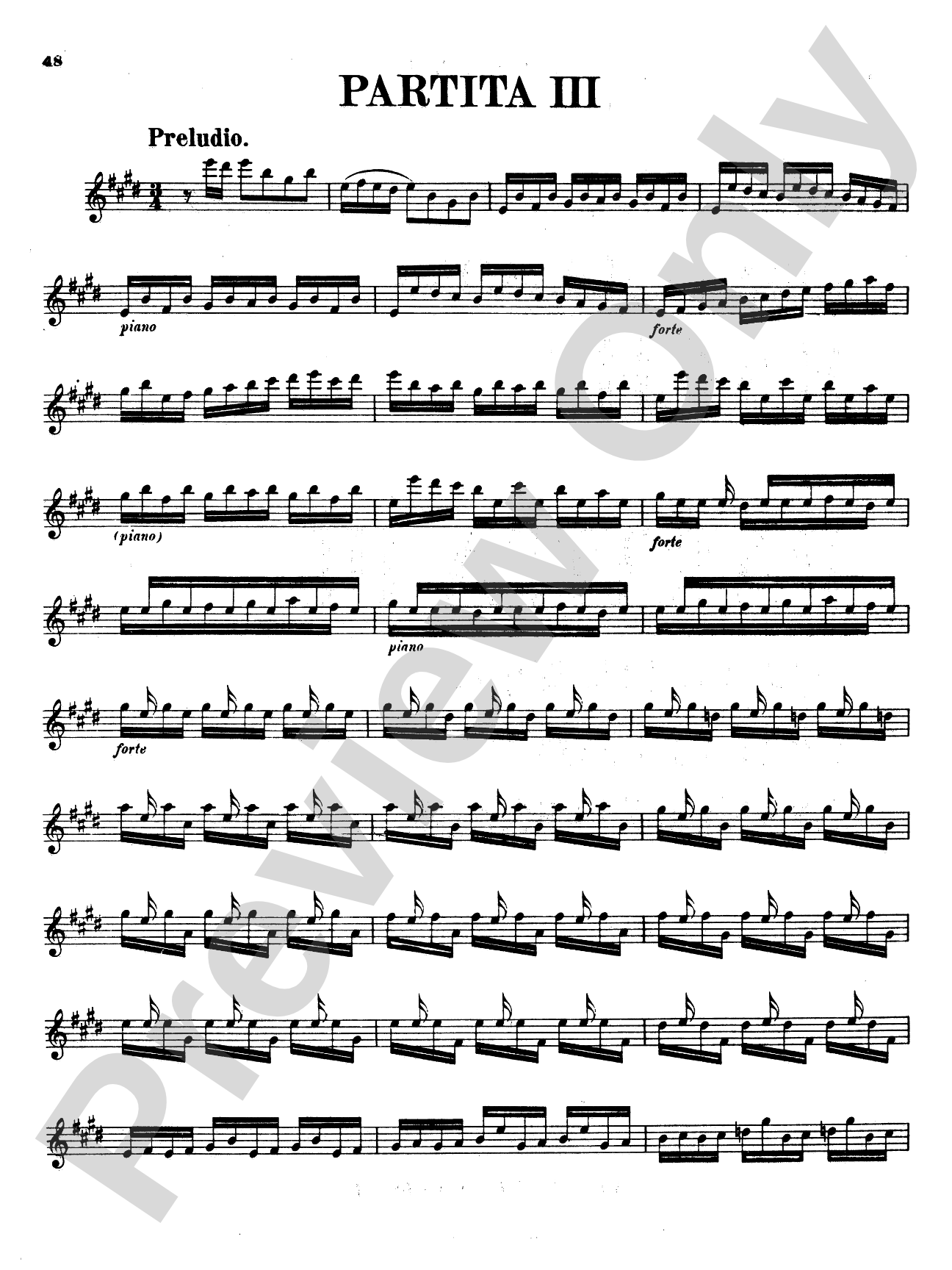
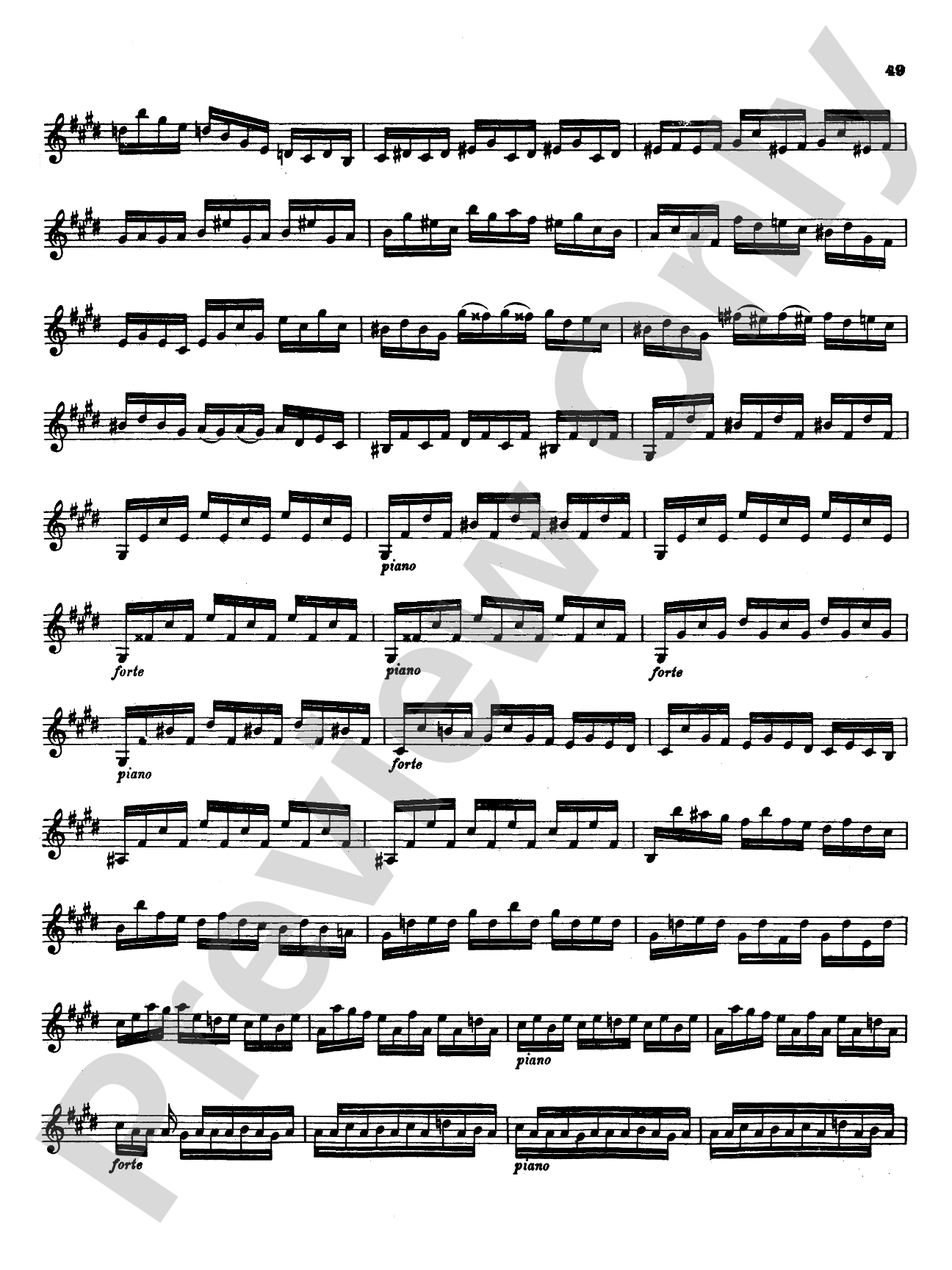
Bach: Partita III, in E Major (with added Piano parts by Ida Elkan) Sheet Music Preview

Bach: Partita III, in E Major (with added Piano parts by Ida Elkan)

By Johann Sebastian Bach / with added Piano parts by Ida Elkan

Item: 00-PC-0004258

Digital Download
$4.99
Description
A Violin solo with Piano Accompaniment composed by Johann Sebastian Bach, with added Piano parts by Ida Elkan.

Don't just read it, hear it, play along with it, and watch your students grow with it. In MakeMusic Cloud, Bach: Partita III, in E Major (with added Piano parts by Ida Elkan) comes alive with professional accompaniment, adjustable tempo, and built-in practice tools that turn solo practice into real progress.

Sample Audio
No sample audio found.
Sample Video
Additional Details
Series: Kalmus Edition
Publisher: Alfred Music
Page Count: 40
SKU: 00-PC-0004258

More about this title

About the Composer: Johann Sebastian Bach

Johann Sebastian Bach (1685-1750) stands as one of history's most influential composers, whose mastery of counterpoint and harmonic invention shaped centuries of music that followed. His works span nearly every genre available in his era, from intimate solo pieces to vast sacred compositions, all characterized by mathematical precision married to profound emotional depth. Bach's six unaccompanied violin partitas and sonatas represent the pinnacle of solo violin writing, establishing technical and musical standards that remain central to the repertoire.

Why we love this

This partita demands and develops a violinist's complete technical arsenal while remaining deeply musical rather than merely virtuosic. Ida Elkan's piano accompaniment provides harmonic grounding and textural richness that honors Bach's original voice while making this treasured work accessible to violinists at the intermediate-advanced level who might find the unaccompanied version beyond their current reach.

What to expect

The E Major Partita unfolds with luminous brightness and intricate forward momentum, weaving dance rhythms and fugal passages into a structure that feels simultaneously inevitable and surprising. The violin must soar and articulate with clarity while the piano's added parts create an elegant harmonic foundation, giving the work a sense of courtly grace without losing the intellectual rigor for which Bach is revered.

Who it's for

Violinists at the intermediate-advanced level preparing for competitions, festivals, or recitals who want to engage with Bach's uncompromising compositional standards without the technical demands of playing completely unaccompanied. This edition serves students ready to explore the Baroque masters and teachers seeking repertoire that combines musical substance with reasonable accessibility.

How to get the most out of it

  • Shape the melodic lines with forward motion and clear phrasing, allowing the piano to support rather than interrupt your violin voice.
  • Pay close attention to Bach's motivic structure within each movement; repeating material with subtle variation becomes more apparent when you hear the harmonic context beneath it.
  • Balance technical passagework with expressive clarity by practicing slowly enough to hear every note distinctly, then gradually building tempo without sacrificing articulation or tone quality.
  • Use the piano part to understand the harmonic progression and your place within it, which clarifies otherwise ambiguous passages in the violin line.

How to use it

Feature this in a recital exploring Baroque solo repertoire, pairing it with other Bach works or contemporary chamber music that highlights similar contrapuntal thinking. The partita's substantial length and technical demands make it suitable as a competition submission or as a centerpiece demonstrating a student's mastery of classical violin technique and musical interpretation.

Skills your students will build

  • Baroque phrasing and articulation conventions
  • Reading and executing complex rhythmic figures
  • Double stops and hand position shifts across multiple registers
  • Contrapuntal independence and motivic development
  • Collaboration with piano accompaniment in a structured harmonic context
  • Stamina and technical control across extended passages

You May Also Like