Bach: Notebook for Anna Magdalena Bach Sheet Music Preview

Bach: Notebook for Anna Magdalena Bach

By Johann Sebastian Bach

Item: 00-PC-0003773

Digital Download
$0.99
Description
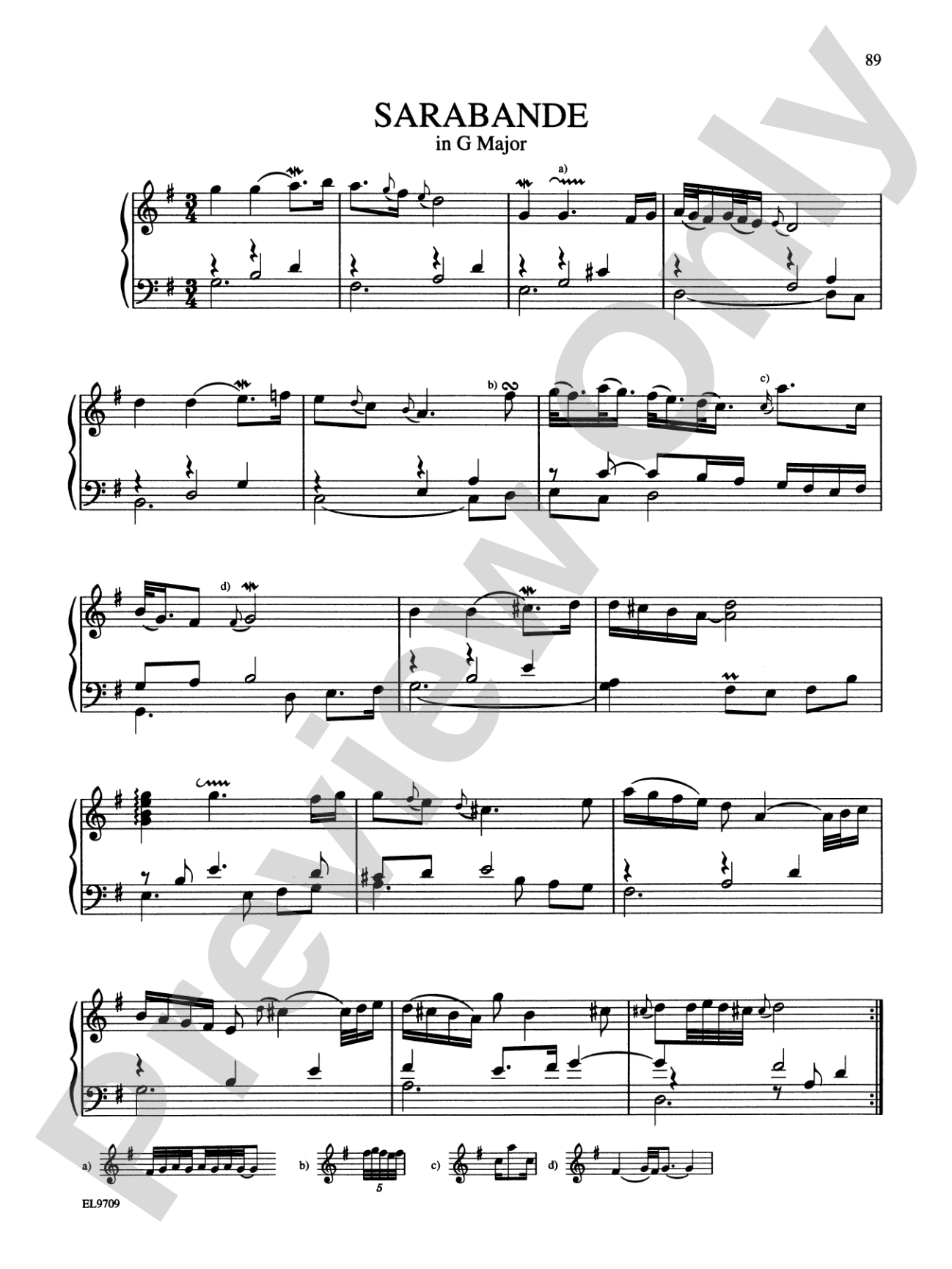
Here's a newly engraved edition of this famous book used by teachers and students for centuries. Includes Arias, Chorales, Marches, Menuets, Partitas, Polonaises, Suites, a Rondeau, Musette, Sarabande, Prelude, and several pieces for voice. This edition, which follows the Callwey edition of 1935, contains the music J. S. Bach presented to his wife, Anna Magdalena, in an ornate book in 1725 as a birthday present. 140 pages.

Don't just read it, hear it, play along with it, and watch your students grow with it. In MakeMusic Cloud, Bach: Notebook for Anna Magdalena Bach comes alive with professional accompaniment, adjustable tempo, and built-in practice tools that turn solo practice into real progress.

Sample Audio
No sample audio found.
Sample Video
Additional Details
Series: Kalmus Edition
Publisher: Alfred Music
Page Count: 140
SKU: 00-PC-0003773

More about this title

About the Composer: Johann Sebastian Bach

Johann Sebastian Bach (1685-1750) stands as one of history's most consequential composers, whose mastery of counterpoint, harmonic language, and structural architecture shaped Western music for centuries. His output spans every major genre of his era except opera, from sacred cantatas and passions to instrumental works that defined the possibilities of the keyboard and ensemble writing.

Why we love this

This collection offers students direct access to Bach's intimate gift to his wife, a book that has served as a foundational teaching text since the 18th century. The range of forms and difficulty levels means teachers can assign pieces from early-intermediate onward, making it possible to grow with a single, authoritative source rather than patchworking from multiple editions.

What to expect

This music breathes with the elegance of 18th-century salon life: intimate dances, ceremonial marches, and songlike arias that unfold with natural grace. The harmonic language is both forward-looking and rooted in tradition, offering pianists a sense of historical depth without excessive technical demand.

Who it's for

Students progressing from early-intermediate through advanced amateur pianist levels will find repertoire suited to their development. Teachers building comprehensive keyboard technique and music literacy will use this collection repeatedly across multiple seasons and student cohorts.

How to get the most out of it

  • Pay attention to voice leading across all four parts, even in simpler pieces. Bach's inner voices often contain melodic interest that shapes the harmonic journey.
  • Treat the ornaments as structural markers, not decorative add-ons. Each turn, trill, or grace note clarifies phrase architecture and directs the listener's ear.
  • Balance texture by bringing out the top voice while allowing lower voices to support rather than disappear. Many pieces benefit from subtle dynamic shaping that honors the independence of each line.

How to use it

Select individual pieces for student recitals at various levels, or program a suite of selections as an intermission set in a larger concert. The collection's pedagogical reputation makes it an excellent choice for demonstrating period style and keyboard proficiency to audiences familiar with classical training standards.

Skills your students will build

  • Reading Baroque notation and ornamentation symbols
  • Four-part voice leading and harmonic analysis
  • Articulation and phrasing across dance forms (menuet, polonaise, sarabande)
  • Touch control for clarity in contrapuntal textures
  • Interpretation of unfamiliar historical keyboard idioms

You May Also Like