
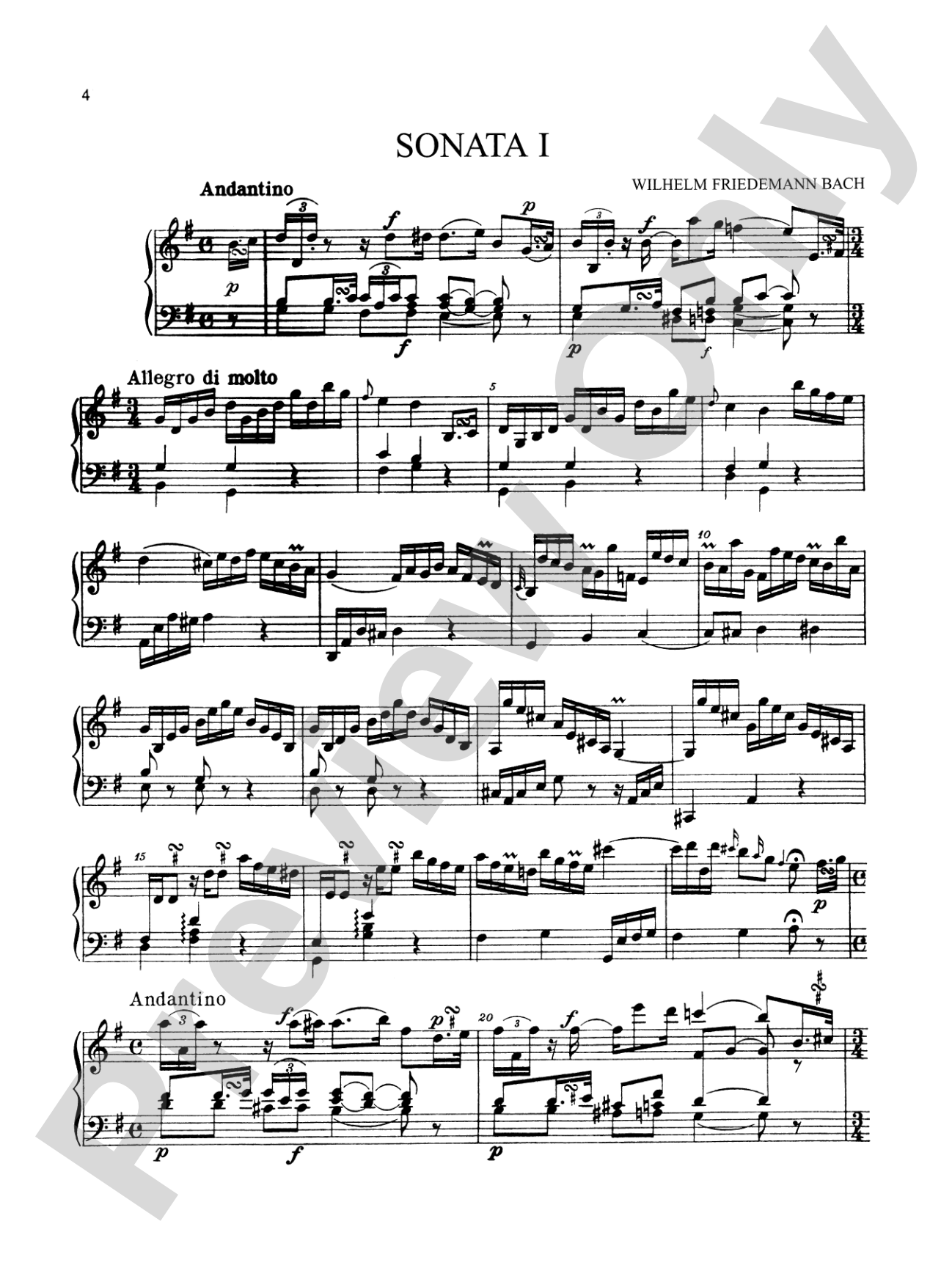
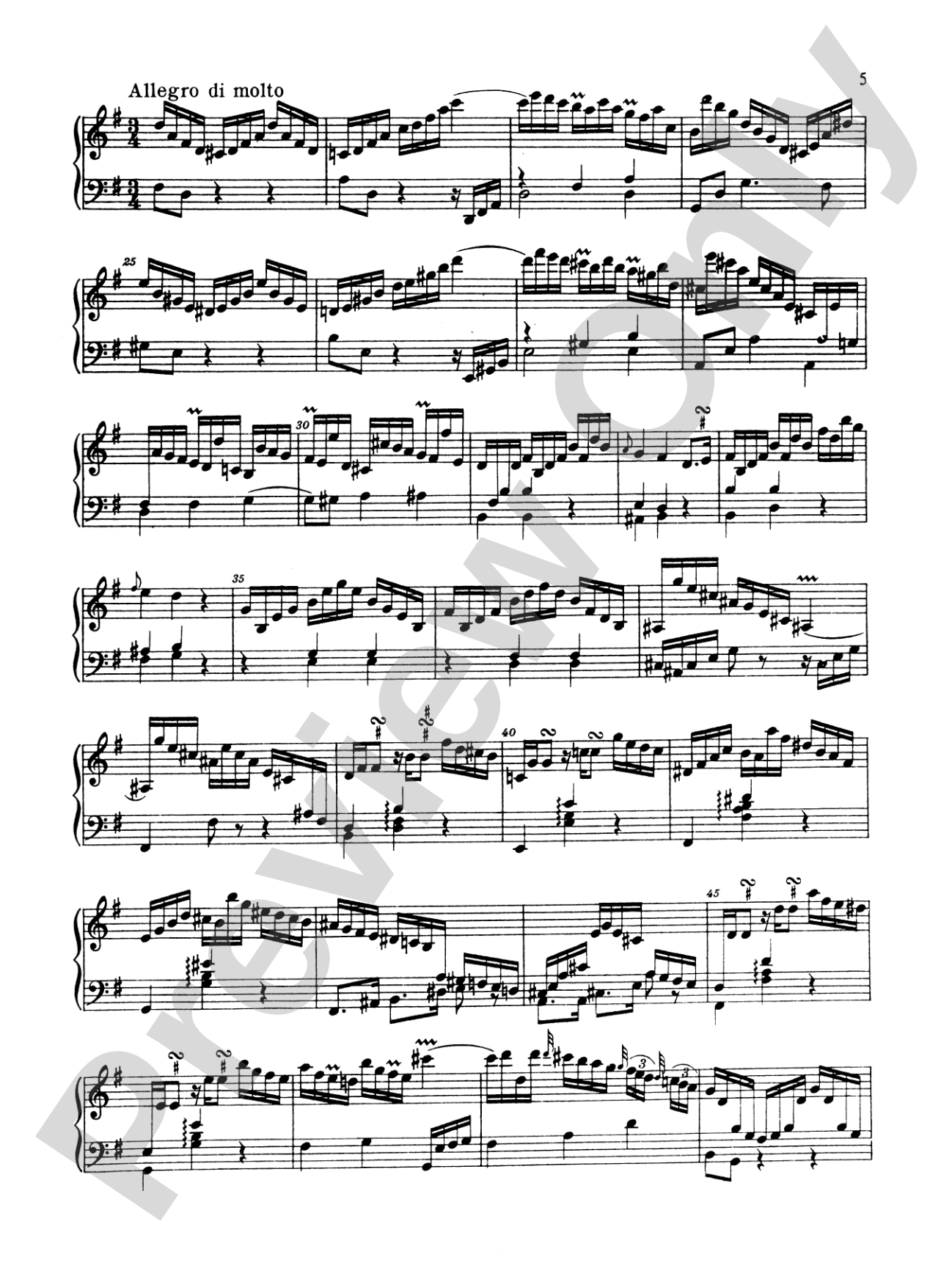

Bach: Nine Sonatas
By Wilhelm Friedemann Bach
Item: 00-PC-0002870
$0.99
Pickup currently not available
Description
Wilhelm Friedemann Bach (1710--1784) was the eldest son of Johann Sebastian Bach and was a composer and performing musician. He was acknowledged in his day as an excellent organist, improviser and composer. Includes Sonatas: No. 1 in G Major * No. 2 in A Major * No. 3 in B-flat Major * No. 4 in D Major * No. 5 in D Major * No. 6 in E-flat Major * No. 7 in C Major * No. 8 in C Major * No. 9 in F Major.


Don't just read it, hear it, play along with it, and watch your students grow with it. In MakeMusic Cloud, Bach: Nine Sonatas comes alive with professional accompaniment, adjustable tempo, and built-in practice tools that turn solo practice into real progress.
Open in the Player
Jump straight in and assign it today.
Start Your Free Trial
Open this title and explore the full library in minutes.
Sample Audio
No sample audio found.
Sample Video
No sample videos found.
Additional Details
Series:
Kalmus Edition
Publisher:
Alfred Music
Page Count:
76
SKU:
00-PC-0002870
More about this title
About the Composer: Wilhelm Friedemann Bach
Wilhelm Friedemann Bach (1710–1784) occupied a singular position in music history as both the direct heir to his father's keyboard mastery and a composer who charted his own path. He was celebrated during his lifetime as an exceptional organist and improviser, with contemporaries noting his technical brilliance and imaginative command of the instrument. His nine sonatas represent a bridge between the contrapuntal rigor of the Baroque and the emerging galant sensibility of the early Classical era.
Though overshadowed in later centuries by his father's towering reputation, Wilhelm Friedemann's sonatas reward serious study for their harmonic sophistication, elegant phrasing, and virtuosic keyboard writing. His music reveals a composer fully trained in Bach family traditions yet unafraid to embrace stylistic innovations of his generation. These works remain essential repertoire for pianists seeking authentic voices from the transitional period between Baroque and Classical idioms.
Why we love this
This collection offers pianists direct access to genuinely rewarding works that deserve far more performance time than they typically receive. The nine sonatas span a range of keys and moods, making them ideal for recital programming, student repertoire exploration, or simply understanding what keyboard composition sounded like in the hands of an accomplished mid-18th-century master who had something distinct to say.
What to expect
These sonatas inhabit a distinct world between worlds: they possess the harmonic sophistication and contrapuntal awareness of the Baroque, yet they move with the grace and periodic phrasing that define the galant style. Playing through them reveals a composer confident in his craft, unafraid of unexpected modulations or dense textures, yet equally capable of writing passages of crystalline clarity and melodic elegance.
Who it's for
This book serves intermediate to advanced pianists who are ready to move beyond well-worn Classical sonata repertoire into music that carries genuine historical weight and compositional craftsmanship. It appeals to students preparing undergraduate auditions, recital programs, or graduate-level keyboard studies, as well as teachers seeking substantive works that illuminate keyboard history between Bach and Mozart.
How to get the most out of it
- Treat the contrapuntal voices with clarity; these sonatas inherit their father's concern for independent line writing, and each voice benefits from distinct color and articulation even within the homophonic passages.
- Allow the harmonic language room to breathe. Wilhelm Friedemann's chromatic voice-leading and unexpected key relationships are part of his voice, not obstacles to push through.
- Use the key variety strategically when programming multiple sonatas. Alternating between major and minor, different tonal centers, and varied tempos creates a compelling arc across the collection.
- Pay attention to the printed dynamics and phrasing marks; they reflect period style and often guide you toward authentic articulation choices rather than relying solely on Romantic-era conventions.
How to use it
Individual sonatas work beautifully as standalone recital pieces, particularly when paired with works by CPE Bach or early Haydn to contextualize the harmonic language. Alternatively, program two or three contrasting sonatas from this collection in sequence to create a mini-retrospective of Wilhelm Friedemann's keyboard aesthetic within a larger concert structure.
Skills your students will build
- Voice independence in keyboard texture and pedaling choices
- Interpretation of chromatic harmony and unexpected key relationships
- Period-appropriate ornamentation and articulation in pre-Classical keyboard music
- Structural navigation across multiple movements and tonal centers
- Authorial style recognition within the Bach family compositional tradition