

Bach: Goldberg Variations
By Johann Sebastian Bach / ed. Hans Bischoff
Item: 00-PC-0004341
$8.95
Pickup currently not available
Description
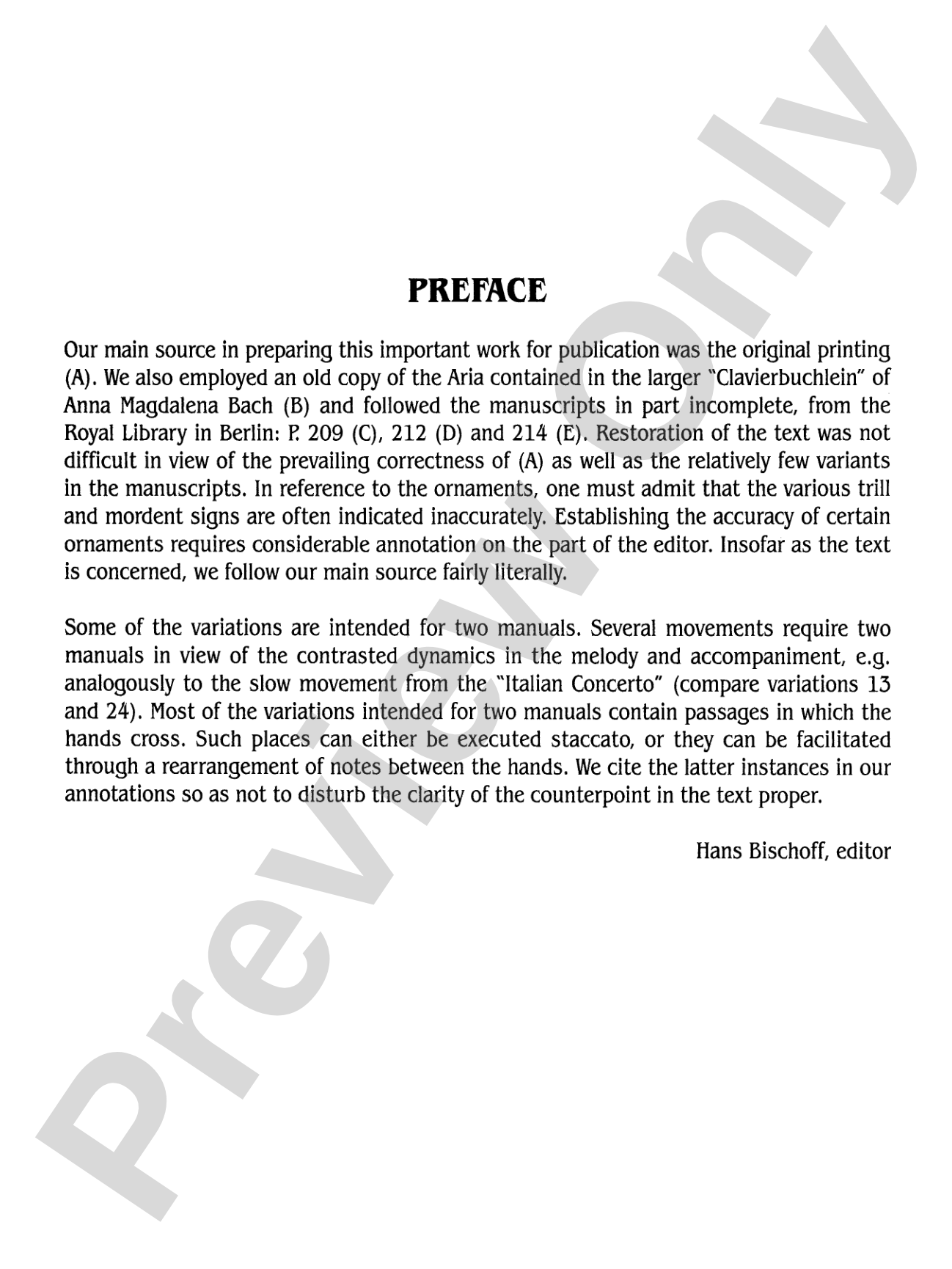
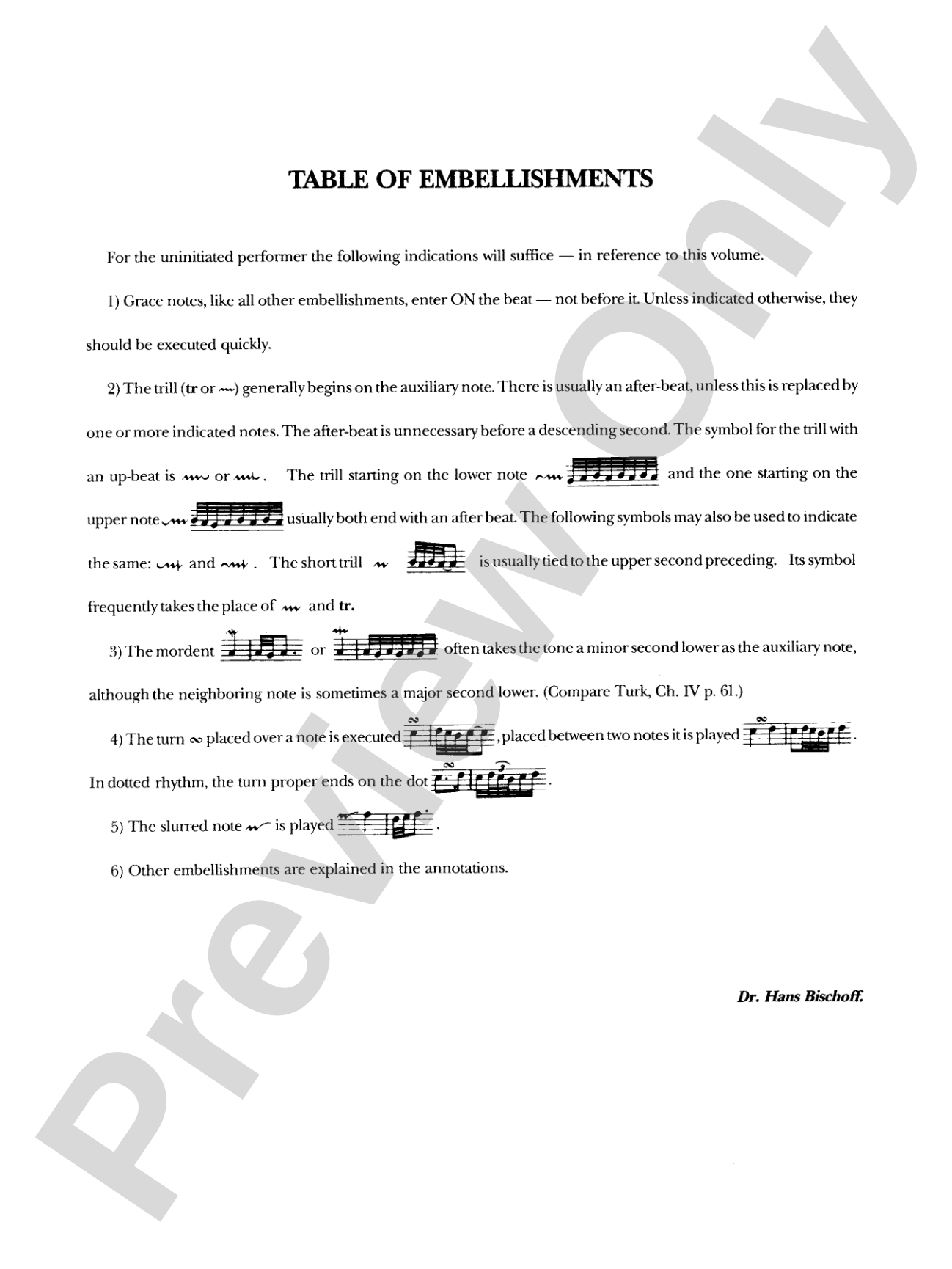
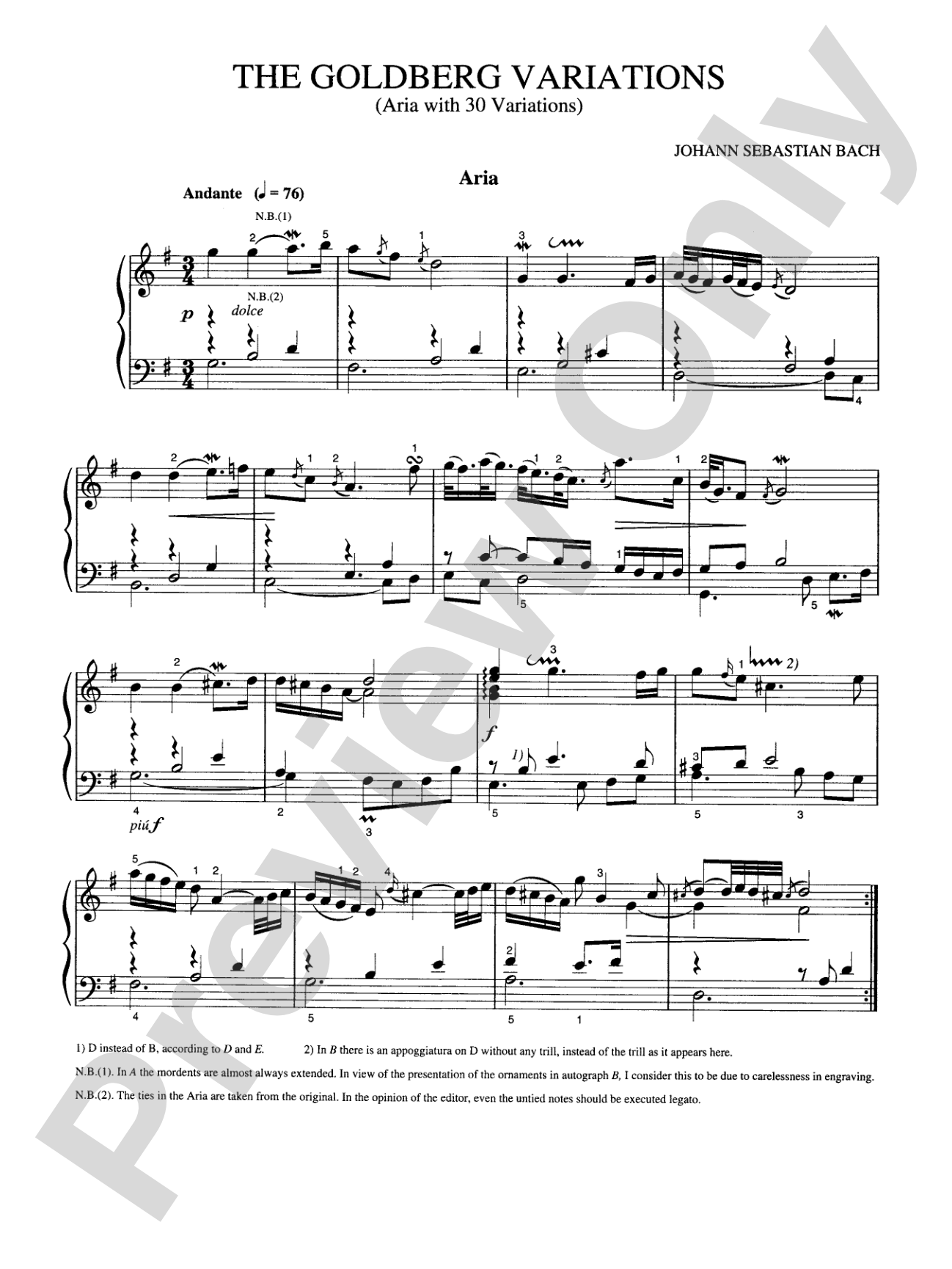
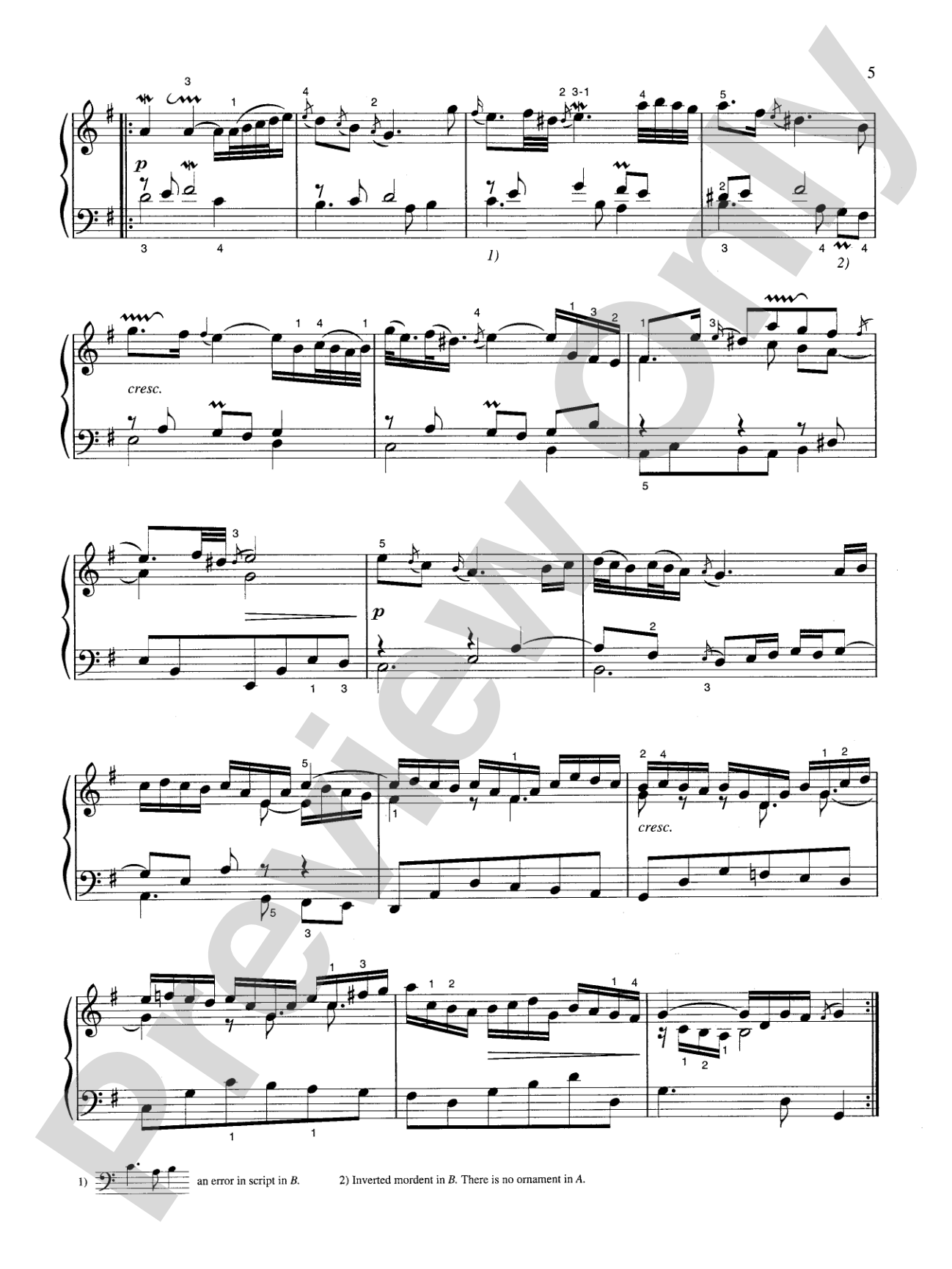
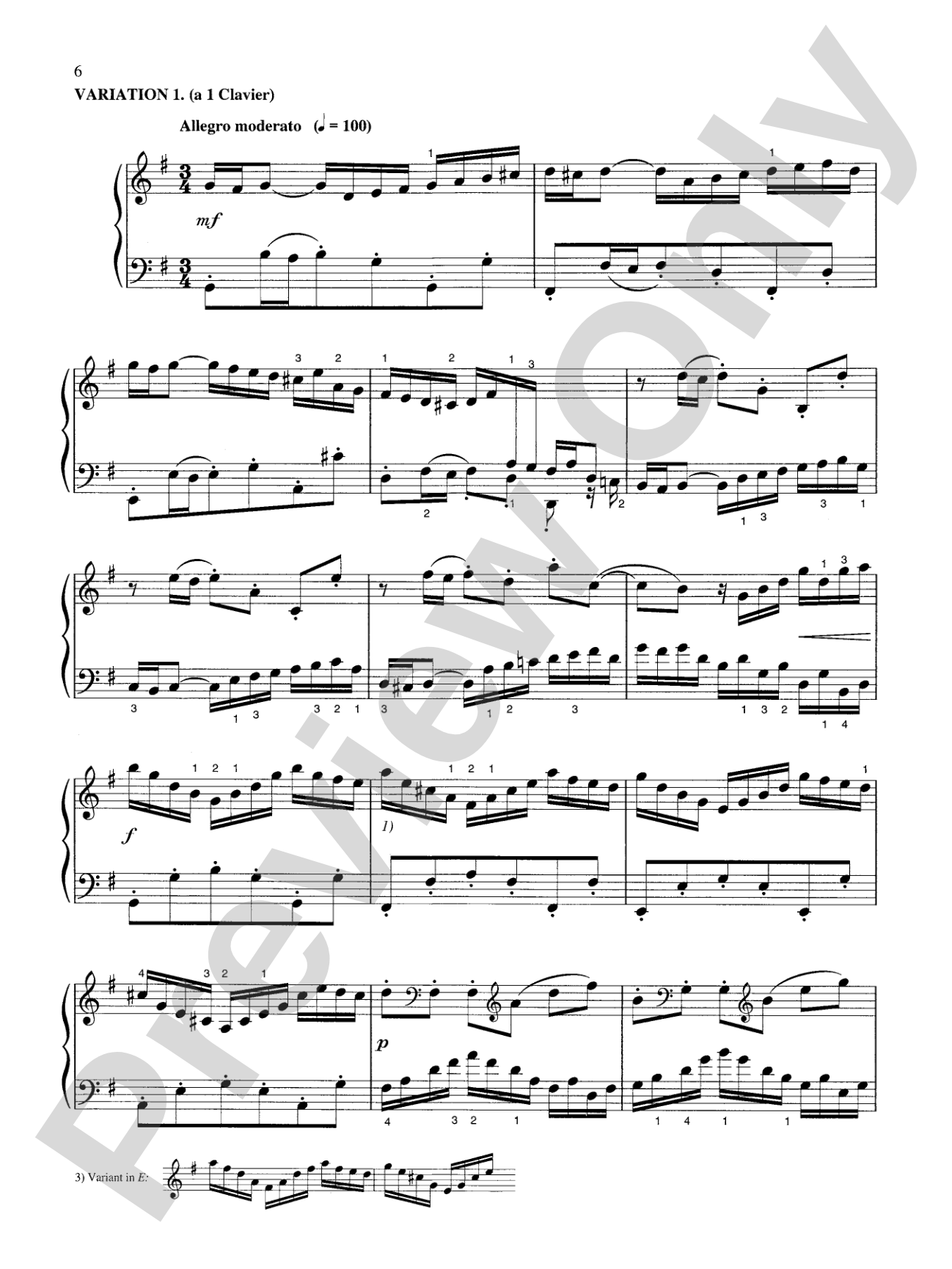
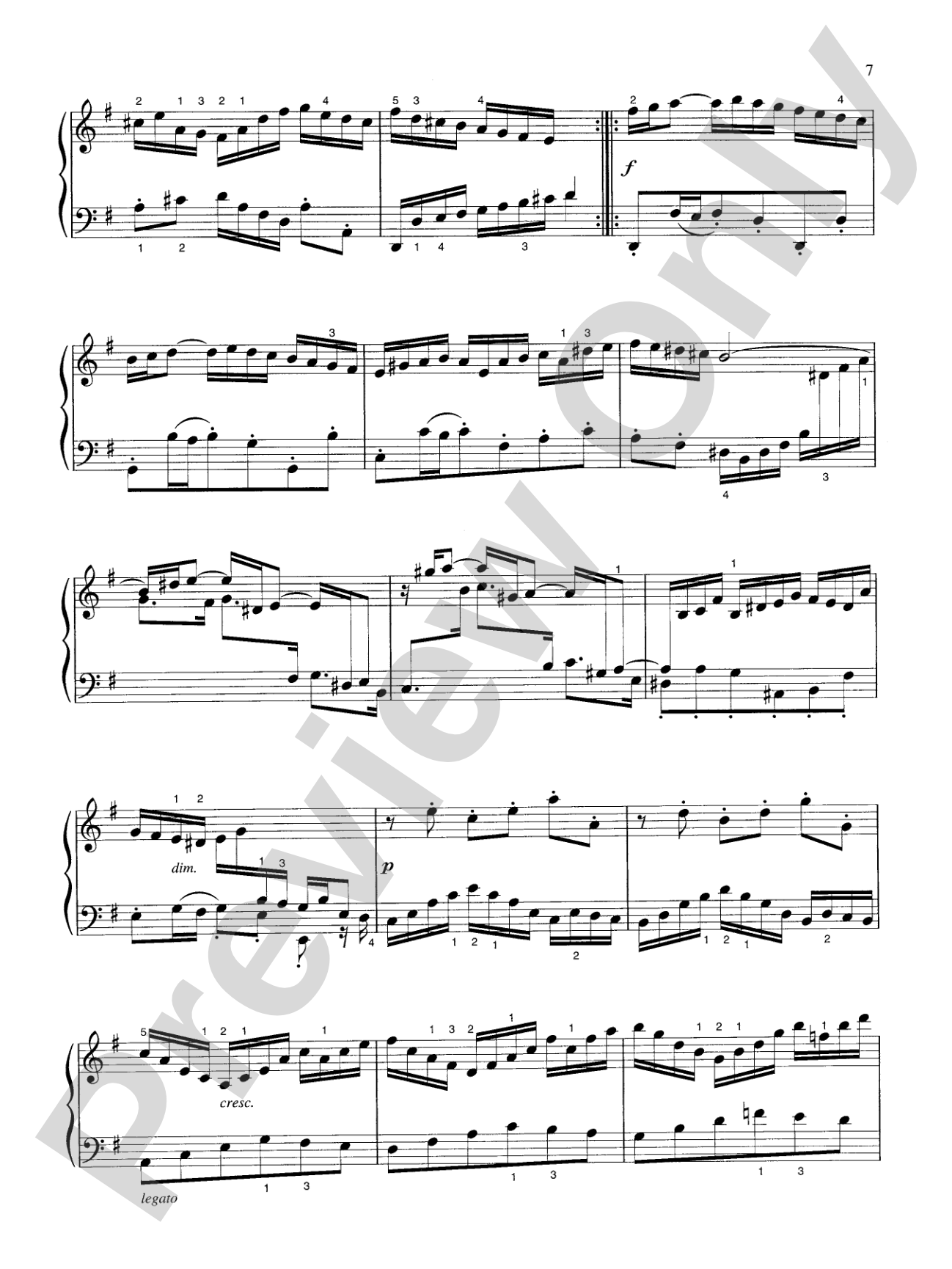
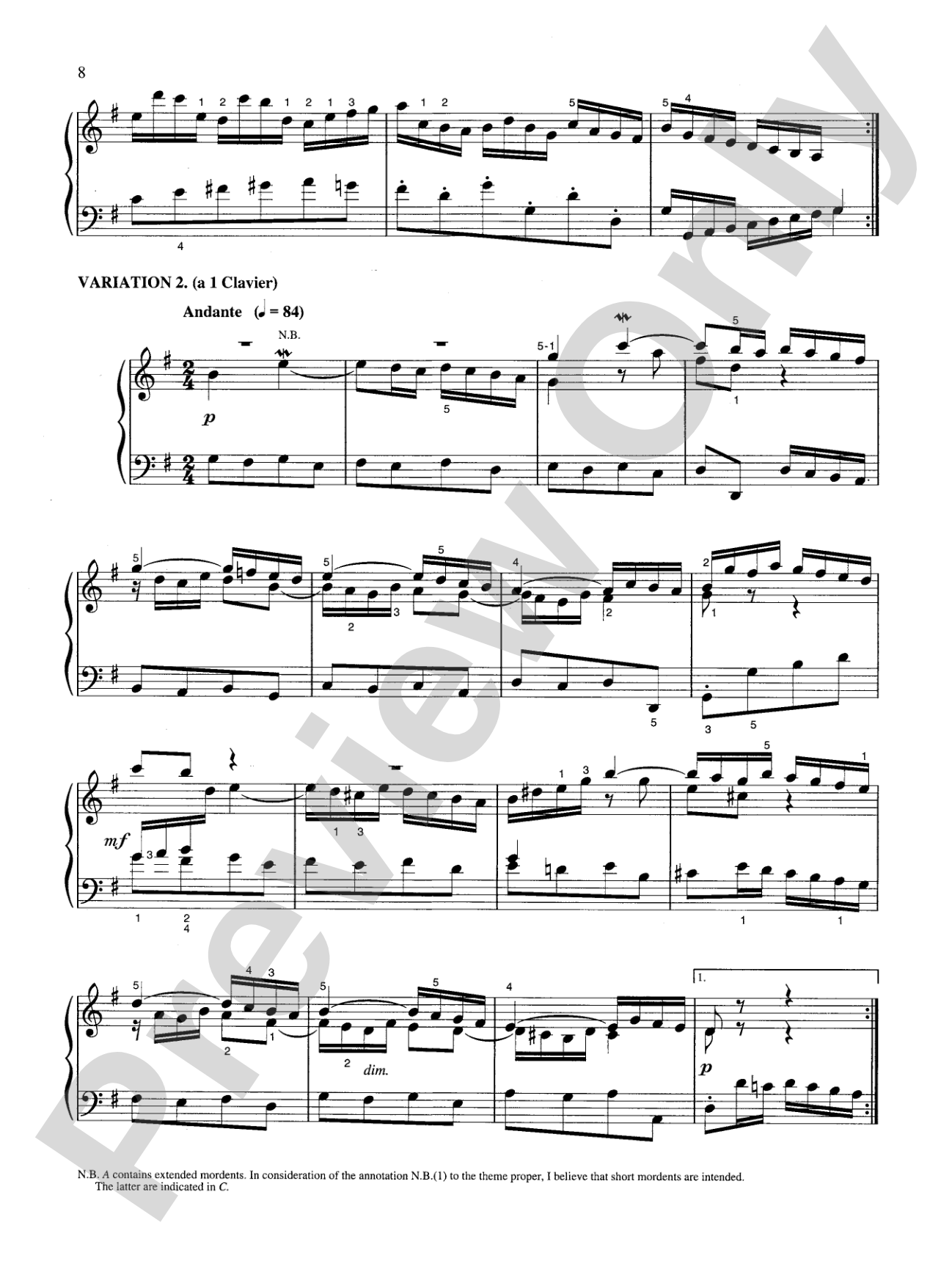
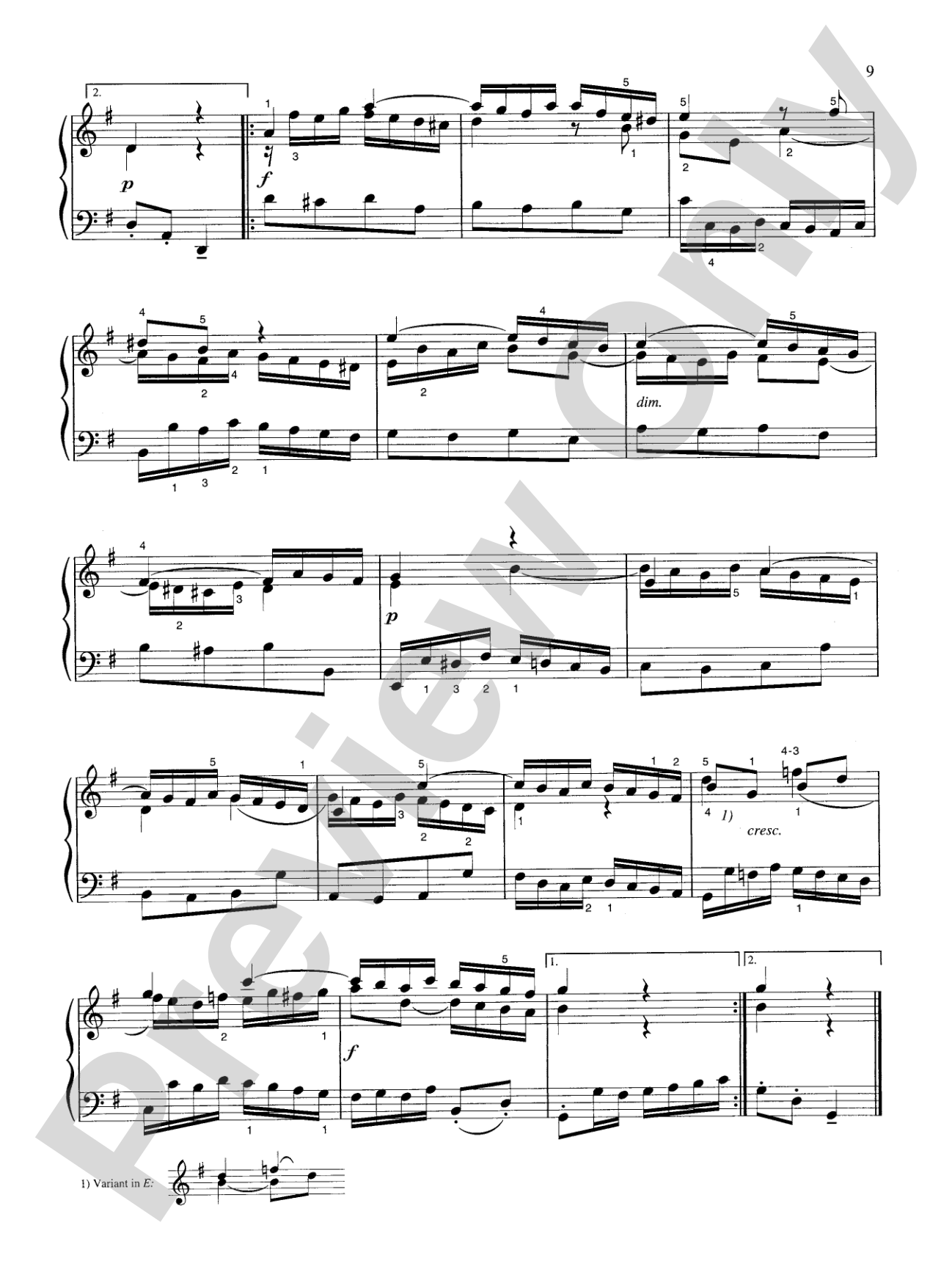
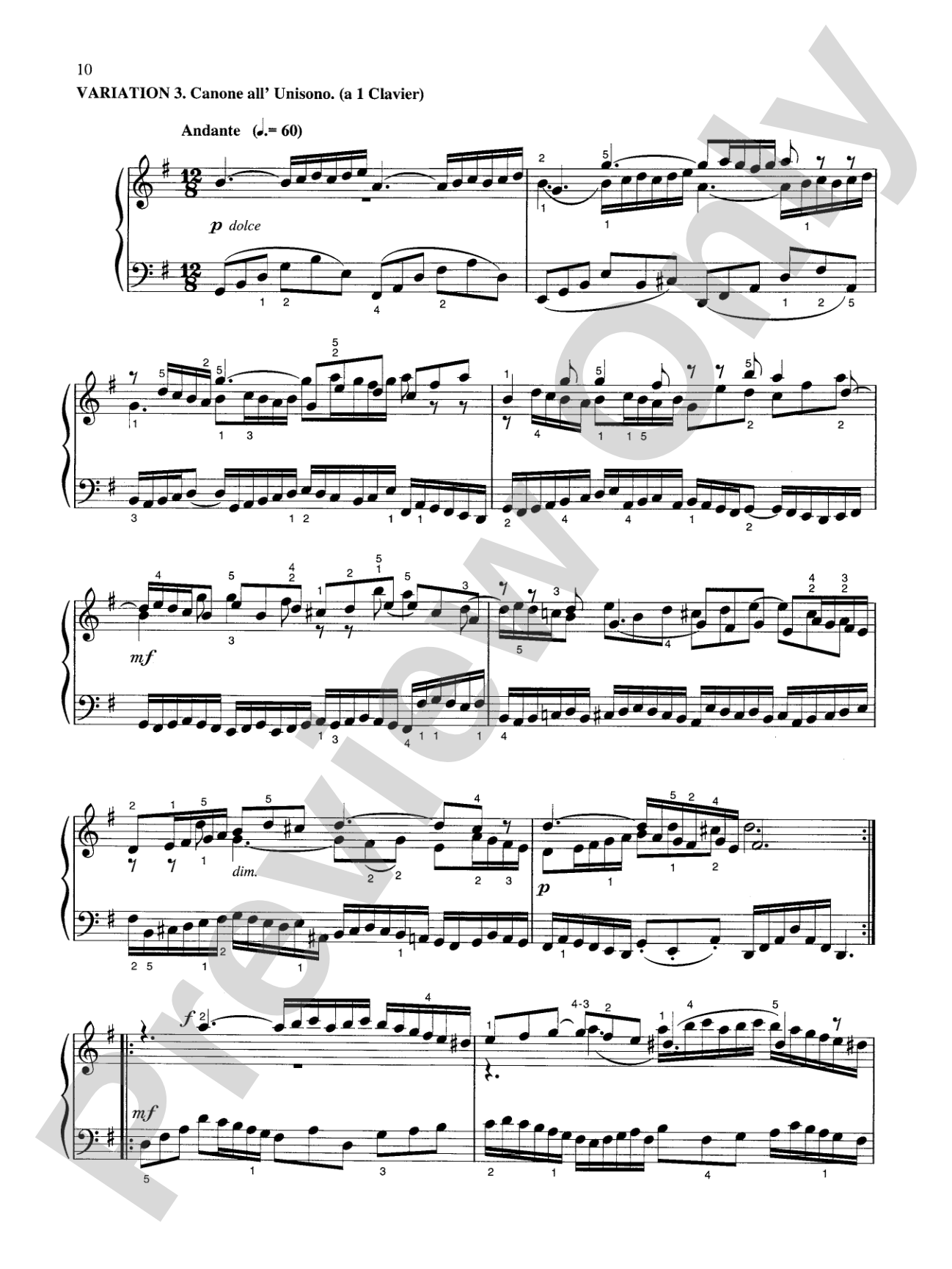
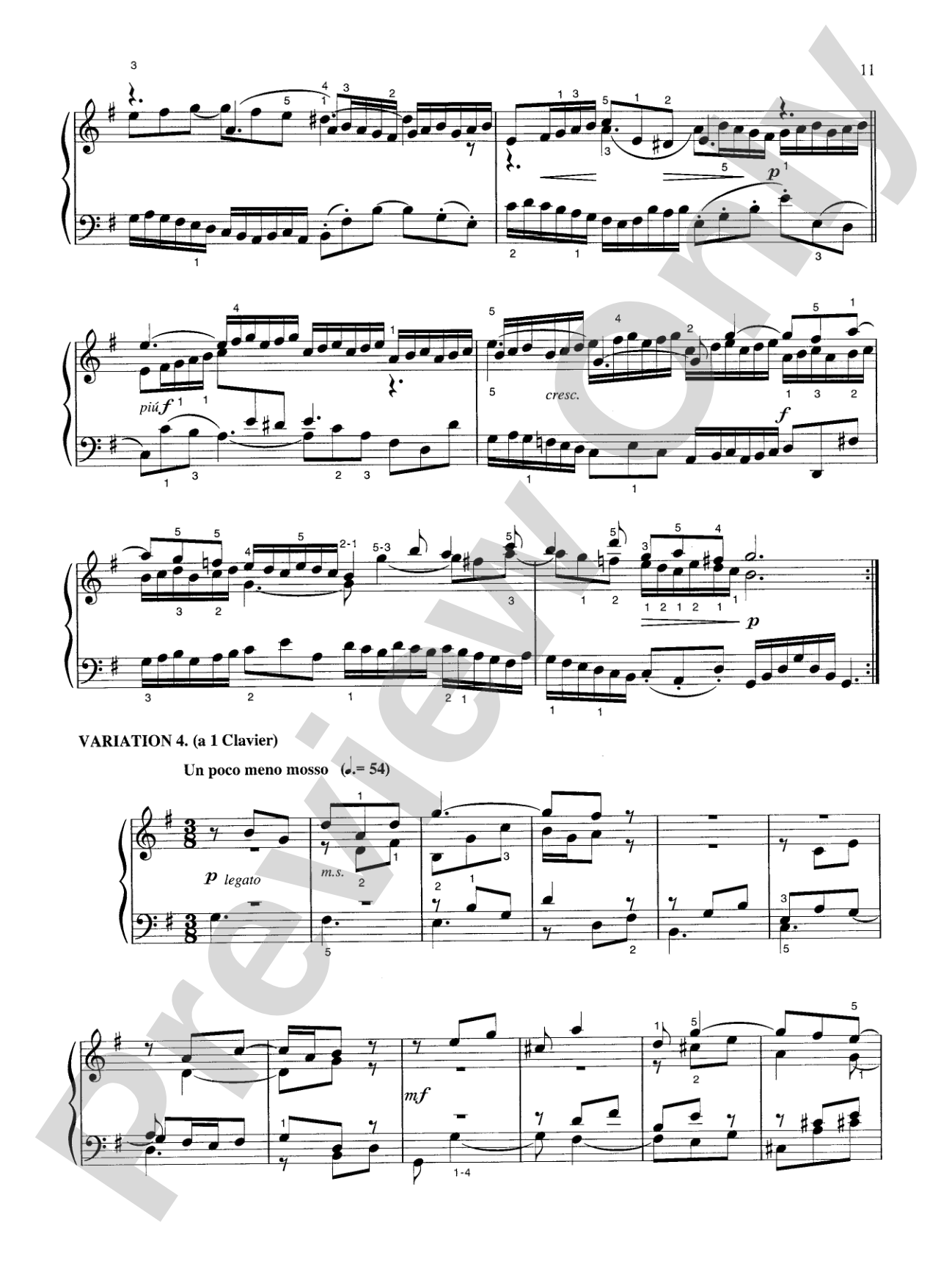
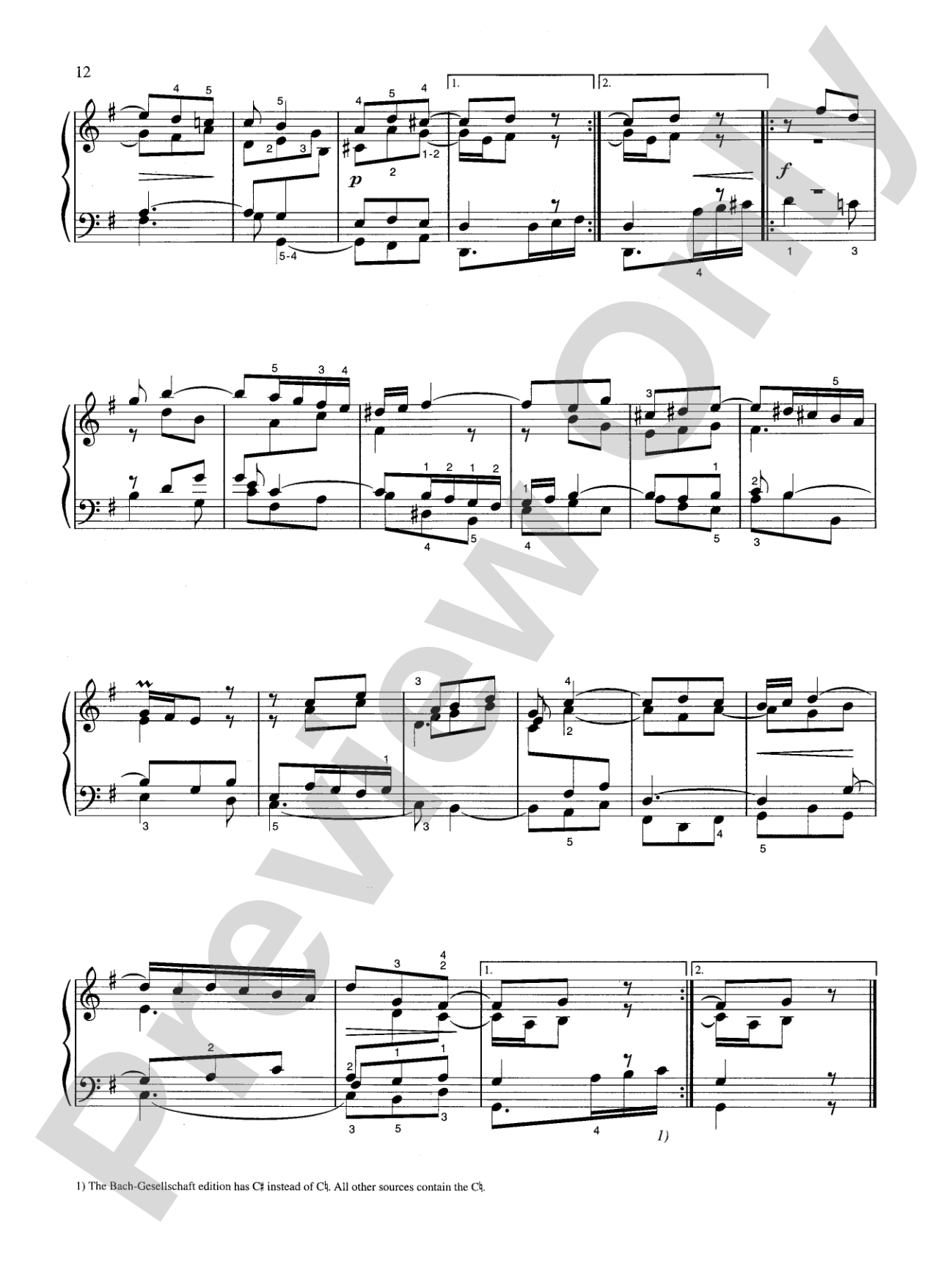
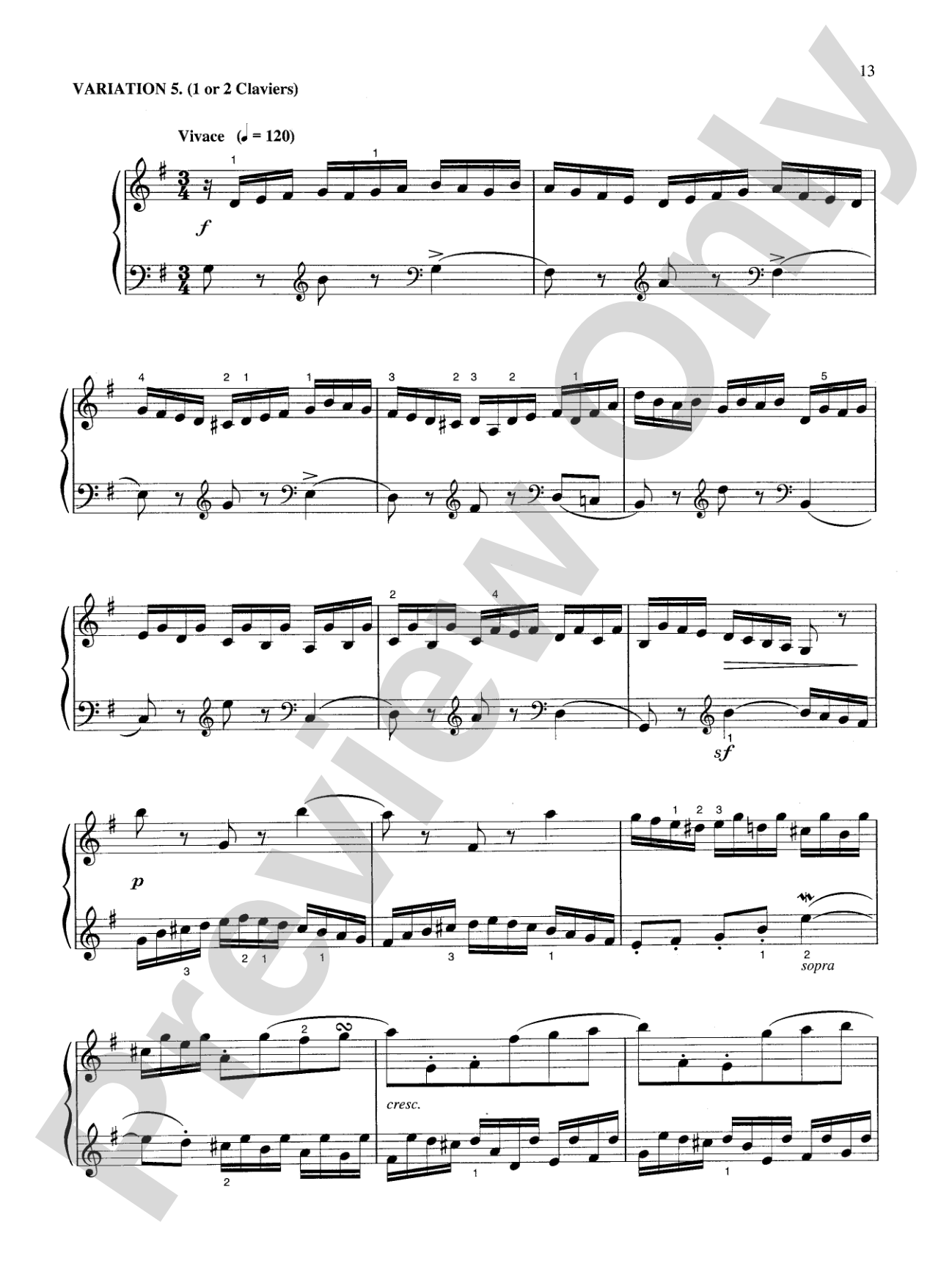
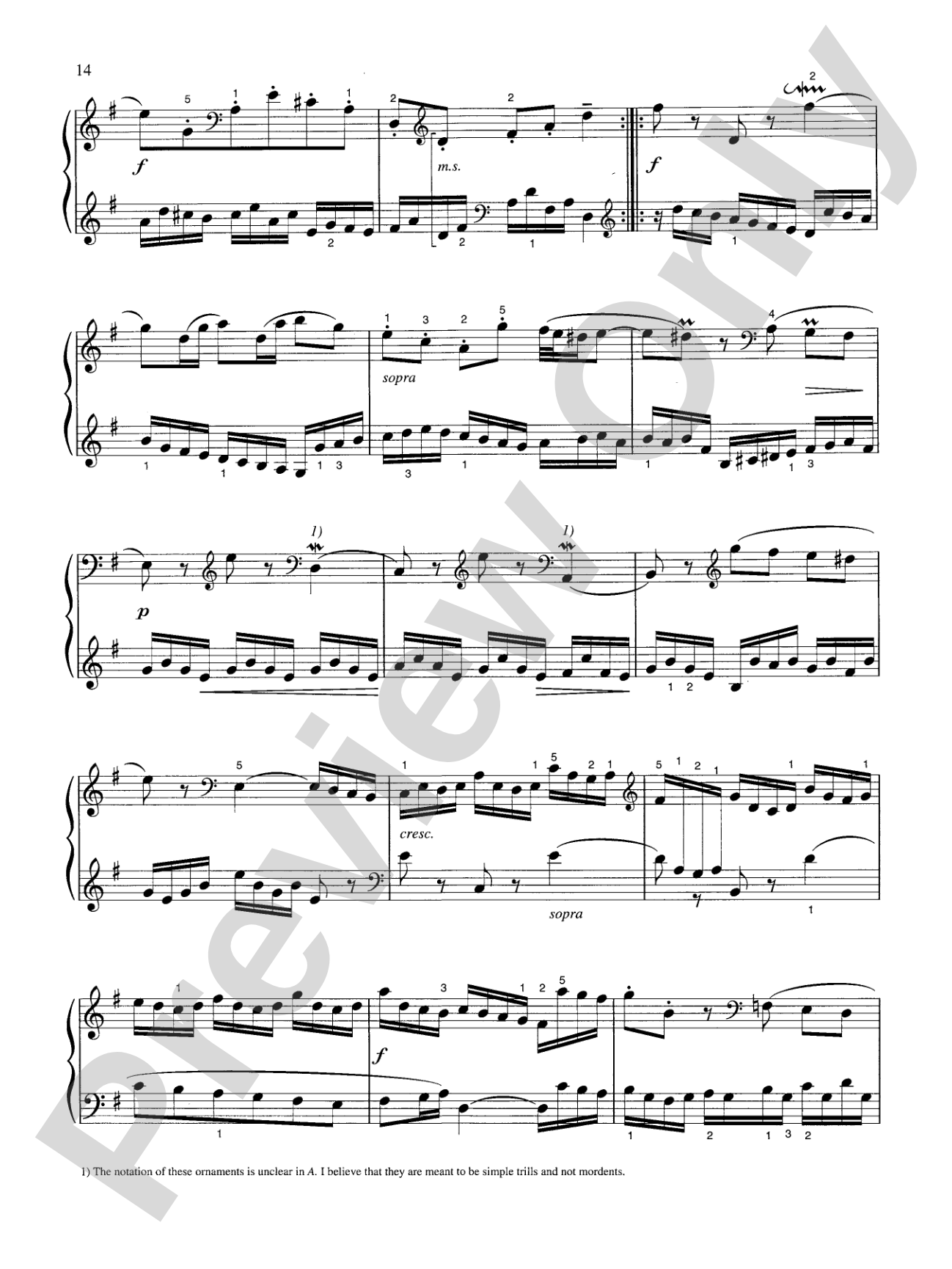
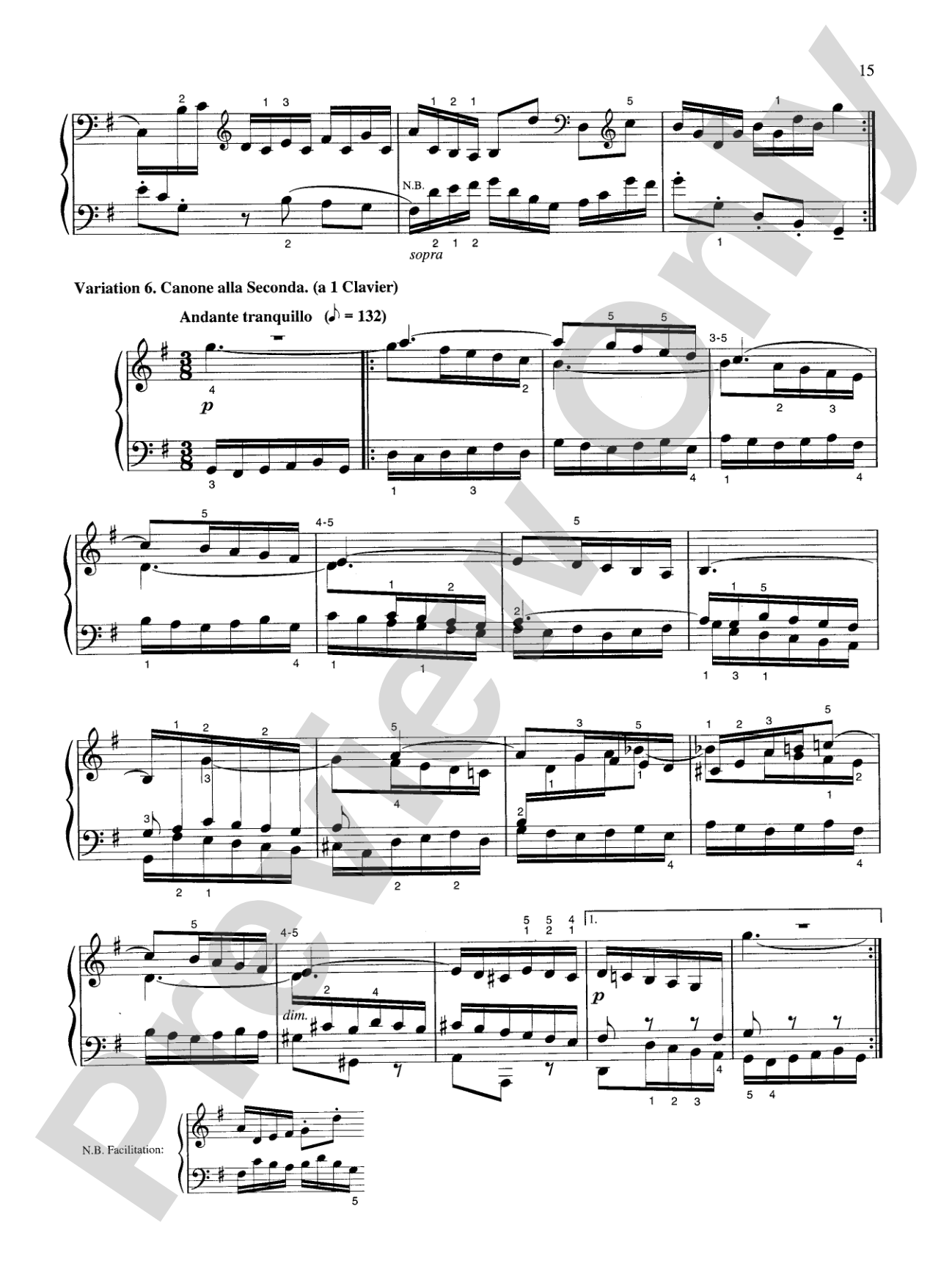
Dr. Hans Bischoff's excellent edition of Bach's well-known keyboard air and 30 variations, named after Johann Gottlieb Goldberg, contains performance notes, explanations of ornamentation and other editorial helps. BWV 988.


Don't just read it, hear it, play along with it, and watch your students grow with it. In MakeMusic Cloud, Bach: Goldberg Variations comes alive with professional accompaniment, adjustable tempo, and built-in practice tools that turn solo practice into real progress.
Open in the Player
Jump straight in and assign it today.
Start Your Free Trial
Open this title and explore the full library in minutes.
Sample Audio
No sample audio found.
Sample Video
No sample videos found.
Additional Details
Series:
Kalmus Edition
Publisher:
Alfred Music
Page Count:
72
SKU:
00-PC-0004341
More about this title
About the Composer: Johann Sebastian Bach
Johann Sebastian Bach (1685-1750) shaped the foundations of Western music through his command of counterpoint, harmonic innovation, and structural genius. His keyboard works remain central to piano pedagogy and performance because they demand and develop every technical and musical skill a pianist needs: independence of hands, voice leading clarity, rhythmic precision, and interpretive depth. The Goldberg Variations represent the apex of his keyboard writing, showcasing his ability to spin infinite variation from a single musical idea.
Why we love this
Bischoff's edition removes interpretive guesswork through clear performance notes and ornamentation guidance, letting pianists focus on the music itself rather than hunting through multiple sources. The 72 pages of this masterwork offer an entire curriculum in one score: students encounter French overture style, fugal writing, dance forms, and keyboard virtuosity across the 30 variations. Programming a Bach variations cycle signals serious artistry and rewards both performer and audience with intellectual and emotional richness.
What to expect
The Goldberg Variations unfold like a series of meditations on a single musical truth. The opening Aria establishes an intimate, unhurried beauty; subsequent variations sweep through dancing rhythms, intricate fugal exchanges, and virtuosic keyboard displays before settling back into that same peaceful theme. The work feels both mathematically precise and deeply human, demanding complete technical facility while inviting profound interpretive choices.
Who it's for
Advanced pianists preparing recital repertoire or exploring Bach's keyboard canon in depth. Students pursuing music theory or composition benefit enormously from studying how Bach generates 30 distinct variations from one harmonic and melodic blueprint. This edition also serves teachers seeking a reliable, clearly annotated score for performance or study.
How to get the most out of it
- Approach the Aria as a structural anchor rather than a simple frame. Return to it between variations with fresh ears, letting its nobility reset the listener's sense of the work's architecture.
- Study the ornament explanations closely before performing. Bach's notational conventions differ from later composers, and Bischoff's editorial notes prevent the common mistake of over-ornamenting or misinterpreting trills and mordents.
- Honor the dance character of variations built on minuet, gavotte, or gigue forms. These aren't abstract patterns; they carry rhythmic and stylistic profiles that shape phrasing and articulation.
- Balance clarity of counterpoint with phrase continuity. Independent voices must sing, but the variation should breathe as a single musical line, not as isolated melodic strands.
How to use it
A full performance of the Goldberg Variations makes for an ambitious solo recital or a substantial concert program segment. Alternatively, pianists often perform selected variations as a standalone group, allowing flexibility in concert length while still showcasing Bach's ingenuity. This work also anchors masterclasses, lecture-demonstrations, or educational series focused on Baroque keyboard practice and the evolution of keyboard technique.
Skills your students will build
- Baroque ornamentation interpretation (trills, mordents, turns as notated in this era)
- Voice independence and contrapuntal clarity across hand positions
- Structural listening (recognizing harmonic and melodic recurrence across 30 variations)
- Dance character and stylistic differentiation (minuet vs. gavotte vs. gigue rhythmic profiles)
- Extended keyboard technique and finger dexterity across multiple registers
- Score annotation and editorial decision-making (working with Bischoff's performance notes)