

Bach: First Lessons in Bach (Ed. Carroll)
Twenty-Eight Short Pieces
By Johann Sebastian Bach / ed. Walter Carroll
Level: Easy
Item: 00-PC-0004696
$0.99
Pickup currently not available
Description
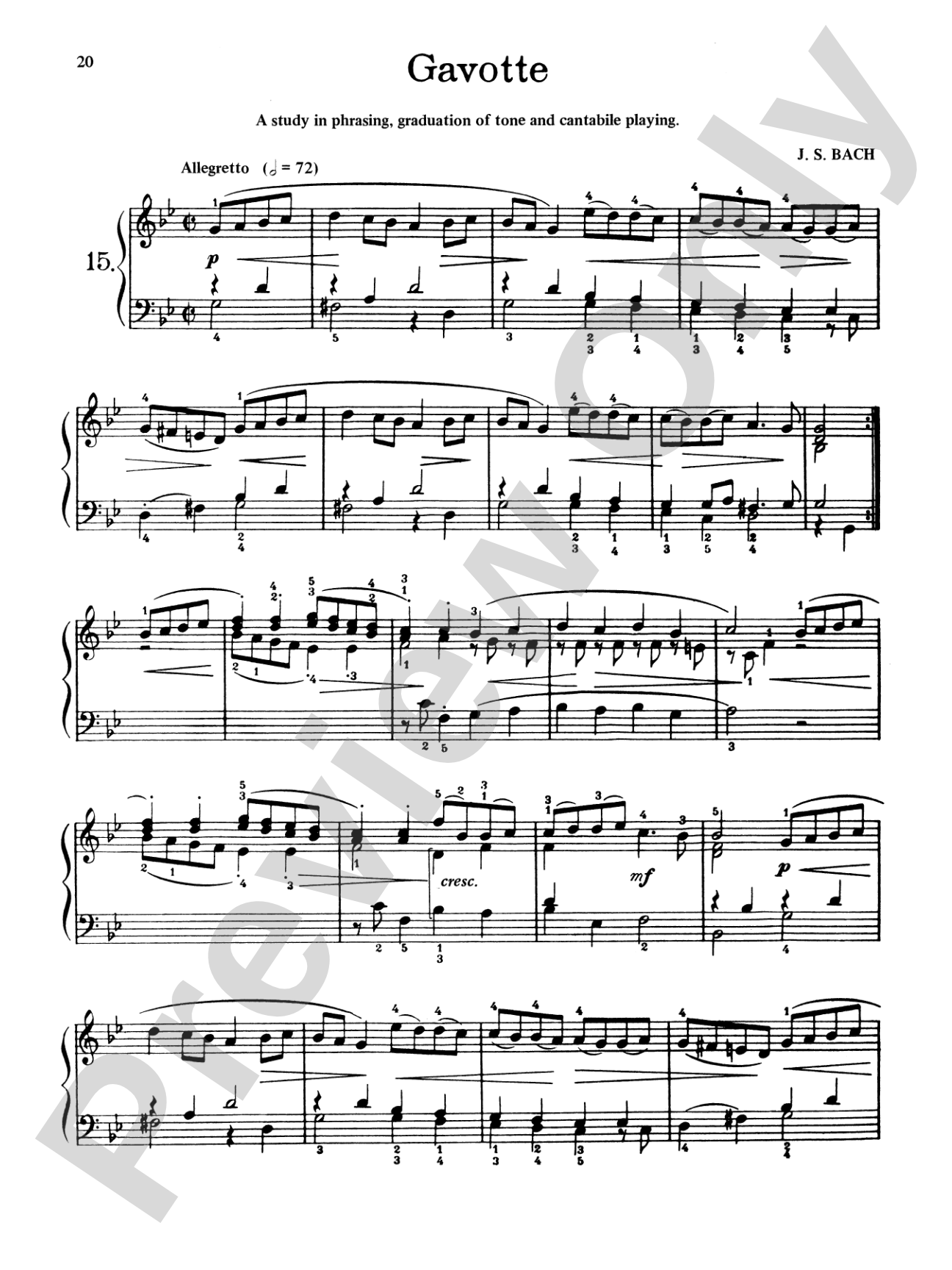
This collection of 28 short, melodious pieces by J. S. Bach was compiled and edited by Walter Carroll in order to provide a varied set of easier compositions for study by pianists first being introduced to Bach's work. Includes 11 Minuets, 4 Polonaises, 3 Marches, 2 Musettes, a Bourree, 4 Gavottes, a Scherzo, a Sarabande, and a Prelude.


Don't just read it, hear it, play along with it, and watch your students grow with it. In MakeMusic Cloud, Bach: First Lessons in Bach (Ed. Carroll) comes alive with professional accompaniment, adjustable tempo, and built-in practice tools that turn solo practice into real progress.
Open in the Player
Jump straight in and assign it today.
Start Your Free Trial
Open this title and explore the full library in minutes.
Sample Audio
No sample audio found.
Sample Video
No sample videos found.
Additional Details
Series:
Kalmus Edition
Publisher:
Alfred Music
Page Count:
36
SKU:
00-PC-0004696
More about this title
About the Composer: Johann Sebastian Bach
Johann Sebastian Bach (1685-1750) stands as one of the most prolific and influential composers in Western music history. His output spanned nearly every Baroque form and genre, from sacred cantatas and passions to instrumental concertos, suites, and keyboard works. Bach's music is distinguished by its mathematical precision, harmonic sophistication, and the interweaving of multiple melodic lines, qualities that have made his compositions a cornerstone of music education for centuries.
Bach's keyboard works in particular have served generations of pianists as both artistic inspiration and pedagogical foundation. His dances, preludes, and shorter character pieces combine structural clarity with genuine musicality, offering students the opportunity to engage with a master's work while developing technique and musical understanding. The accessibility of pieces like those in this collection makes them invaluable for pianists ready to move beyond elementary repertoire.
Why we love this
Carroll's selection captures the full range of Bach's shorter dance forms, giving pianists genuine exposure to Baroque style without overwhelming them with technical demands. The variety of genres within these 28 pieces means students encounter minuets, polonaises, gavottes, and other forms in their authentic, proportionate versions rather than simplified arrangements. For teachers seeking to introduce serious repertoire at an accessible level, this collection offers both immediate musical gratification and lasting educational value.
What to expect
These pieces sparkle with the courtly elegance of the Baroque dance suite. Each minuet, polonaise, and gavotte carries its own rhythmic character and social grace, inviting performers into a world of ordered beauty and refined melody. The melodic lines are singing and memorable, while the harmonic language, though sophisticated, remains transparent and logical.
Who it's for
Pianists at the early intermediate stage who have developed basic technique and sight-reading skills and are ready to explore Baroque music beyond simplified editions. This collection also serves teachers and independent students looking for authentic, unadorned Bach suitable for recital preparation, audition study, or concert programming at the pre-collegiate level.
How to get the most out of it
- Bring out the melodic line with clarity and consistent tone; in many of these pieces, the upper voice carries the primary musical idea, while the harmonic foundation below serves to support rather than compete.
- Practice the hand independence required for Bach's two-voice textures; establish the left hand as a stable, rhythmically secure foundation before layering the right hand melody on top.
- Attend to phrase structure and breathing points by observing cadences and harmonic resolutions; even in short dances, Bach's phrases have natural peaks and valleys that benefit from subtle dynamic and agogic shaping.
- Maintain a steady, characteristic tempo for each dance form; minuets move with elegant restraint, polonaises with processional dignity, and gavottes with lilting grace.
How to use it
Program individual pieces from this collection as curtain-raisers or intermission selections in a recital featuring mixed-era repertoire; a single minuet or gavotte offers intelligent musical substance in a brief, elegant package. You might also use contrasting selections to frame larger works, creating visual and stylistic variety within a student recital or ensemble concert. These pieces work equally well in pedagogical contexts such as group classes or community performances where accessibility and musical authenticity matter equally.
Skills your students will build
- Reading two-voice Baroque counterpoint and understanding how melody and bass lines interact harmonically
- Executing characteristic dance rhythms (minuet's 3/4 lilt, polonaise's driving dotted figures, gavotte's upbeat phrasing)
- Recognizing and interpreting phrase structure, cadences, and harmonic progressions without analytical annotation
- Developing finger independence and clarity in scalar passages and hand-crossing figures typical of Baroque keyboard writing
- Internalizing the concept of period style and appropriate articulation and tempo for dance forms