

Bach: Fifteen Three-Part Inventions (Ed. Carl Czerny): Piano Book
By Johann Sebastian Bach / ed. Carl Czerny
Item: 00-PK-0003876

$7.99
Pickup currently not available
Buy Extra Parts (Digital PDF Download)
Parts Added to Cart!
Related Items
Three-Part Inventions: Piano Book |
$7.99
|
View |
Description
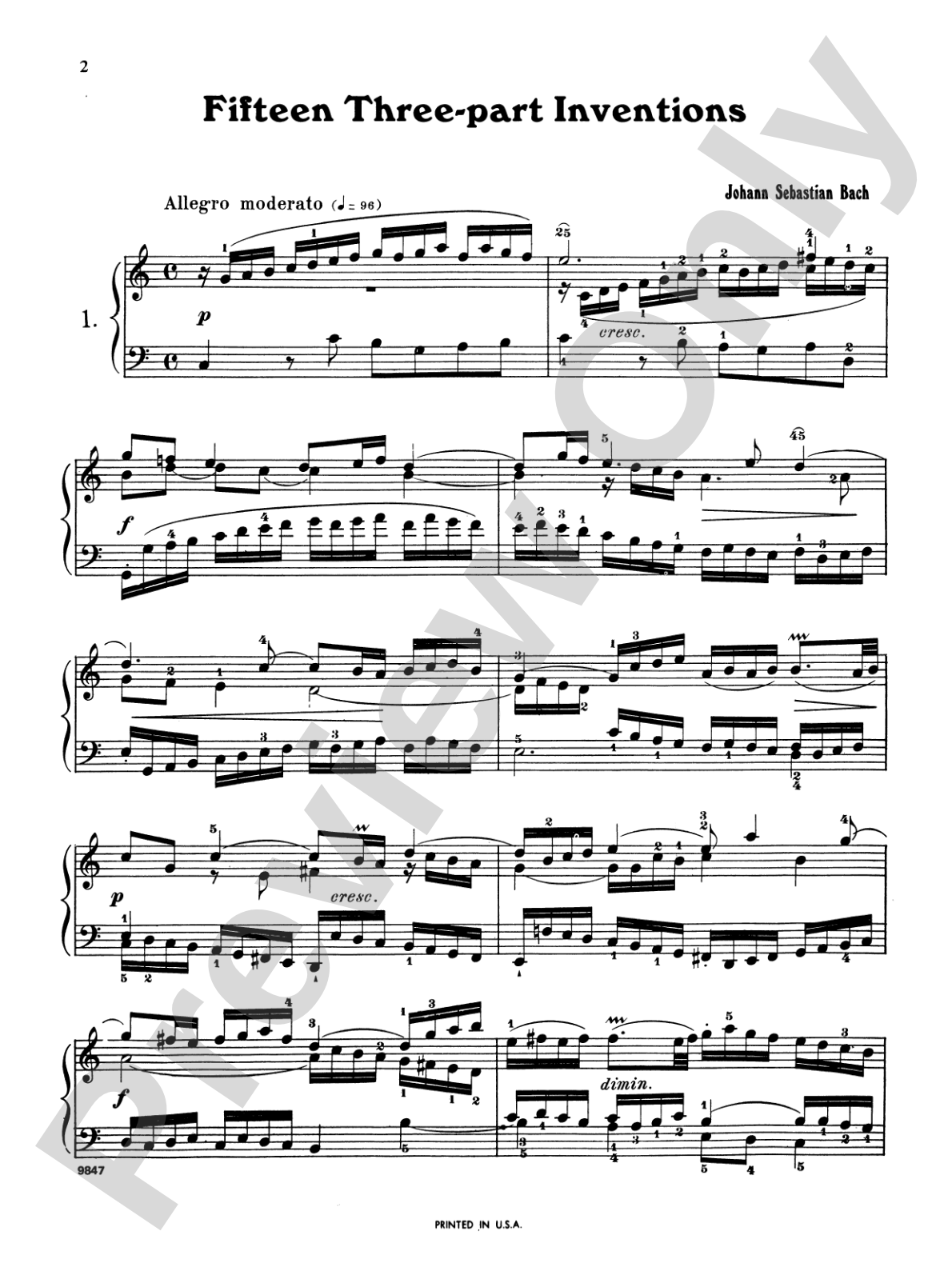
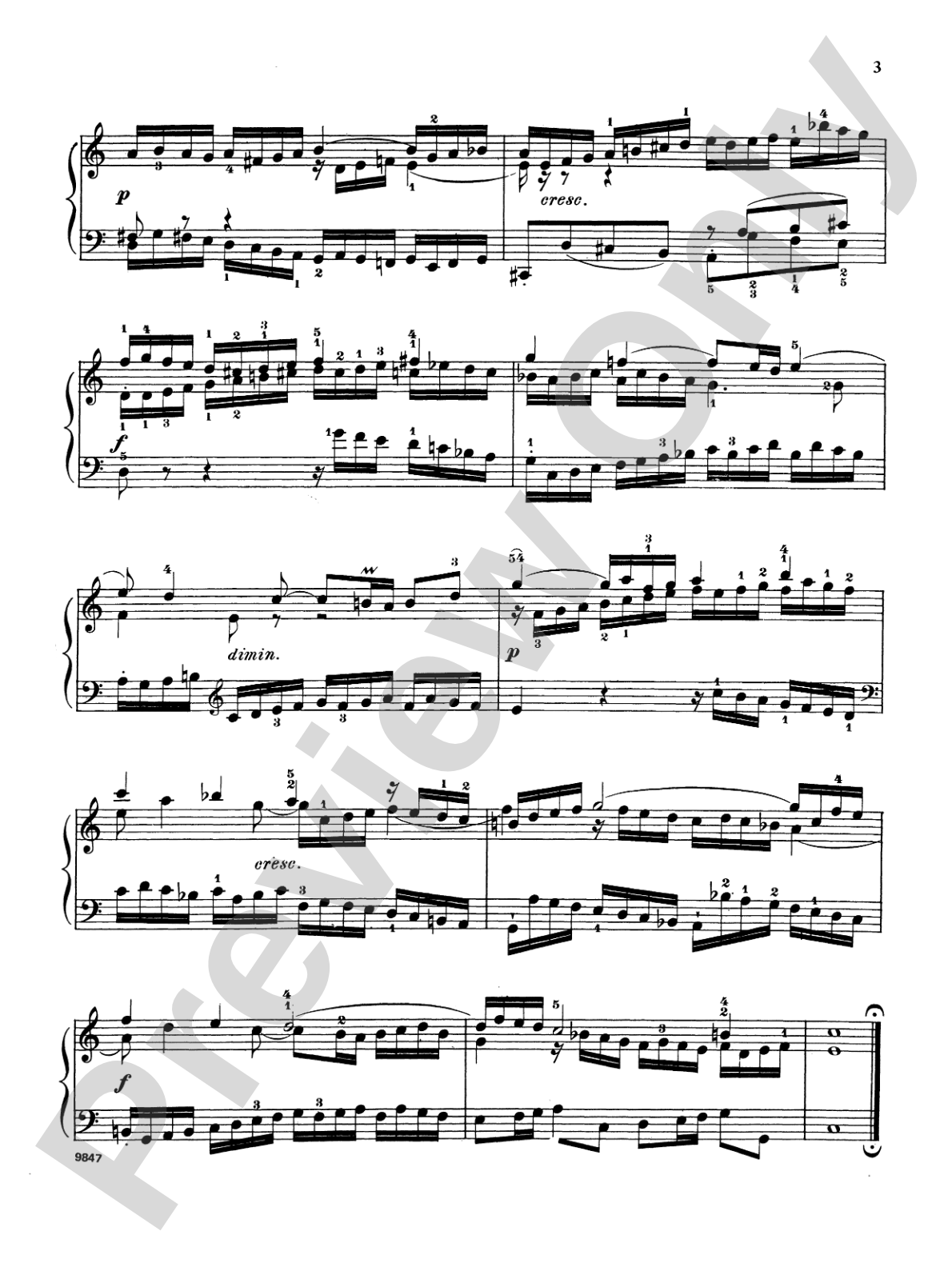
The edition of Johan Sebastian Bach's fifteen 3-Part Inventions, edited by Carl Czerny, contains editorial additions, including dynamics, fingering and tempo indications. 31 pages.


Don't just read it, hear it, play along with it, and watch your students grow with it. In MakeMusic Cloud, Bach: Fifteen Three-Part Inventions (Ed. Carl Czerny): Piano Book comes alive with professional accompaniment, adjustable tempo, and built-in practice tools that turn solo practice into real progress.
Open in the Player
Jump straight in and assign it today.
Start Your Free Trial
Open this title and explore the full library in minutes.
Sample Audio
No sample audio found.
Sample Video
No sample videos found.
Additional Details
Series:
Kalmus Edition
Publisher:
Alfred Music
Page Count:
32
SKU:
00-PK-0003876
More about this title
About the Composer: Johann Sebastian Bach
Johann Sebastian Bach (1685-1750) wrote the Inventions as teaching pieces for his son Wilhelm Friedemann, intending them to develop both technical facility and musical thinking. These works stand among the most essential compositions in keyboard pedagogy, prized for their clarity of voice leading, motivic development, and balanced demands on independent hand work.
Why we love this
Czerny's editorial layer transforms the Inventions into an ideal bridge between early-intermediate technique and serious musical study. His fingering and dynamic markings guide students through contrapuntal textures without obscuring Bach's architectural clarity, making this edition particularly useful for pianists developing independence between voices and comfort with baroque ornamentation.
What to expect
Precise, orderly, yet dancing. These inventions sparkle with baroque clarity while demanding absolute control from your fingers. The three-part texture creates conversation, voices interrupt, agree, and challenge each other in miniature dramatic moments.
Who it's for
Intermediate to early advanced pianists ready to engage with canonical keyboard works and develop polyphonic independence. Students working toward classical repertoire fluency and teachers seeking historically grounded material for technique and musicianship instruction.
How to get the most out of it
- Approach each voice as a distinct melodic line rather than a keyboard part; imagine three separate instruments articulating independent phrases even when hands must manage two voices.
- Follow Czerny's tempo indications as starting points, but adjust for clarity of voice independence; rushing through faster inventions sacrifices the counterpoint's transparency.
- Balance Czerny's added dynamics against Bach's inherent stress patterns; use his markings to shape phrases without creating artificial swells that obscure motivic relationships.
- Practice each voice in isolation before combining them, using the fingering suggestions to maintain evenness and avoid accidental emphasis on single notes.
How to use it
Feature individual inventions on student recitals to highlight technical progress and baroque literacy. Pair contrasting inventions as a suite to demonstrate variety within Bach's systematic approach to voice leading, or use them alongside contemporary classical sonatas to anchor a program in historical language and craftsmanship.
Skills your students will build
- Independent voice control and contrapuntal independence between hands
- Clear articulation of motivic development and imitative counterpoint
- Baroque ornamentation and period-appropriate phrasing
- Legato touch and voice leading clarity at moderate tempos
- Reading and executing editorial fingering for technical efficiency