
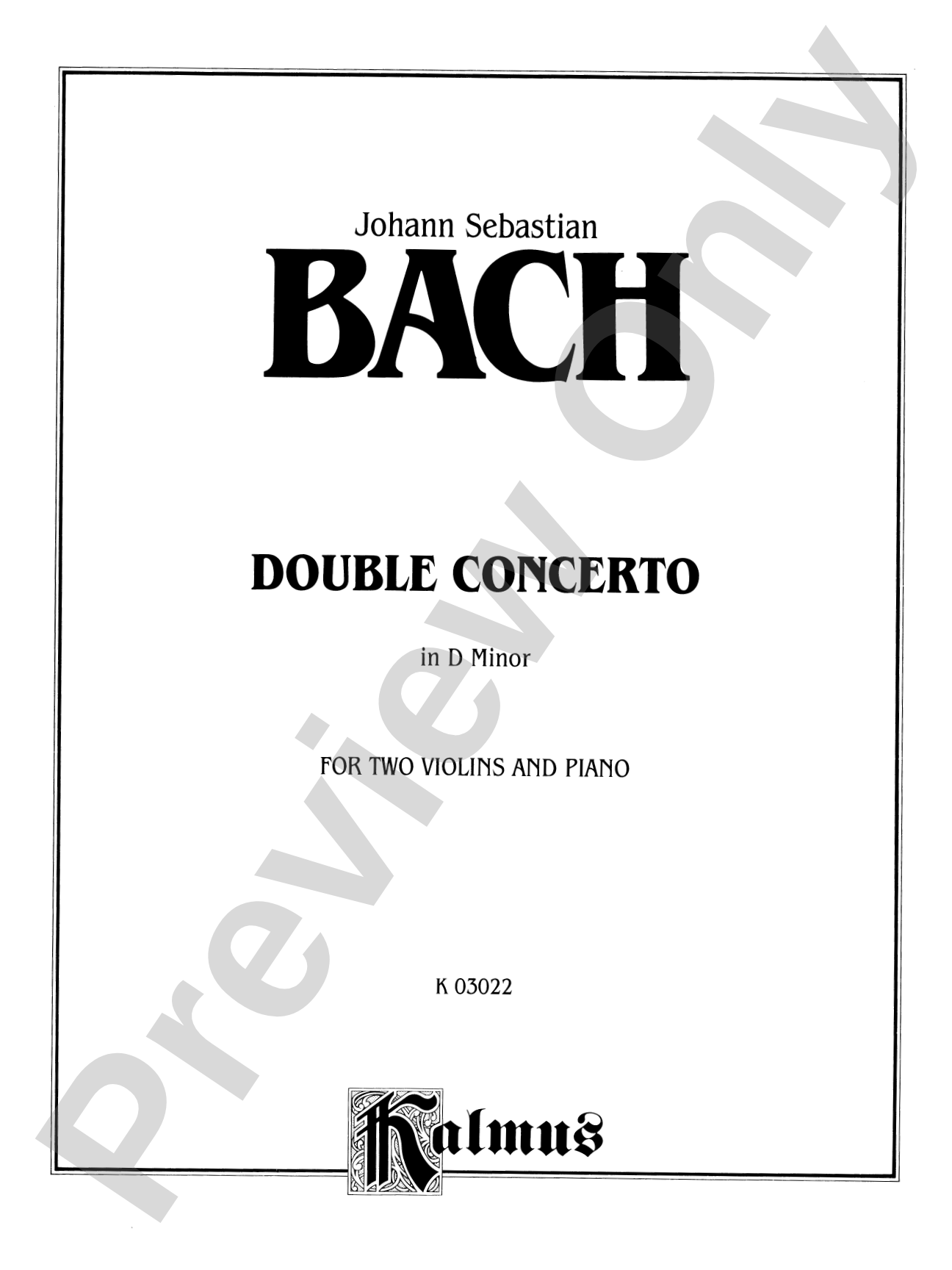

Bach: Double Concerto in D Minor
By Johann Sebastian Bach
Item: 00-PC-0004257
$2.99
Pickup currently not available
Description
Expertly arranged for 2 Violins with Piano Accompaniment by Johann Sebastian Bach from the Kalmus Edition series. This is from the Baroque era.


Don't just read it, hear it, play along with it, and watch your students grow with it. In MakeMusic Cloud, Bach: Double Concerto in D Minor comes alive with professional accompaniment, adjustable tempo, and built-in practice tools that turn solo practice into real progress.
Open in the Player
Jump straight in and assign it today.
Start Your Free Trial
Open this title and explore the full library in minutes.
Sample Audio
No sample audio found.
Sample Video
No sample videos found.
Additional Details
Series:
Kalmus Edition
Publisher:
Alfred Music
Page Count:
36
SKU:
00-PC-0004257
More about this title
About the Composer: Johann Sebastian Bach
Johann Sebastian Bach (1685-1750) shaped the foundation of Western music through his mastery of counterpoint, harmonic innovation, and structural precision. His output across keyboard, vocal, and instrumental genres established compositional practices that defined the Baroque era and influenced every major composer who followed. Bach's concertos, in particular, showcase his genius for writing idiomatic parts that challenge performers while maintaining the architectural integrity that makes his music endure across centuries.
Why we love this
The Double Concerto in D Minor stands among Bach's most rewarding works for advancing violin students because it demands genuine chamber music listening while remaining pedagogically sound. The two violin parts create natural dialogue without overwhelming either player, and the piano reduction respects the Baroque texture while providing harmonic support that clarifies Bach's intricate voice-leading. Contestants and festival performers consistently gain recognition for its technical brilliance and emotional depth.
What to expect
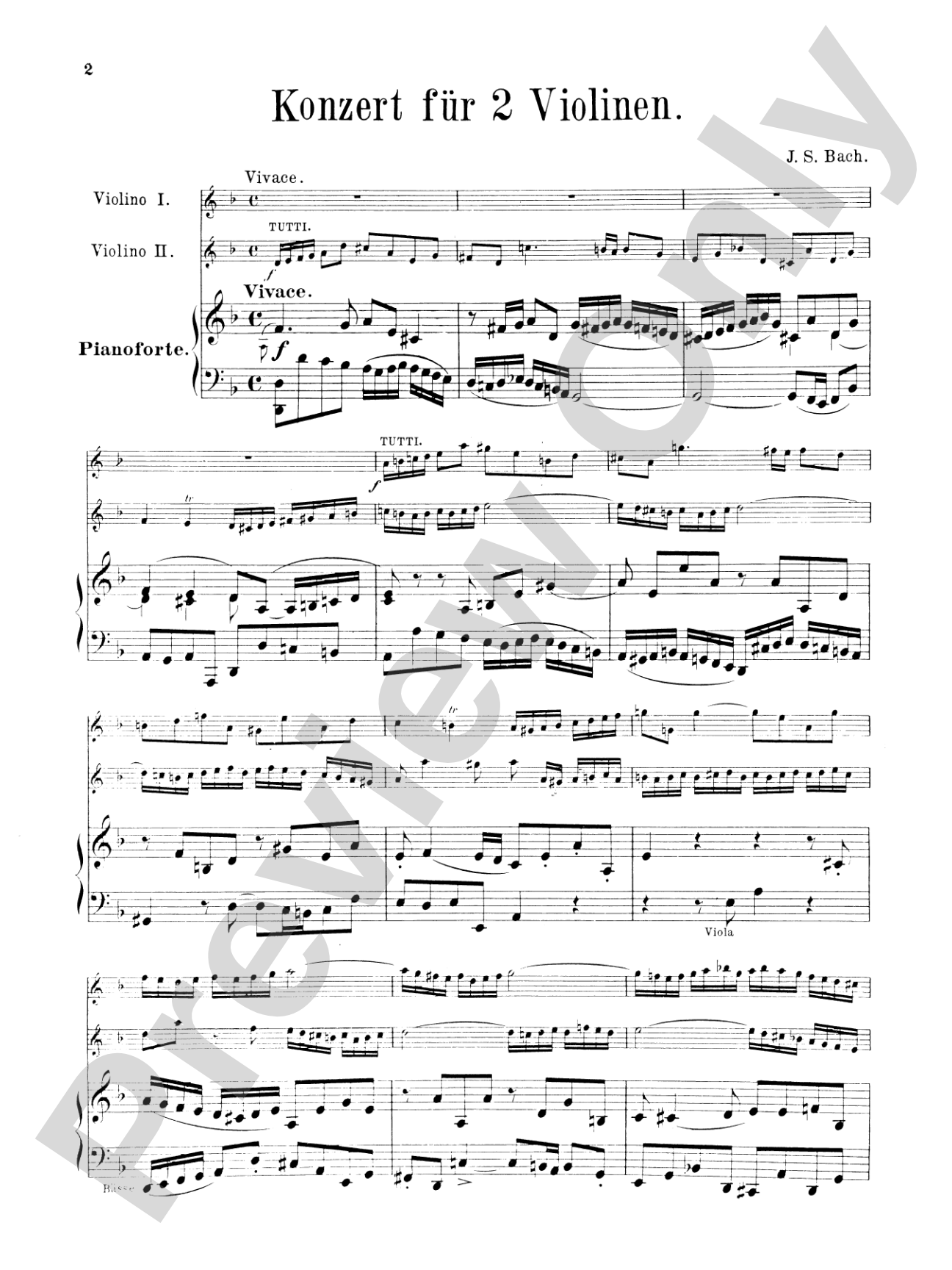
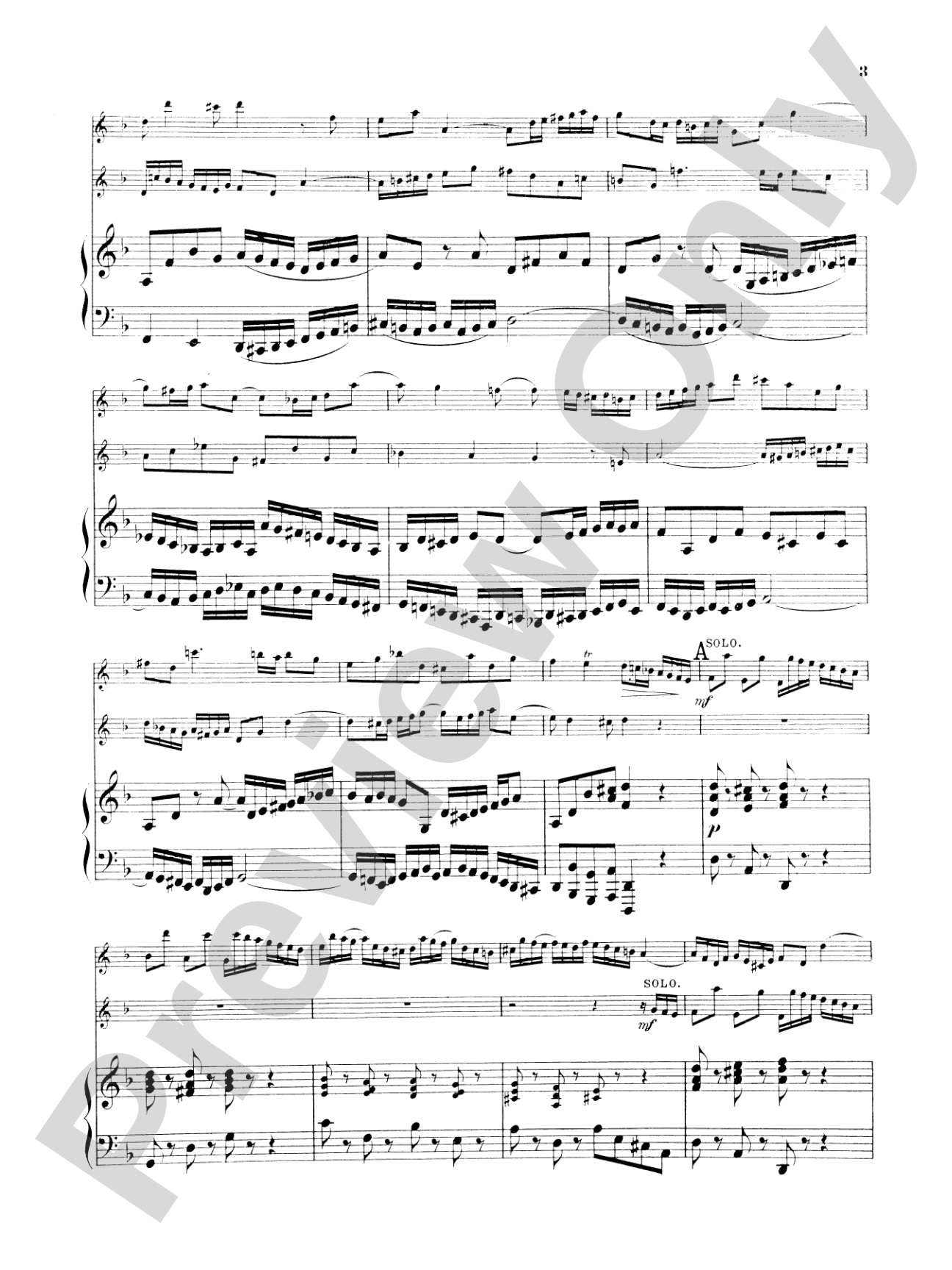
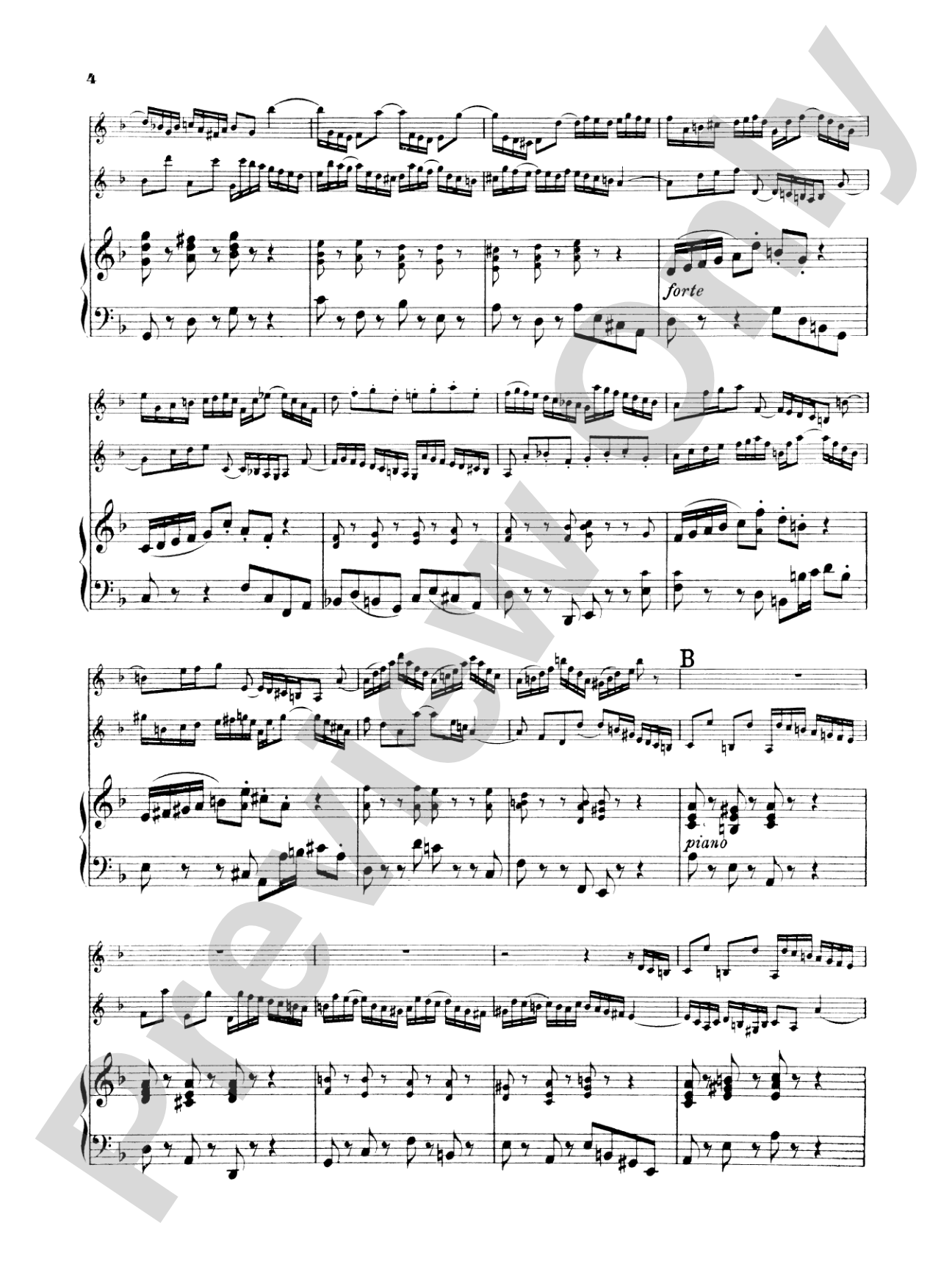
The Double Concerto opens with an insistent D minor theme that establishes architectural urgency from the first measure, then unfolds through passages of remarkable contrapuntal density where two violins weave around and through one another. The work maintains its Baroque formality without coldness; the lines sing across quick scalar runs and harmonic surprises that reward careful listening with moments of genuine tenderness.
Who it's for
Violinists at the intermediate-advanced level preparing for competitions, festivals, or recital programs will find this concerto both musically satisfying and technically substantial. Duet partners seeking Baroque repertoire that requires genuine ensemble listening rather than parallel playing benefit from Bach's intricate voice-writing. This arrangement works equally well for private instruction, preparatory chamber music study, or solo performance with piano accompaniment.
How to get the most out of it
- Shape each phrase according to Baroque articulation conventions; use lighter bowings for scalar passages and slight weight changes to highlight harmonic arrivals rather than dynamic markings.
- Balance the two violin lines by listening laterally rather than toward the audience; the concertante relationship requires constant awareness of where your partner sits in the musical conversation.
- Work with the pianist to establish a steady continuo pulse without metronomic rigidity; Baroque performance benefits from gentle breathing room that allows phrasing to float naturally over the harmonic foundation.
- Highlight the fugal and imitative sections by clarifying which violin carries the subject; clean entries and transparent counterpoint distinguish Bach's architectural design from mere technical display.
How to use it
Program this alongside other Baroque concertos to create a historically coherent recital section, or feature it as a competition piece where its formal rigor and technical demands will demonstrate serious musicianship. The 36-page score allows for flexible programming; you might perform it complete or extract movements for shorter festival slots while still showcasing Bach's craft.
Skills your students will build
- Reading and executing Baroque articulation and ornamentation conventions
- Managing contrapuntal balance in two-part writing without relying on dynamic markings
- Coordinating intonation and rhythmic precision with a chamber partner across fast passagework
- Interpreting figured bass concepts through piano accompaniment to understand harmonic function
- Sustaining musical phrasing through extended unaccompanied sections and technical runs