
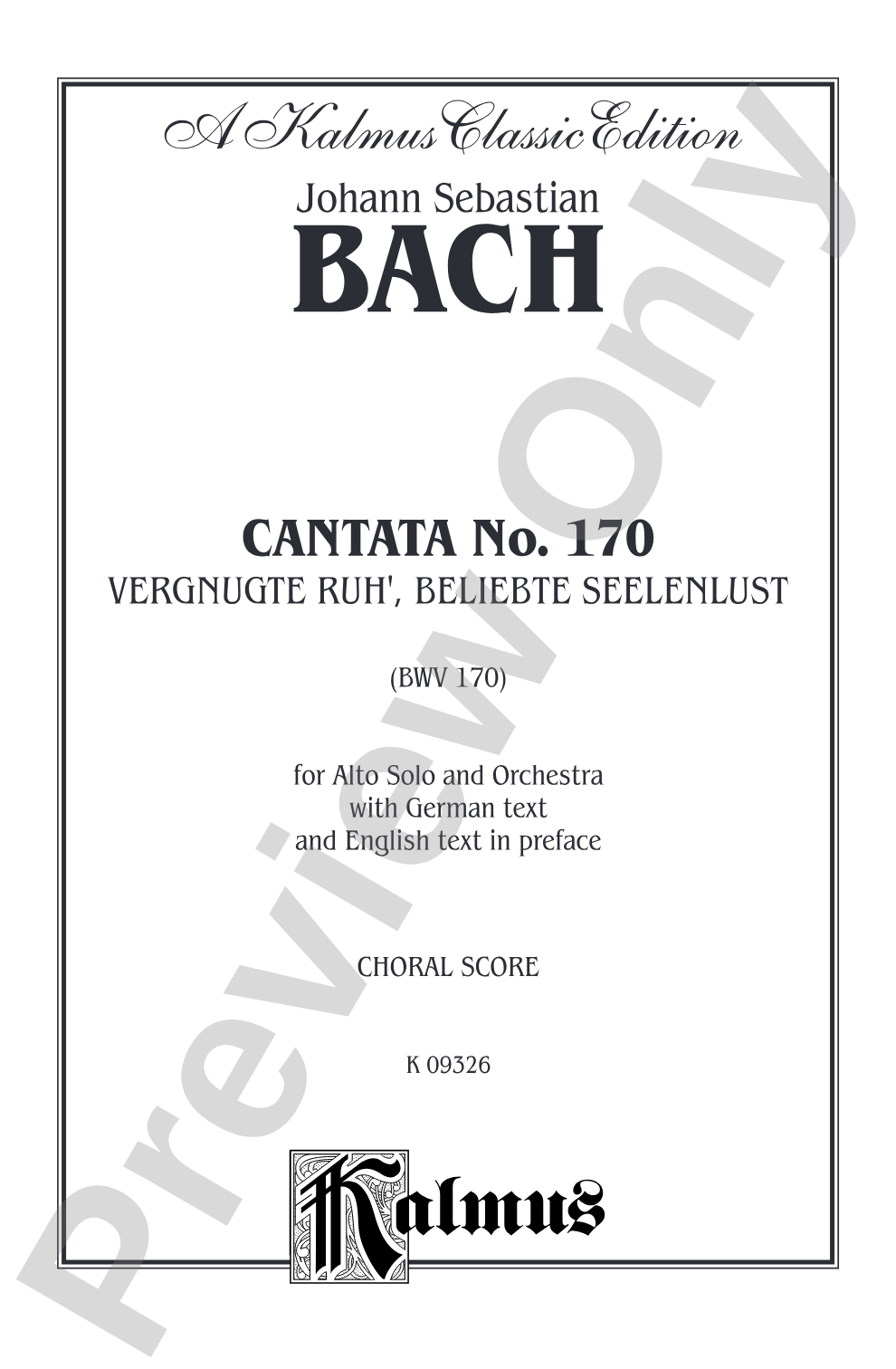

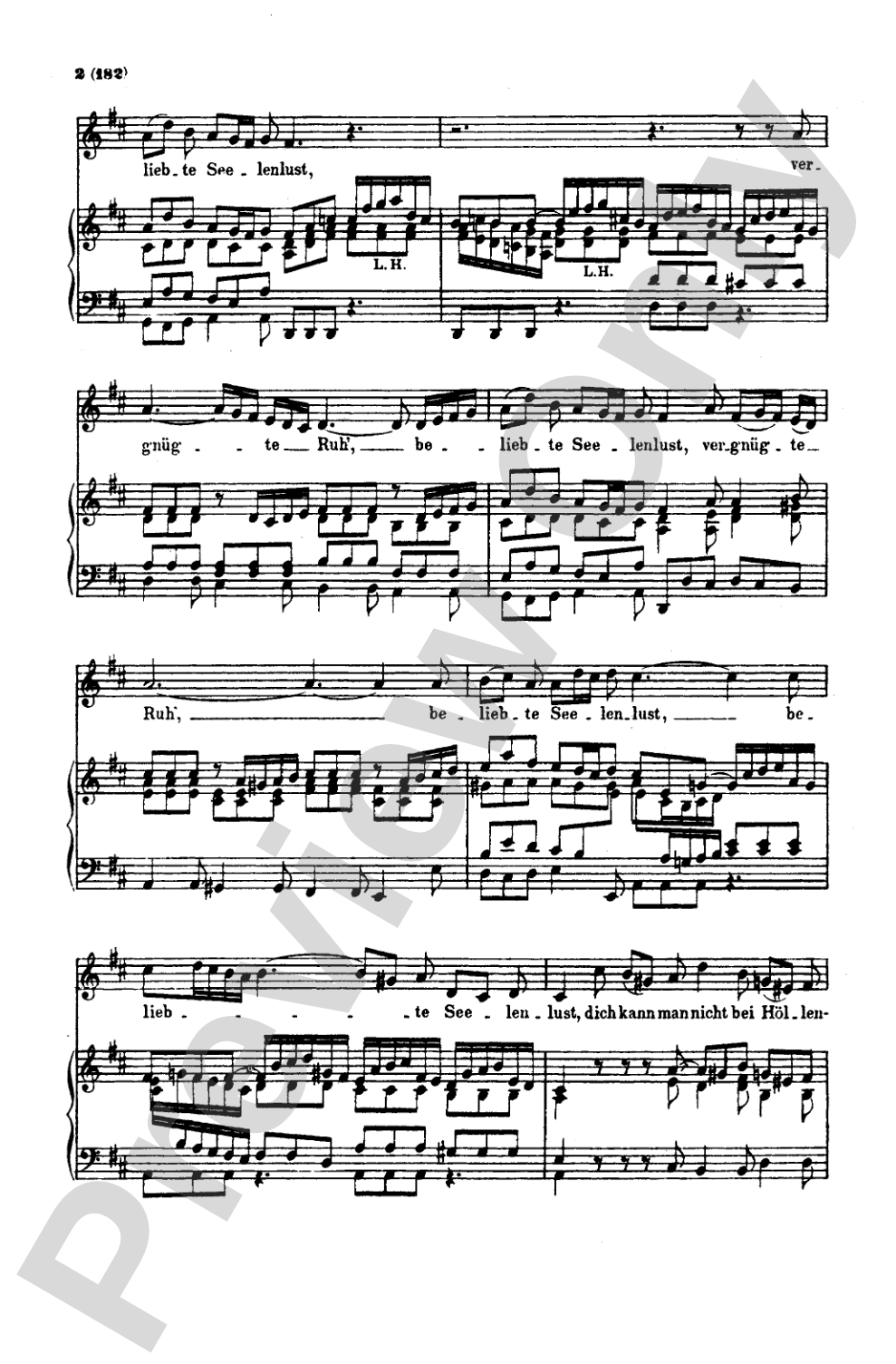
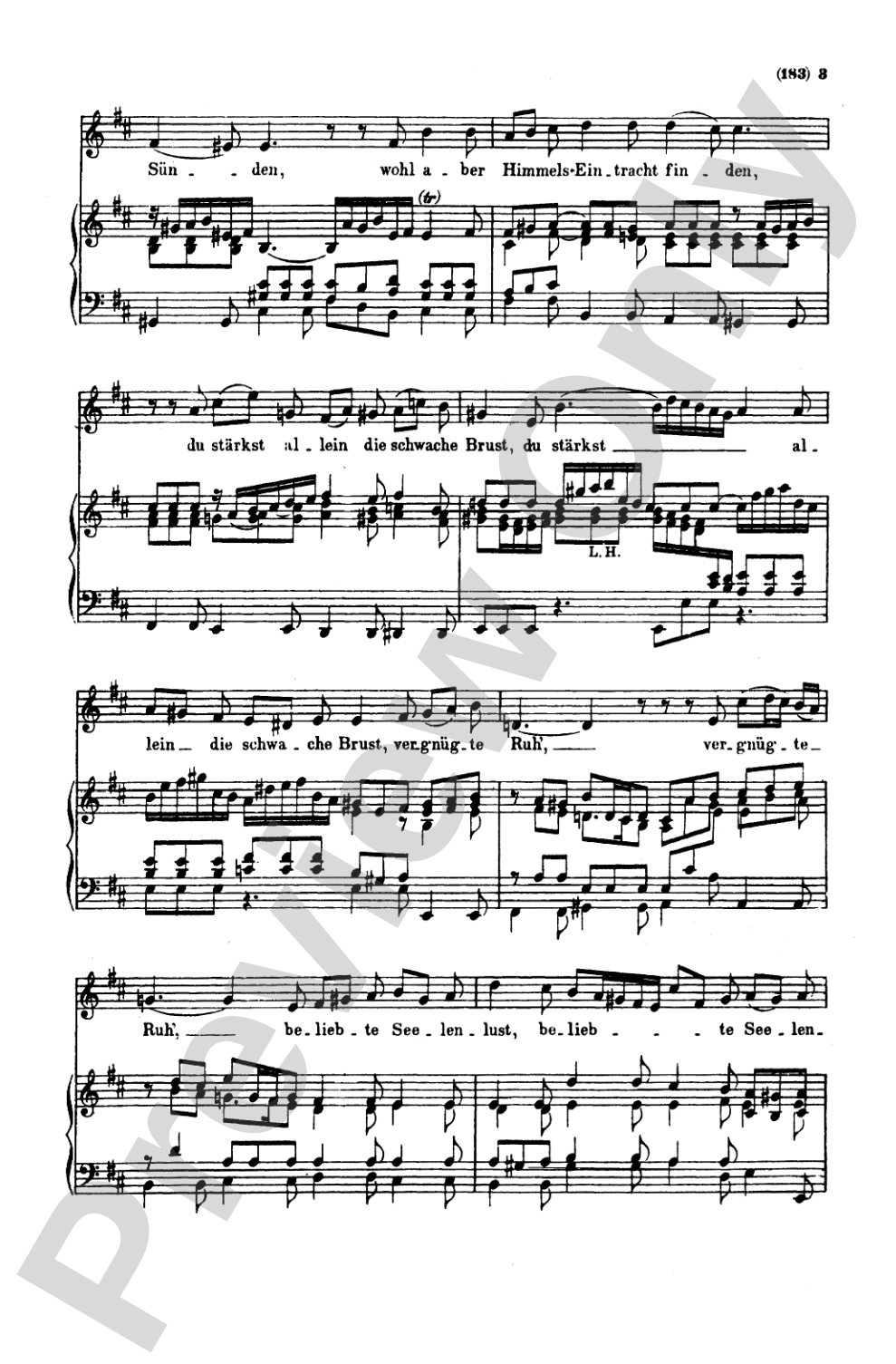
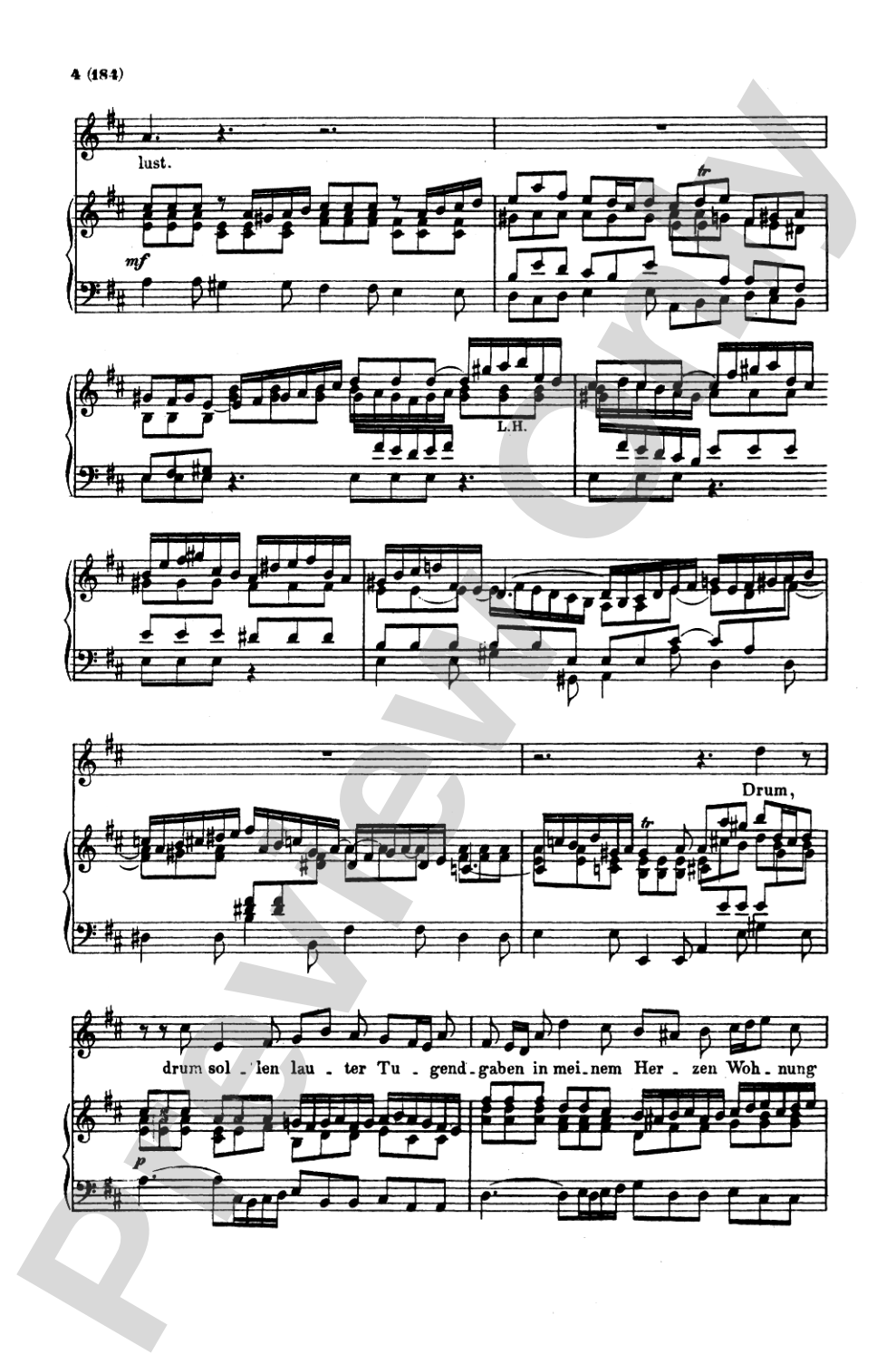
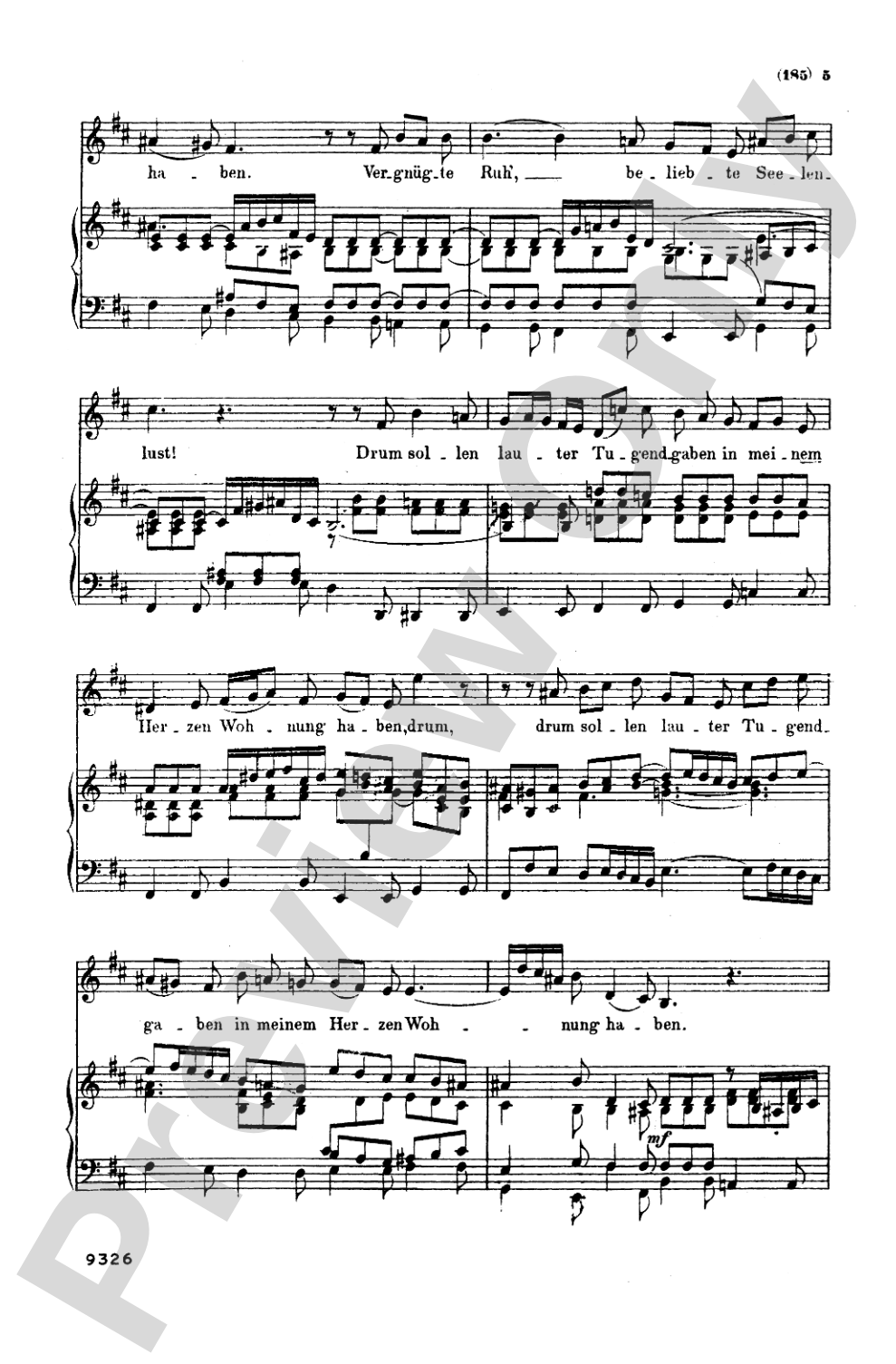
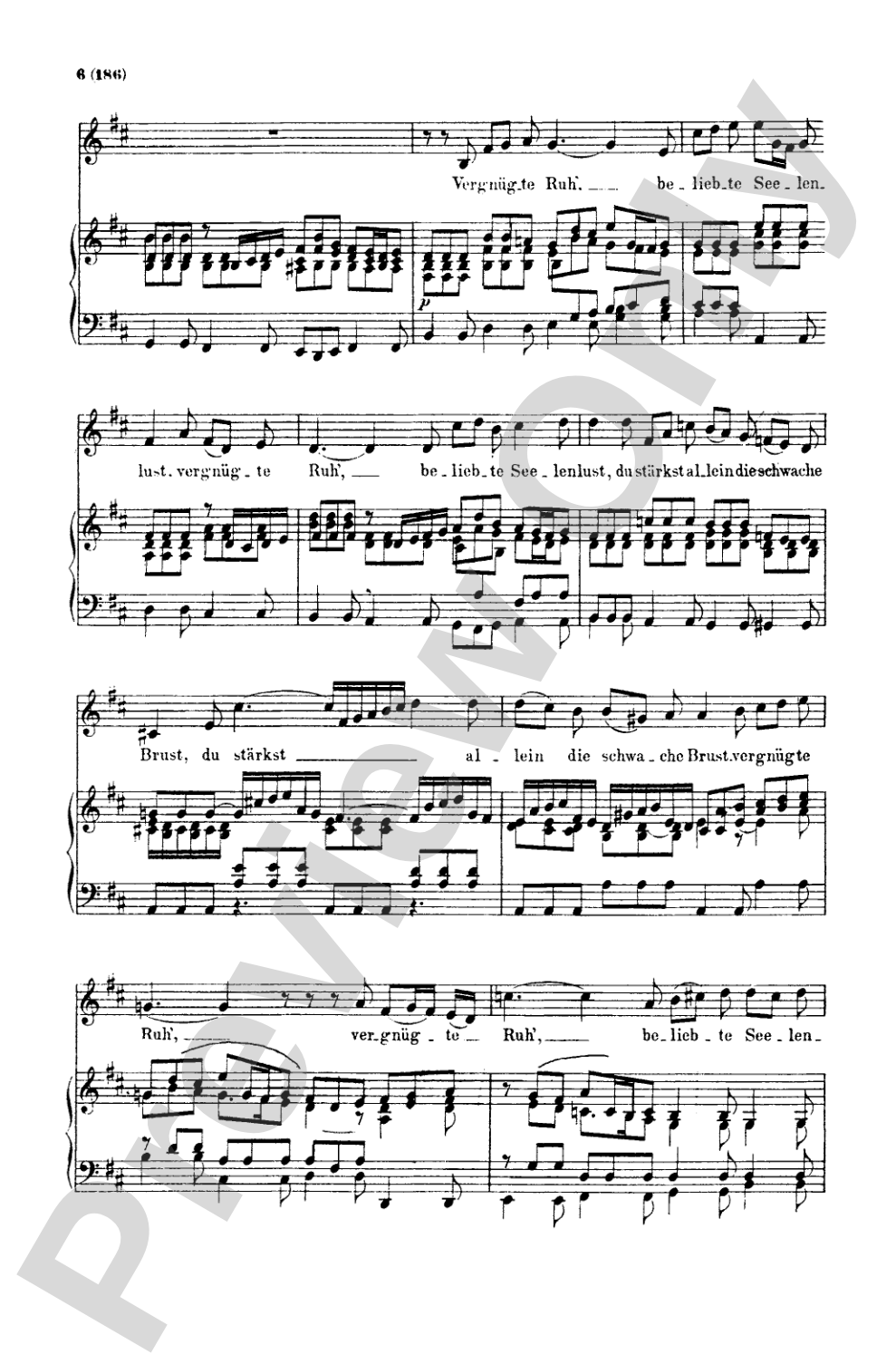
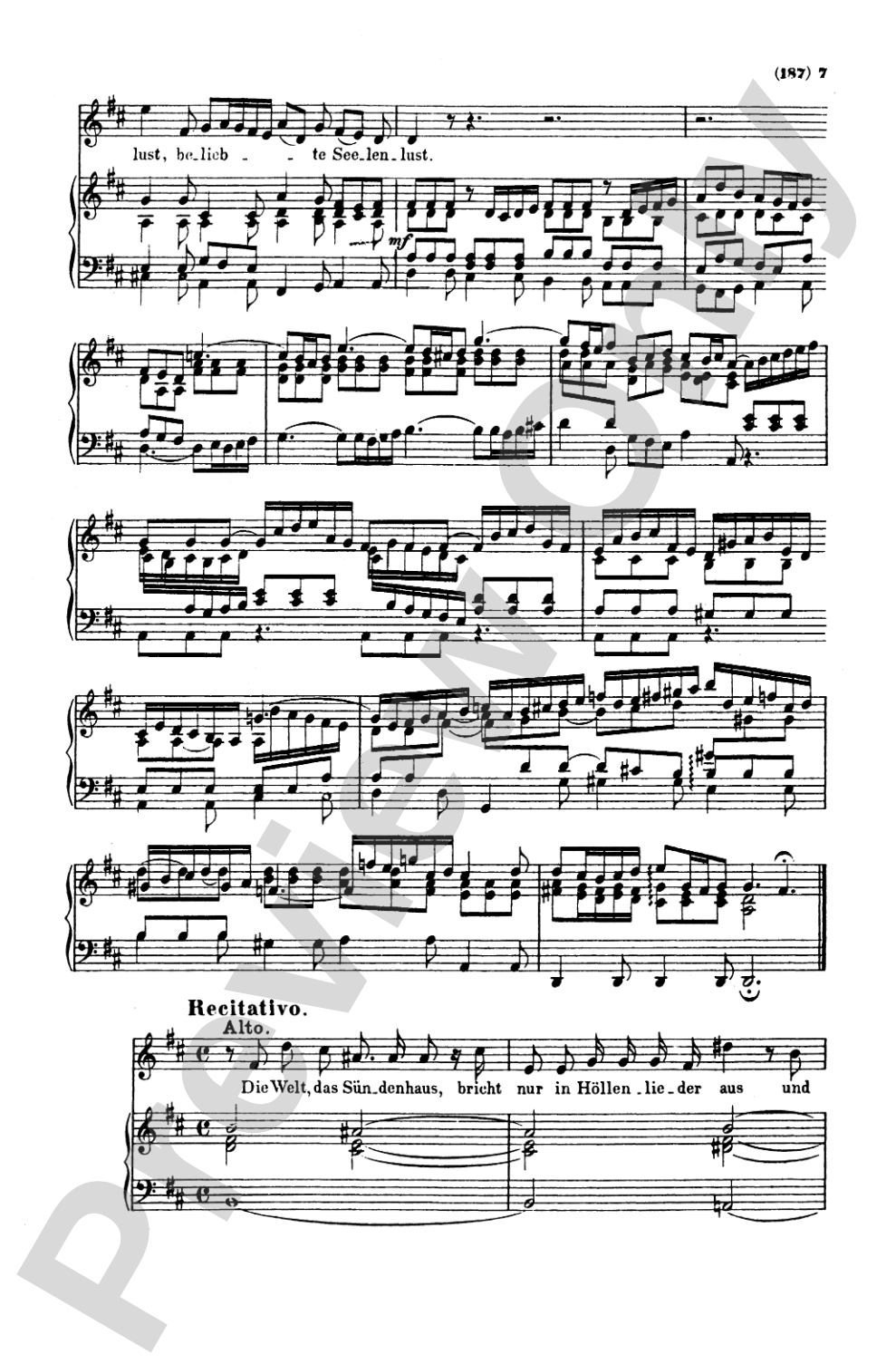
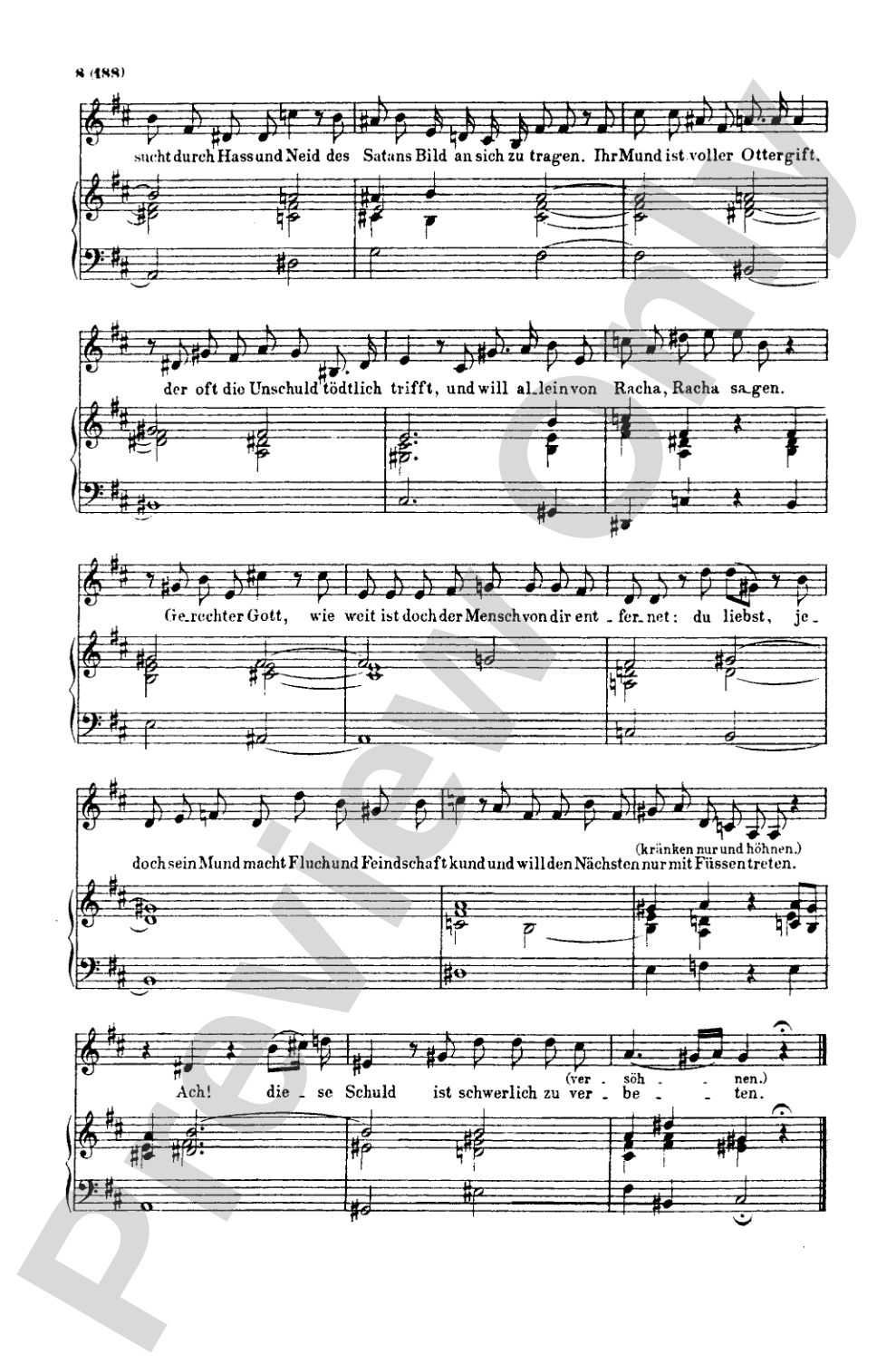
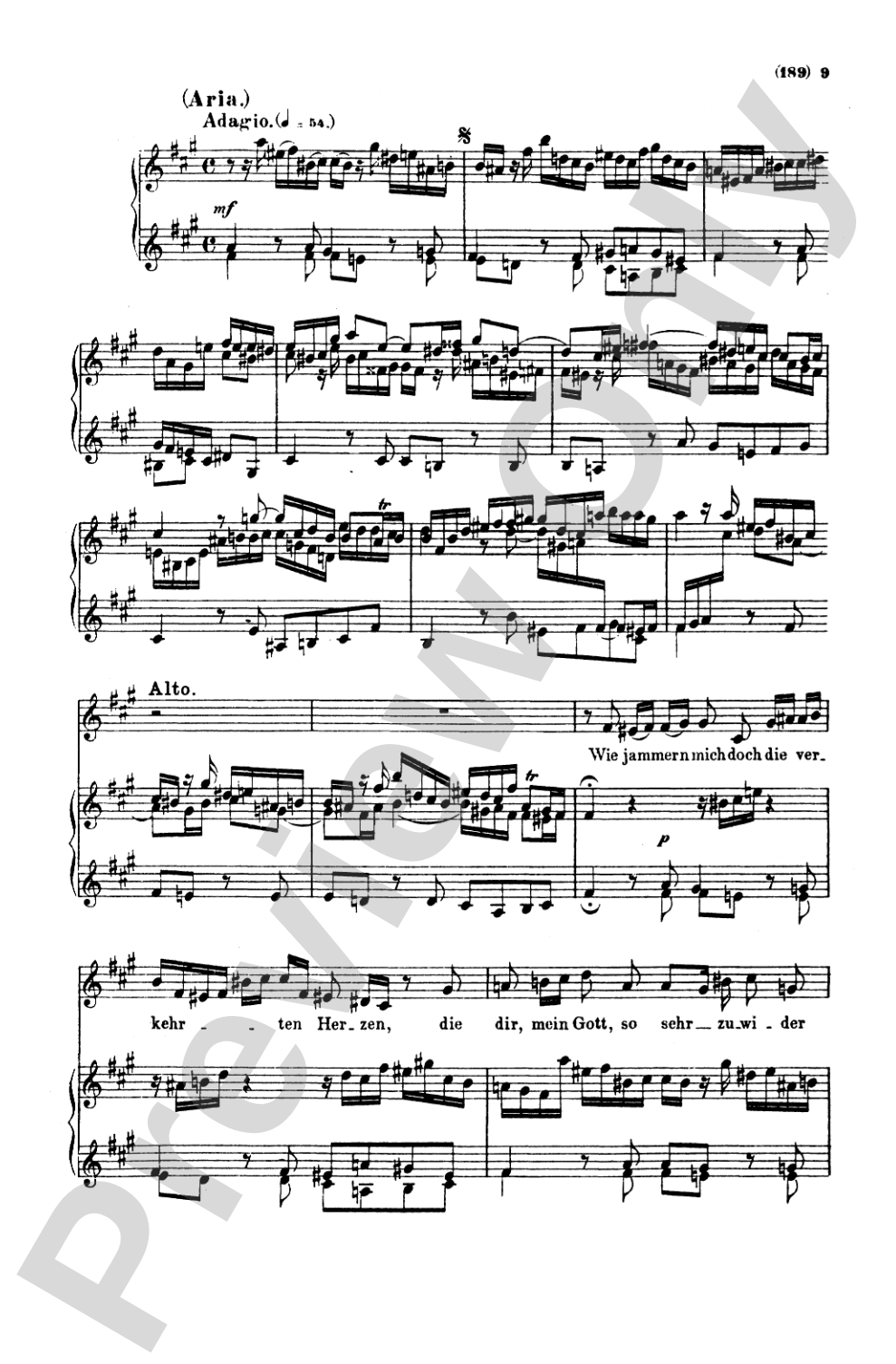
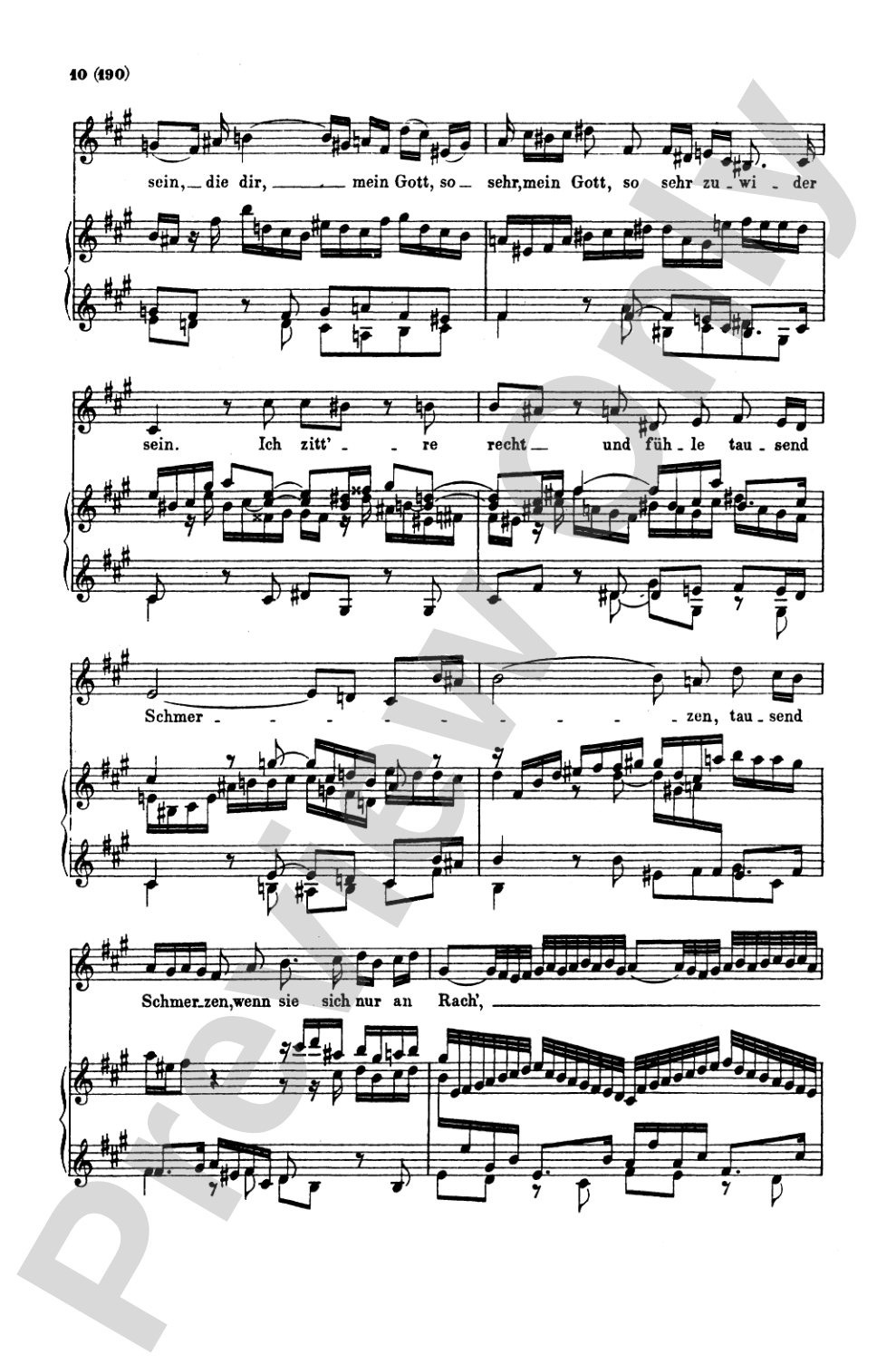
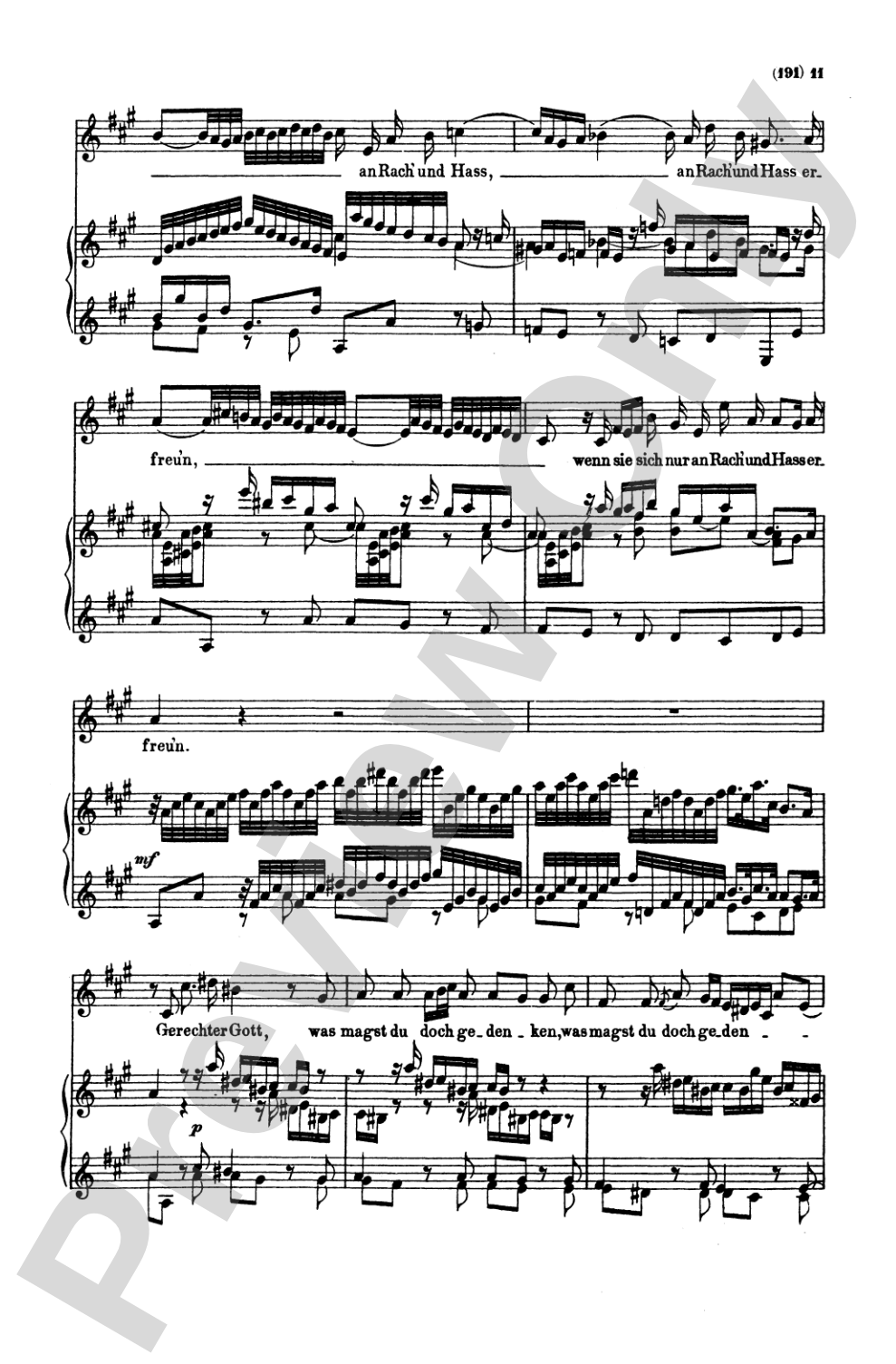
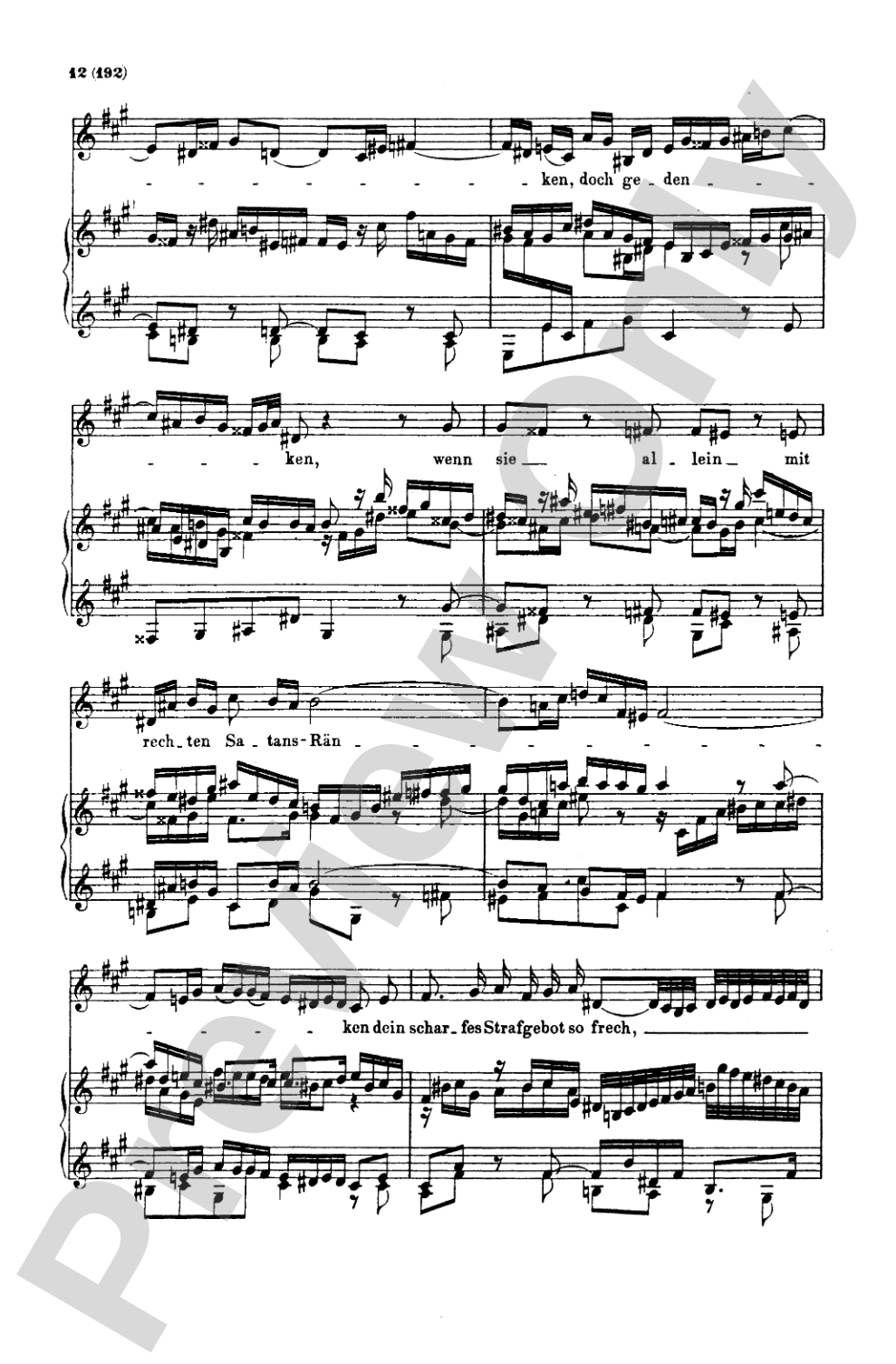
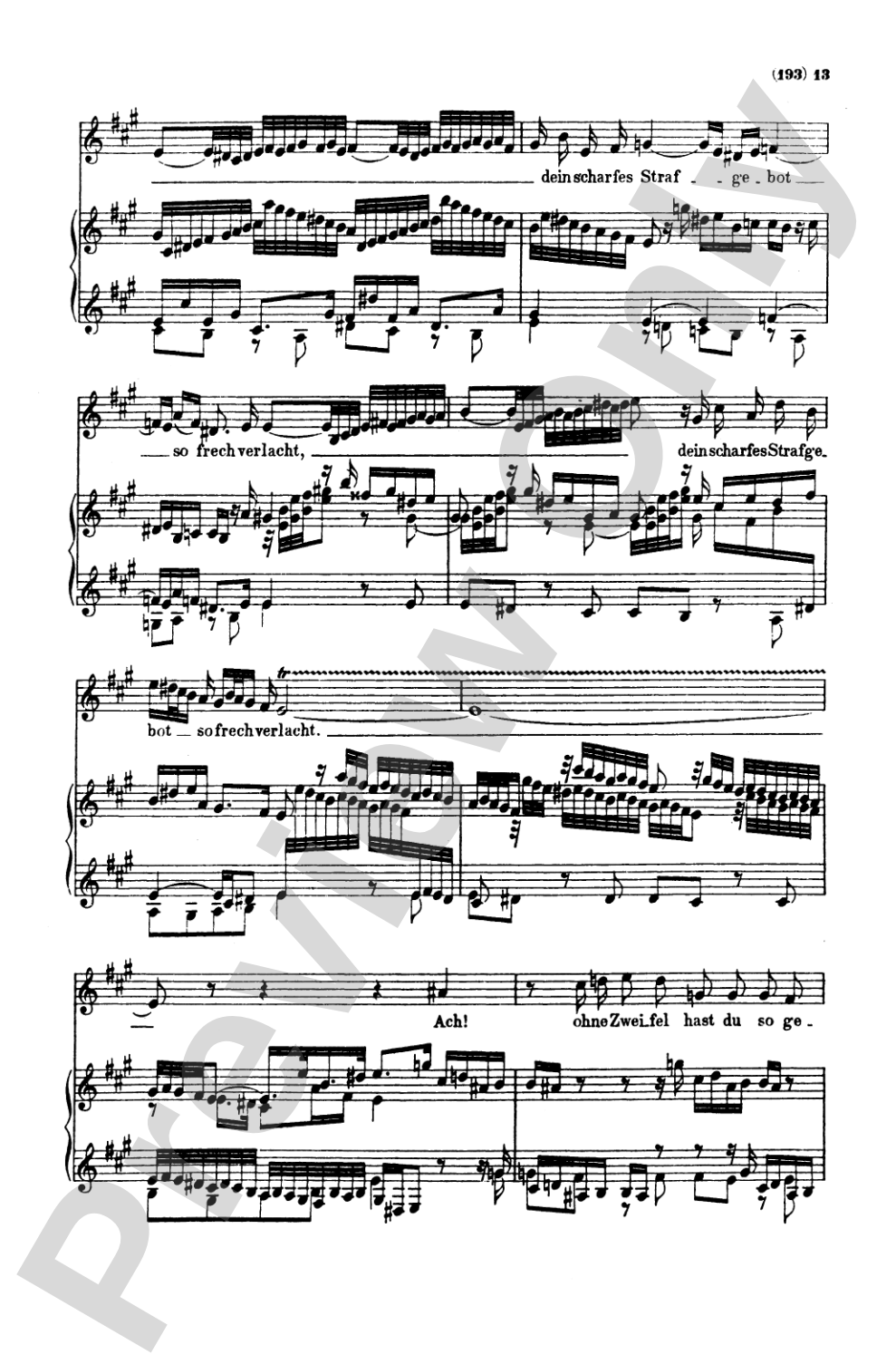
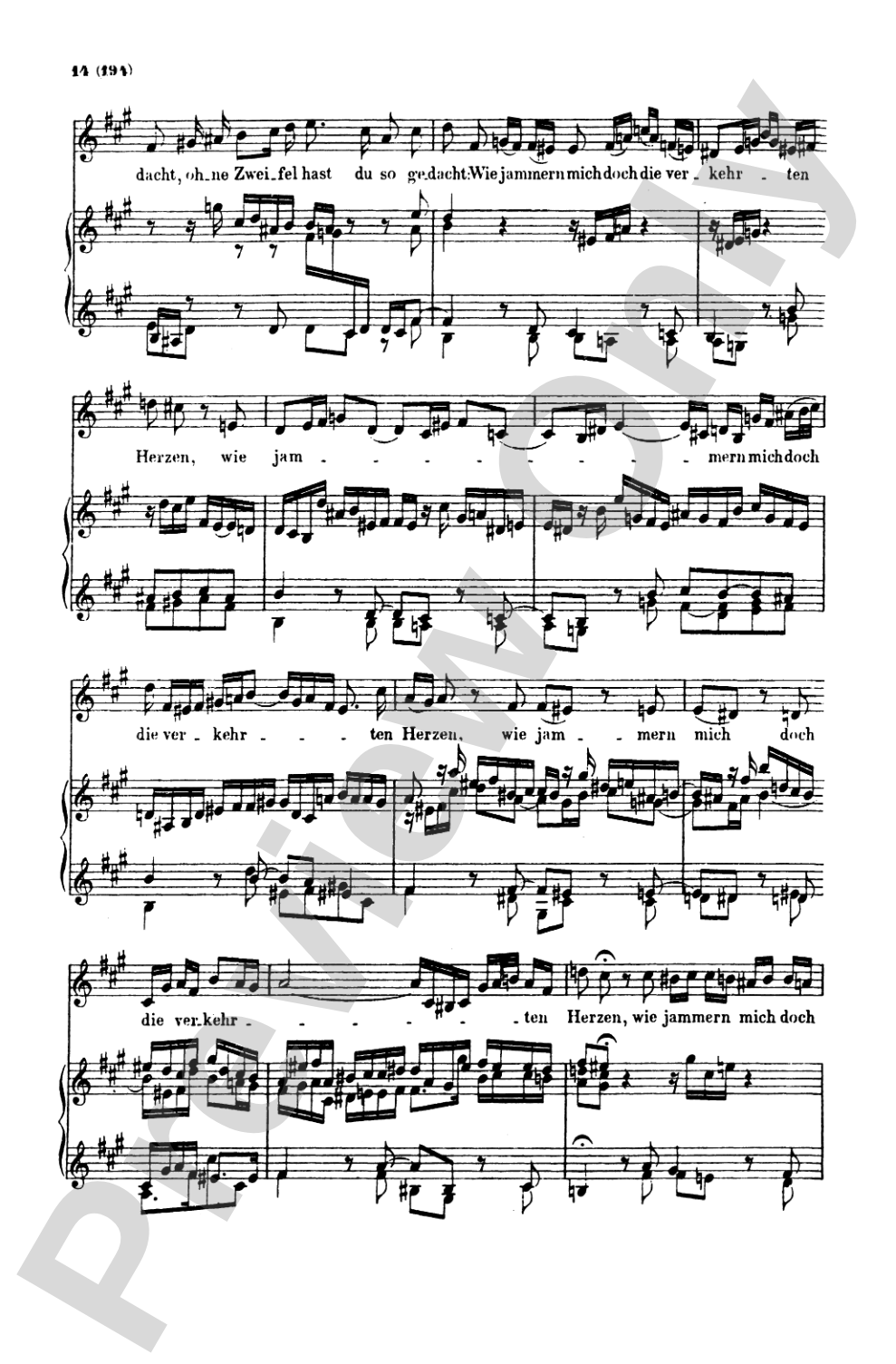
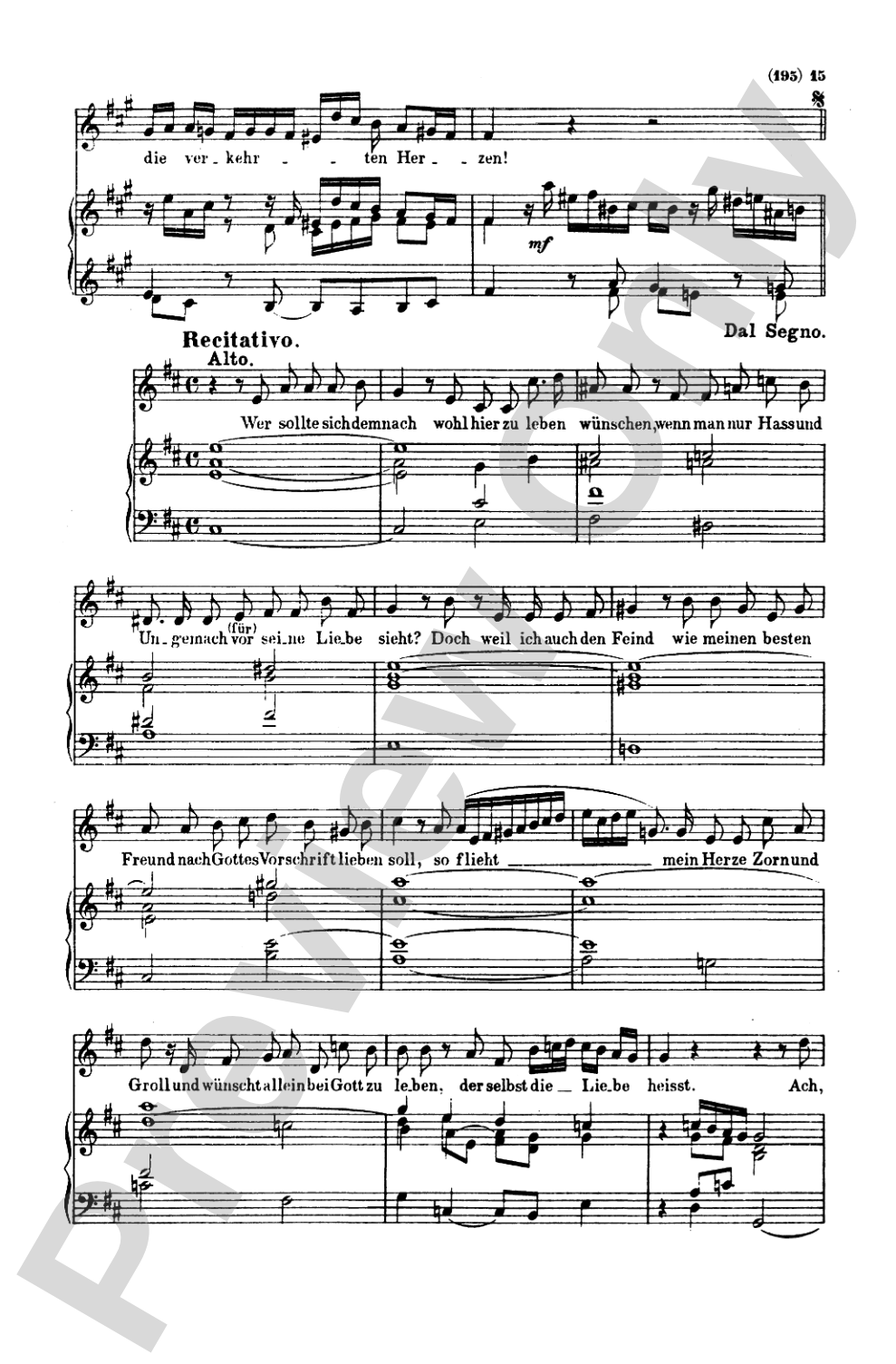
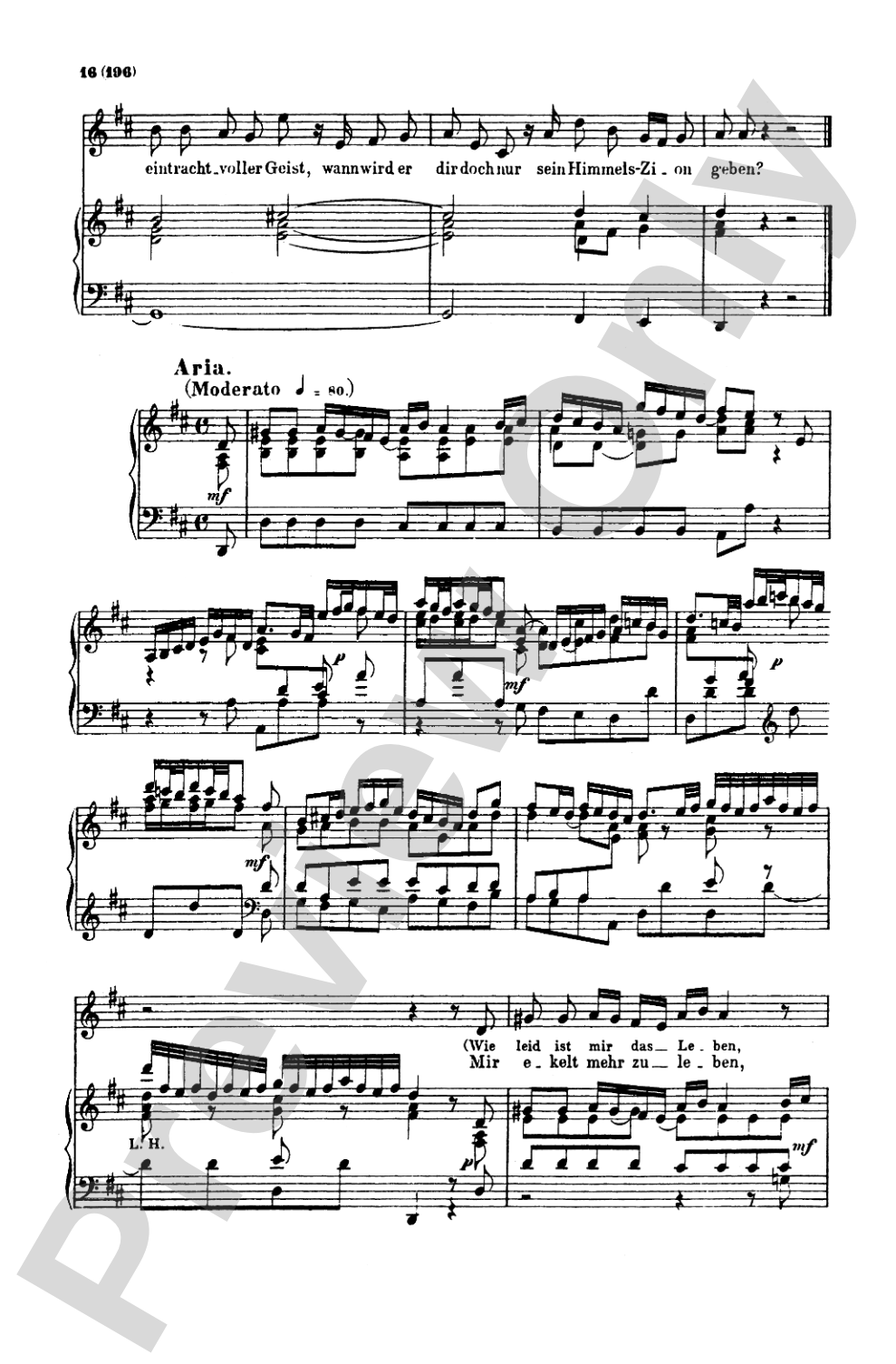
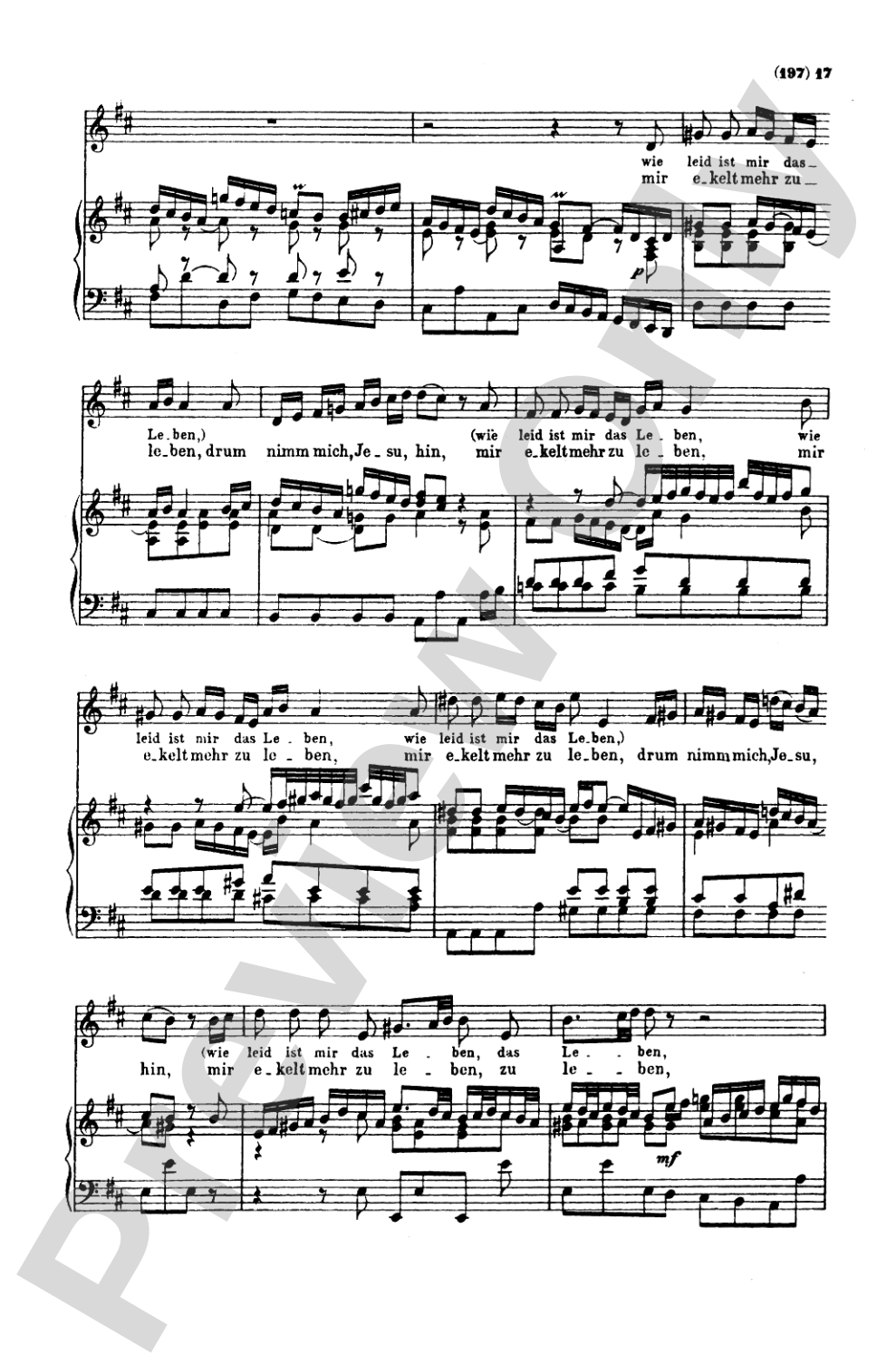
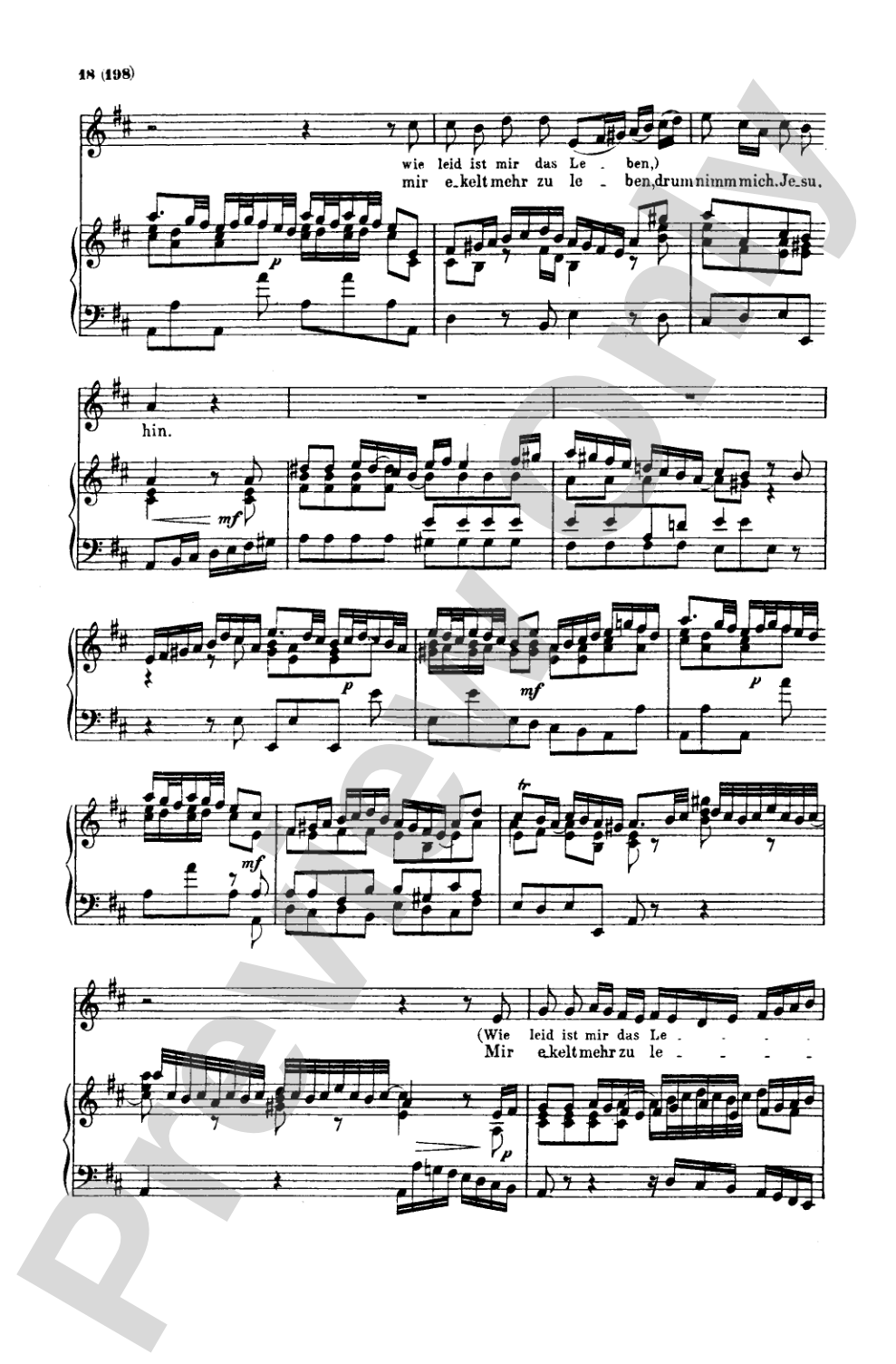
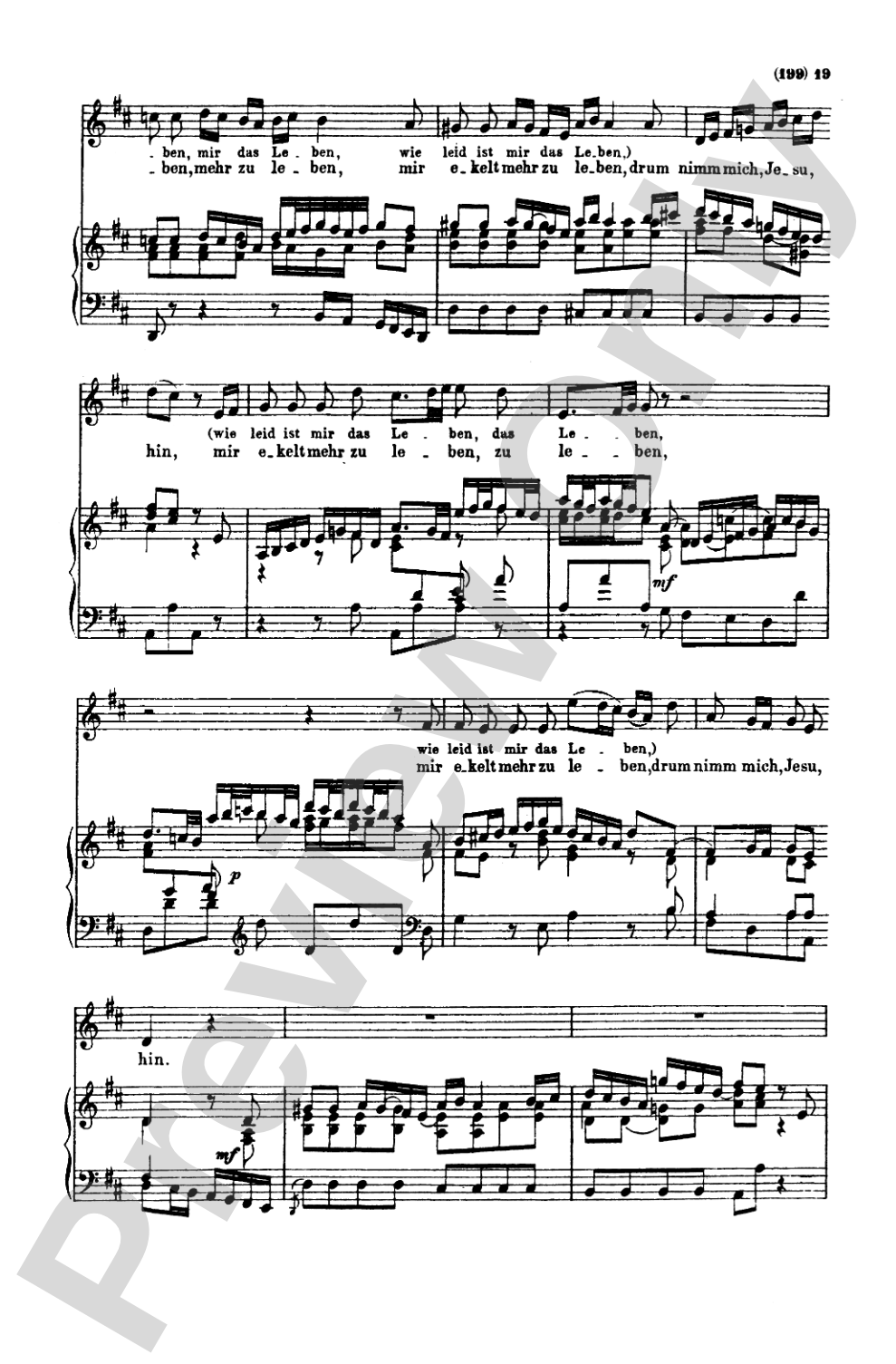
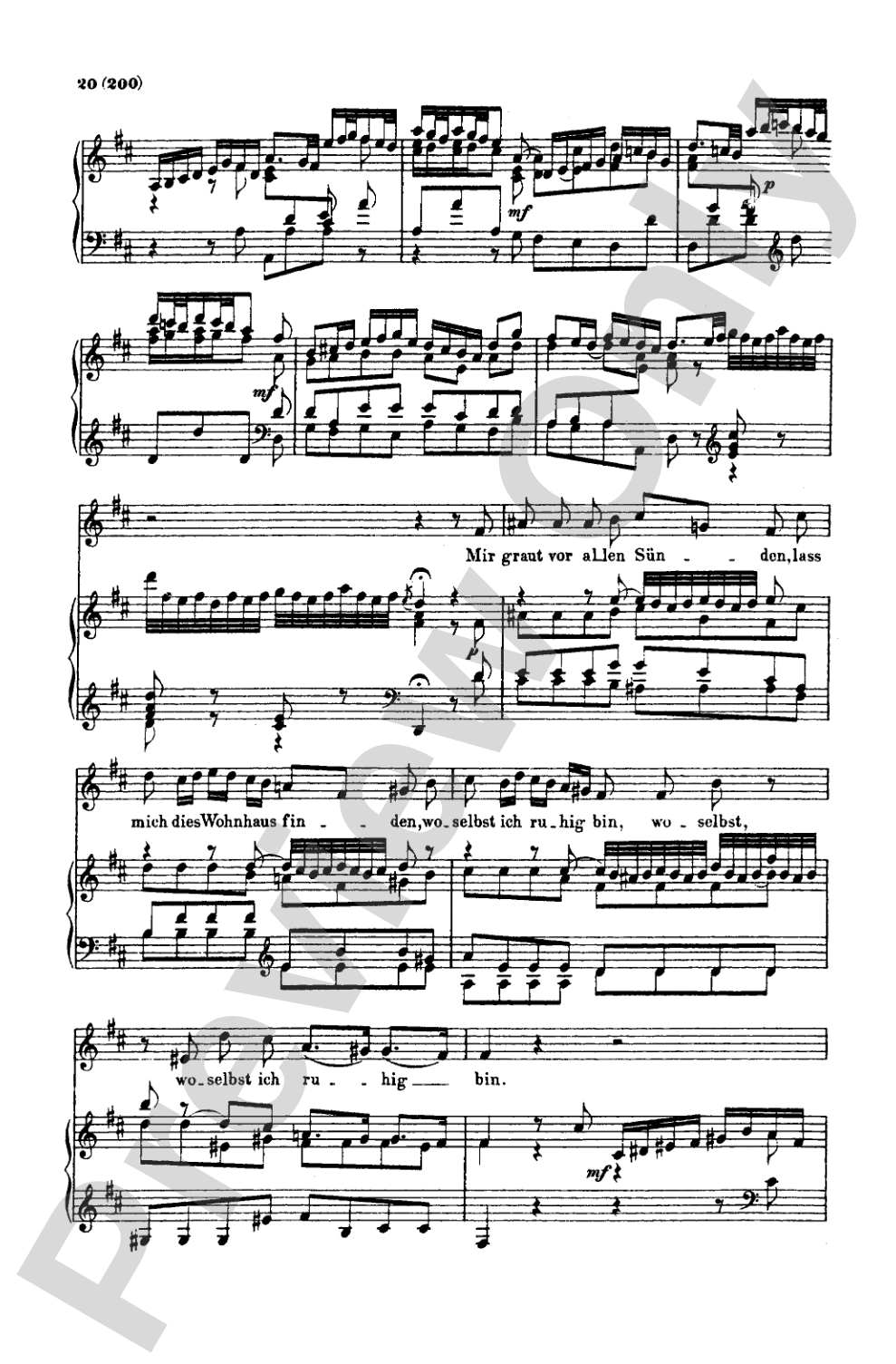
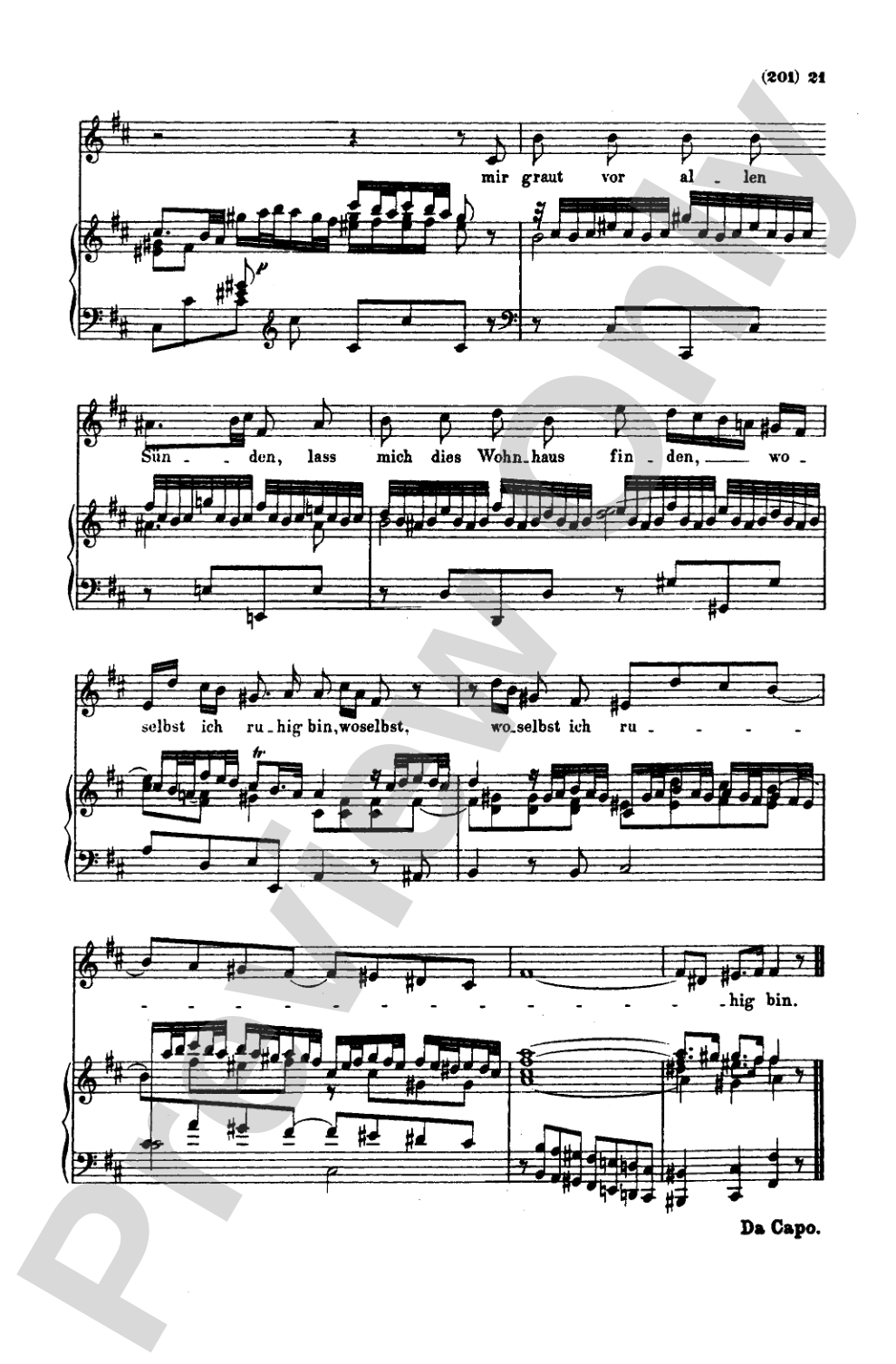




Bach: Contralto Solo, Cantata No. 170, Vergnugte Ruh', beliebte Seelenlust (German): SATB with A Solo Voice
For Alto Solo and Orchestra with German Text and English Text in Preface (Chorus/Choral Score)
By Johann Sebastian Bach
Item: 00-PK-0003730

$6.99
Pickup currently not available
Buy Extra Parts (Digital PDF Download)
| Product | Price | Quantity |
|---|---|---|
| Bach: Contralto Solo, Cantata No. 170, Vergnugte Ruh', beliebte Seelenlust (German) | $3.95 |
Parts Added to Cart!
Related Items
Cantata No. 170 -- Vergnugte Ruh', beliebte Seelenlust: SATB with A Solo Voice |
$6.99
|
View |
Description
A Solo Cantata for Contralto, composed by Johann Sebastian Bach.


Don't just read it, hear it, play along with it, and watch your students grow with it. In MakeMusic Cloud, Bach: Contralto Solo, Cantata No. 170, Vergnugte Ruh', beliebte Seelenlust (German): SATB with A Solo Voice comes alive with professional accompaniment, adjustable tempo, and built-in practice tools that turn solo practice into real progress.
Open in the Player
Jump straight in and assign it today.
Start Your Free Trial
Open this title and explore the full library in minutes.
Sample Audio
No sample audio found.
Sample Video
No sample videos found.
Additional Details
Series:
Kalmus Edition
Publisher:
Alfred Music
Page Count:
28
SKU:
00-PK-0003730
More about this title
About the Composer: Johann Sebastian Bach
Johann Sebastian Bach (1685-1750) composed some of the most intellectually rigorous and spiritually profound sacred music in the Western canon. His 200-plus cantatas represent a lifetime of weekly compositional commitment, each one crafted to accompany a specific Sunday or feast day in the Lutheran church calendar. Bach's mastery of counterpoint, harmonic innovation, and text-setting established the template for sacred vocal writing that composers would study for centuries to come.
Why we love this
This cantata sits at the intersection of Bach's deepest spiritual expression and some of his most singable vocal writing. The contralto solo line has a lyrical elegance that contrasts beautifully with the structural complexity surrounding it, making it an ideal vehicle for singers who need a showpiece that is both vocally rewarding and musically substantive. Programming a complete Bach cantata signals serious choral ambition and gives your ensemble access to the real thing rather than a simplified adaptation.
What to expect
The title translates to "Contented Rest, Beloved Soul's Joy," and the music radiates a contemplative, almost meditative quality. Bach balances lyrical warmth in the solo line with intricate harmonic and contrapuntal movement in the ensemble, creating a sense of spiritual arrival and inner peace. The Baroque idiom speaks with unfussy directness; there is no sentimentality here, only clarity and conviction.
Who it's for
This work demands choral singers with solid part-reading skills and an intermediate to advanced grasp of Baroque counterpoint. The contralto soloist should be comfortable with period style, German diction, and the emotional restraint and ornamentation typical of Bach's vocal writing. Programs with the musical literacy to tackle authentic Bach cantatas will find this a cornerstone repertoire choice.
How to get the most out of it
- Prepare the SATB ensemble separately from the solo line first. The harmonic foundation must be rock solid, with independent voice leading heard clearly, before the contralto soloist adds her expressive layer on top.
- Shape the solo line with attention to German text declination and rhetorical emphasis rather than purely musical phrasing. Bach's text-painting rewards singers who understand what the words are communicating spiritually.
- Balance the solo voice so it sits inside the four-part texture rather than floating above it. The cantata's design integrates the soloist into the harmonic fabric; avoid the trap of treating her as a separate entity.
- Mark breath points in the score where they align with textual or harmonic punctuation, not arbitrary phrase lengths. Baroque phrasing often defies modern expectations of lyrical line.
How to use it
This cantata works exceptionally well as a complete liturgical or concert program on its own, or paired with other Bach sacred works of similar scale to create a focused Bach concert. Its 28 pages suggest a substantial rehearsal investment best suited to a season where Bach is a central focus rather than a single concert item. Consider programming it for a sacred music festival, church music series, or a concert exploring German Baroque vocal literature.
Skills your students will build
- Reading and performing Bach's counterpoint with independent voice integrity
- Sustaining long Baroque harmonic progressions without losing pitch center
- German text clarity and period-appropriate articulation and ornamentation
- Coordinate solo and ensemble voices in a multi-movement sacred work
- Interpreting rhetorical and spiritual content in 18th-century Lutheran sacred music