

Bach: Complete Organ Works, Volume VII
By Johann Sebastian Bach
Level: Advanced
Item: 00-PC-0004634
$0.99
Pickup currently not available
Description
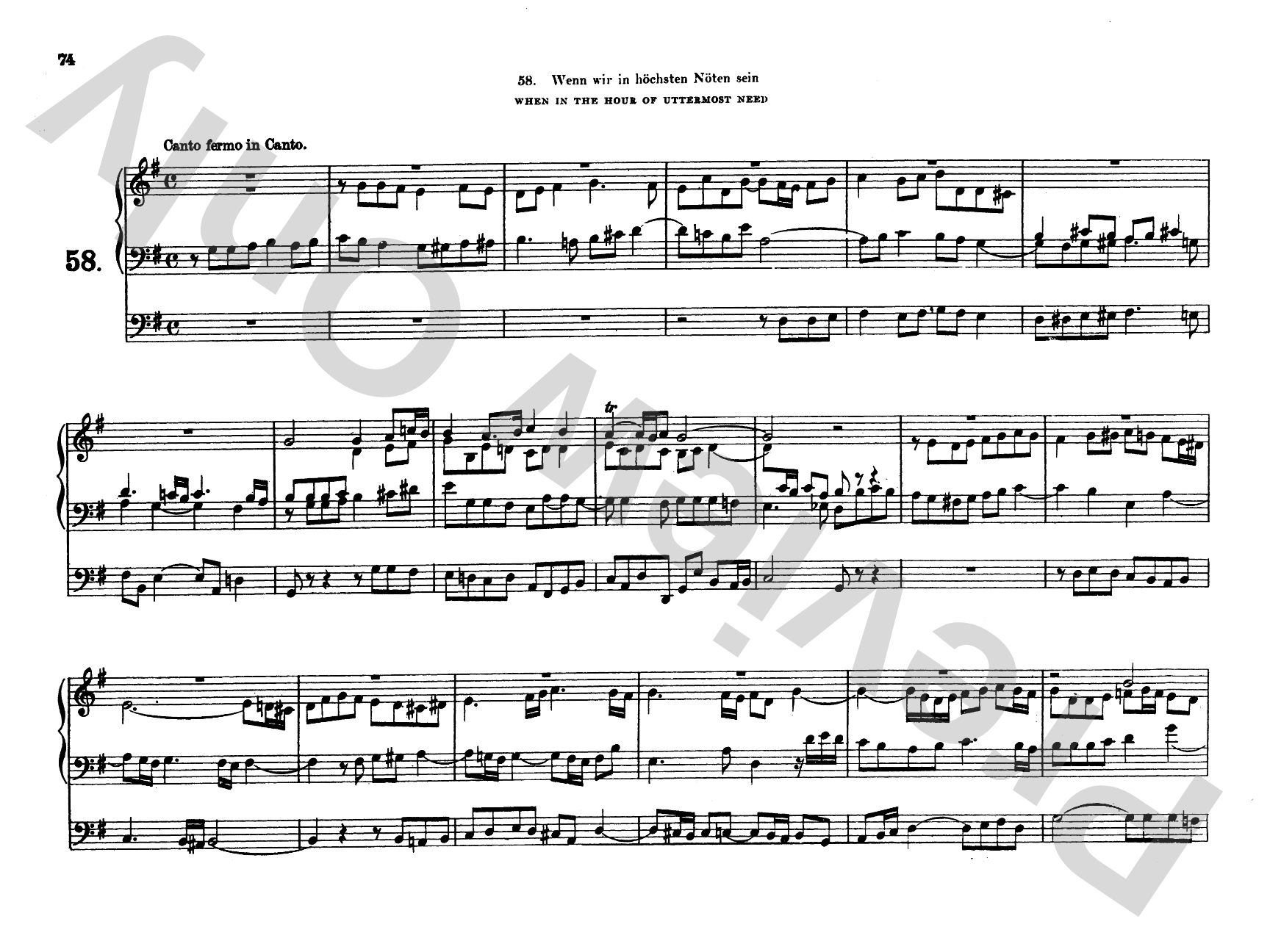
29 Chorale Preludes (Incl. 11 From the Clavierubung, Part III) (Advanced). The comb binding creates a lay-flat book that is perfect for study and performance.


Don't just read it, hear it, play along with it, and watch your students grow with it. In MakeMusic Cloud, Bach: Complete Organ Works, Volume VII comes alive with professional accompaniment, adjustable tempo, and built-in practice tools that turn solo practice into real progress.
Open in the Player
Jump straight in and assign it today.
Start Your Free Trial
Open this title and explore the full library in minutes.
Sample Audio
No sample audio found.
Sample Video
No sample videos found.
Additional Details
Series:
Kalmus Edition
Publisher:
Alfred Music
Page Count:
112
SKU:
00-PC-0004634
More about this title
About the Composer: Johann Sebastian Bach
Johann Sebastian Bach (1685-1750) shaped the foundation of Western music through his mastery of counterpoint, harmony, and structural logic. His work across every major Baroque genre established principles that would influence composers for centuries. Bach's organ music stands apart for its architectural complexity and spiritual depth, combining technical virtuosity with profound musical expression.
As cantor at St. Thomas Church in Leipzig and kapellmeister at Weimar and Cöthen, Bach composed for the instruments and liturgical needs of his time. His chorale preludes in particular represent a convergence of his gifts: they transform Protestant hymn melodies into polyphonic works of extraordinary craft, making them essential repertoire for organists seeking to understand both historical performance practice and the roots of modern keyboard technique.
Why we love this
These 29 chorale preludes offer advanced organists a concentrated study in how Bach transforms a single hymn melody into a complete musical argument. The inclusion of the Clavierübung III settings provides access to some of his most architecturally ambitious keyboard writing, and the lay-flat comb binding respects the performer's need to study and perform without fighting the book. This collection bridges liturgical utility and concert repertoire in a way few works can.
What to expect
Each chorale prelude unfolds with the inevitability of a mathematical proof, yet the emotional landscape shifts constantly from introspection to brilliance. The writing balances contrapuntal complexity with moments of stark harmonic clarity, creating spaces where both technical display and spiritual contemplation coexist. Bach's ability to suggest movement, color, and even drama within the constraints of a single hymn melody makes these works endlessly rewarding to explore.
Who it's for
Advanced organists who want to deepen their understanding of Bach's keyboard language and liturgical writing. Church musicians preparing repertoire for services or recitals will find both practical and artistically rewarding material here. This collection also serves organists working toward performance diplomas or those building a comprehensive Bach cycle.
How to get the most out of it
- Attend to the independence of each voice line; Bach's counterpoint will dissolve into mud if any voice is subordinated to another. Each strand requires its own breath and articulation.
- Use the pedal part to establish harmonic foundation first, then integrate the manual divisions. Many organists force the texture by trying to balance everything at once.
- Study the registration suggestions in your edition carefully, but understand that Bach's original organ specifications differed radically from modern instruments. Experiment with how coupler settings and manual changes create textural shifts.
- Approach the hymn melody as a cantus firmus that anchors the texture, not as the primary line. Bach often hides the chorale in an inner voice or embeds it within faster figuration.
How to use it
Chorale preludes work beautifully as standalone recital pieces or as part of a thematic program exploring Bach's sacred keyboard works. They fit naturally into church services as postludes or interludes, especially when the chosen chorale is relevant to the liturgy. Consider pairing selections with works by composers who wrote in response to Bach, showing how his structural principles carried forward into later centuries.
Skills your students will build
- Polyphonic independence between multiple manual and pedal divisions
- Registration and tonal balance across different sections of the instrument
- Ornament interpretation and period-appropriate articulation in Baroque keyboard music
- Harmonic analysis of Bach's part-writing and voice-leading logic
- Pedal technique including legato, staccato, and rapid passage work
- Sight-reading complex multi-stave layouts with varying clefs