Bach: Complete Organ Works, Volume VI Sheet Music Preview

Bach: Complete Organ Works, Volume VI

By Johann Sebastian Bach

Level: Moderately Difficult

Item: 00-PC-0004598

Digital Download
$0.99
Description
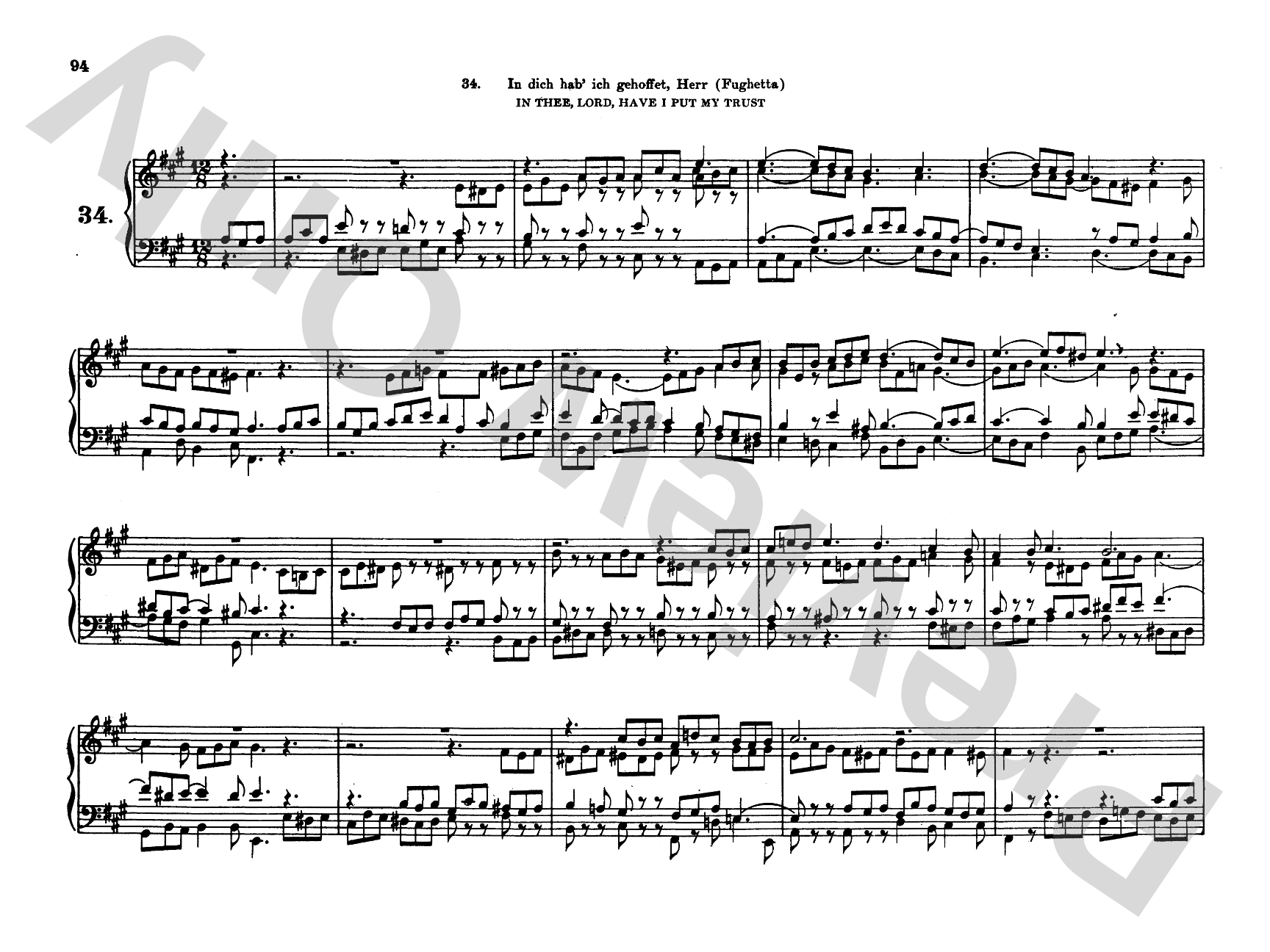
34 Chorale Preludes (Moderately Difficult). The comb binding creates a lay-flat book that is perfect for study and performance.

Don't just read it, hear it, play along with it, and watch your students grow with it. In MakeMusic Cloud, Bach: Complete Organ Works, Volume VI comes alive with professional accompaniment, adjustable tempo, and built-in practice tools that turn solo practice into real progress.

Sample Audio
No sample audio found.
Sample Video
Additional Details
Series: Kalmus Edition
Publisher: Alfred Music
Page Count: 120
SKU: 00-PC-0004598

More about this title

About the Composer: Johann Sebastian Bach

Johann Sebastian Bach (1685-1750) shaped the trajectory of Western music through his synthesis of German, Italian, and French styles. His organ works stand as the apex of Baroque keyboard writing, demanding both technical mastery and interpretive maturity from performers. Bach's chorale preludes in particular represent a lifetime of compositional refinement, moving from the elaborate fantasias of his youth to the distilled, profound meditations of his later years.

Why we love this

These 34 chorale preludes showcase Bach at his most introspective and structurally ingenious. The comb binding makes sustained study genuinely practical; you can keep the book open to a single piece during practice without it snapping shut or requiring page weights. This collection spans Bach's entire compositional life, so a thoughtful organist can trace the evolution of his voice across decades within a single volume.

What to expect

These chorale preludes range from intimate and meditative to architecturally ambitious, often within a single piece. The textures are clear and transparent, yet they contain surprising harmonic turns and intricate inner-voice movement that rewards repeated listening. There is profound restraint here; Bach says everything necessary and nothing more, creating a sense of inevitability.

Who it's for

Organists who have moved past early repertoire and are ready to engage with Bach's harmonic language and contrapuntal complexity. This collection suits both advanced students preparing for recitals and experienced performers looking to deepen their Bach practice. Teachers can also use individual pieces from this volume as recital openers or standalone teaching repertoire.

How to get the most out of it

  • Map the manual and pedal divisions before you begin. Bach's registration intentions vary widely across these pieces; some demand contrast between manuals, while others benefit from unified sonority. The score itself provides limited registration guidance, so listen to multiple recordings and trust your instrument's capabilities.
  • Slow your practice tempo radically, especially in the elaborate figurations and canonic passages. These pieces contain harmonic and contrapuntal density that obscures itself at performance tempo. Working at half speed reveals Bach's inner voices and the relationships that make each phrase coherent.
  • Pay close attention to the bass line as its own melodic voice rather than accompaniment. In many of these chorales, the pedal part is thematically active and rhythmically independent. Neglecting it flattens the architecture.
  • Attend to fermatas and breathing points with precision. Bach uses them structurally to separate sections and create rhetorical weight. Rushing through these moments collapses the form.

How to use it

A single chorale prelude functions beautifully as a recital opener, establishing the Baroque aesthetic before moving to later repertoire. Alternatively, program three or four pieces from different periods of Bach's life as a thematic suite that demonstrates his stylistic evolution. These works also complement organ concertos or larger Bach works on the same program.

Skills your students will build

  • Independent hand and foot coordination in contrapuntal textures
  • Reading figured bass notation and realizing implied harmonies
  • Voicing four-part chorales across multiple manuals and pedal
  • Sustaining lyrical lines while managing complex accompaniment figuration
  • Interpreting Baroque phrasing and articulation without modern expression markings
  • Understanding chorale melody and its harmonic treatment across different compositional approaches

You May Also Like