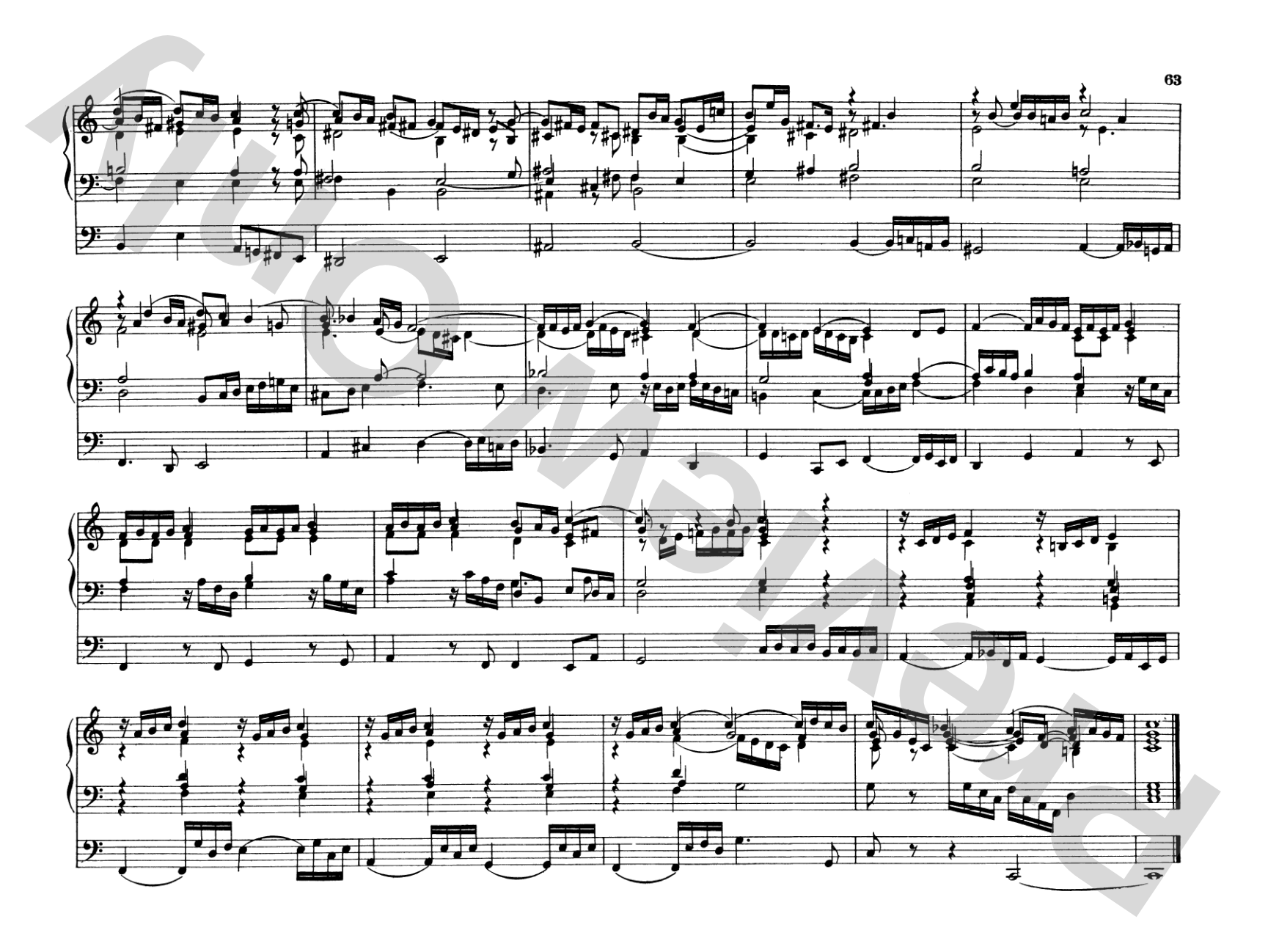
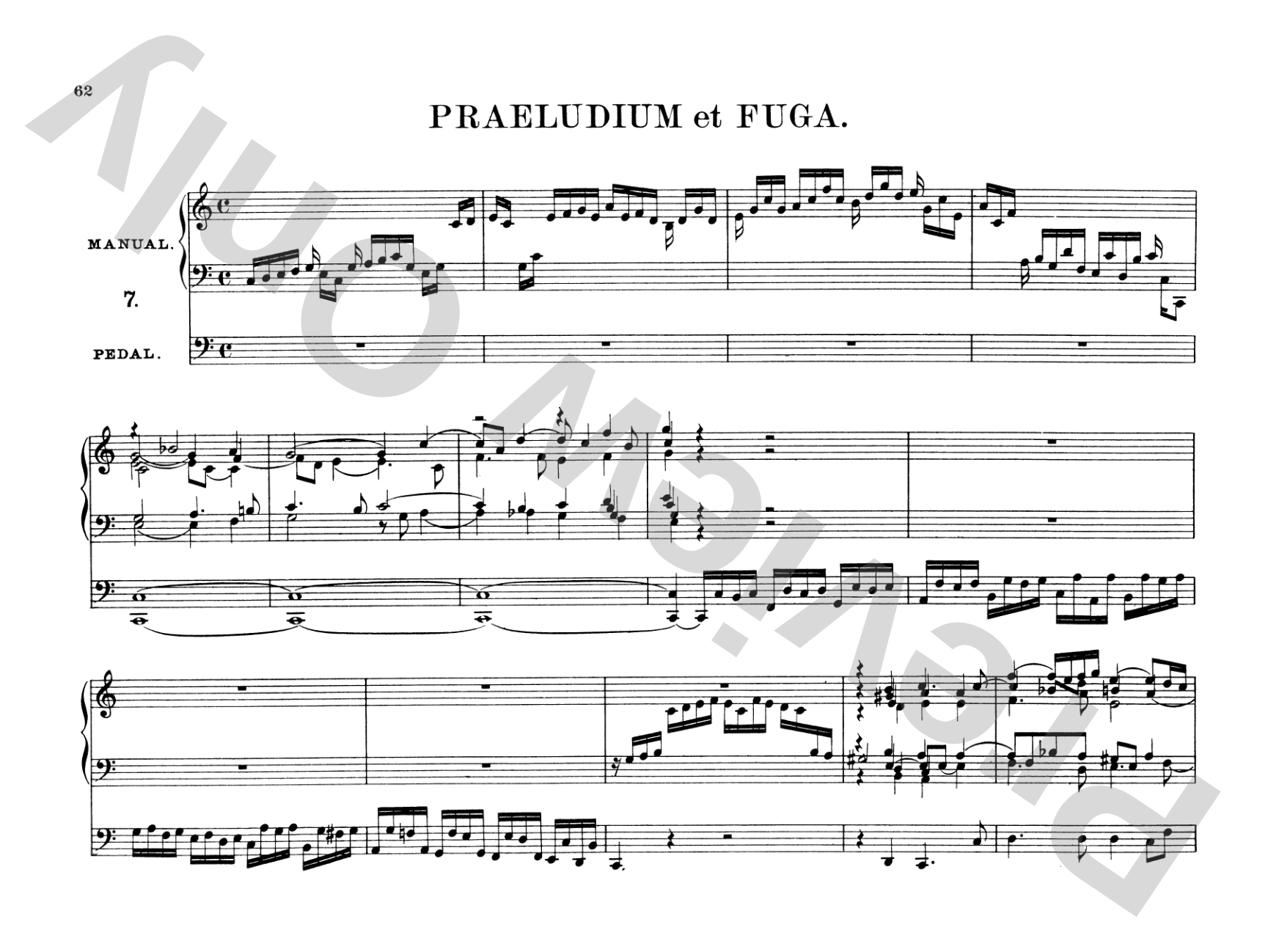
Bach: Complete Organ Works, Volume III Sheet Music Preview

Bach: Complete Organ Works, Volume III

By Johann Sebastian Bach

Item: 00-PC-0004544

Digital Download
$0.99
Description
SIX Preludes and Fugues (Incl. St. Ann's Fugue), Three Toccatas and Fugues, Fantasy and Fugue. The comb binding creates a lay-flat book that is perfect for study and performance.

Don't just read it, hear it, play along with it, and watch your students grow with it. In MakeMusic Cloud, Bach: Complete Organ Works, Volume III comes alive with professional accompaniment, adjustable tempo, and built-in practice tools that turn solo practice into real progress.

Sample Audio
No sample audio found.
Sample Video
Additional Details
Series: Kalmus Edition
Publisher: Alfred Music
Page Count: 108
SKU: 00-PC-0004544

More about this title

About the Composer: Johann Sebastian Bach

Johann Sebastian Bach (1685-1750) remains the foundation of organ literature and keyboard pedagogy. His organ works span cantata-like preludes, intricate fugal writing that defines polyphonic mastery, and virtuosic toccatas that demand technical command across the entire keyboard. For organists and keyboard musicians, Bach's compositions are inseparable from serious study; they build foundational skills in voice leading, registration, pedal technique, and the interpretation of Baroque performance practice.

Bach held positions as court organist, Kapellmeister, and cantor throughout his career, and his organ works reflect both liturgical function and extraordinary musical ambition. Many pieces began as teaching works or were written for specific performance contexts, making them pedagogically valuable beyond their artistic merit. Understanding Bach's organ writing opens doors to the entire Baroque and Classical keyboard tradition.

Why we love this

This collection gives organists the core Bach repertoire in a single, accessible volume with the practical advantage of comb binding for performance and study. The inclusion of St. Ann's Fugue alongside the six Preludes and Fugues and three Toccatas and Fugues means you're not patching together multiple editions; the music lies flat, turns pages reliably, and stays open during rehearsal or recital. These works repay deep study and return the investment every time they're played.

What to expect

Bach's organ writing encompasses austere, mathematical fugal architecture alongside moments of profound harmonic movement and virtuosic passage work. The Preludes establish character and harmonic territory before their paired Fugues unfold with inexorable logic. Toccatas and Fugues demand technical brilliance and expressive control in equal measure, creating music that is both intellectually rigorous and deeply moving.

Who it's for

Organists preparing recitals or study programs who need reliable scores of canonical Bach works. Advanced students undertaking serious keyboard study in classical or jazz contexts will also benefit from Bach's voice-leading and structural clarity. Anyone building a foundational organ library.

How to get the most out of it

  • Study the figured bass or original sources when available to understand Bach's intended harmonic foundation; pedal technique and manual registration both depend on clarity about which voices support the harmonic structure
  • Approach fugal exposition with rhythmic precision and clear voice delineation before adding tempo; a slow, controlled practice tempo reveals voice interactions that quick playing obscures
  • Experiment with registration choices early in your preparation rather than waiting until final polishing; Bach's polyphonic lines need the manual and stop changes to speak distinctly, and this choice shapes phrasing and articulation decisions throughout

How to use it

Feature a Prelude and Fugue as a concert opener or concluding work; their structural completeness and formal clarity make them natural program anchors. A Toccata and Fugue commands attention as a standalone recital feature. These works also pair well with chorale-based organ music or with instrumental works by Bach's sons, creating a programming arc that traces keyboard tradition across a generation.

Skills your students will build

  • Independent voice leading and tracking four or more simultaneous lines
  • Pedal technique and coordination between hands and feet
  • Baroque fugal structures and exposition/development/recapitulation form
  • Registration choices and their effect on voice clarity and phrasing
  • Sight-reading larger score layouts and tablature-style notation
  • Interpreting baroque articulation, ornamentation, and performance practice conventions

You May Also Like