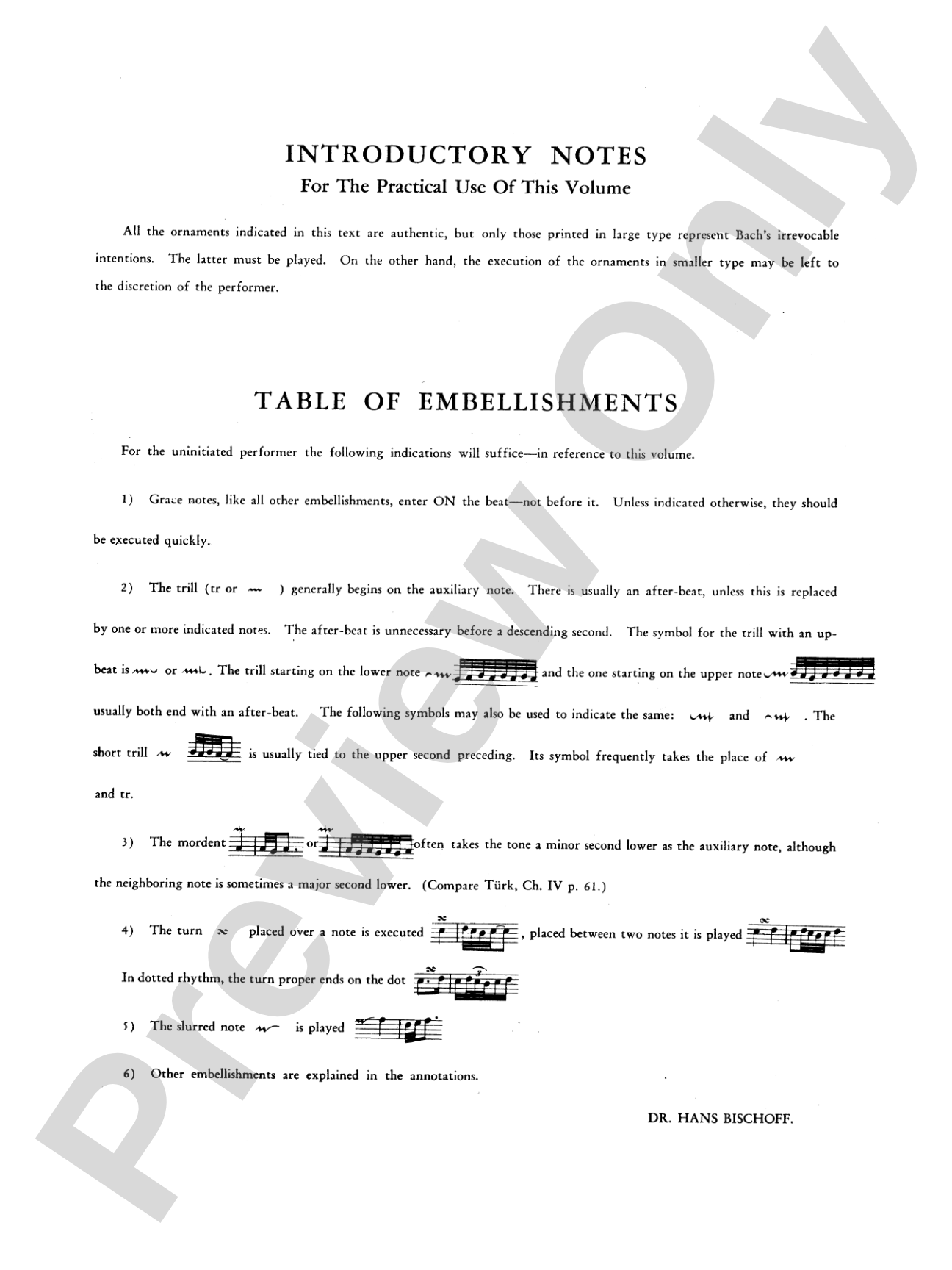
Bach: Cappriccio on the Departure of His Dearly Beloved Brother Sheet Music Preview

Bach: Cappriccio on the Departure of His Dearly Beloved Brother

By Johann Sebastian Bach

Item: 00-PC-0004387

Digital Download
$4.99
Description
The Capriccio in B-flat Major, "On the Departure of a Friend," is an unusually romantic-styled composition by Johann Sebastian Bach when he was 19 years of age, written upon the departure of his brother, Johann Jacob Bach, for his new duties in the service of King Carl XII of Sweden. 8 pages. Includes: 1. An Affectionate Plea to the Friend not to Embark * 2. Reflections on the Misfortunes of Travel * 3. Mutual Lamentations * 4. The Farewell * 5. Aria and Fugue on the Post Horn Call.

Don't just read it, hear it, play along with it, and watch your students grow with it. In MakeMusic Cloud, Bach: Cappriccio on the Departure of His Dearly Beloved Brother comes alive with professional accompaniment, adjustable tempo, and built-in practice tools that turn solo practice into real progress.

Sample Audio
No sample audio found.
Sample Video
Additional Details
Series: Kalmus Edition
Publisher: Alfred Music
Page Count: 8
SKU: 00-PC-0004387

More about this title

About the Composer: Johann Sebastian Bach

Johann Sebastian Bach (1685-1750) was a German composer and keyboardist whose mastery of counterpoint, fugal writing, and harmonic language fundamentally shaped Western music. Beyond his monumental sacred and instrumental works, Bach composed numerous keyboard pieces that reveal his lighter side, including this youthful Capriccio written when he was around 19 years old.

Bach's keyboard works span from intimate character pieces to intellectually demanding fugues, and they remain central to piano pedagogy and concert repertoire. His influence on music composition and performance extends across every subsequent era and genre.

Why we love this

This piece captures Bach at his most emotionally direct. Rather than the austerity some associate with Baroque keyboard music, the Capriccio unfolds as a genuinely felt narrative about separation, complete with named movements that guide the listener through stages of parting. For advanced pianists, it offers a masterwork that feels approachable without sacrificing sophistication.

What to expect

The music moves from tender, pleading dialogue to wistful reflection, then darkens briefly with lament before brightening into resignation. The final pairing of aria and fugue feels almost defiant, as though acceptance has transformed into celebration. Throughout, Bach's characteristic clarity of voice writing makes the emotional content legible without sentimentality.

Who it's for

Advanced pianists and intermediate-to-advanced students seeking substantial keyboard repertoire that combines Baroque rigor with narrative clarity. Pianists preparing recitals or exploring Bach's secular keyboard works will find this Capriccio more approachable than the Goldberg Variations while remaining genuinely enriching.

How to get the most out of it

  • Treat each of the five movements as distinct scenes with their own character. The opening plea requires singing, graceful phrasing; the post horn call finale demands rhythmic precision and jubilant articulation.
  • Let the aria breathe before the final fugue launches. These paired movements reward a clear pause that lets the harmonic transition register.
  • Balance independence between the hands throughout. Bach's counterpoint is conversational; avoid allowing one hand to dominate the texture.
  • The 8-page format rewards planning interpretive choices about tempo relationships across movements to maintain architectural coherence without monotony.

How to use it

Program this as a standalone recital piece that needs no apology or explanation. Its narrative arc and moderate length make it ideal as a centerpiece in a program of Baroque keyboard music, or as a bridge between Bach's more familiar works and deeper explorations of his secular compositional voice.

Skills your students will build

  • Independent voice leading and contrapuntal clarity across five distinct movements
  • Interpretive choices that shape character within Baroque harmonic language
  • Narrative musical architecture and tempo relationships between linked movements
  • Baroque ornamentation and articulation appropriate to keyboard writing
  • Balance and independence of both hands in conversational texture

You May Also Like