
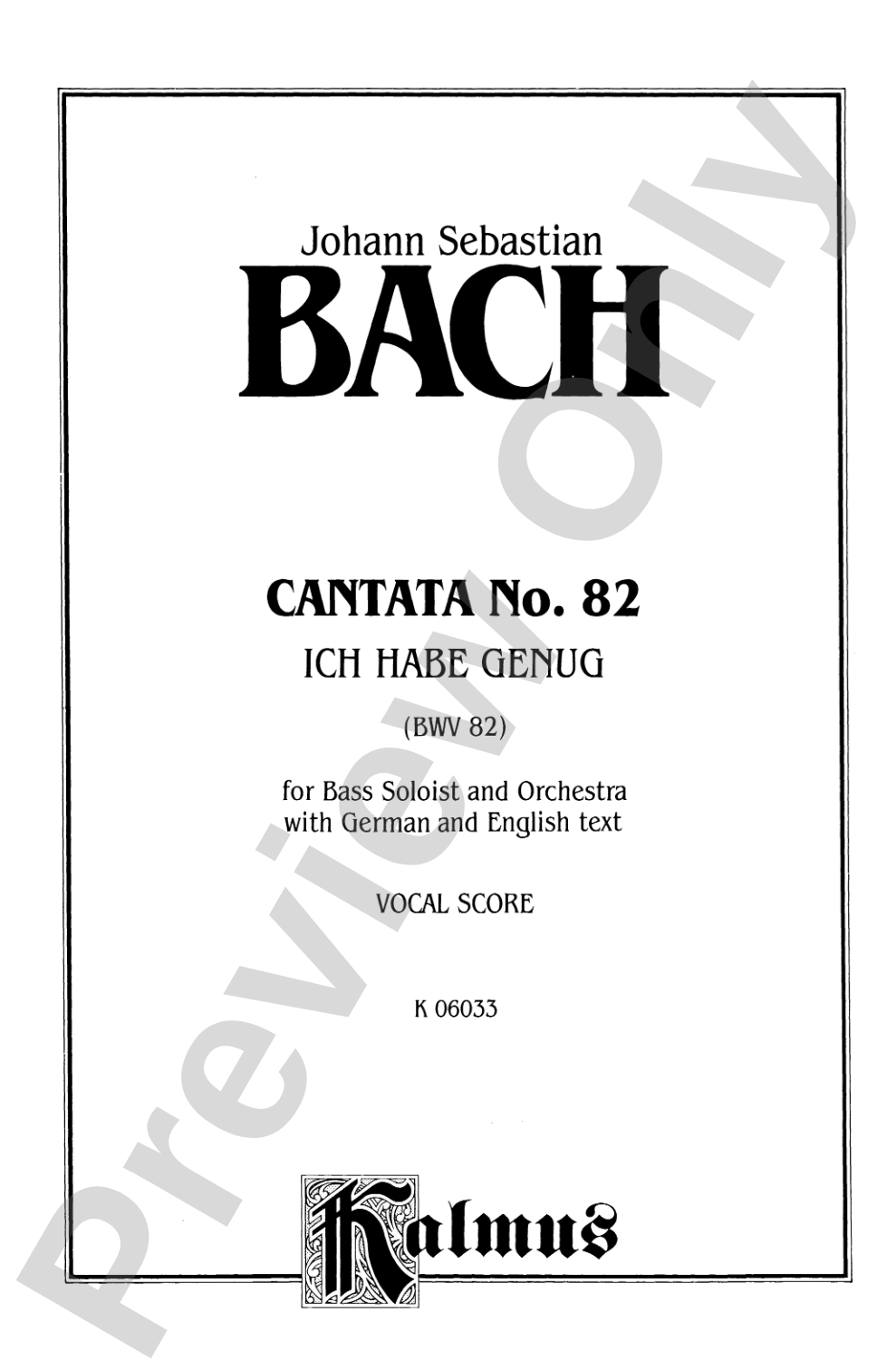

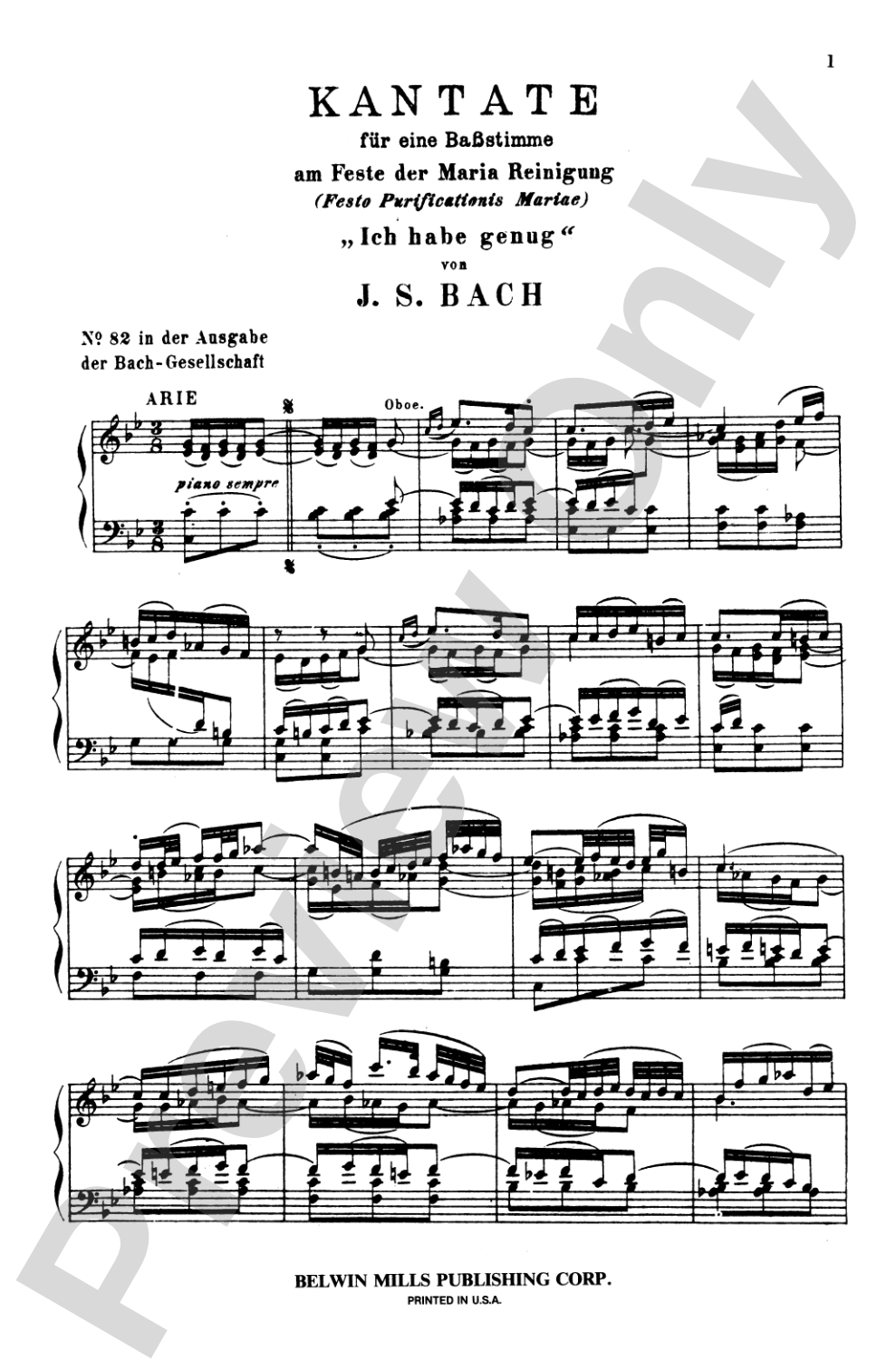
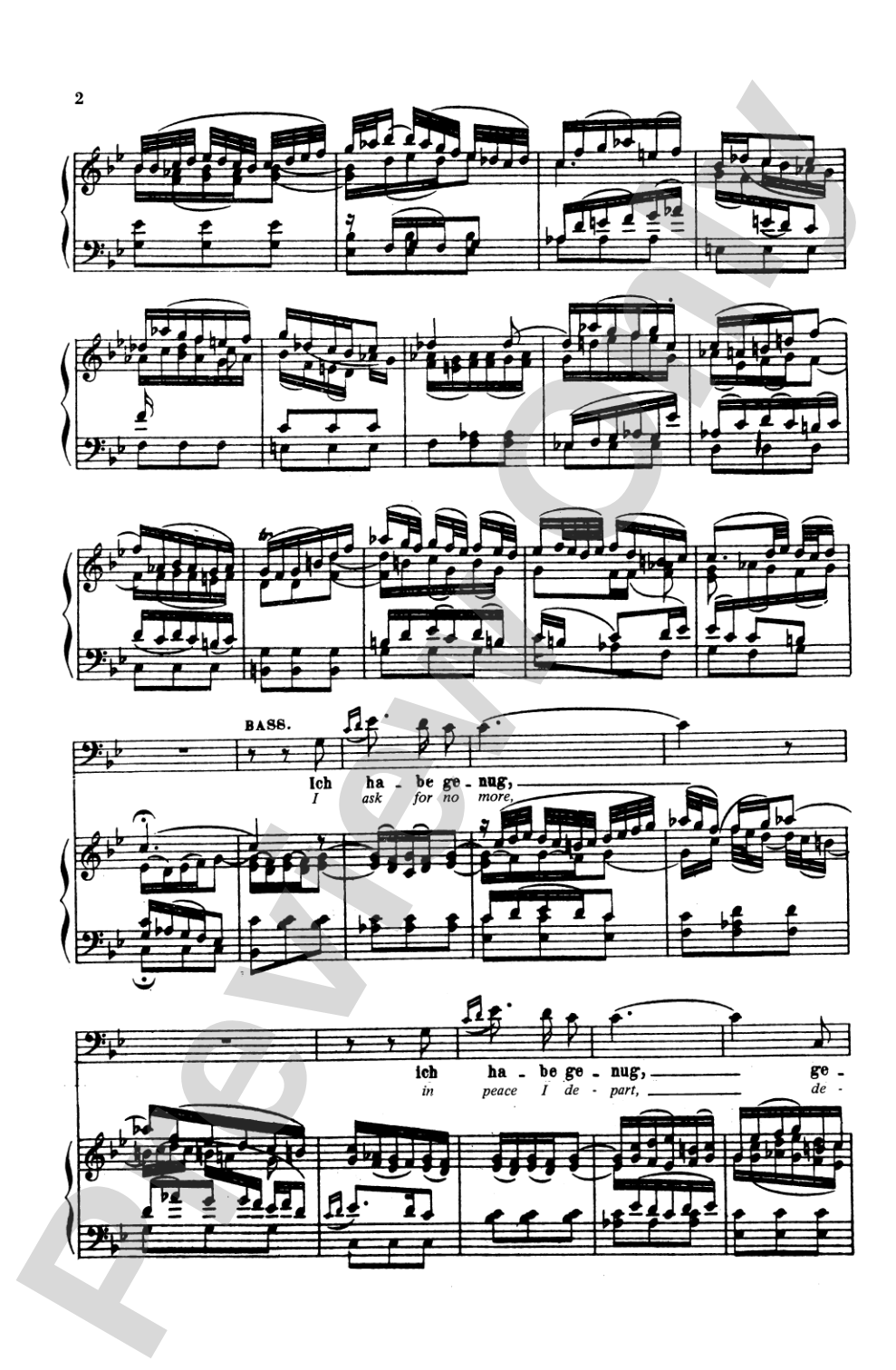
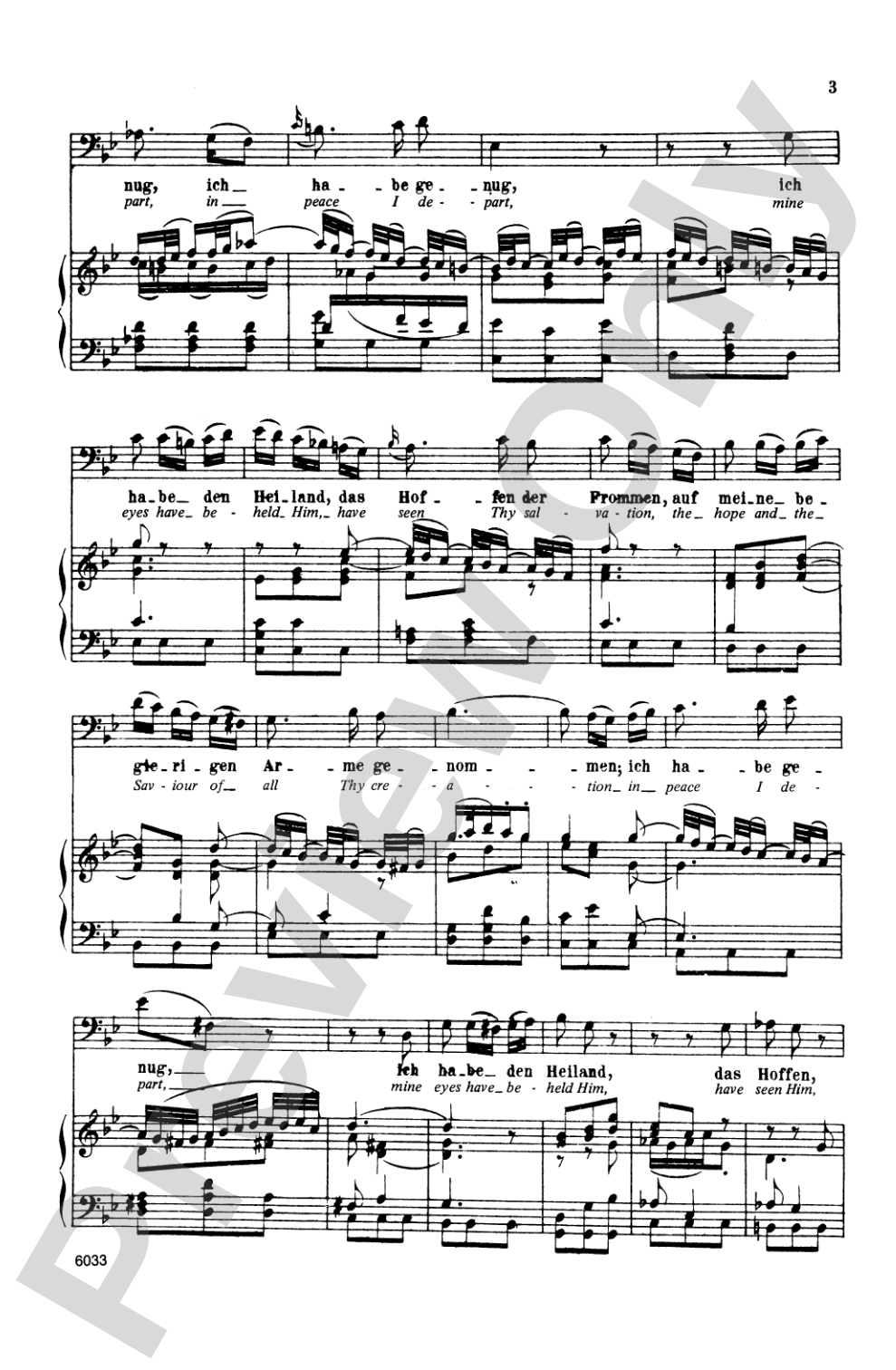
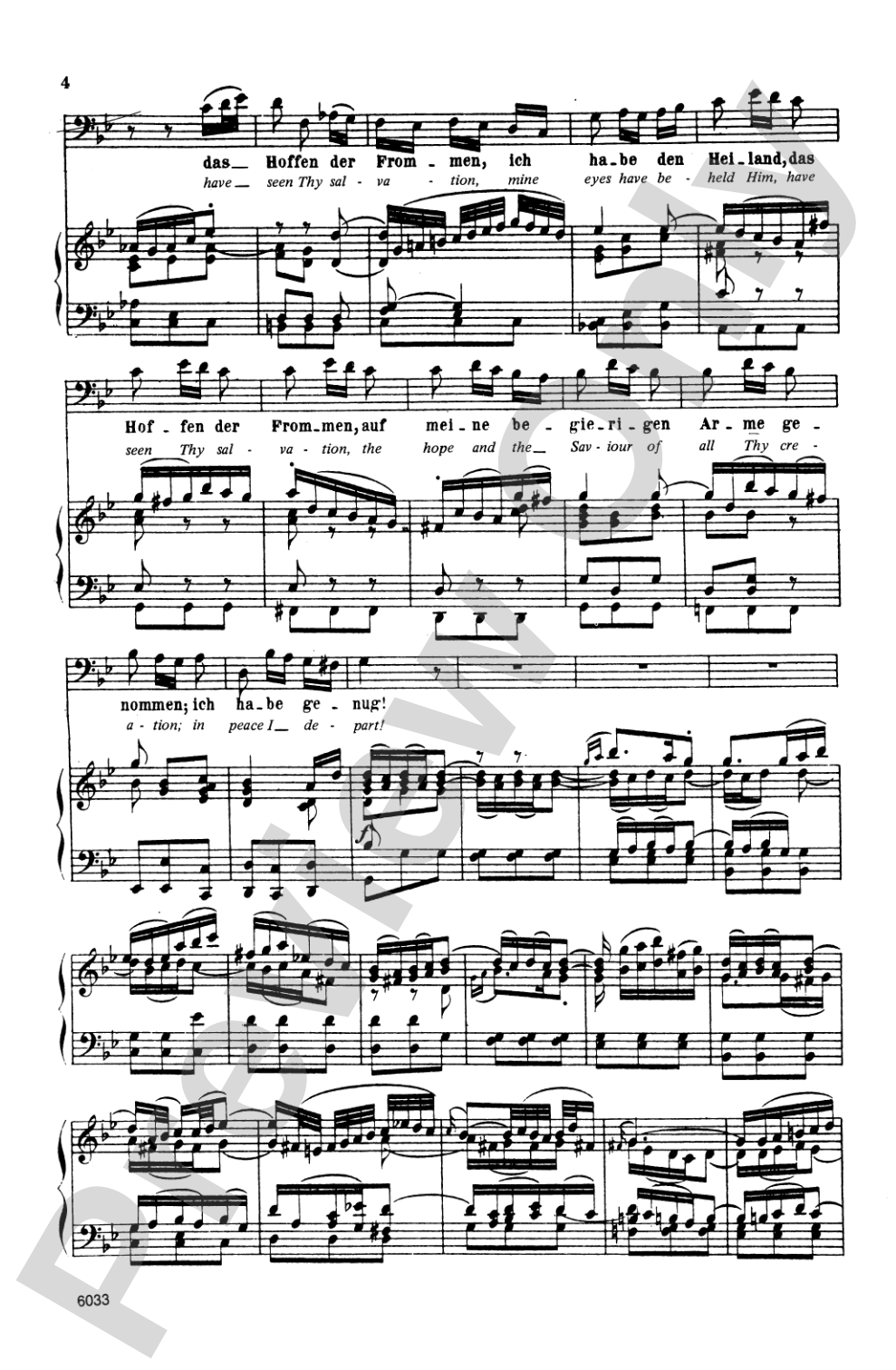
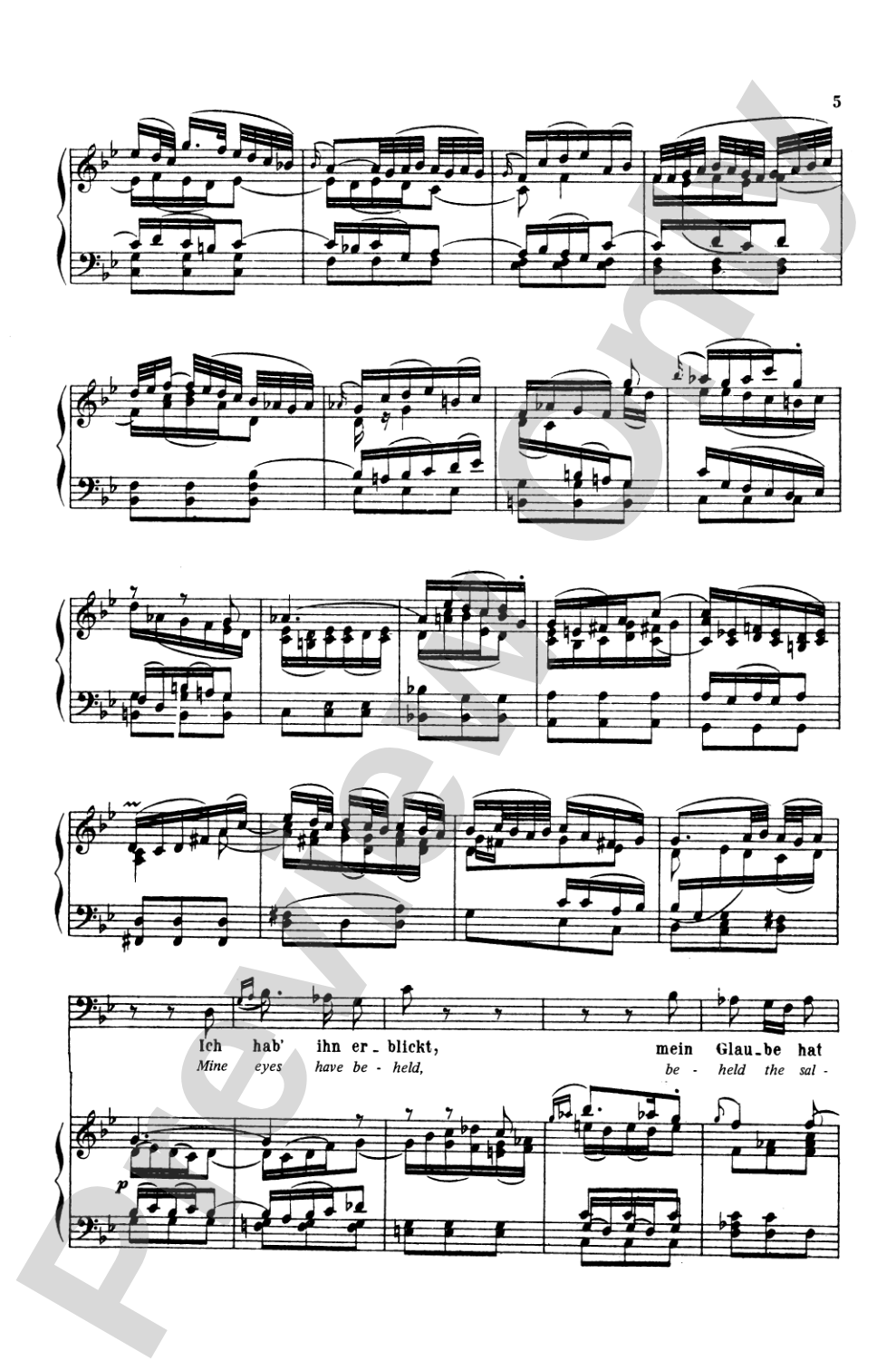
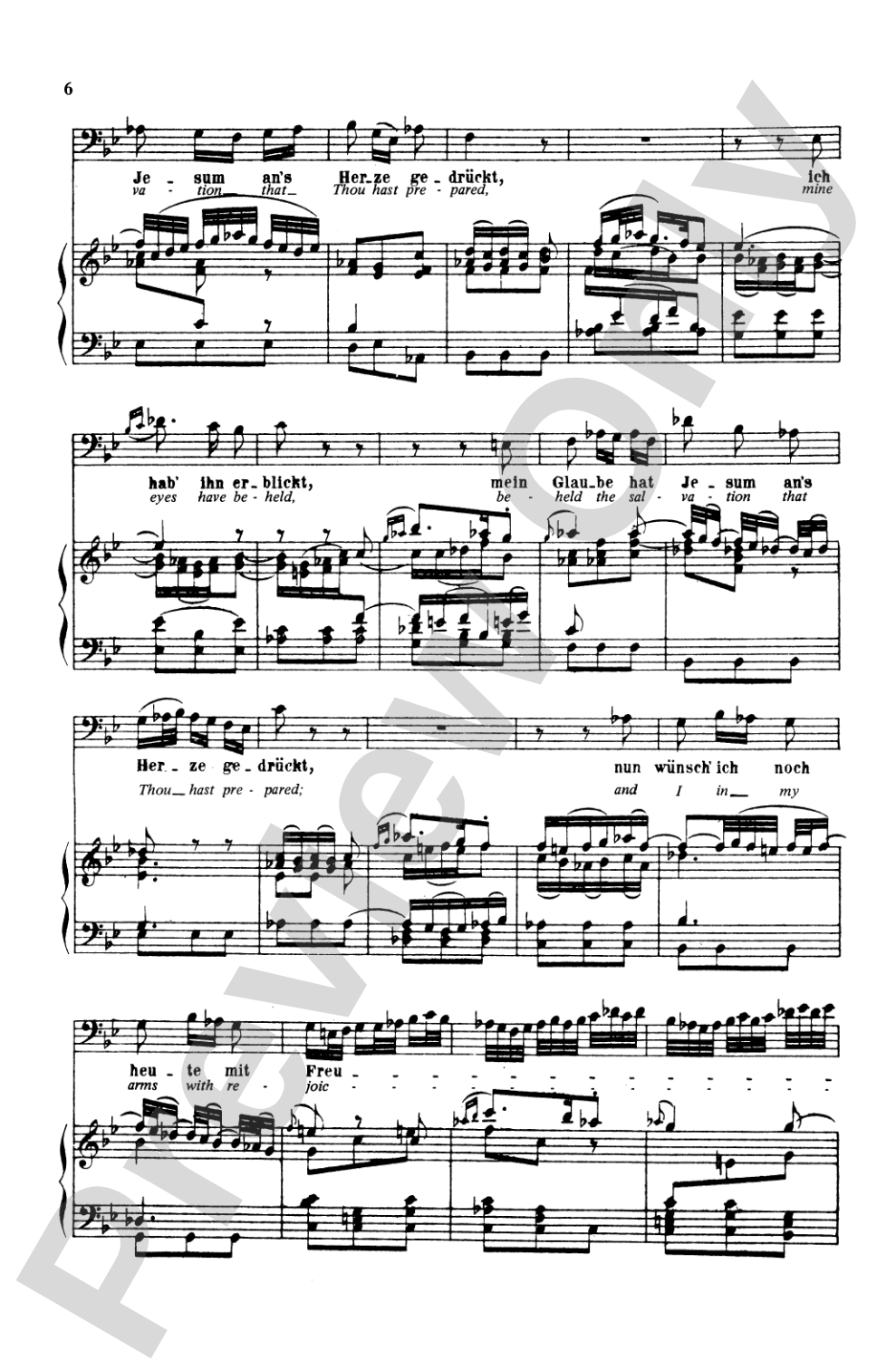
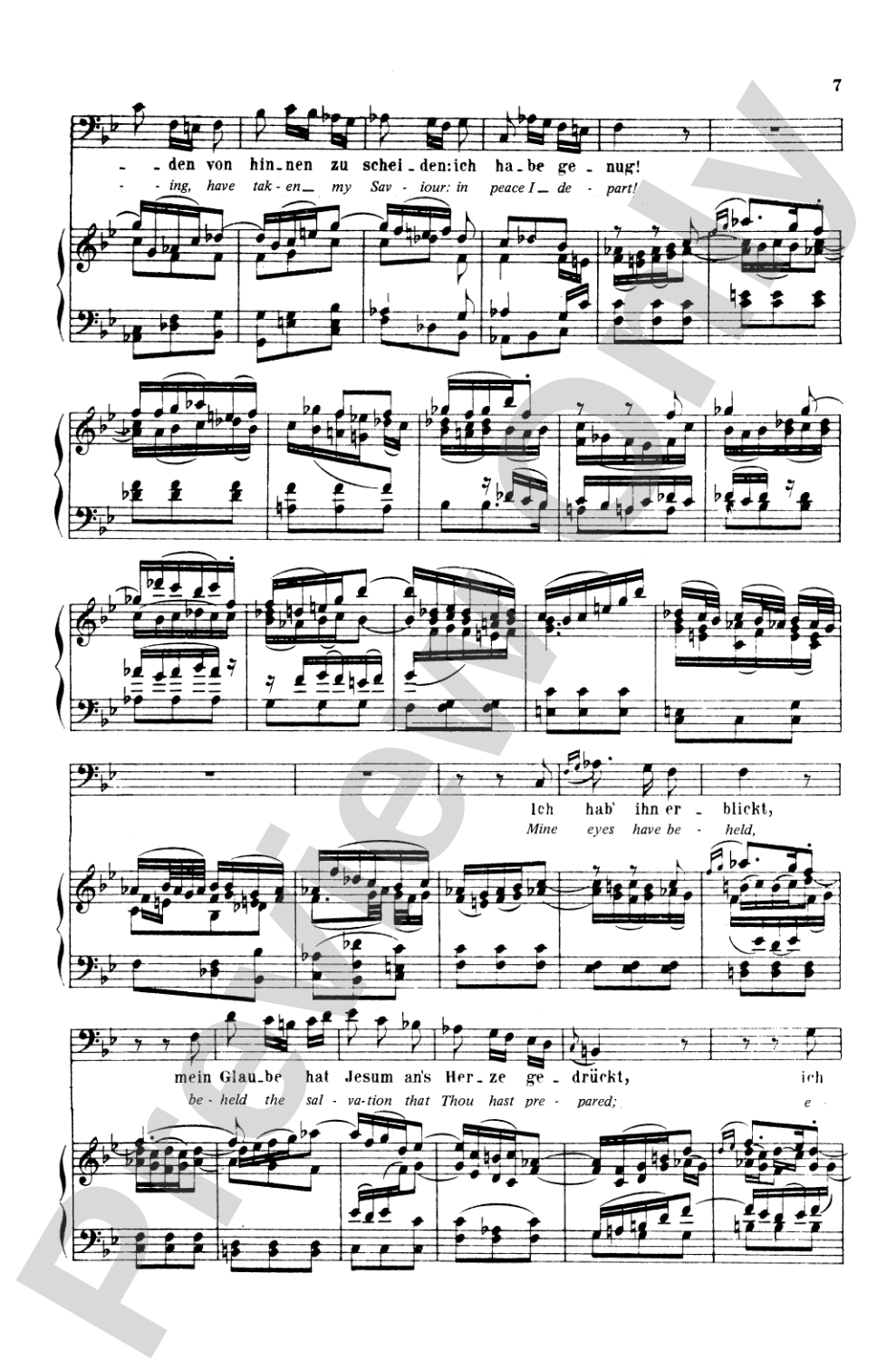
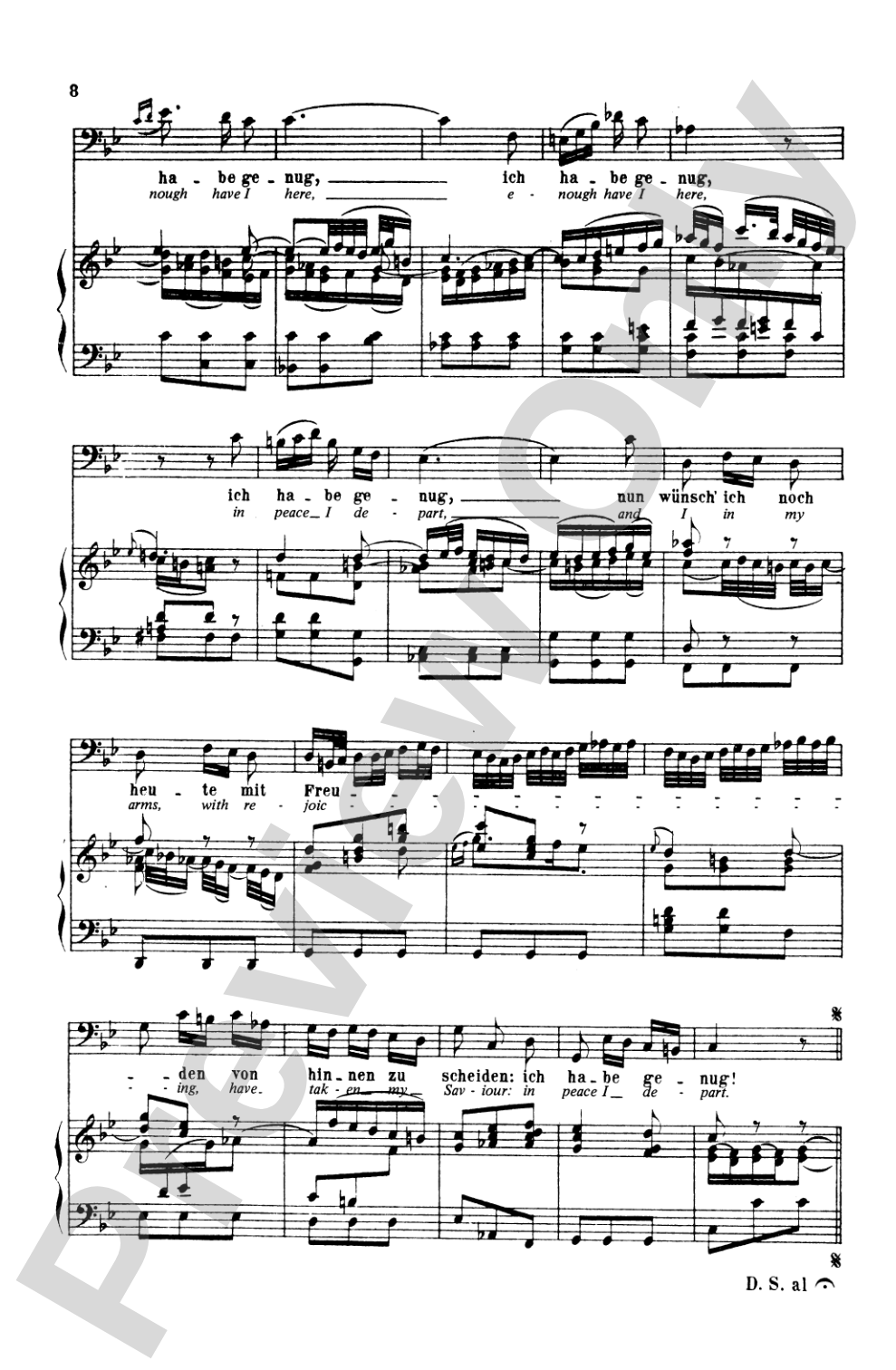
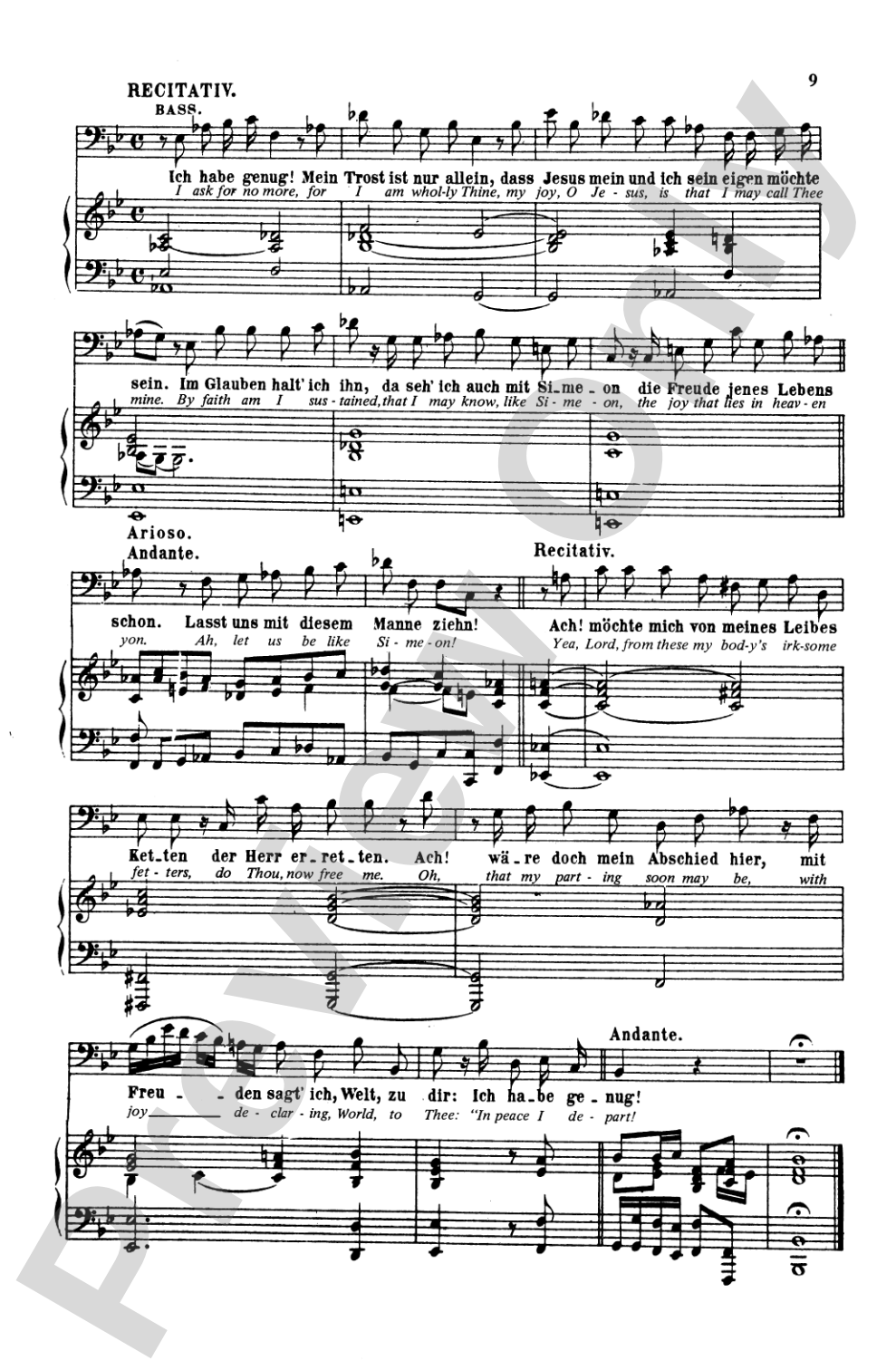
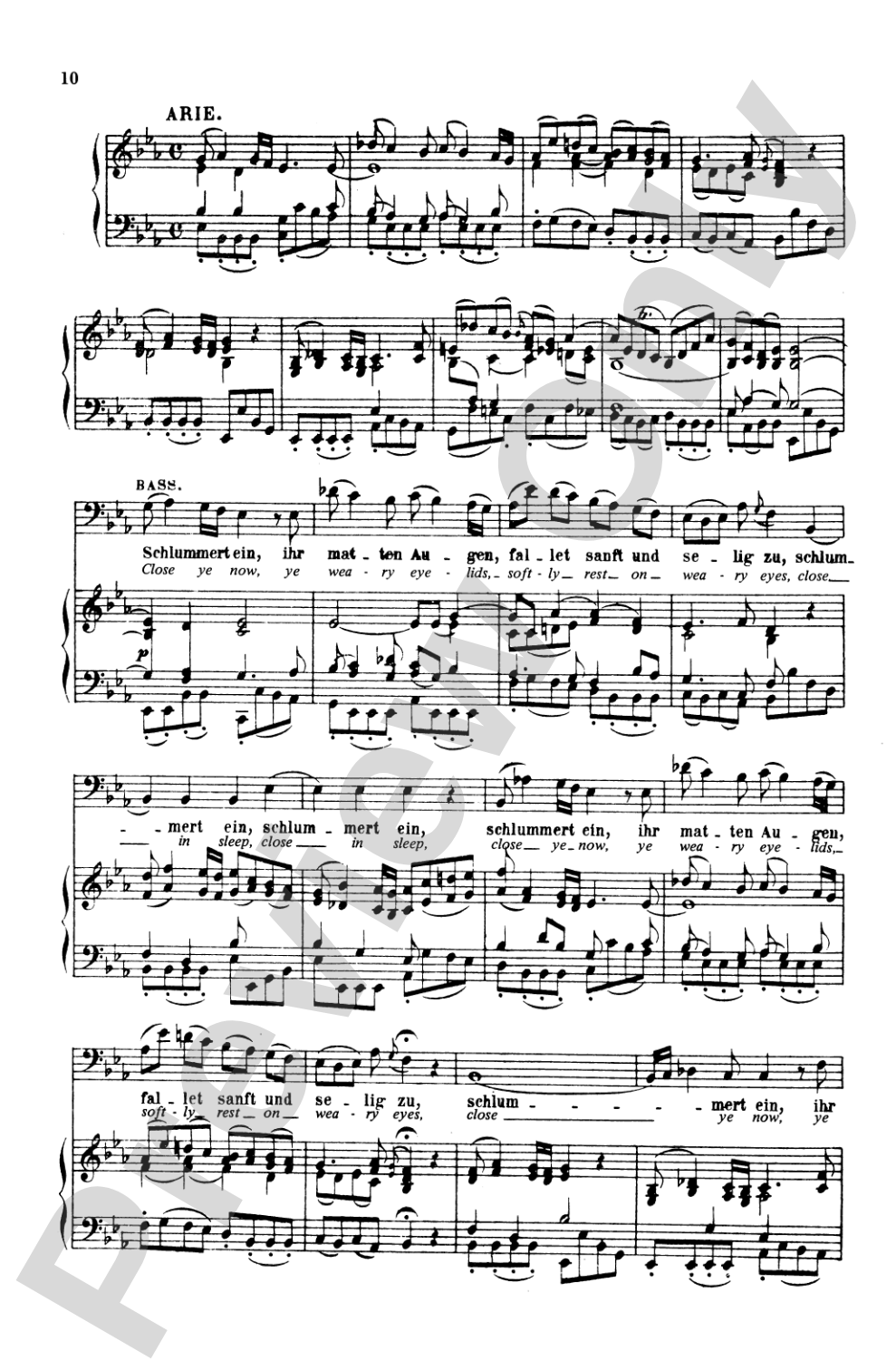
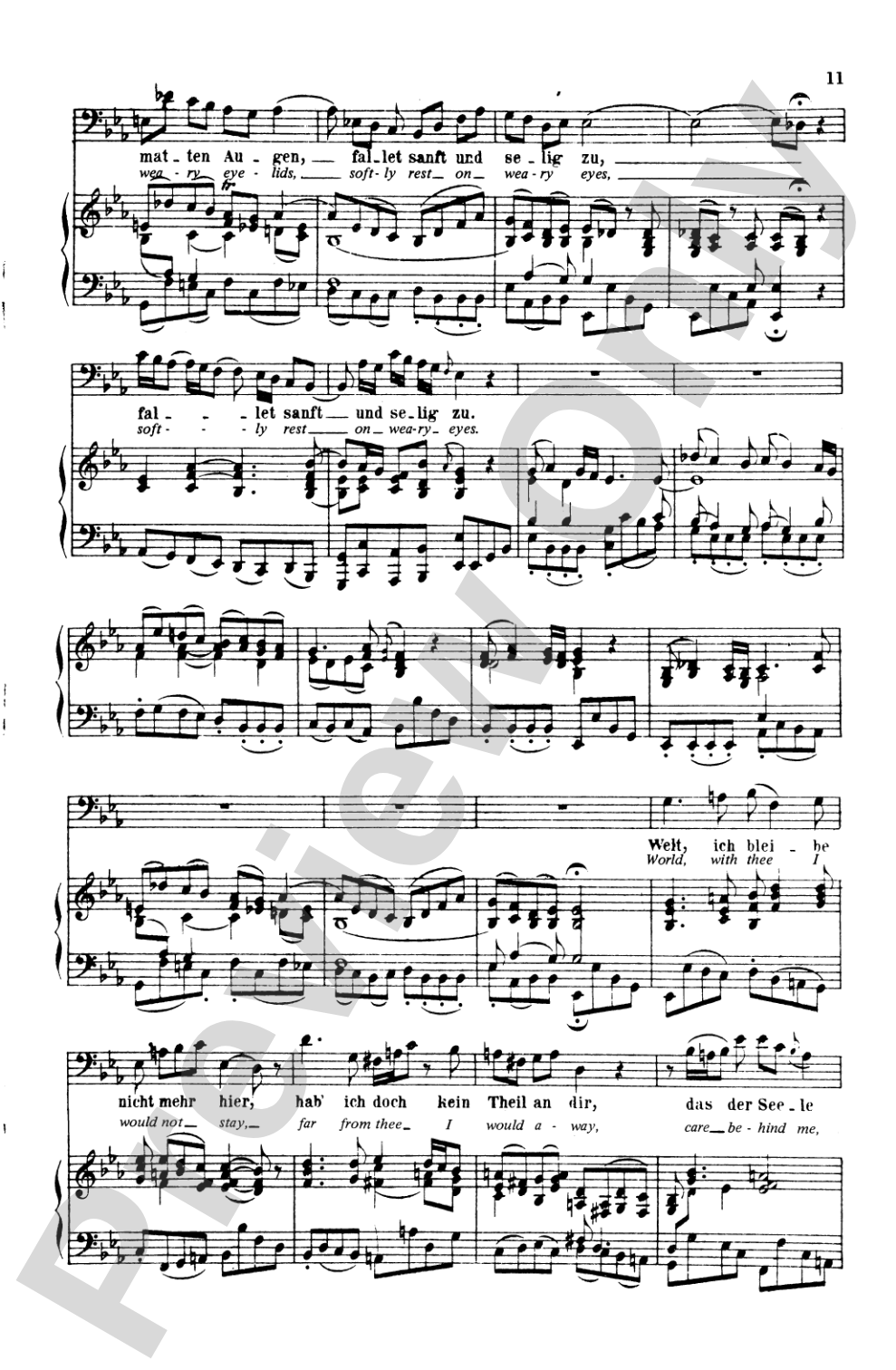
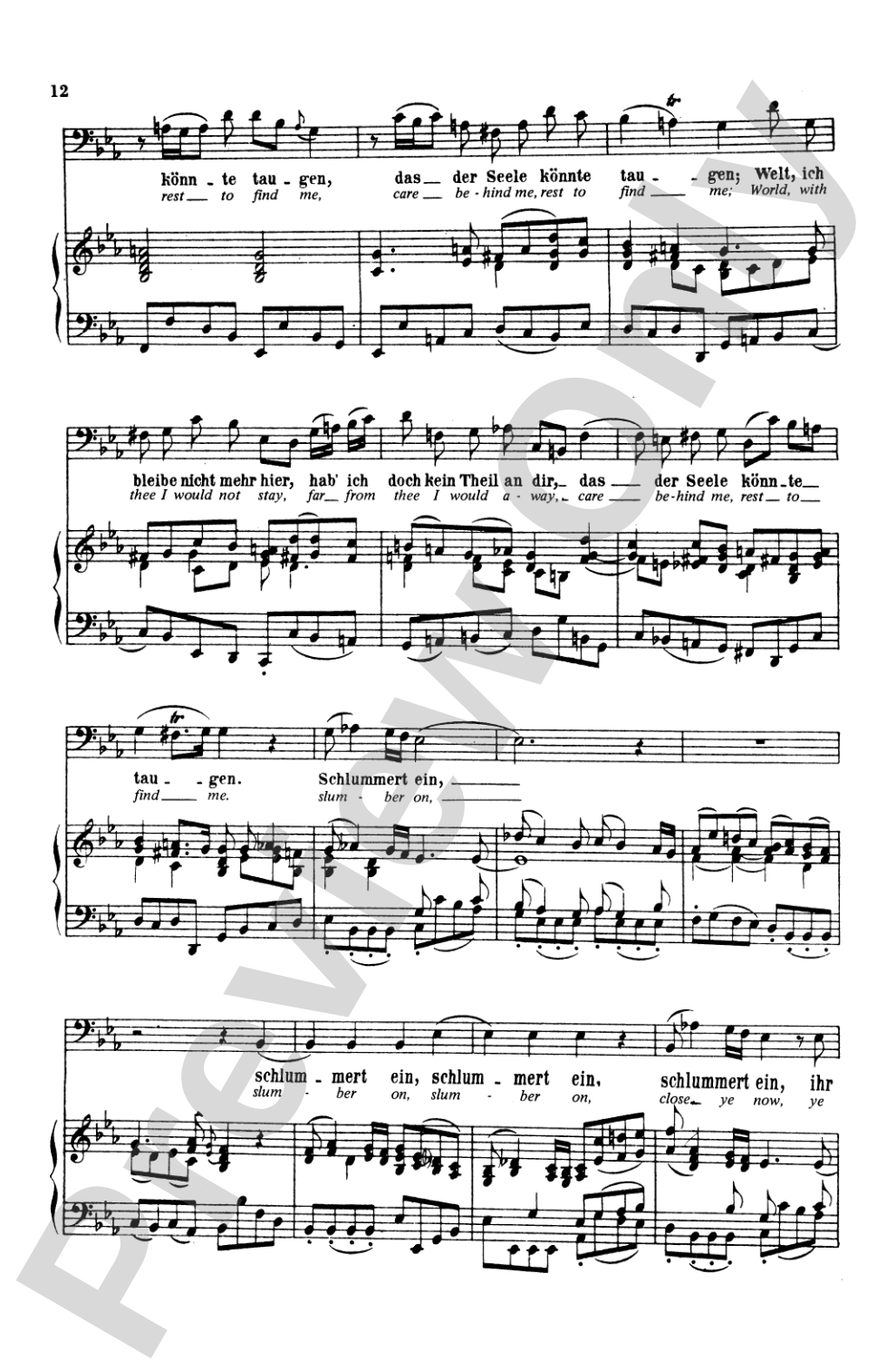
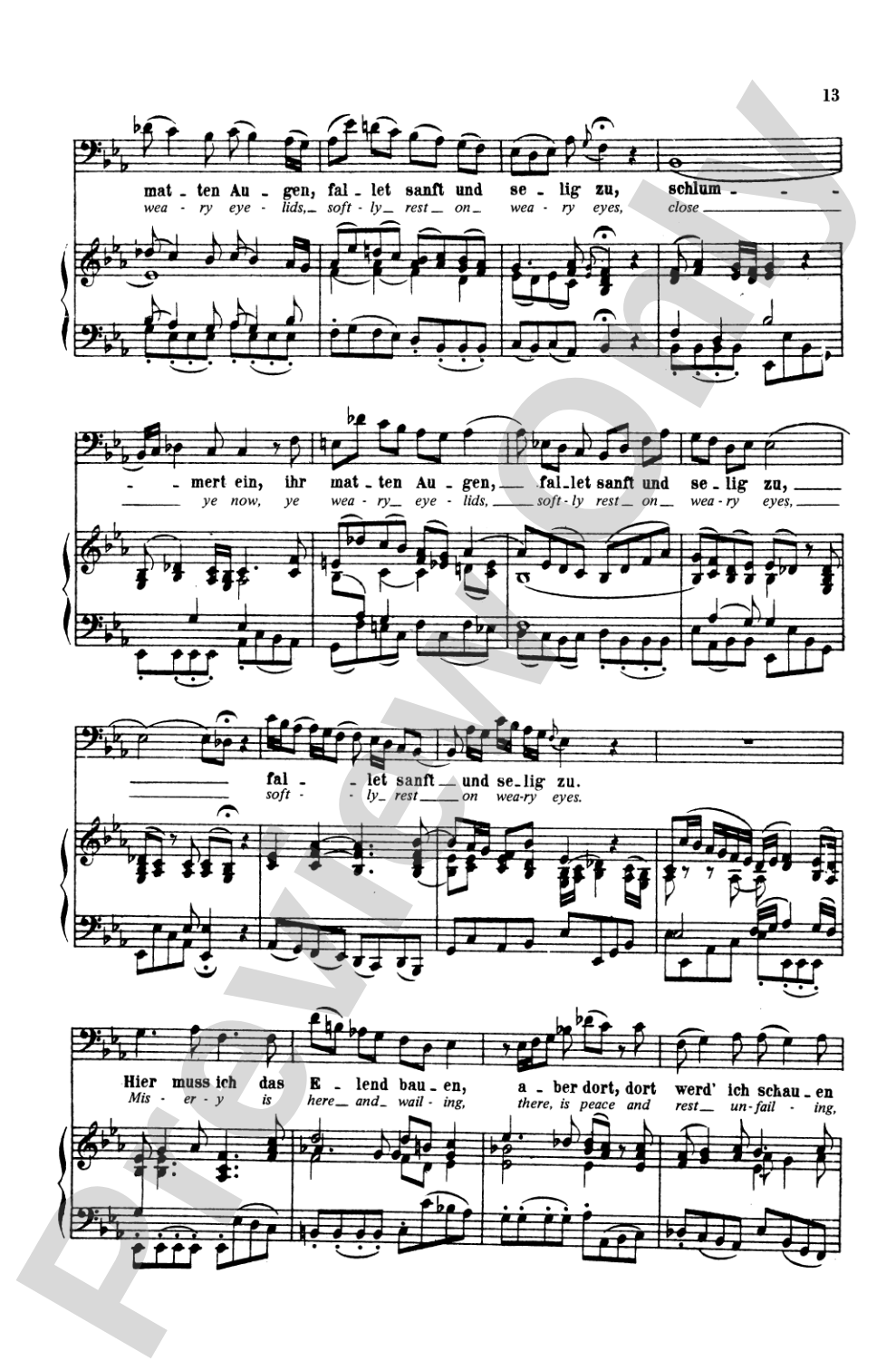
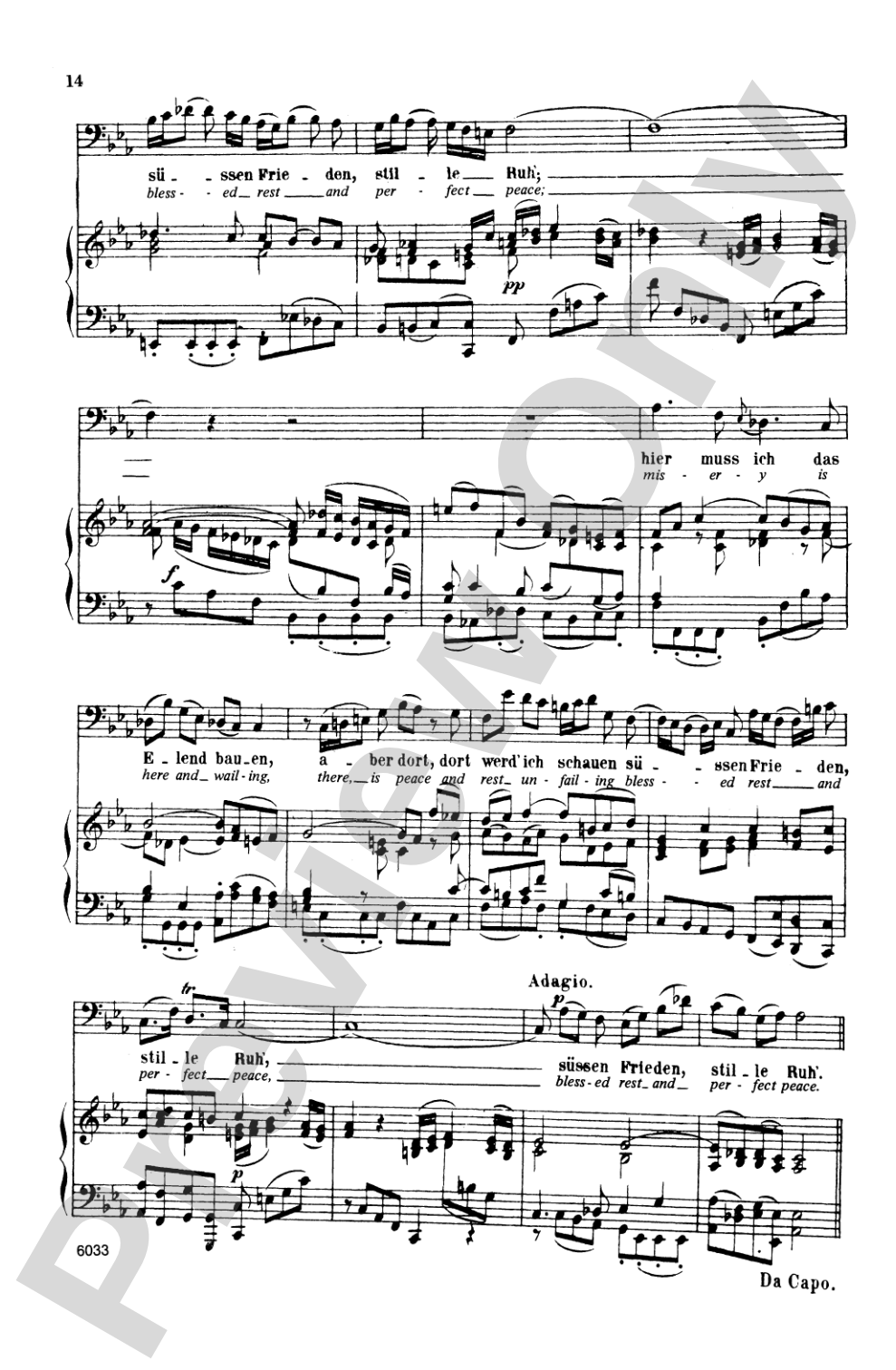
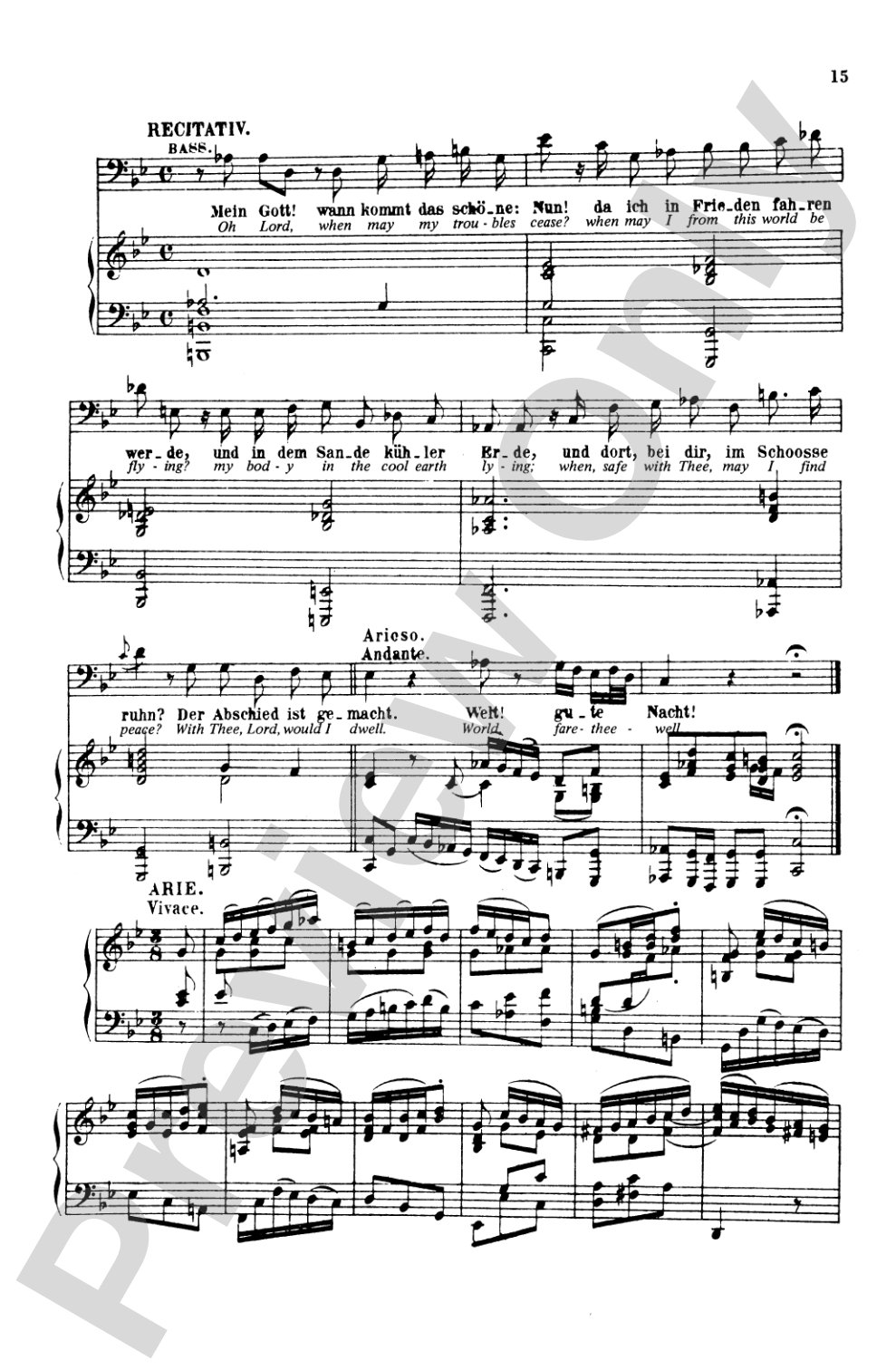
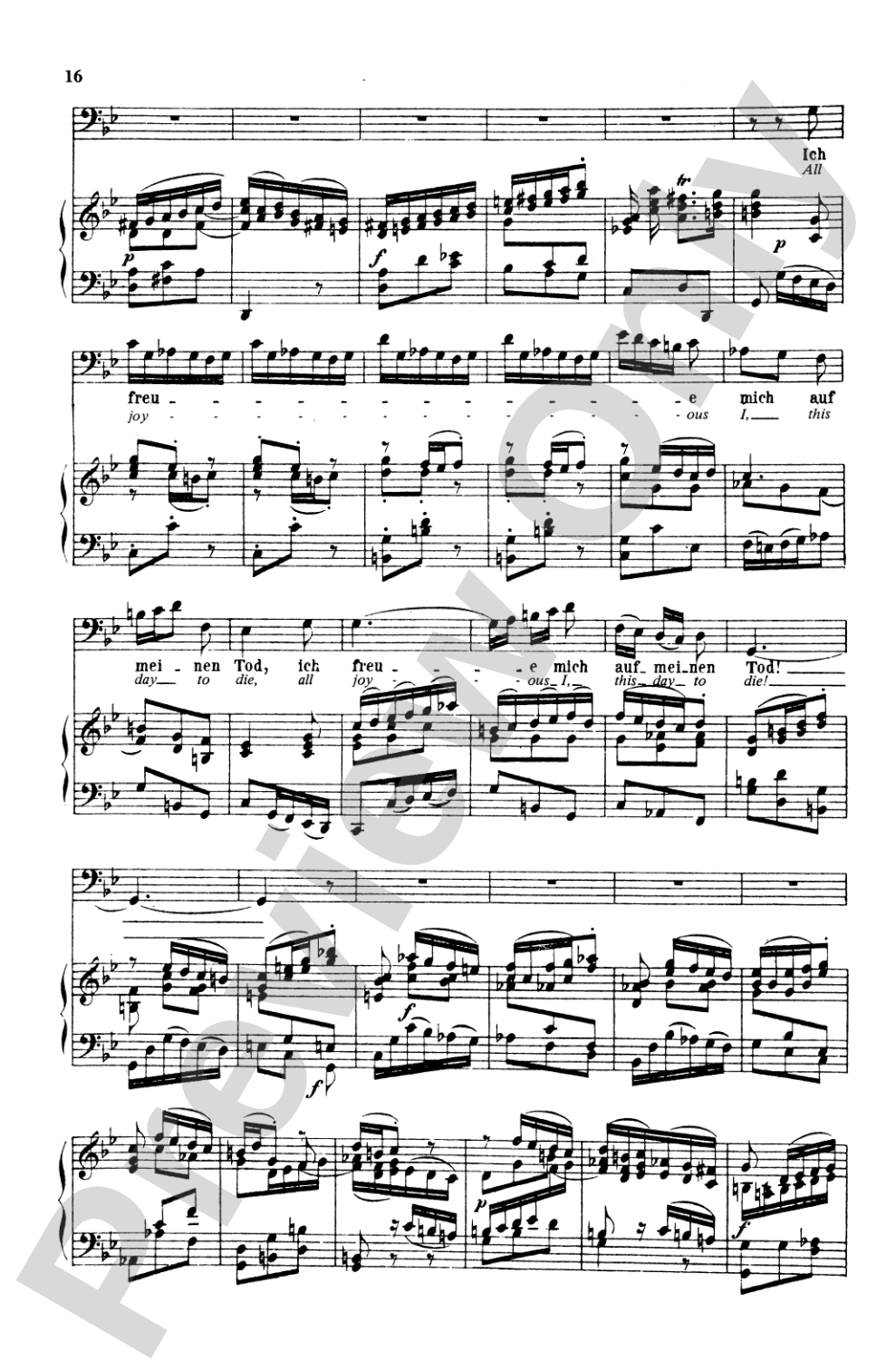
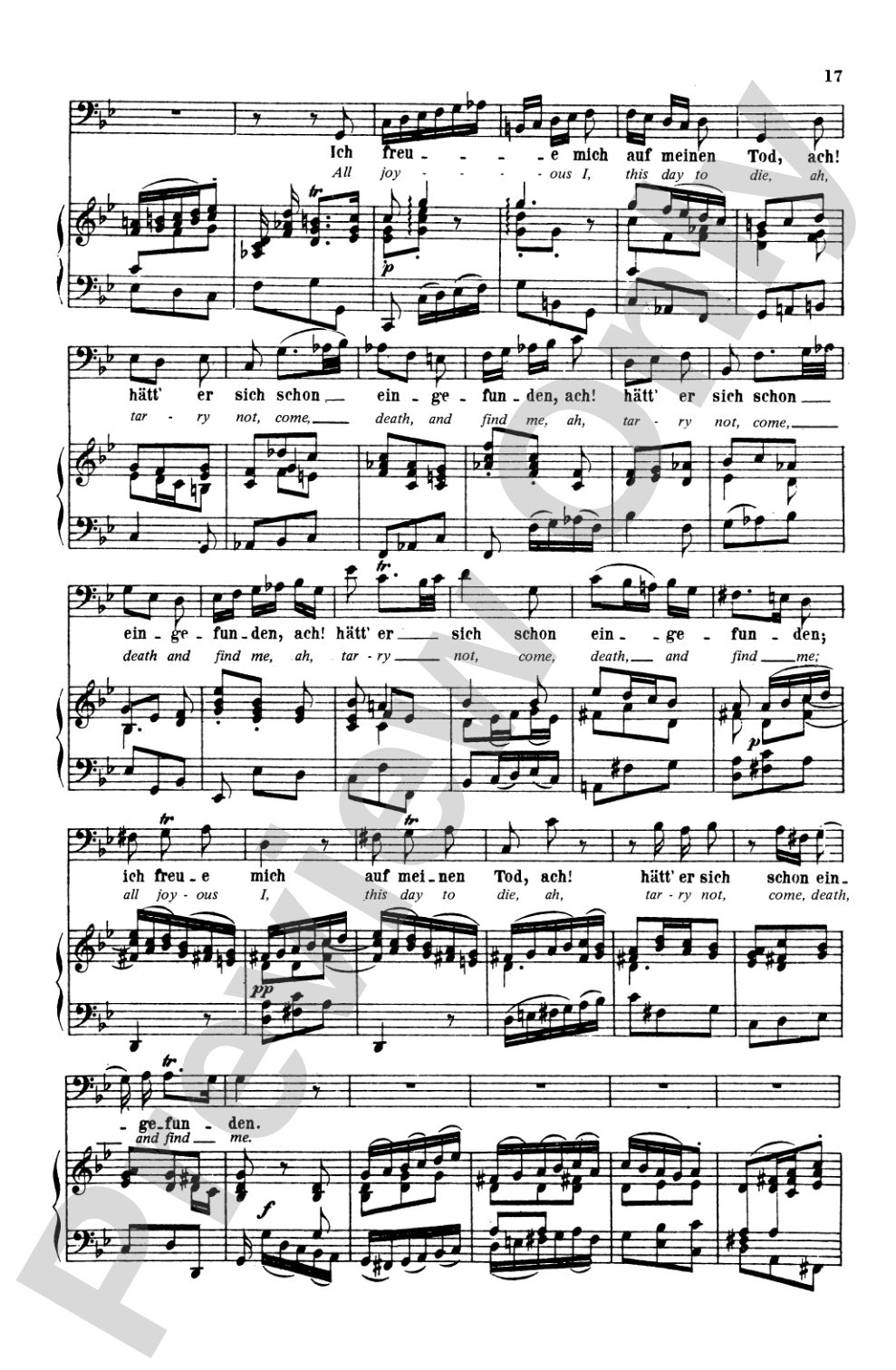
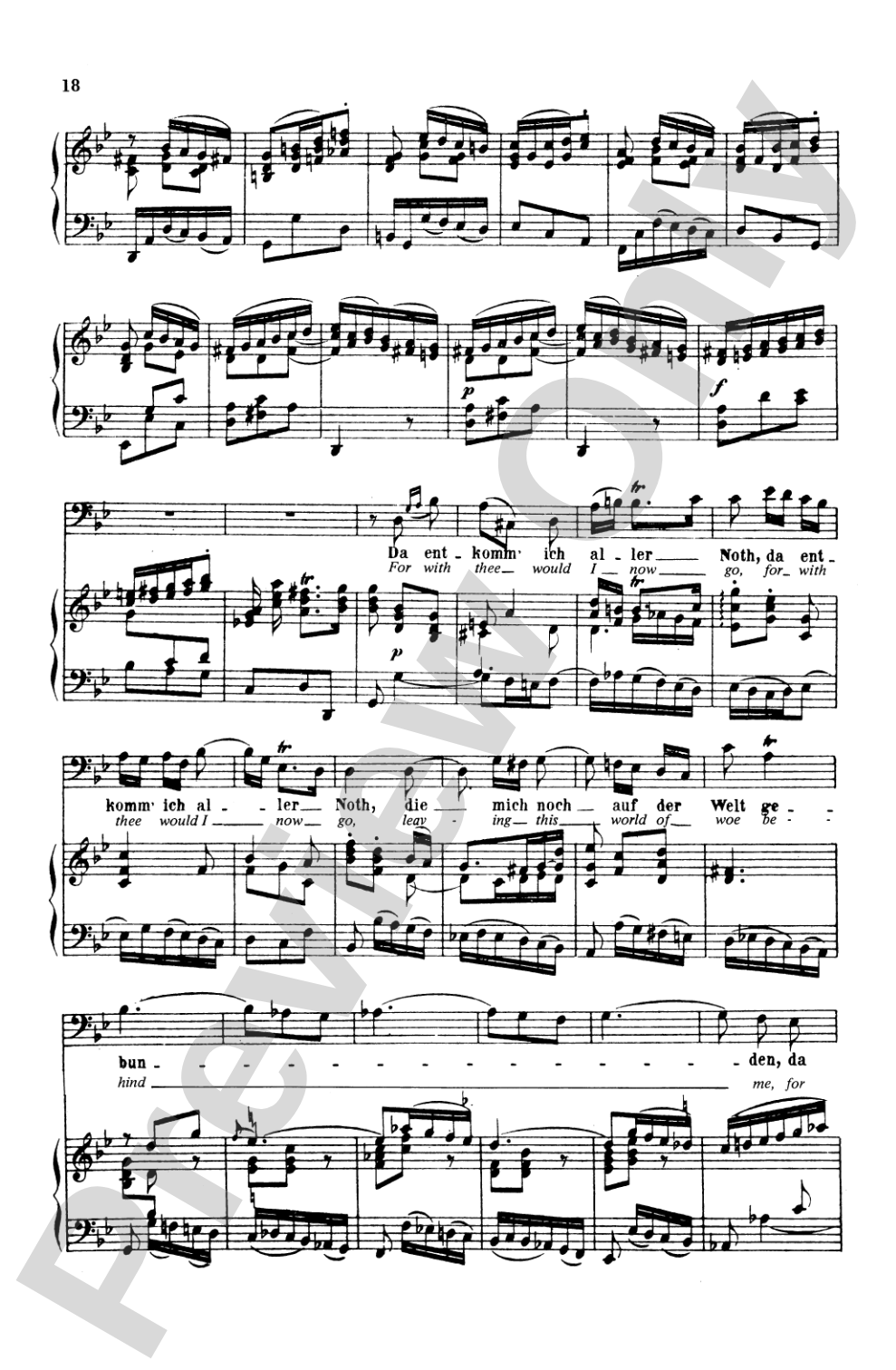
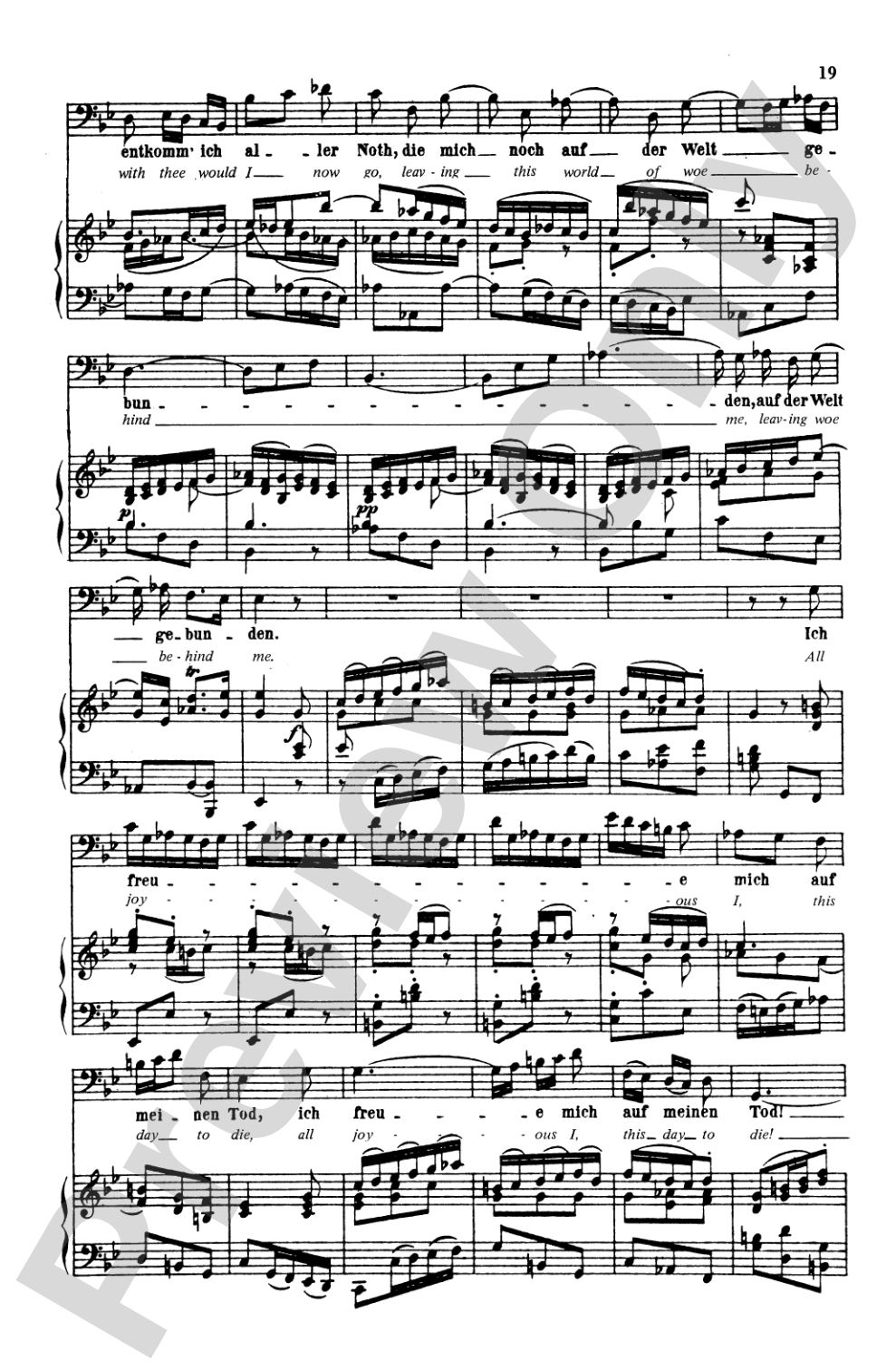
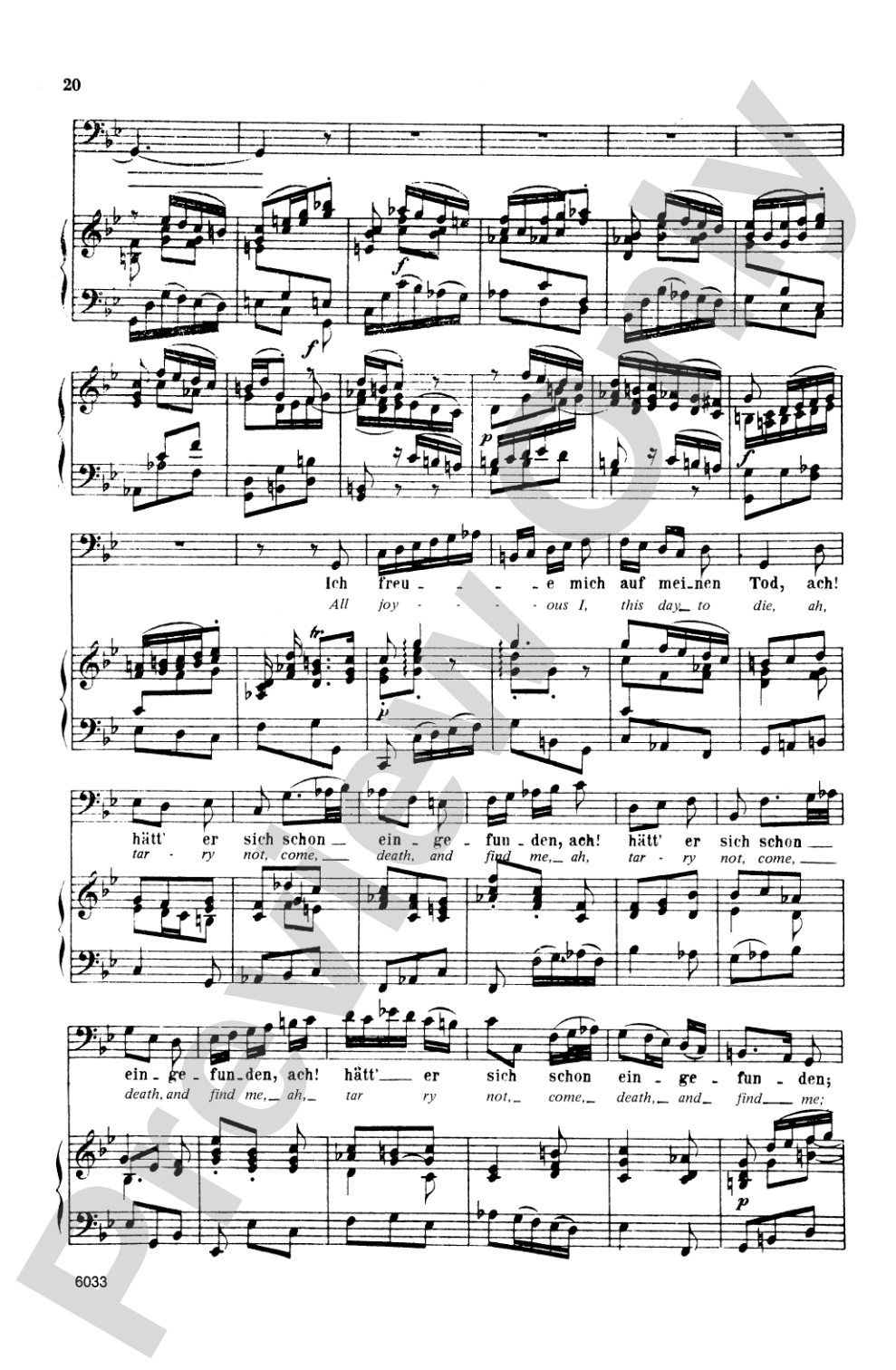
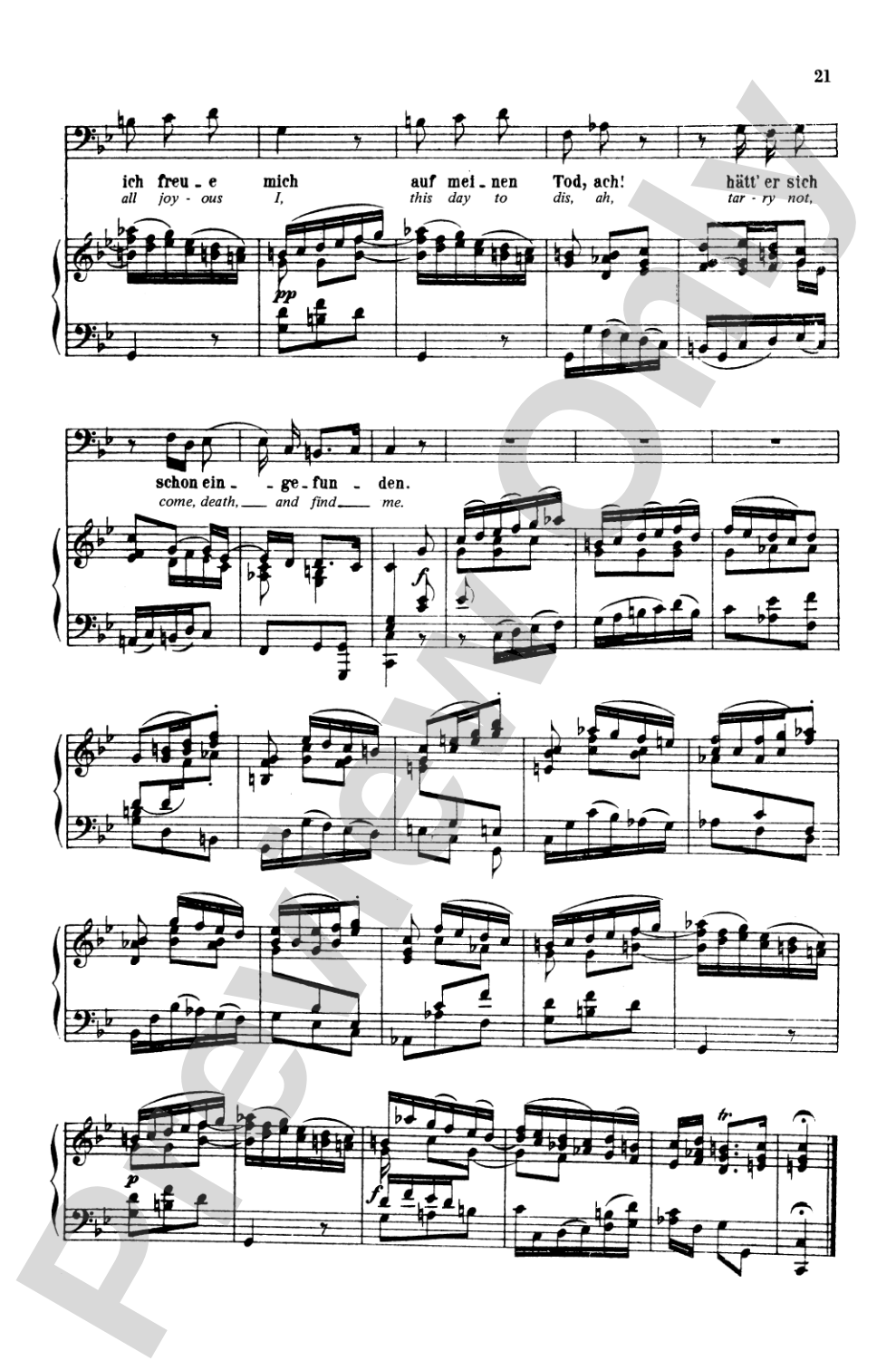


Bach: Bass Solo, Cantata No. 82, Ich Habe Genug (German/English): Bass Solo Voice Book
For Bass Solo and Orchestra with German and English Text (Vocal Score)
By Johann Sebastian Bach
Item: 00-PK-0003636

$6.95
Pickup currently not available
Buy Extra Parts (Digital PDF Download)
| Product | Price | Quantity |
|---|---|---|
| Bach: Bass Solo, Cantata No. 82, Ich Habe Genug (German/English) | $5.95 |
Parts Added to Cart!
Related Items
Cantata No. 82 -- Ich habe genüg: Bass Solo Voice Book |
$6.95
|
View |
Description
A Solo Cantata composed by Johann Sebastian Bach with Cembalo and Orchestra Accompaniment.


Don't just read it, hear it, play along with it, and watch your students grow with it. In MakeMusic Cloud, Bach: Bass Solo, Cantata No. 82, Ich Habe Genug (German/English): Bass Solo Voice Book comes alive with professional accompaniment, adjustable tempo, and built-in practice tools that turn solo practice into real progress.
Open in the Player
Jump straight in and assign it today.
Start Your Free Trial
Open this title and explore the full library in minutes.
Sample Audio
No sample audio found.
Sample Video
No sample videos found.
Additional Details
Series:
Kalmus Edition
Publisher:
Alfred Music
Page Count:
24
SKU:
00-PK-0003636
Instrumentation:
Cembalo & Orch.
More about this title
About the Composer: Johann Sebastian Bach
Johann Sebastian Bach (1685–1750) was a German Baroque composer whose output across all genres established him as one of the most influential figures in Western music. His cantatas, numbering over 200 surviving works, represent a pinnacle of sacred vocal writing that combines rigorous counterpoint with profound emotional depth. Bach's mastery of orchestration, harmonic language, and text-setting shaped the foundation of musical literacy that music educators teach today.
Why we love this
Cantata No. 82 ranks among Bach's most performed solo cantatas, and this bass voice book makes one of his most rewarding vocal masterworks accessible to singers at the advanced level. The solo writing sits well for bass voice, with dramatic range and character that builds from intimate reflection to powerful declaration. Programming this work demonstrates command of Baroque vocal technique and offers audiences an encounter with authentic spiritual music at its most sophisticated.
What to expect
The cantata moves through states of spiritual contemplation and acceptance, beginning with a poignant reflection on life's brevity and culminating in expressions of peace and longing. The musical language is both intimate and grand, employing Bach's signature contrapuntal textures and harmonic surprises to deepen the emotional landscape. Singing this work demands vulnerability alongside technical assurance.
Who it's for
Advanced bass soloists with strong Baroque technique and the ability to handle both the technical demands and textual depth of Bach's writing. This work suits experienced church musicians, professional soloists, and mature students preparing for recital or competition. It requires secure intonation, breath control, and interpretive sensitivity to German text.
How to get the most out of it
- Attend carefully to the text underlay, especially in melismatic passages where single syllables extend across multiple notes. Bach's word-painting is precise, and clarity of diction requires deliberate phrasing.
- Shape longer phrases by understanding their harmonic arc rather than by breath placement alone. Let the figured bass accompaniment inform your sense of harmonic motion and momentum.
- Balance ornamentation with the overall pacing of the music. While baroque performance practice allows for interpretive freedom, Bach's own notation is typically explicit; avoid over-embellishing.
- Work closely with the continuo player (harpsichord) to establish the emotional tone of each section. The relationship between voice and cembalo is conversational and mutually dependent.
How to use it
Feature this as a centerpiece recital work or as part of a concert exploring Bach's sacred vocal music alongside works by his contemporaries. It works particularly well on programs devoted to German Baroque sacred music or on concerts marking liturgical occasions where themes of mortality and redemption resonate. Consider pairing it with other cantata movements or with instrumental works from the same era to provide contextual depth.
Skills your students will build
- Baroque vocal phrasing and text-based expression
- Figured bass comprehension and dialogue with continuo accompaniment
- Secure intonation in complex harmonic contexts
- Melismatic passage clarity and word underlay accuracy
- Sustained legit singing across an extended vocal range
- Interpretive choices grounded in historical performance practice