Bach: Ave Maria (Meditation), Arr. Charles François Gounod Sheet Music Preview

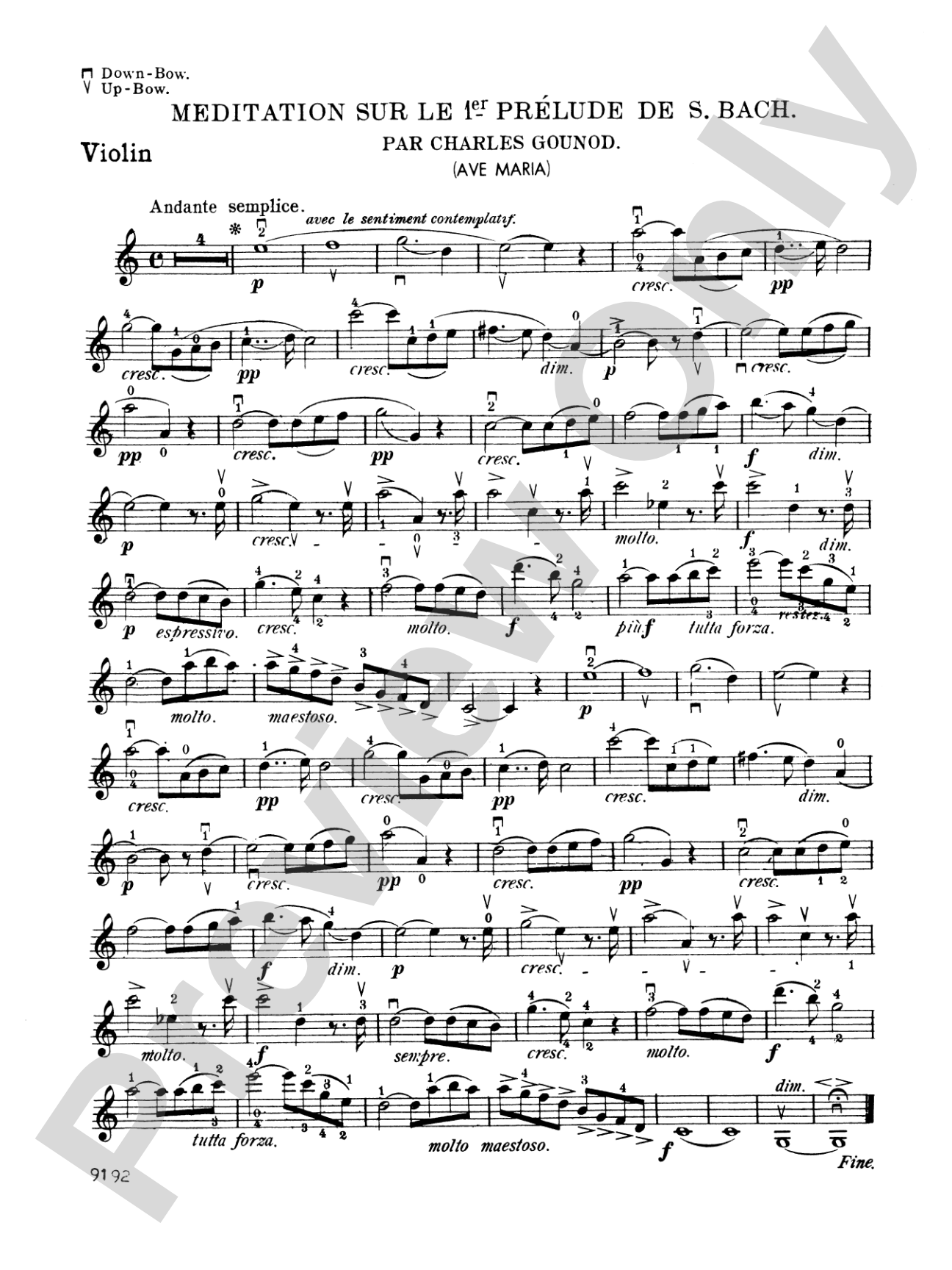
Bach: Ave Maria (Meditation), Arr. Charles François Gounod

By Johann Sebastian Bach / arr. Charles François Gounod

Item: 00-PC-0011792

Digital Download
$2.99
Description
A Violin solo with Piano Accompaniment composed by Johann Sebastian Bach and arranged byCharles François Gounod.

Don't just read it, hear it, play along with it, and watch your students grow with it. In MakeMusic Cloud, Bach: Ave Maria (Meditation), Arr. Charles François Gounod comes alive with professional accompaniment, adjustable tempo, and built-in practice tools that turn solo practice into real progress.

Sample Audio
No sample audio found.
Sample Video
Additional Details
Series: Kalmus Edition
Publisher: Alfred Music
Page Count: 12
SKU: 00-PC-0011792

More about this title

About the Composer: Johann Sebastian Bach

Johann Sebastian Bach (1685-1750) stands as one of history's most prolific and influential composers, creating works across nearly every musical form of the Baroque era except opera. His mastery of counterpoint, harmonic innovation, and structural architecture established foundations that shaped centuries of musical practice. Bach's sacred music, including over 200 cantatas and numerous chorale-based works, reflects both his deep theological convictions and his position as Cantor of St. Thomas Church in Leipzig, where he spent the final 27 years of his life.

Bach's influence on music education remains unmatched. His works appear in curricula worldwide not merely as historical documents but as living repertoire that challenges and develops musicians at every level. The Ave Maria meditation derived from his Prelude in C Major exemplifies how his foundational harmonic and melodic language continues to resonate across generations of performers.

Why we love this

Gounod's arrangement transforms Bach's serene Prelude into an intensely lyrical vehicle for violin, positioning this sacred meditation as a showcase piece that appeals equally to audiences and adjudicators. The violin part breathes with singable phrasing while maintaining the harmonic sophistication audiences expect from Bach, making it accessible without sacrificing musical substance.

What to expect

A hushed reverence settles over this meditation. The gentle pulse of the piano creates a foundation of stillness while the violin floats above in moments of profound calm, occasionally reaching toward something transcendent before settling again. Bach's harmonic language glows with spiritual warmth throughout.

Who it's for

This arrangement serves contest and festival soloists seeking a standard-repertoire sacred piece that demands musicality over virtuosity. Intermediate to advanced violinists will find the moderate technical demands paired with significant interpretive responsibility make this ideal for developing expressive control.

How to get the most out of it

  • Shape the melody in long, connected phrases rather than note-by-note articulation; the accompaniment's steady foundation allows the violin to soar with vocal-like legato and strategic breathing.
  • Balance the sustained notes against subtle dynamic contours that trace the underlying harmony; avoid the trap of playing straight through any passage without shaping.
  • Use the piano accompaniment's texture as your harmonic anchor; listen for how the left hand supports your line and adjust intonation accordingly in sustained passages.
  • Reserve your brightest tone for the higher register passages while maintaining warmth throughout; Gounod's orchestration asks for an almost singing quality that shifts between intimate and transcendent.

How to use it

Program this as an opening work or interlude piece where its contemplative character provides contrast to livelier repertoire. It also pairs naturally with other Baroque sacred works or serves as a tasteful contemporary answer on a recital that features Romantic-era violin literature.

Skills your students will build

  • sustaining tone quality over extended passages
  • vocal phrasing and breathing in instrumental context
  • intonation in slow harmonic progressions
  • interpreting Baroque harmonic language through Romantic arrangement
  • balance between soloist and accompaniment

You May Also Like