
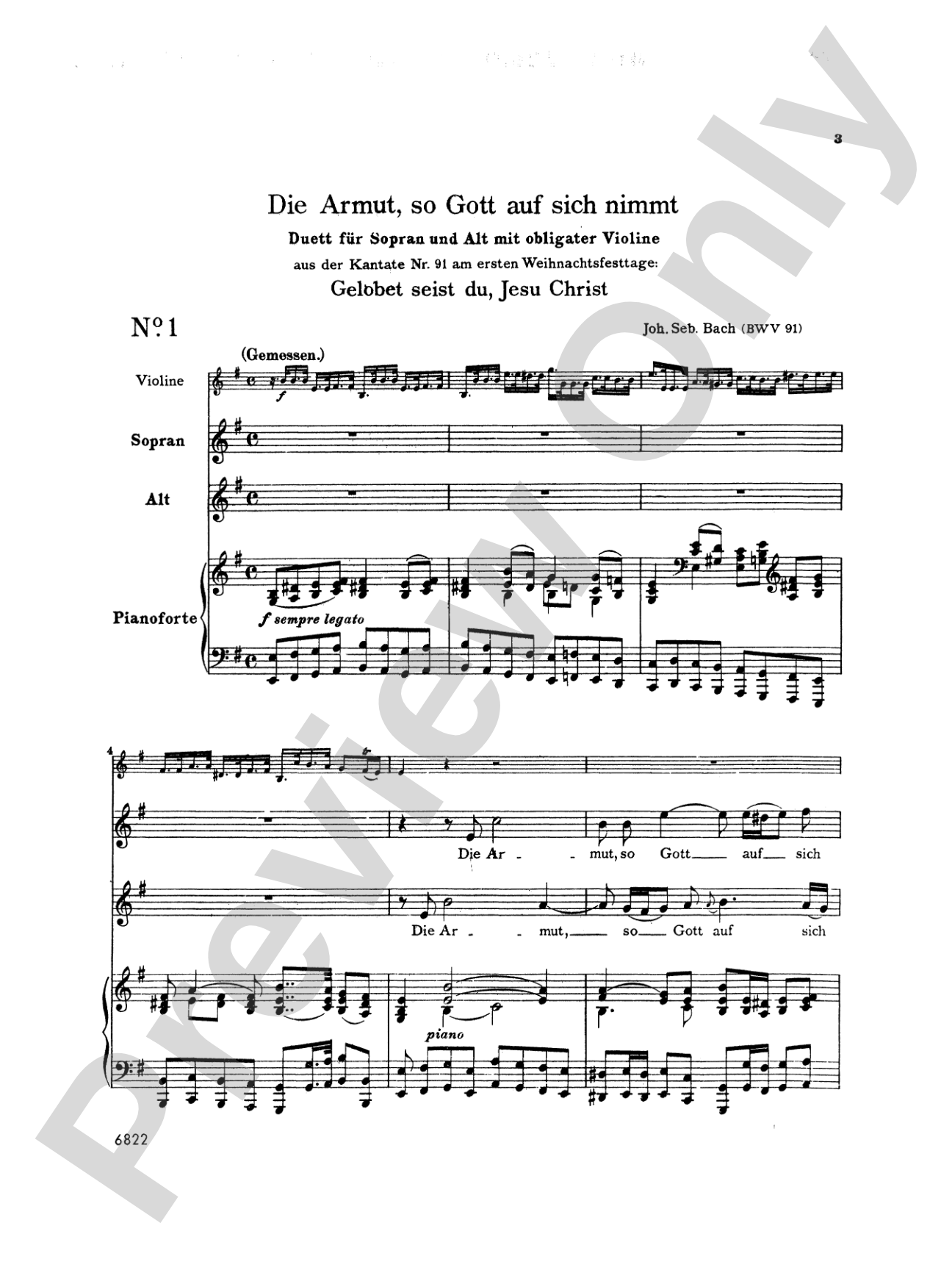
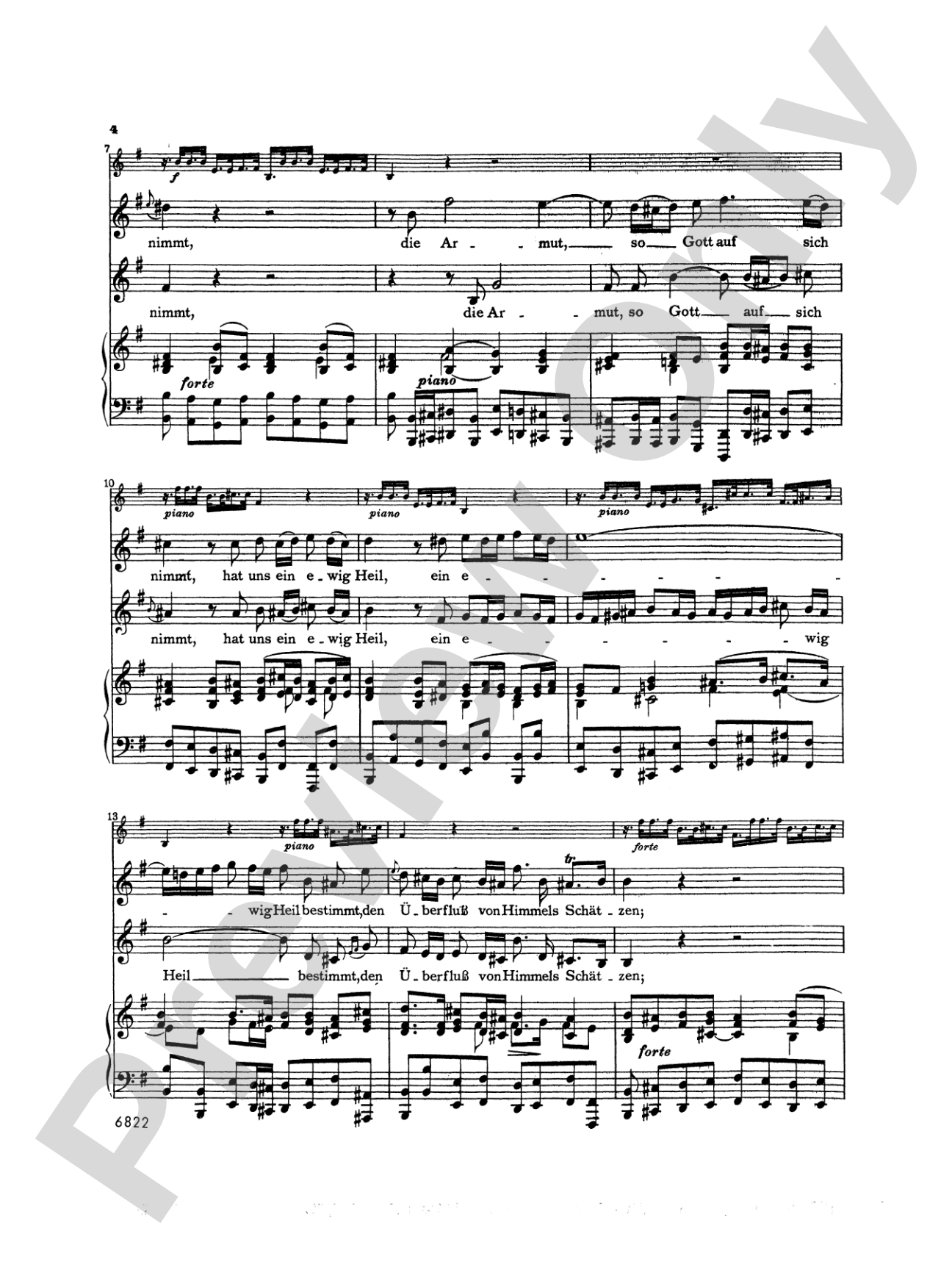

Bach: Arias from Church Cantatas (Soprano and Alto), Volume I (3 Duets) (German)
Duets for Soprano and Alto with Obbligato Instruments and Piano or Organ with German Text
By Johann Sebastian Bach
Item: 00-PC-0011411
$3.99
Pickup currently not available
Description
A collection of songs for Soprano and Alto voice, composed by Johann Sebastian Bach.


Don't just read it, hear it, play along with it, and watch your students grow with it. In MakeMusic Cloud, Bach: Arias from Church Cantatas (Soprano and Alto), Volume I (3 Duets) (German) comes alive with professional accompaniment, adjustable tempo, and built-in practice tools that turn solo practice into real progress.
Open in the Player
Jump straight in and assign it today.
Start Your Free Trial
Open this title and explore the full library in minutes.
Sample Audio
No sample audio found.
Sample Video
No sample videos found.
Additional Details
Series:
Kalmus Edition
Publisher:
Alfred Music
Page Count:
20
SKU:
00-PC-0011411
More about this title
About the Composer: Johann Sebastian Bach
Johann Sebastian Bach (1685-1750) stands as the foundation of Western harmonic practice and remains the most systematically studied composer in the classical canon. His output spans nearly every musical form of the Baroque era, from intimate solo works to massive choral cycles, each demonstrating inexhaustible contrapuntal invention and spiritual depth. Bach's church cantatas number over 200 surviving works, each crafted for specific liturgical occasions in Leipzig and earlier posts; they represent the pinnacle of German sacred music and continue to anchor choral and vocal pedagogy worldwide.
For singers and choral directors, Bach's music offers unparalleled clarity of voice leading, harmonic logic, and textual expression. His duets demand precise intonation, independent melodic thinking, and the ability to sustain long lines while maintaining ensemble awareness. Teaching and performing Bach is not optional in serious vocal training; it is foundational.
Why we love this
These three duets distill the essence of Bach's compositional mastery into forms that reward both singers and listeners. The duet genre showcases his gift for creating two complete, songful lines that weave together with mathematical clarity yet never feel academic. Performing Bach at this level builds the kind of intonation discipline and harmonic awareness that elevates every other repertoire singers touch.
What to expect
These duets balance spiritual restraint with lyrical warmth. Bach's soprano and alto lines sing with natural grace, unforced and often quite beautiful, yet every note serves the underlying harmonic architecture. There is no sentimentality here, only clarity, faith, and the quiet confidence of voices moving in perfect understanding.
Who it's for
This collection serves soprano and alto singers preparing for sacred music performance, chamber singing, or choral auditions where Bach is a standard expectation. Advanced high school singers, college voice students, and private studio students seeking to build foundational vocal maturity will find substantial musical and pedagogical value here. Choir directors can use these duets as training repertoire for section leaders or as optional program material for smaller concerts.
How to get the most out of it
- Shape each phrase as a complete musical thought, not a collection of measures. Bach's long lines demand breath planning that prioritizes the arch of the melody over text punctuation.
- Maintain independent voice leading throughout; avoid the temptation to shadow your partner's line in unison or lock into rhythmic unison unnecessarily. Bach expects both singers to move with equal confidence.
- Listen vertically to every harmonic moment, especially at phrase cadences. Intonation in close intervallic relationships (seconds, sevenths) will determine whether the duet sounds luminous or muddy.
- Articulate consonants cleanly in German text without sacrificing legato in the melodic line. The clarity of language and the continuity of the voice must coexist.
How to use it
Feature one duet on a chamber music recital, a sacred music concert, or an a cappella vocal program to anchor the program with historical and harmonic substance. These works pair well with Renaissance motets on one end of the timeline and later Baroque cantata movements on the other. Alternatively, extract these duets as rehearsal repertoire for advanced singers preparing for auditions or choral ensemble leadership roles.
Skills your students will build
- Reading and sustaining long melodic lines across multiple phrases without breath interruption
- Independent voice part singing while maintaining harmonic awareness of the duet partner's line
- Baroque text declamation and diction in German with legit singing technique
- Intonation precision in close harmonic intervals characteristic of Bach's voice leading
- Ensemble balance and blend when two singers must maintain equal prominence without one dominating