

Bach: Album for the Piano (Ed. Heinze)
A Collection of 21 Favorite Pieces for the Pianoforte
By Johann Sebastian Bach / ed. Heinze
Item: 00-PC-0004715
$0.99
Pickup currently not available
Description
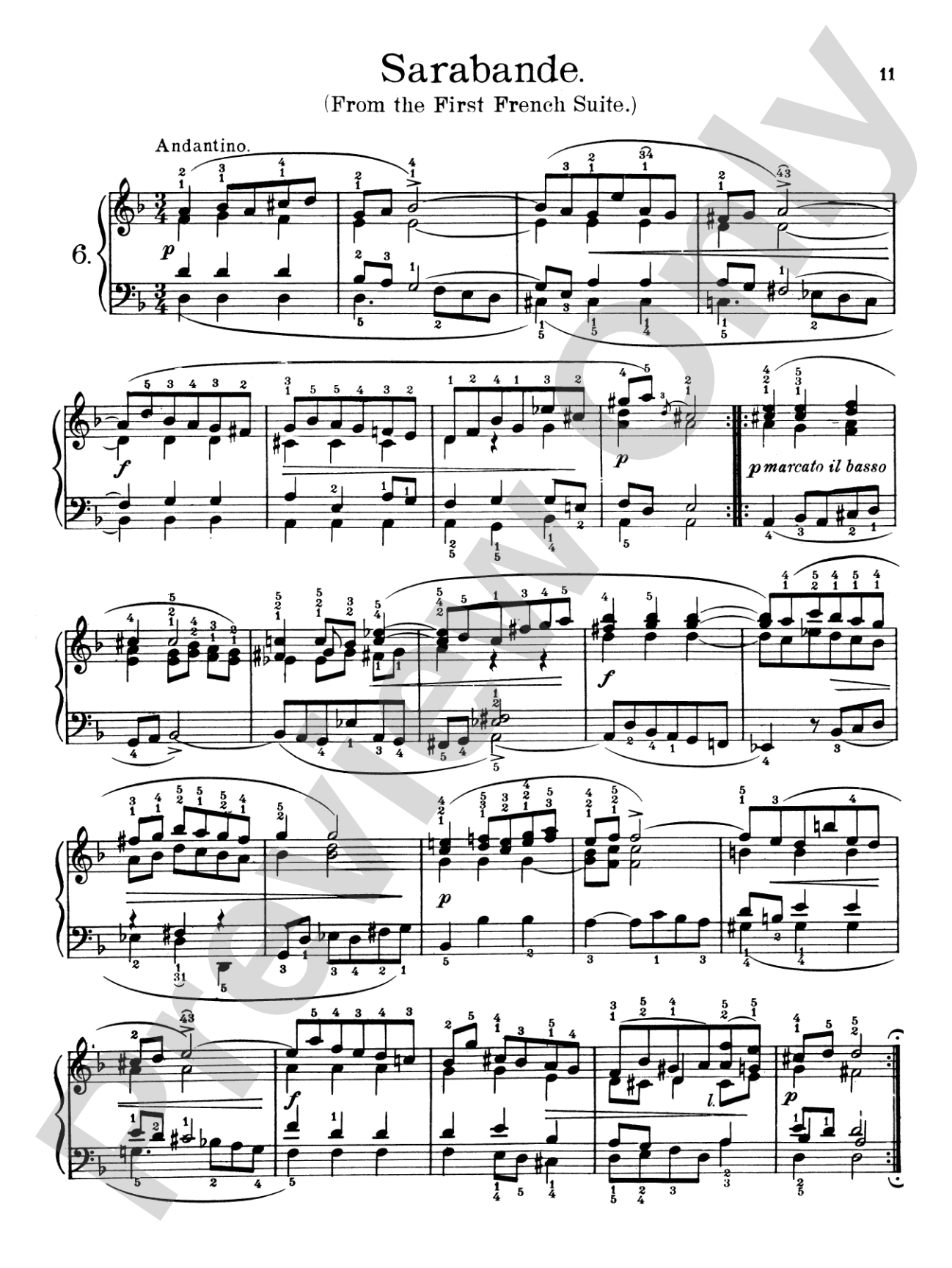
These 21 well known pieces by Johann Sebastian Bach are from a variety of his works, some transcribed for piano from instrumental suites and cantatas. 43 pages. Includes: Aria from Partita No. 4 * Aria ("My Heart Ever Faithful) from the Pentecost Cantata * Bourree from English Suite No. 2 * Bourree from Cello Suite No. 3 * Bourree from the Trumpet Suite * Bourree from Violin Sonata No. 2 * Gavotte from French Suite No. 5 * Gavotte from English Suite No. 6 * Gavotte from English Suite No. 3 * Gavotte from Cello Suite No. 6 * Gigue from Partita No. 1 * Intrata from Cello Suite No. 5 * Menuet from Partita No. 1 * Menuet from French Suite No. 3 * Menuet from Cello Suite No. 1 * Passepied from English Suite No. 5 * Praeludium from Partita No. 1 * Preambule from Violin Sonata No. 6 * Rondo-Gavotte from Violin Sonata No. 6 * Sarabande from English Suite No. 5 * Sarabande from French Suite No. 1.


Don't just read it, hear it, play along with it, and watch your students grow with it. In MakeMusic Cloud, Bach: Album for the Piano (Ed. Heinze) comes alive with professional accompaniment, adjustable tempo, and built-in practice tools that turn solo practice into real progress.
Open in the Player
Jump straight in and assign it today.
Start Your Free Trial
Open this title and explore the full library in minutes.
Sample Audio
No sample audio found.
Sample Video
No sample videos found.
Additional Details
Series:
Kalmus Edition
Publisher:
Alfred Music
Page Count:
44
SKU:
00-PC-0004715
More about this title
About the Composer: Johann Sebastian Bach
Johann Sebastian Bach (1685-1750) stands as perhaps the most systematically rigorous composer in Western music history. His output across every major genre except opera reveals an exhaustive exploration of counterpoint, harmonic language, and structural architecture that continues to define musical excellence for performers and composers alike.
Bach's instrumental works, from which many pieces in this collection are drawn, served both pedagogical and artistic purposes. His suites and sonatas for solo instruments contain the seeds of later Classical forms while remaining deeply rooted in Baroque rhetorical expression. For pianists, these works offer a direct path into period style, voice leading, and the ornamental language that shaped all subsequent keyboard music.
Why we love this
This collection distills the essential Bach for pianists without demanding years of preparation or historical context to sound coherent. The variety of dances and shorter forms provides immediate wins: students can master a complete piece in reasonable time while encountering Bach's harmonic vocabulary, contrapuntal logic, and ornamental style in digestible portions. The mix of pieces sourced from different genres (suites, sonatas, cantatas) lets pianists experience how Bach deployed similar musical ideas across instrumental and vocal contexts.
What to expect
A journey through Bach's world of elegant courtly dances and intimate song. Each piece breathes with controlled emotion, ornamental grace, and the transparency of well-managed multiple voices. The music asks for clarity and directness, rewarding restraint over sentimentality.
Who it's for
Intermediate pianists ready to engage with Baroque style and voice-leading principles without tackling the complete WTC or Goldberg Variations. This collection suits studio teachers building repertoire for students grades 4-8 who want exposure to Bach beyond fragments, as well as adult learners returning to piano who seek masterworks at a digestible scale.
How to get the most out of it
- Shape the melodic line with the same care you'd bring to singing; Bach's voice leading rewards listening as though the top line were a soprano soloist, even in accompaniment figures.
- Treat ornaments (trills, mordents, turns) as rhythmic and harmonic events, not decorative afterthoughts. They often resolve tension or highlight structural points.
- Balance the hands by voices, not by volume. Inner voices often carry harmonic or contrapuntal importance that demands clarity without overwhelming the primary melody.
- Establish a consistent tempo before you begin and hold it steady; Bach's metric architecture depends on listeners hearing the phrase structure clearly, and rubato clouds that clarity.
How to use it
Use individual pieces to open or close recitals; a single Menuet or Gavotte makes an ideal program foil to Romantic or contemporary works. Alternatively, program a sequence of contrasting dances from this collection as a Bach set that showcases period style without demanding a full suite's duration.
Skills your students will build
- Voice leading and harmonic analysis in Baroque syntax
- Ornamentation execution and interpretation (trills, mordents, turns)
- Period-appropriate articulation and phrasing in dance forms
- Counterpoint recognition and independence of hands
- Baroque dance meter and rhythmic character (Minuet vs. Gavotte vs. Gigue)