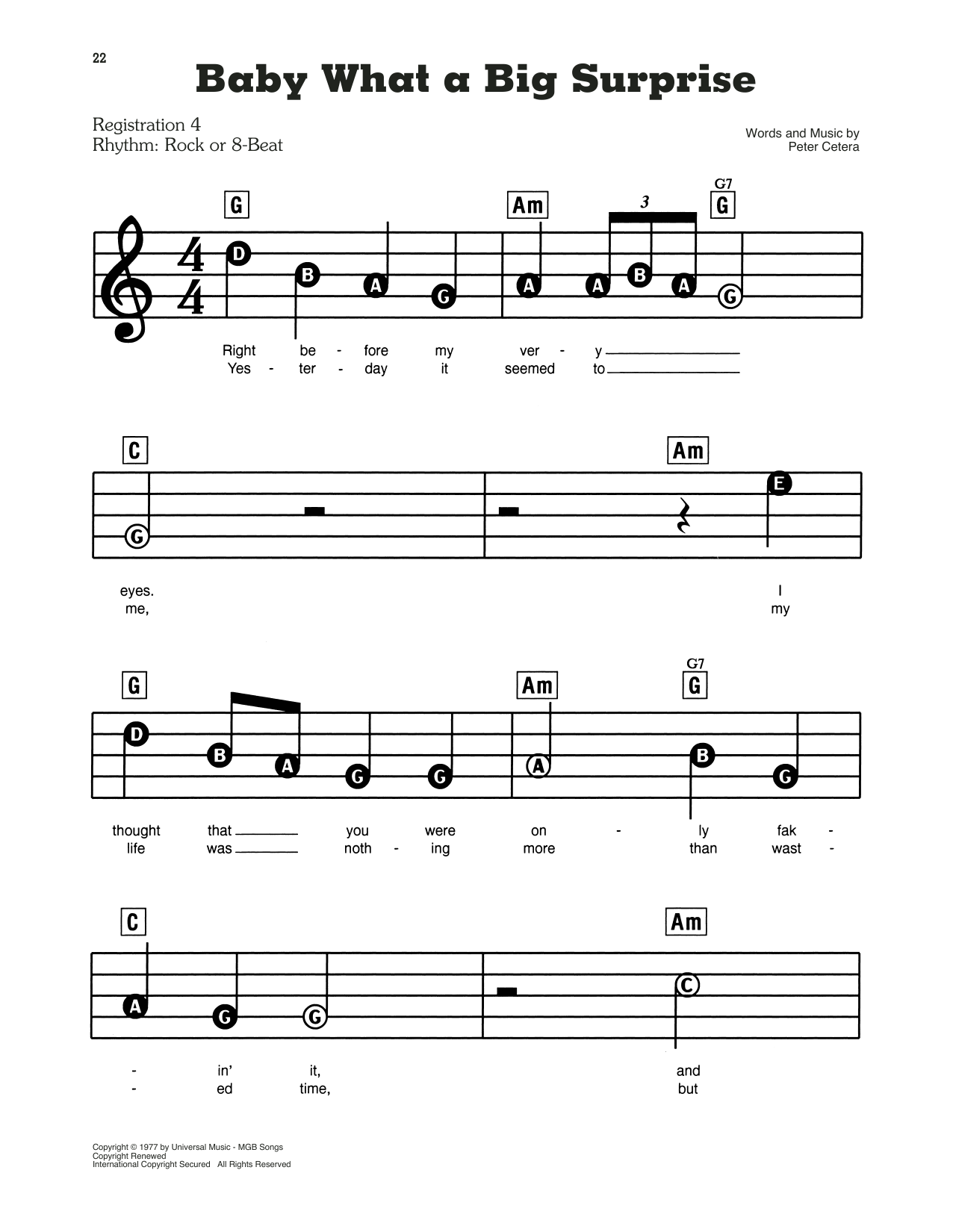
Baby What A Big Surprise Sheet Music Preview

Baby What A Big Surprise: E-Z Play Today

As performed by Chicago

Item: 35-DS00733904

Digital Download
$4.99
Description

Baby What A Big Surprise: E-Z Play Today isn't in MakeMusic Cloud just yet...but it could be. Let us know you'd like to see it, and you'll help shape what comes next. In the meantime, start a free trial and dive into thousands of interactive titles your students can play along with today.

Sample Audio
No sample audio found.
Sample Video
Additional Details
Publisher: Hal Leonard
Page Count: 4
SKU: 35-DS00733904

More about this title

About the Artist: Chicago

Chicago emerged from the late 1960s Chicago jazz scene as one of the first rock bands to integrate horns into a power trio format, fundamentally reshaping what rock music could sound like. Their tightly arranged horn sections and sophisticated harmonies brought jazz sensibility to stadium rock, creating a catalog that appeals equally to musicians interested in harmonic complexity and popular songwriting.

Why we love this

This track captures Chicago's signature blend of groove and musicianship in a four-page arrangement that remains accessible without sacrificing character. Students get to experience how pop songwriting works when it's built on genuine harmonic and rhythmic sophistication, making this both rewarding to play and genuinely fun.

What to expect

Confident and breezy, with an undercurrent of sophistication. The piano carries both the rhythmic thrust and harmonic intelligence that defined Chicago's best work, creating an arrangement that feels both joyful and musically substantial.

Who it's for

Piano students who want to explore 1970s pop and rock styles will find this arrangement engaging and appropriately challenging. Teachers can use this to show how horn band arrangements translate to keyboard settings.

How to get the most out of it

  • Lock the syncopated rhythms in the left hand with the phrasing in the right to nail the pocket that gives this song its swagger.
  • Pay attention to the dynamics marked throughout; this song breathes through volume shifts rather than dramatic tempo changes.
  • Let the groove settle into your fingers before worrying about speed; the song lives in its pocket, not its tempo.

How to use it

Consider this for a concert exploring 1970s songwriting or for a set featuring pop and rock repertoire that elevates beyond standard arrangements. It works particularly well when paired with other pieces that show the evolution of rock musicianship during that decade.

Skills your students will build

  • Syncopated left-hand rhythms in a pop/rock context
  • Interpreting horn-band voicings on keyboard
  • Maintaining groove while reading written dynamics
  • Balancing melody and accompaniment roles

You May Also Like