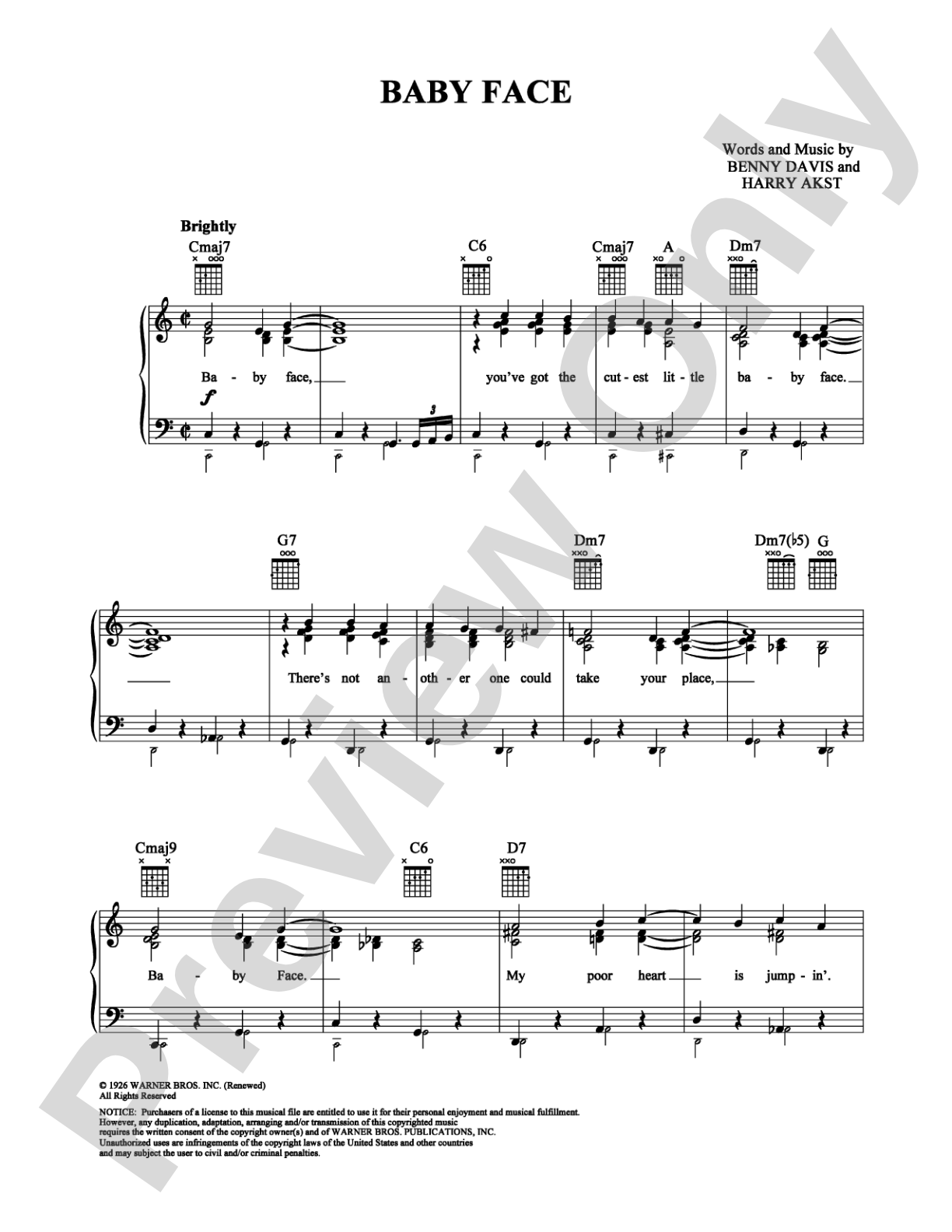
Baby Face: Piano/Vocal/Chords Digital Sheet Music

Baby Face: Piano/Vocal/Chords Digital Sheet Music

Harry Akst, Benny Davis, Art Mooney

Item: 00-PS-0008479

Digital Download
$3.99
Description

Baby Face: Piano/Vocal/Chords Digital Sheet Music isn't in MakeMusic Cloud just yet...but it could be. Let us know you'd like to see it, and you'll help shape what comes next. In the meantime, start a free trial and dive into thousands of interactive titles your students can play along with today.

Sample Audio
No sample audio found.
Sample Video
Additional Details
SKU: 00-PS-0008479

More about this title

About the Artist: Art Mooney

Art Mooney (1911-1993) was an American bandleader and accordionist who became a fixture of 1950s pop music and television. His orchestra recorded numerous novelty and sentimental hits during the postwar era, often featuring his distinctive accordion sound and polished arrangements that appealed to mainstream audiences.

Why we love this

This is a genuine crowd-pleaser that works beautifully in recitals, senior centers, or programs celebrating American popular music. The melody sits naturally for singers while the chord structure keeps accompanists engaged, and the nostalgic charm makes it accessible to pianists and vocalists at multiple levels.

What to expect

Warm and intimate, with a gentle sentimental quality that captures the affection of a smitten observer. The tune unfolds with an easygoing charm that feels both wistful and genuinely approachable, inviting the audience into a moment of simple human sweetness.

Who it's for

Singers and pianist-accompanists working together on American popular standards from the mid-20th century. This piece suits vocalists comfortable with vernacular diction and pianists who enjoy the interplay between melody and chord-based accompaniment.

How to get the most out of it

  • Honor the relaxed, conversational phrasing of the vocal line rather than rushing the tempo; let the lyrics breathe naturally between phrases.
  • Keep the piano accompaniment light and supportive, avoiding heavy dynamic shifts that would overshadow the vocalist's storytelling quality.
  • Pay attention to the harmonic progression in the chords to maintain smooth voice leading and clean transitions between changes.

How to use it

Pair this with other 1920s, 1950s standards to build a nostalgia set, or use it as a lighter moment between more demanding repertoire. It works particularly well in community concerts, senior centers, or variety shows where accessibility outweighs complexity.

Skills your students will build

  • Vocal phrasing and lyrical interpretation in popular song style
  • Chord-reading and accompaniment from lead sheets
  • Coordination between vocalist and pianist in ensemble setting
  • Understanding harmonic movement in jazz-influenced popular music

You May Also Like