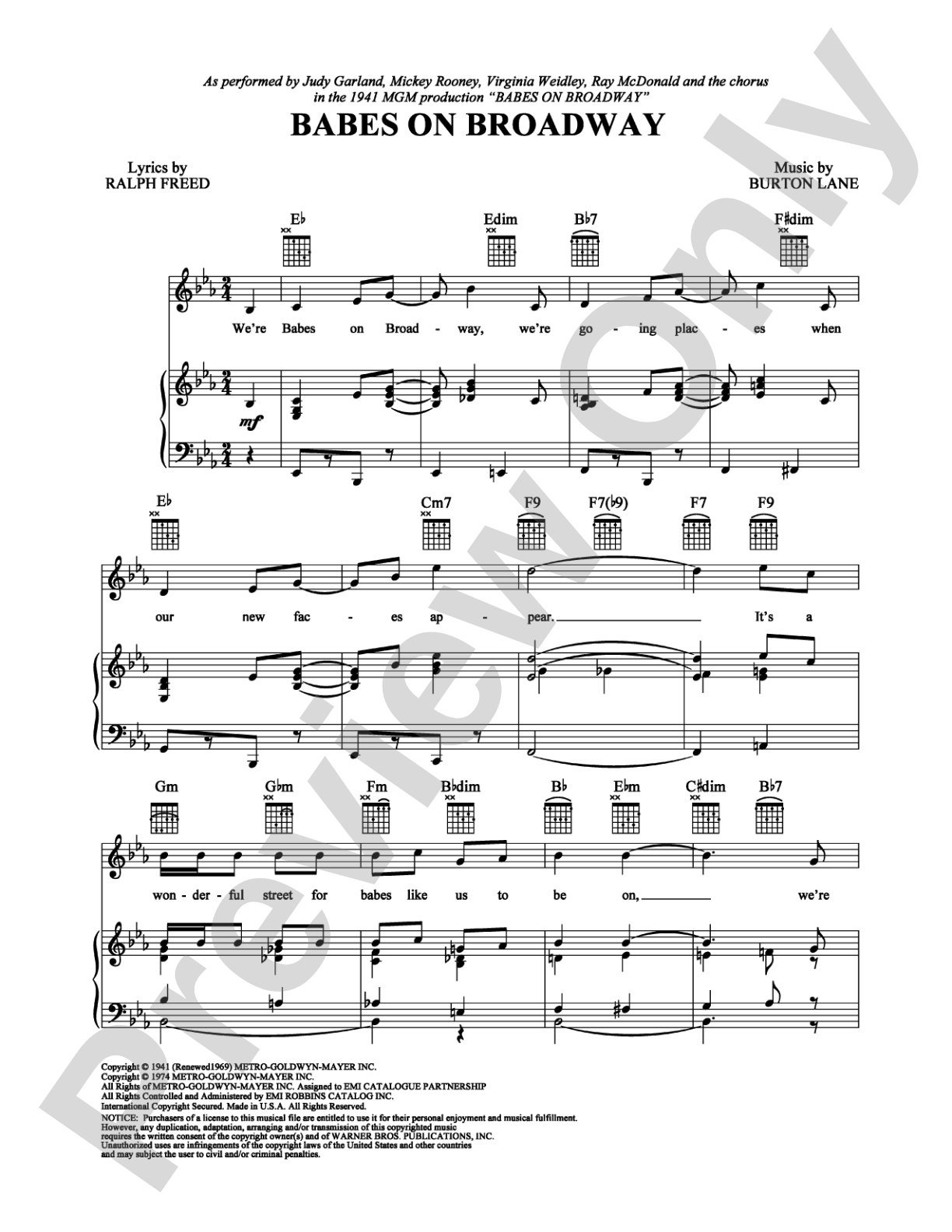
Babes on Broadway: Piano/Vocal/Chords Digital Sheet Music

Babes on Broadway: Piano/Vocal/Chords Digital Sheet Music

Burton Lane, Judy Garland, Mickey Rooney

Item: 00-PS-0007034

Digital Download
$3.99
Description

Babes on Broadway: Piano/Vocal/Chords Digital Sheet Music isn't in MakeMusic Cloud just yet...but it could be. Let us know you'd like to see it, and you'll help shape what comes next. In the meantime, start a free trial and dive into thousands of interactive titles your students can play along with today.

Sample Audio
No sample audio found.
Sample Video
Additional Details
SKU: 00-PS-0007034

More about this title

About the Artist: Judy Garland

Judy Garland (1922-1969) was an actor and singer whose interpretations of American popular song became the standard by which generations of performers measure their craft. She built her career on emotional directness and vocal control, bringing theatrical depth to every lyric she sang. Her work across film, radio, and stage made her one of the most influential vocalists in twentieth-century entertainment.

Why we love this

This duet captures a moment of pure theatrical joy. The song's straightforward structure and buoyant melody make it accessible for student singers while its Broadway pedigree and film legacy give it real cultural weight in any program.

What to expect

This is upbeat vaudeville energy on stage at the Babes Theatre: youthful performers with infectious confidence, trading quick quips and building momentum together. The music bounces with comedy and heart, inviting both singers and audiences into a moment of unforced fun.

Who it's for

Singers studying American musical theatre and jazz standards will find this duet engaging and rewarding. Piano students accompanying singers in recital or rehearsal benefit from its clear chord structure and singable accompaniment patterns.

How to get the most out of it

  • Balance the vocal melody clearly against the piano accompaniment; the melody should sing forward without the accompaniment drowning it out.
  • Shape the duet lines so each vocalist's entrance and phrasing feels conversational, trading energy back and forth rather than blending into a single line.
  • Use the chord symbols to guide harmonic color and dynamic support; slight lift on the richer chords will enhance the song's theatrical character.
  • Keep the tempo bright but controlled; rushing will flatten the syncopation that gives this song its infectious quality.

How to use it

Program this alongside other classic film-musical selections when building a recital around twentieth-century popular song. It works well in concert contexts celebrating musical theatre or as an accessible showstopper for young performers building confidence with duet singing.

Skills your students will build

  • Singing two-part harmony in a theatrical duet context
  • Reading and interpreting chord symbols for accompaniment
  • Balancing vocal melody with piano-driven accompaniment
  • Phrasing and ensemble entrances in a comedic song

You May Also Like