
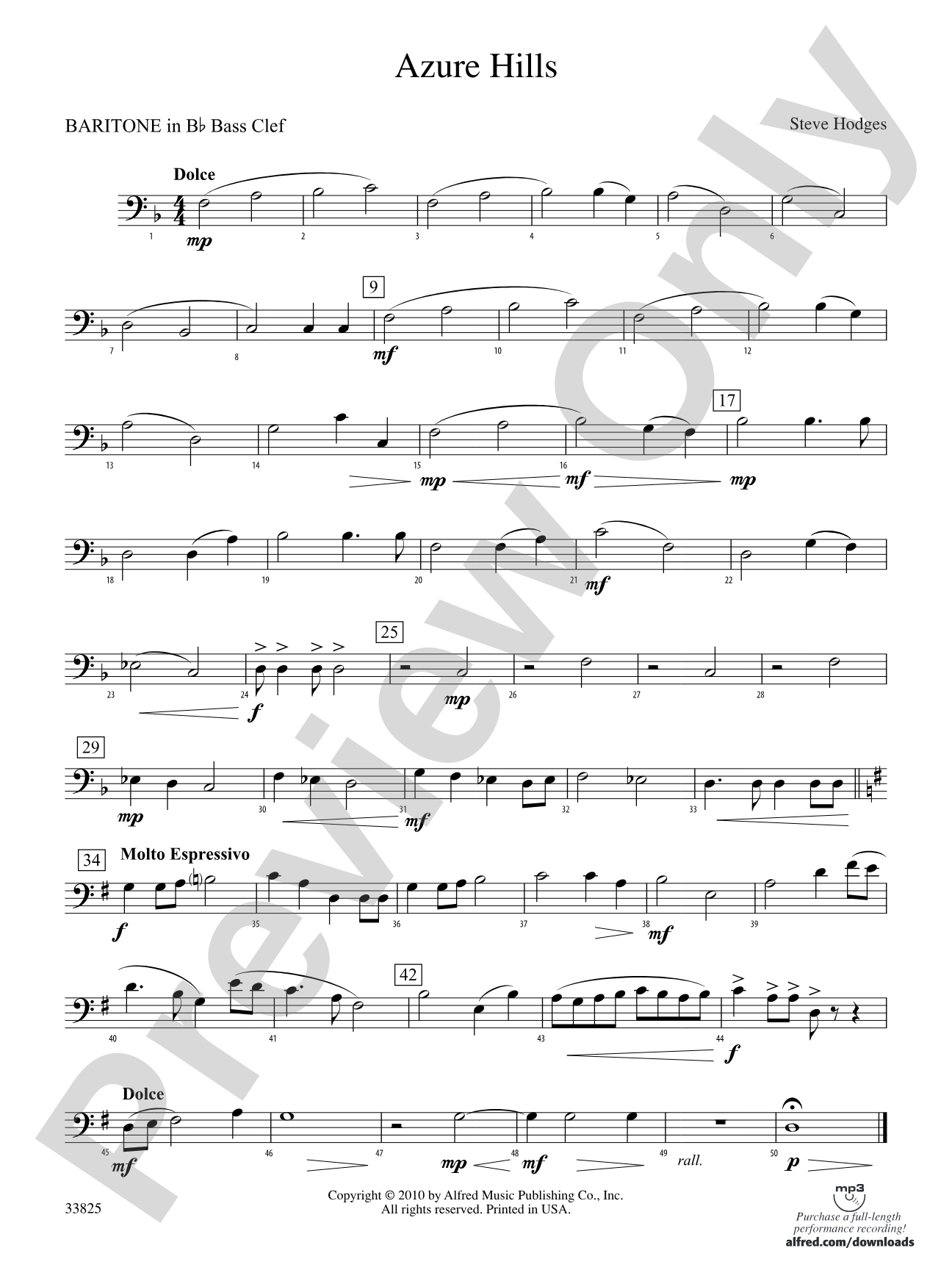

Azure Hills: (wp) B-flat Baritone B.C.
By Steve Hodges
Grade: 1.5 (Easy)
Item: 00-PC-0014556_wpBBBC
$3.00
Pickup currently not available
Description
Azure Hills is a lyrical ballad that presents the band with many opportunities for expressive playing. The theme is lightly presented by the flutes, then followed by another statement in the trumpets with added textures in the accompaniment. The second statement features some interesting harmonies by the woodwinds before leading into a very expressive final presentation of the melody with an added woodwind countermelody. A stirring variation and development leads to a very effective and climactic ending where melodic motives are passed from section to section as the piece winds down to a quiet, reflective conclusion.


Don't just read it, hear it, play along with it, and watch your students grow with it. In MakeMusic Cloud, Azure Hills: (wp) B-flat Baritone B.C. comes alive with professional accompaniment, adjustable tempo, and built-in practice tools that turn solo practice into real progress.
Open in the Player
Jump straight in and assign it today.
Start Your Free Trial
Open this title and explore the full library in minutes.
Sample Audio
1
Audio File
--:--
0:00
0:00
Sample Video
No sample videos found.
Additional Details
Series:
Challenger Band Series
Publisher:
Alfred Music
Page Count:
118
SKU:
00-PC-0014556_wpBBBC
More about this title
About the Composer: Steve Hodges

Steve Hodges holds degrees from Western Oregon University (B.S.) and Central Washington University (M.A. in Music Education). After four decades directing concert bands, choirs, and chamber ensembles across public school districts, he transitioned to full-time composition, publishing over 120 band works through Alfred Music since 1986.
Hodges's compositions have appeared at state conventions, international festivals, and on broadcasts for TBS and ESPN. His commissioned works span honor bands and school programs in Virginia, Iowa, Washington, Oregon, North Carolina, and Canada. As an ASCAP member, he continues to live in The Dalles, Oregon, where he remains active in community music and watches his grandchildren perform his pieces in their own school bands.
Why we love this
Azure Hills delivers exactly what Grade 1.5 bands need: accessible yet genuinely musical writing that rewards expressive attention without demanding technical heroics. The distributed melody statements across flutes, trumpets, and woodwinds give multiple sections their moment while building harmonic sophistication through the middle section. Most impressive is how the climactic section moves material through the ensemble in a way that feels organic rather than formulaic, creating the kind of ownership and engagement that early concert bands rarely experience.
What to expect
Azure Hills unfolds with the unhurried grace of a landscape emerging through morning mist. Warm, lyrical, and contemplative, it gives listeners time to settle into each phrase while building toward a moment of genuine elevation before fading into quiet reflection.
Who it's for
Grade 1.5 concert bands preparing for festival or contest performance. The piece works equally well for groups prioritizing musical growth over technical display, as it builds expressive sensitivity and sectional independence without demanding advanced range or technique.
How to get the most out of it
- Shape the opening flute melody with gentle dynamic waves rather than playing it straight; even at this level, students hear the difference between a statement and a sung phrase.
- When the trumpet takes the theme, ensure woodwind accompaniment stays supportive. This is where many young bands rush; lock the tempo with the rhythm section and let the textures breathe.
- Balance the woodwind countermelody in the final presentation so it complements rather than competes with the main melody. Rehearse these lines separately first, then blend.
- The climactic section gains its power from clarity, not volume. Emphasize clean articulation as motives pass between sections so the audience follows the conversation.
How to use it
Program Azure Hills on a festival or concert that benefits from a contrasting ballad, especially if you're pairing it with more energetic or technically demanding works. Its modest page count (118 pages of score and parts) makes it manageable for groups juggling multiple pieces, and the reflective ending provides natural programming placement before an intermission or as a closing selection.
Skills your students will build
- Dynamic shaping and phrase contour across multiple statement variations
- Sectional balance and accompaniment texture support
- Ensemble blend during harmonic changes in the middle section
- Thematic continuity and recognition as melodies pass between instrument families
- Expressive performance at accessible technical levels