
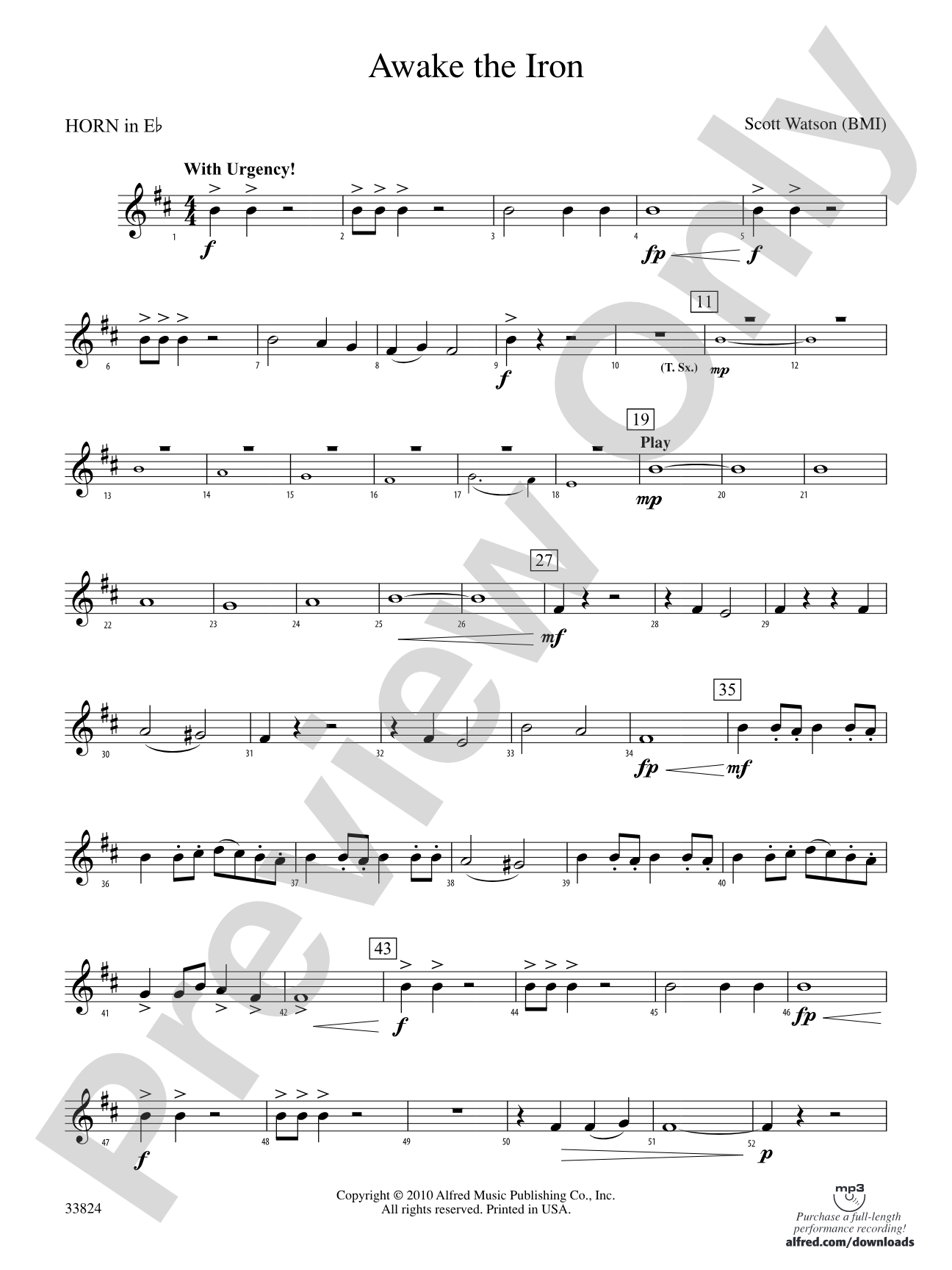
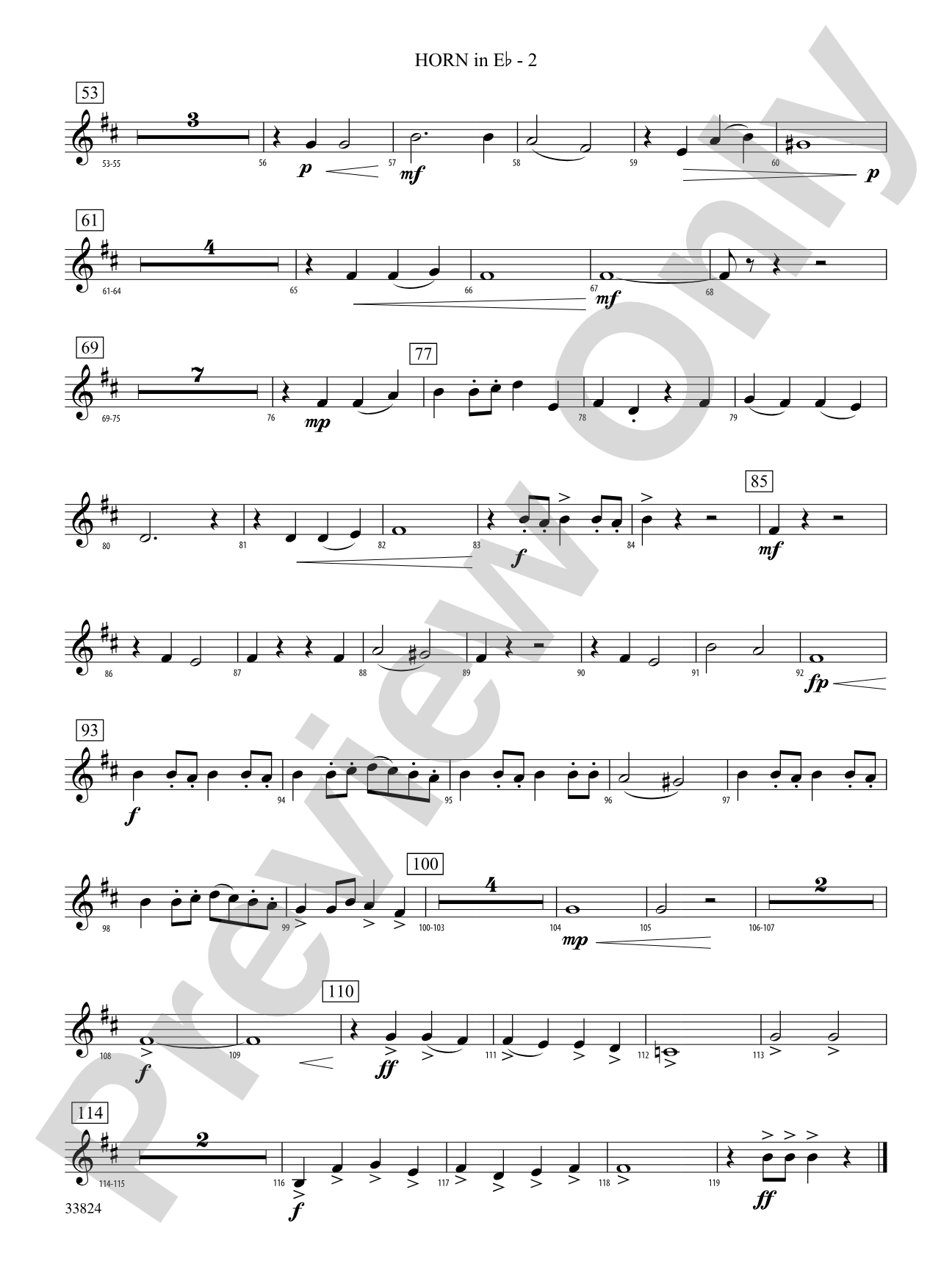

Awake the Iron: (wp) 1st Horn in E-flat
By Scott Watson
Grade: 1.5 (Easy)
Item: 00-PC-0014555_wpEH1
$3.00
Pickup currently not available
Description
"Desperta Ferro!," or "Awake the iron!" was the battle cry of Medieval Spanish soldiers called the Almogavars. In the dim light of dawn, as they prepared for battle, these fierce soldiers would beat their swords on rocks shouting this phrase.
The sparks that flew from the rocks in the eerie light of dawn, together with the soldier's call to arms, would give any enemy pause. Awake the Iron, with its insistent unisons, energetic rhythms, modal themes, and powerful percussive writing, mirrors the ferocious intensity of the medieval battlefield. This mature sounding, yet approachable work, is sure to be a favorite of both the musicians and audience. (3:30) This title is available in MakeMusic Cloud.


The sparks that flew from the rocks in the eerie light of dawn, together with the soldier's call to arms, would give any enemy pause. Awake the Iron, with its insistent unisons, energetic rhythms, modal themes, and powerful percussive writing, mirrors the ferocious intensity of the medieval battlefield. This mature sounding, yet approachable work, is sure to be a favorite of both the musicians and audience. (3:30) This title is available in MakeMusic Cloud.
Don't just read it, hear it, play along with it, and watch your students grow with it. In MakeMusic Cloud, Awake the Iron: (wp) 1st Horn in E-flat comes alive with professional accompaniment, adjustable tempo, and built-in practice tools that turn solo practice into real progress.
Open in the Player
Jump straight in and assign it today.
Start Your Free Trial
Open this title and explore the full library in minutes.
Sample Audio
1
Audio File
--:--
0:00
0:00
Sample Video
Additional Details
Series:
Alfred Debut Series
Publisher:
Alfred Music
Page Count:
232
SKU:
00-PC-0014555_wpEH1
More about this title
About the Composer: Scott Watson

Scott Watson has spent nearly four decades shaping young musicians, first as Director of Bands at Allentown's Parkland High School and later as coordinator of the district's elementary band and strings program. His work in the classroom directly informs his compositional voice; he has written over 120 published works for concert band, string orchestra, and chamber ensembles across all performance levels, and his music has been heard at venues ranging from the Philadelphia Academy of Music to the Kennedy Center.
Now Associate Professor of Music at Cairn University, Watson balances university teaching with an active composing and clinician schedule. His background spans both contemporary concert art music and the practical demands of the band room, a duality that gives his writing its distinctive character. He is an exclusive composer for Alfred Publications and the author of Using Technology to Unlock Musical Creativity, published by Oxford University Press.
Why we love this
Watson writes with the sensibility of someone who has stood in front of student musicians for decades. Awake the Iron delivers genuine impact without requiring advanced technical facility; the Grade 1.5 rating means your band can sound formidable without spending weeks on complex passages. The programmatic frame gives context and energy to every rehearsal, and the insistent unisons and modal writing create natural buy-in from your ensemble.
What to expect
Awake the Iron captures the raw energy of dawn on a medieval battlefield. Swords striking stone, voices unified in purpose, rhythms pulsing with urgency. The orchestration emphasizes texture and rhythm over melody, creating a visceral, almost primal intensity that never tips into heavy-handed or overly complex writing.
Who it's for
Bands looking for substantive concert or contest material at the Grade 1-2 level will find this both playable and genuinely impressive. The programmatic subject matter engages student musicians intellectually while the accessible voicing and straightforward harmonic language keep rehearsal time efficient. It's equally effective as a festival or concert opener.
How to get the most out of it
- Let the opening unisons ring with absolute clarity and commitment. The strength of this work lives in rhythmic precision and tonal unity, not individual virtuosity.
- Shape the modal themes as if they're battle calls, not melodies. Watson's writing is deliberately angular and repetitive by design; treat these lines as part of the percussion texture rather than lyrical material.
- Balance your percussion section carefully across the three-and-a-half minutes. The sparks described in the program notes are literal here, so rhythmic accuracy in the auxiliary percussion matters as much as the front line.
- Take advantage of the recorded accompaniment option in MakeMusic Cloud to lock ensemble pulse during sectional rehearsals, especially with younger or less experienced bands.
How to use it
Open a concert or festival appearance with this piece; its dramatic frame and driving rhythm establish instant audience engagement. The approachable grade level and three-and-a-half-minute duration make it ideal for paired programming with more intricate works. Alternatively, use it as a springboard for discussing how composers draw inspiration from history and how modal writing differs from traditional major/minor harmony.
Skills your students will build
- Ensemble unison precision and blend
- Reading and executing rhythmic patterns across mixed meters
- Modal melodic thinking (as opposed to traditional major/minor tonality)
- Dynamic control in driving, percussive textures
- Maintaining rhythmic momentum in repetitive, motivic writing