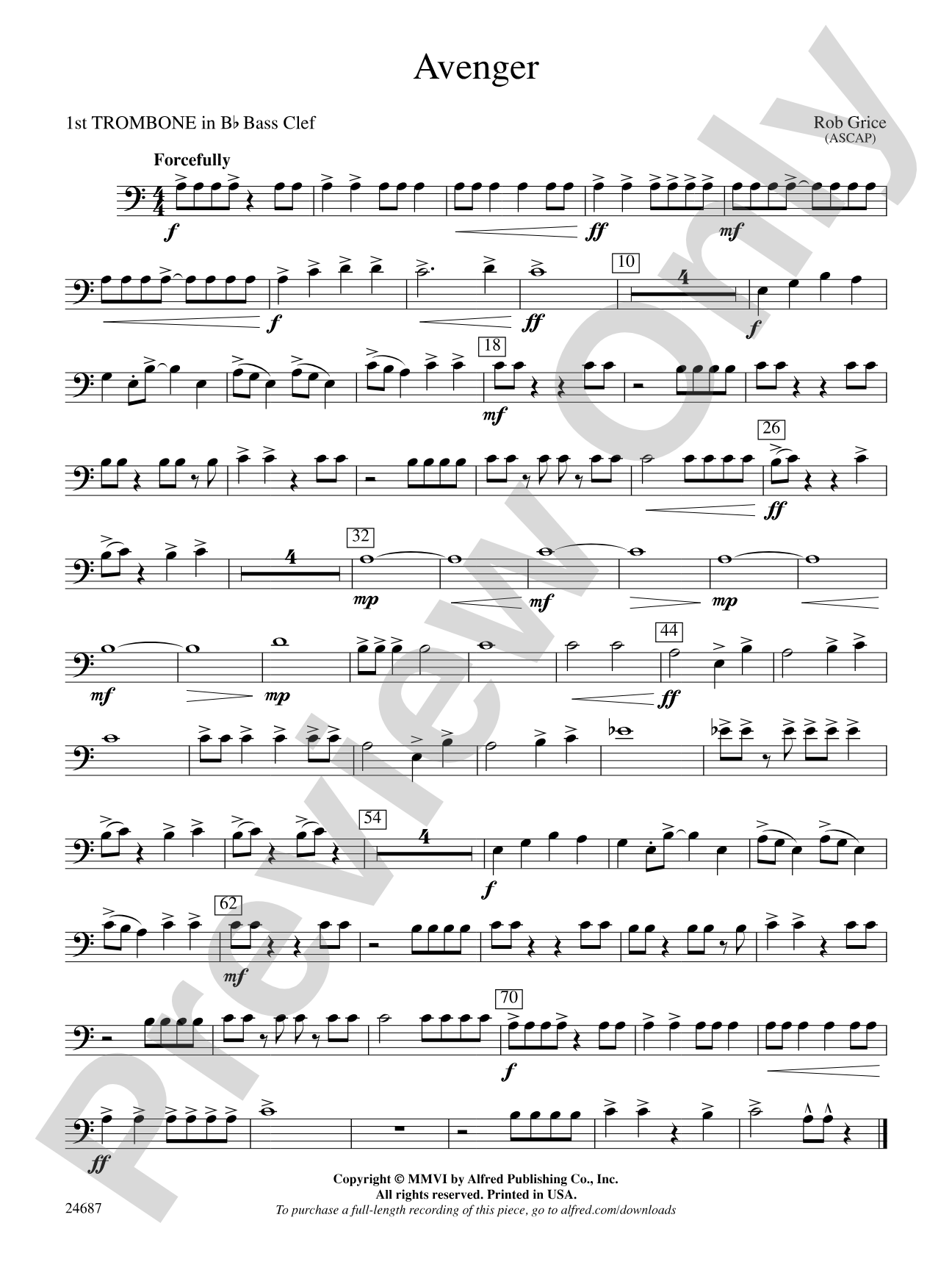
Avenger: (wp) 1st B-flat Trombone B.C. Sheet Music Preview

Avenger: (wp) 1st B-flat Trombone B.C.

By Rob Grice

Grade: 2 (Medium Easy)

Item: 00-PC-0000851_wpTN1BC

Digital Download
$3.00
Description
Avenger is an aggressive young band composition that explores contemporary harmonies and vigorous rhythms to create a feeling of drama and excitement. A variety of harmonic, rhythmic, and textural settings were utilized in the development of this dramatic work. Dynamic and intense, this piece abounds with drive and energy to the last note!

Don't just read it, hear it, play along with it, and watch your students grow with it. In MakeMusic Cloud, Avenger: (wp) 1st B-flat Trombone B.C. comes alive with professional accompaniment, adjustable tempo, and built-in practice tools that turn solo practice into real progress.

Sample Audio
0:00
0:00
Sample Video
Additional Details
Series: Young Symphonic
Publisher: Alfred Music
Page Count: 146
SKU: 00-PC-0000851_wpTN1BC

More about this title

About the Composer: Rob Grice

Rob Grice

Rob Grice's compositions and arrangements have earned performances across the United States, Australia, Canada, Europe, and Japan. His works have been featured at the Midwest Clinic, the Society of Wind Instruments in Germany, Carnegie Hall, and numerous state and regional conventions. He brings deep pedagogical insight to his writing, informed by decades of classroom experience at elementary, secondary, and community college levels.

Grice was named Secondary Teacher of the Year by the Enterprise City School System in Enterprise, Alabama, and received the Golden Apple Award from WDHN-TV18 for his educational contributions. He remains active as a guest conductor, clinician, and adjudicator with concert and indoor percussion ensembles. His young band compositions have become staples in school music programs because they balance musical substance with technical accessibility.

Why we love this

Grice understands what young players need: music that sounds genuinely exciting without requiring years of technique to pull off. Avenger delivers contemporary harmonic language and sharp rhythmic momentum in a package that feels achievable at Grade 2, which means your students get to perform something with real dramatic weight rather than simplified versions of "real" pieces.

What to expect

Avenger charges forward with contemporary harmonic tension and relentless rhythmic drive. The piece lives in a state of controlled intensity, with shifting orchestration and textural contrast keeping the momentum fresh and the drama palpable from start to finish.

Who it's for

Young band directors looking for Grade 2 repertoire that doesn't sound like it's written for beginners. This works well for groups with solid fundamentals who are ready to tackle contemporary sonorities and maintain high energy without relying on slow, lyrical passages.

How to get the most out of it

  • Establish a crisp, driving pulse from the downbeat. The aggressive character lives in the precision of rhythmic attack, not in simply playing loud.
  • Balance the contemporary harmonies carefully across sections. Encourage players to listen across parts so the dissonance lands intentionally rather than sounding accidental.
  • Shape the dynamic arc from section to section. Mark where intensity peaks and where it pulls back slightly, even within the overall aggressive energy.
  • Keep the brass section locked in tight rhythmic unison during the vigorous passages. Any sloppiness undercuts the power.

How to use it

Program this as an opener or closer to showcase the ensemble's energy and modern voice. It pairs well on a concert with contrasting styles (a warm, lyrical work before or after) and is equally at home in contest settings where you want judges to hear that your program has contemporary relevance.

Skills your students will build

  • Reading and maintaining contemporary harmonic language
  • Performing aggressive rhythmic figures with precision and control
  • Building sustained dynamic intensity across multiple phrases
  • Balancing part independence while maintaining ensemble cohesion
  • Recognizing textural and orchestrational variety within a single composition

You May Also Like