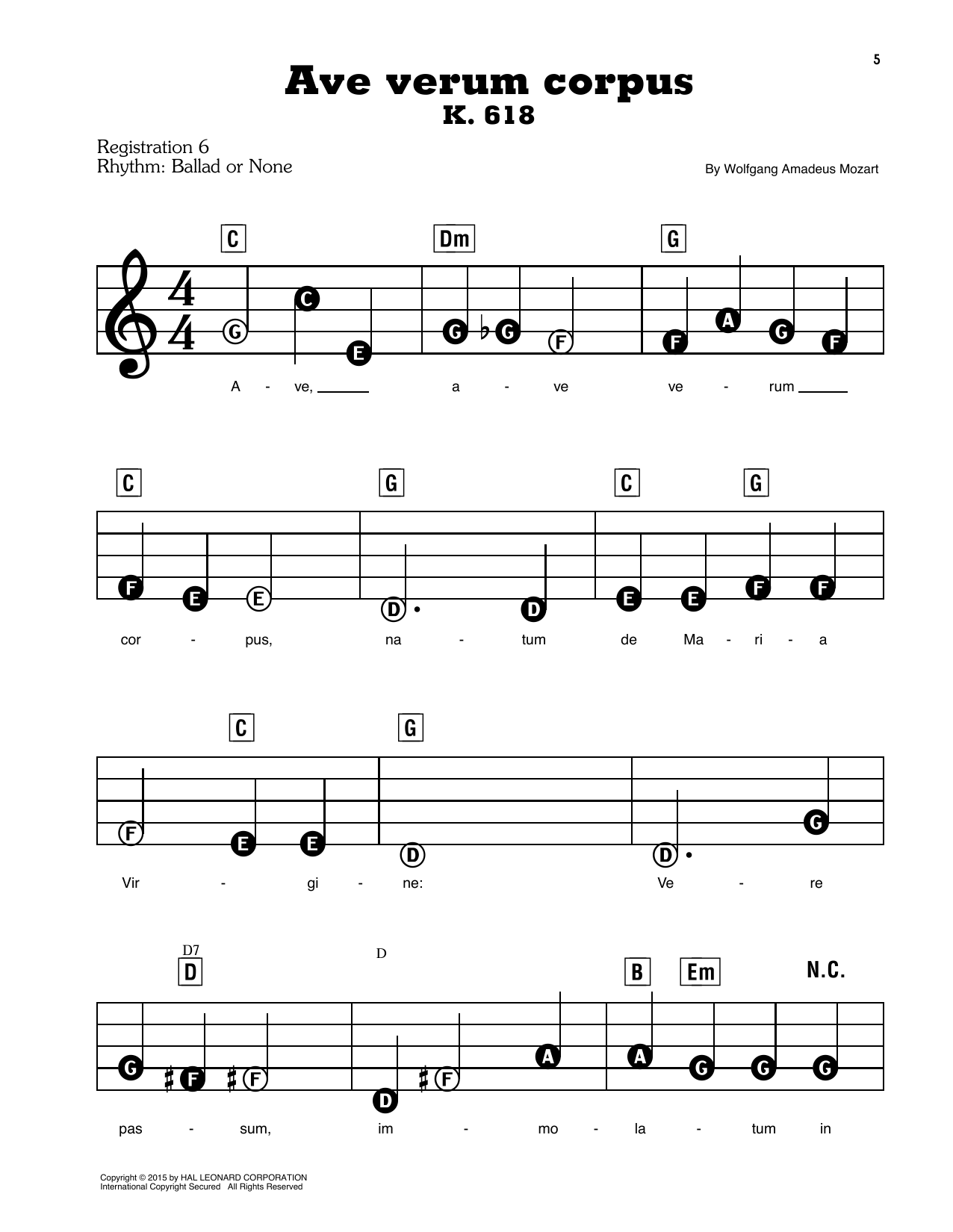
Ave Verum Corpus, K618 (Jesu, Word Of God Incarnate) Sheet Music Preview

Ave Verum Corpus, K618 (Jesu, Word Of God Incarnate): E-Z Play Today

Item: 35-DS00960563

Digital Download
$4.99
Description

Ave Verum Corpus, K618 (Jesu, Word Of God Incarnate): E-Z Play Today isn't in MakeMusic Cloud just yet...but it could be. Let us know you'd like to see it, and you'll help shape what comes next. In the meantime, start a free trial and dive into thousands of interactive titles your students can play along with today.

Sample Audio
No sample audio found.
Sample Video
Additional Details
Publisher: Hal Leonard
Page Count: 3
SKU: 35-DS00960563

More about this title

About the Creator: Wolfgang Amadeus Mozart

Wolfgang Amadeus Mozart composed Ave Verum Corpus, K618, in 1791 during his final year in Vienna. This short but profound sacred motet represents some of his most distilled compositional writing, created for the Benedictine monastery in Baden as a eucharistic hymn. The piece showcases Mozart's gift for lyrical melody and harmonic sophistication within the strictest formal constraints.

Mozart's output across virtually every musical genre set the standard for Classical composition. His ability to write with equal mastery for the concert hall, the church, and the theater made him perhaps the most versatile major composer of his era. Ave Verum Corpus endures because it captures spiritual depth without sentimentality, a balance Mozart achieved throughout his sacred catalog.

Why we love this

This E-Z Play arrangement makes one of the Baroque era's most beloved sacred melodies accessible to pianists still building technical foundation. The three-page format feels substantial without being overwhelming, offering genuine musical substance in digestible proportion.

What to expect

Contemplative and intimate, with the quality of a sacred space distilled into sound. The melody unfolds with unhurried grace, supported by harmonies that feel both inevitable and deeply moving; this is music that asks for patience and reverence rather than display.

Who it's for

Early-intermediate pianists seeking repertoire with genuine liturgical and musical weight. Students preparing for recitals, church services, or auditions benefit from working with a piece that rewards both technical control and interpretive maturity.

How to get the most out of it

  • Shape the melody with a clear singing tone from the opening, allowing the inherent phrasing to guide your rubato rather than imposing external expression.
  • Honor the harmonic rhythm by maintaining slight weight on chord changes, which are deliberately slow and deliberate in this work.
  • Sustain the quiet reverence throughout without sacrificing line; the organ-like texture benefits from consistent tone production rather than dynamic extremes.
  • Support the melodic contour with thoughtful pedaling, using the sustain pedal to blend harmonies while keeping clarity in the articulation of phrases.

How to use it

Pair this with other short Mozart sacred works for a thematic concert segment, or program it alongside Baroque chorale arrangements to demonstrate the evolution of church music. Its brevity and meditative character make it particularly effective as an opening piece for a sacred or classical recital.

Skills your students will build

  • Singing tone production across the middle range of the piano
  • Phrasing within slow harmonic rhythm
  • Selective use of the sustain pedal to blend without muddying
  • Expressive restraint and interpretive clarity in sacred music

You May Also Like