Ave Verum Corpus: Flute Sheet Music Preview

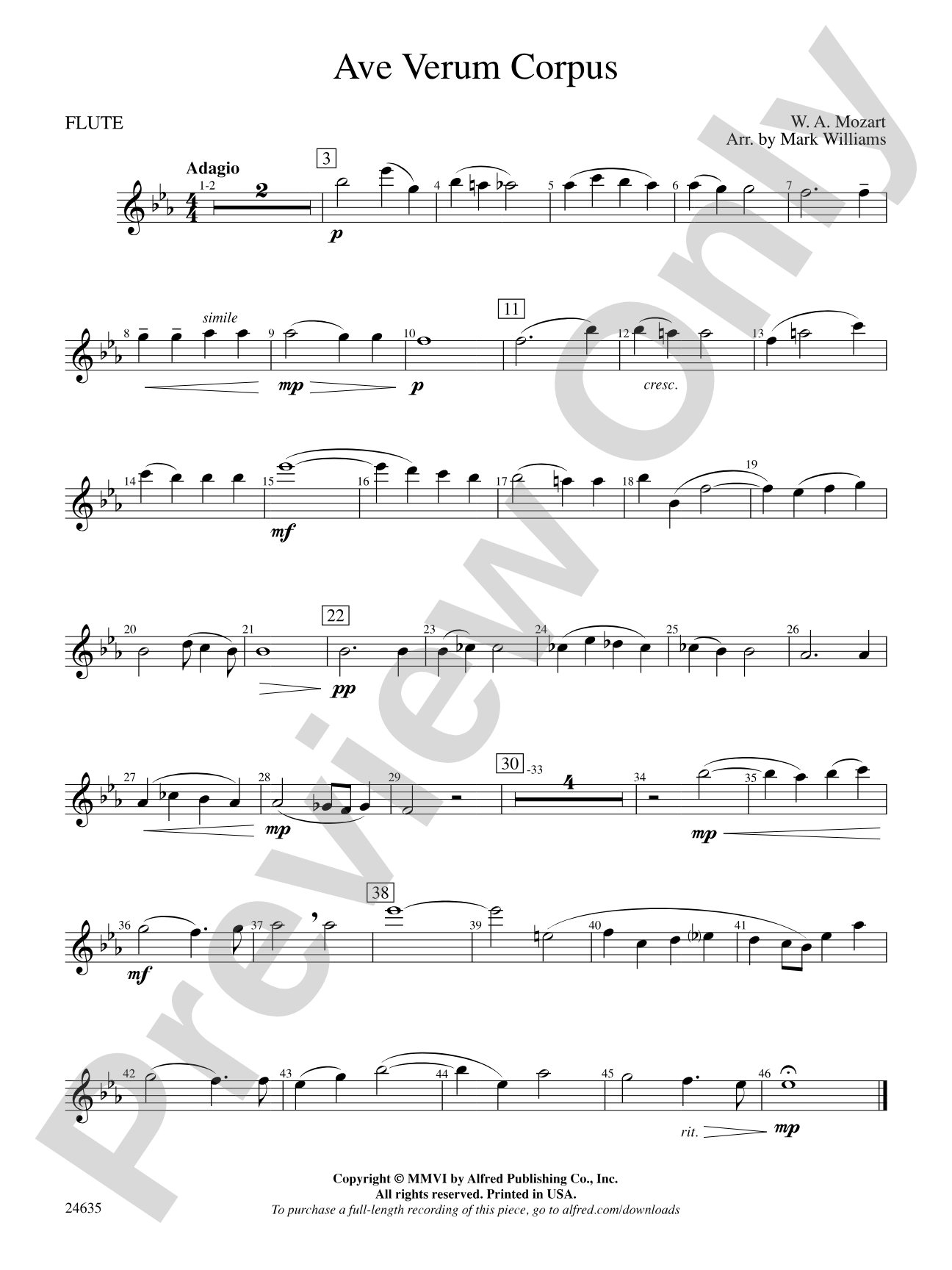
Ave Verum Corpus: Flute

By Wolfgang Amadeus Mozart / arr. Mark Williams

Grade: 1 (Very Easy)

Item: 00-PC-0000803_F1

Digital Download
$3.00
Description
"Ave Verum Corpus" is one of Wolfgang Amadeus Mozart's most popular works and a mainstay of the sacred choral repertoire. Originally written for choir with strings and organ, this arrangement for young concert band faithfully preserves the spirit of the original masterpiece. Correlated with Accent on Achievement, Book 2, page 25, this selection is an ideal vehicle for working on intonation, blend and balance with your band. This title is available in MakeMusic Cloud.

Don't just read it, hear it, play along with it, and watch your students grow with it. In MakeMusic Cloud, Ave Verum Corpus: Flute comes alive with professional accompaniment, adjustable tempo, and built-in practice tools that turn solo practice into real progress.

Sample Audio
0:00
0:00
Sample Video
Additional Details
Series: Accent on Achievement
Publisher: Alfred Music
Page Count: 120
SKU: 00-PC-0000803_F1

More about this title

About the Composer: Wolfgang Amadeus Mozart

Wolfgang Amadeus Mozart (1756-1791) composed with preternatural fluency across every major genre of his time. His sacred music, written throughout his career, blends the formal structures of the Classical period with profound emotional depth and technical mastery. "Ave Verum Corpus" stands as one of his most distilled and moving works, showing how a few minutes of music can contain both technical sophistication and spiritual directness.

For band directors, Mozart's music offers an invaluable lesson in balance and clarity. His textures reward precise ensemble work and transparent voicing, making his arrangements ideal teaching tools. This piece specifically demonstrates how restraint and elegant phrasing can convey more weight than complexity.

Why we love this

This arrangement captures what makes Mozart's original so enduring: a melody of crystalline beauty supported by harmonic sophistication that feels inevitable and right. At Grade 1, it gives young players immediate access to a work they'll encounter throughout their musical lives, and the straightforward orchestration lets you focus on what this piece teaches best: intonation, blend, and the discipline of simplicity. Programming it signals respect for your ensemble's growing musicianship.

What to expect

"Ave Verum Corpus" radiates quiet reverence. The melody unfolds with unhurried grace, supported by warm harmonies that feel like a gentle embrace. There's a transparency to the scoring that invites listeners into an intimate musical moment, even in a concert hall.

Who it's for

Concert bands at the Grade 1 level benefit most from this arrangement, particularly ensembles developing foundational intonation and blend. It also works well in mixed instrumentation contexts and serves bands preparing material for festivals or competitions where a mature-sounding, respected work strengthens the overall program.

How to get the most out of it

  • Shape the long melodic line with subtle dynamic swells rather than sharp contrasts; the piece's power lies in sustained, unified phrasing across the full phrase.
  • Listen specifically for vertical alignment in the harmony. With limited harmonic movement, any tuning discrepancies become obvious, making this an excellent laboratory for blend work.
  • Allow space and stillness in the sound. Young bands often rush sacred music; this arrangement benefits from restraint and breath, especially at cadences.
  • Balance the melody clearly without forcing it; if supporting voices are too loud, the inherent beauty of Mozart's line disappears.

How to use it

This piece anchors a concert as a centerpiece during the middle section, offering a calming counterbalance to more energetic selections. Its brevity and Grade 1 accessibility also make it suitable for spring festivals or memorial/tribute concerts where a brief moment of reflection fits the occasion.

Skills your students will build

  • Intonation in sustained unison and harmony
  • Ensemble blend and balance across multiple voice parts
  • Phrasing and line continuity at moderate tempos
  • Attention to vertical alignment and voicing clarity
  • Sensitivity to dynamics within a limited range

You May Also Like