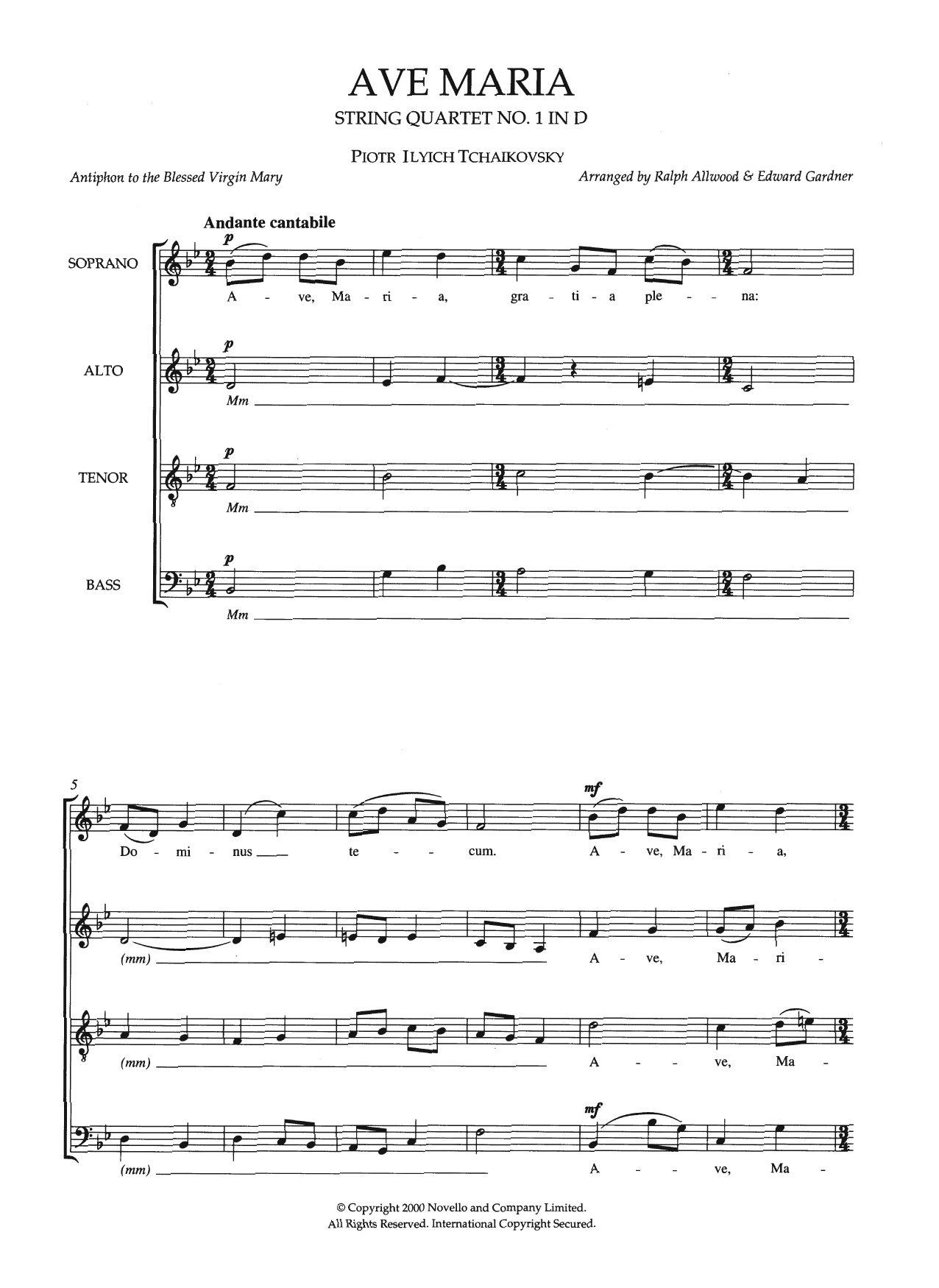
Ave Maria (String Quartet No.1 In D) (arr. Ralph Allwood and Edward Gardner) Sheet Music Preview

Ave Maria (String Quartet No.1 In D) (arr. Ralph Allwood and Edward Gardner): Choral Octavo

As performed by Pyotr Il'yich Tchaikovsky / Arranged by Ralph Allwood / Arranged by Edward Gardner

Item: 35-DS00339680

Digital Download
$2.99
Description

Ave Maria (String Quartet No.1 In D) (arr. Ralph Allwood and Edward Gardner): Choral Octavo isn't in MakeMusic Cloud just yet...but it could be. Let us know you'd like to see it, and you'll help shape what comes next. In the meantime, start a free trial and dive into thousands of interactive titles your students can play along with today.

Sample Audio
No sample audio found.
Sample Video
Additional Details
Publisher: Hal Leonard
Page Count: 9
SKU: 35-DS00339680

More about this title

About the Artist: Pyotr Il'yich Tchaikovsky

Tchaikovsky (1840-1893) stands as one of the most performed composers in the concert hall, yet his path was far from conventional. A product of Russian conservatory training who later taught at the Moscow Conservatory, he composed across virtually every genre while navigating the tension between Western European forms and Russian musical identity. His gift for melody and orchestration made him a master of emotional directness, qualities that translate powerfully to choral arrangements.

Beyond the famous ballets and symphonies, Tchaikovsky's chamber works reveal a composer of remarkable sensitivity and craft. The String Quartet No. 1 in D Major (1871) stands as proof of his ability to sustain intimate musical conversation across four instruments. Its themes possess the lyrical warmth that has made Tchaikovsky's music accessible to generations of listeners and performers.

Why we love this

This arrangement transforms one of Tchaikovsky's most beloved chamber works into choral repertoire without losing the elegant simplicity that makes the original so enduring. The Allwood and Gardner arrangement honors the string quartet's architecture while giving choirs a chance to inhabit music they might otherwise only hear performed by instrumentalists. Programming this piece signals to your audience that you're offering them both familiarity and a fresh perspective.

What to expect

This is music of quiet dignity and genuine warmth. The melody unfolds with the unhurried grace of a performer who knows exactly what they want to say and trusts you to listen. There's no sentimentality here, only clarity and a sense of musical inevitability that feels both intimate and universal.

Who it's for

Choirs with solid fundamentals and a season planned around quality over quantity will find this piece both accessible and rewarding. Directors seeking shorter works (9 pages) that don't require orchestral accompaniment but carry real artistic substance should consider this a core choice for mixed or women's groups.

How to get the most out of it

  • Shape each phrase as the string quartet would, avoiding the tendency to let sustained notes flatten. Think of the choir as bowed instruments that can swell and diminish across the bar line.
  • Balance the soprano line as the primary melodic voice while ensuring inner voices remain clear. This isn't background harmony; every voice part contributes to the emotional architecture.
  • Allow time for breath and separation between phrases. This music breathes naturally when you respect the phrasing of the original quartet writing rather than rush between sections.
  • Work the intonation carefully in the key of D major, particularly where voices move in parallel motion. The brightness of the key can expose tuning issues if singers aren't listening across the ensemble.

How to use it

Place this alongside other Russian choral repertoire to build a thematic concert around that tradition, or use it as a moment of elegant repose between more demanding or dramatic works. Its modest page count makes it ideal for a program that balances substantial multi-movement works with carefully chosen single pieces that give your singers interpretive focus.

Skills your students will build

  • Singing lyrical lines with phrase continuity across sustained notes
  • Balancing soprano melody against four-part inner harmony
  • Intonation in D major key signature with parallel voice motion
  • Respecting chamber music style in choral arrangement
  • Breath management in legato, unaccompanied passages

You May Also Like