
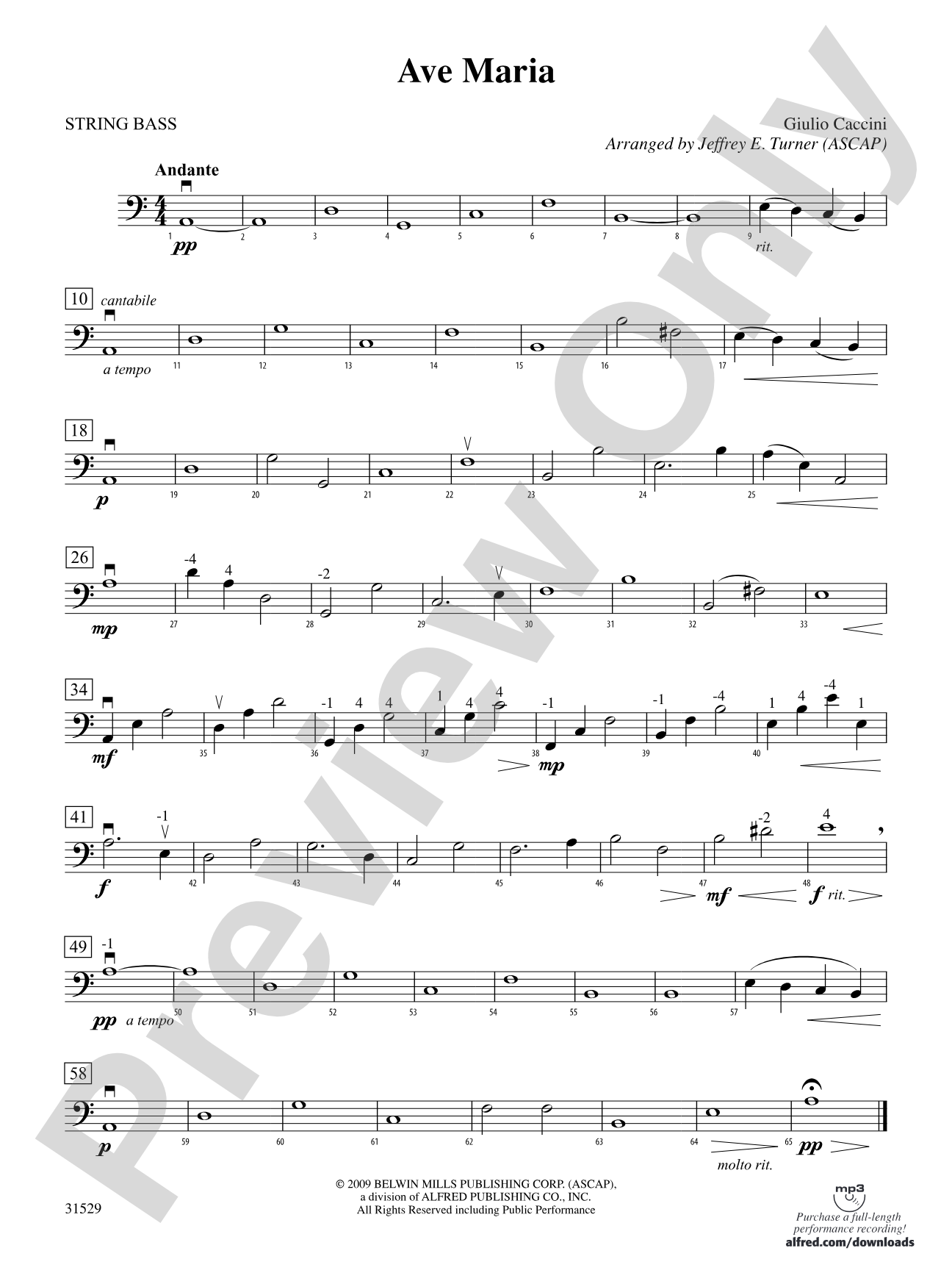

Ave Maria: String Bass
By Giulio Caccini / arr. Jeffrey E. Turner
Grade: 3
Item: 00-PC-0001720_SB
$5.99
Pickup currently not available
Description
This hauntingly beautiful sixteenth century melody was virtually unknown until the '90s when artists including Andrea Bocelli and Charlotte Church performed this piece, enchanting music lovers worldwide. Now exquisitely scored for string orchestra, this easy to play piece will captivate musicians and audiences alike. Perfect for slow-bow technique!


Don't just read it, hear it, play along with it, and watch your students grow with it. In MakeMusic Cloud, Ave Maria: String Bass comes alive with professional accompaniment, adjustable tempo, and built-in practice tools that turn solo practice into real progress.
Open in the Player
Jump straight in and assign it today.
Start Your Free Trial
Open this title and explore the full library in minutes.
Sample Audio
1
Audio File
--:--
0:00
0:00
Sample Video
Additional Details
Series:
Belwin Intermediate String Orchestra
Publisher:
Alfred Music
Page Count:
74
SKU:
00-PC-0001720_SB
More about this title
About the Composer: Giulio Caccini
Giulio Caccini (1545-1618) was a Florentine composer and singer who played a foundational role in the emergence of opera and monody at the turn of the seventeenth century. His vocal works, characterized by expressive text-painting and lyrical melody, influenced the development of Baroque singing and composition throughout Europe.
Caccini's influence extends far beyond his own era. His melodies possess an almost timeless quality, which explains why Ave Maria remained relatively obscure for centuries before contemporary artists discovered its emotional power and brought it to international audiences in the 1990s.
Why we love this
String orchestras at the Grade 3 level rarely find pieces that demand genuine musicianship without requiring virtuosity. This arrangement captures the spiritual restraint of Renaissance melody while giving every player a voice in the texture, making it equally rewarding for first violins and cellos. The slow-bow work required transforms a simple melody into a masterclass in tone production.
What to expect
This arrangement unfolds like a whispered prayer. Sixteenth-century harmony creates an almost ethereal quality, while the string scoring provides warmth and resonance without density. The restraint of the orchestration mirrors the melody's inherent spirituality, inviting audiences into an intimate moment of reflection rather than spectacle.
Who it's for
String orchestras at the intermediate level looking for substantive repertoire that teaches musicianship fundamentals. This piece works equally well for ensembles preparing for festivals and competitions, or for concert programs seeking a moment of contemplative beauty. Directors who want their students to experience how slow, sustained playing builds technique will find exceptional pedagogical value here.
How to get the most out of it
- Invest rehearsal time in bow control rather than rushing into performance. Slow, sustained bowing exposes every unevenness in pressure and speed, so prioritize consistency across the entire orchestra before focusing on dynamics.
- Shape the melody through subtle dynamic contours rather than sudden changes. Let the line breathe at natural phrase breaks, even if the score does not mark them explicitly.
- Balance the harmonic accompaniment so the inner voices support without overwhelming the primary melodic line. This requires selective listening from second violins and violas during sectional rehearsals.
- Conduct with economy of gesture. The piece's power lies in restraint, so avoid over-conducting or imposing interpretive gestures that would contradict the meditation quality of the material.
How to use it
Program this as a centering piece in mixed-genre concerts, where its sustained meditation provides welcome contrast to energetic or technically demanding works. It also serves excellently as a prelude to a more elaborate program section, or as a thoughtful closer that leaves audiences in contemplative silence. Consider pairing it with other Renaissance or early Baroque works to contextualize its historical roots for your listeners.
Skills your students will build
- Sustained legato bowing and tone production
- Dynamic control at soft dynamic levels
- Phrase shape and melodic sensitivity
- Ensemble balance between melody and accompaniment
- Emotional restraint and interpretive maturity