
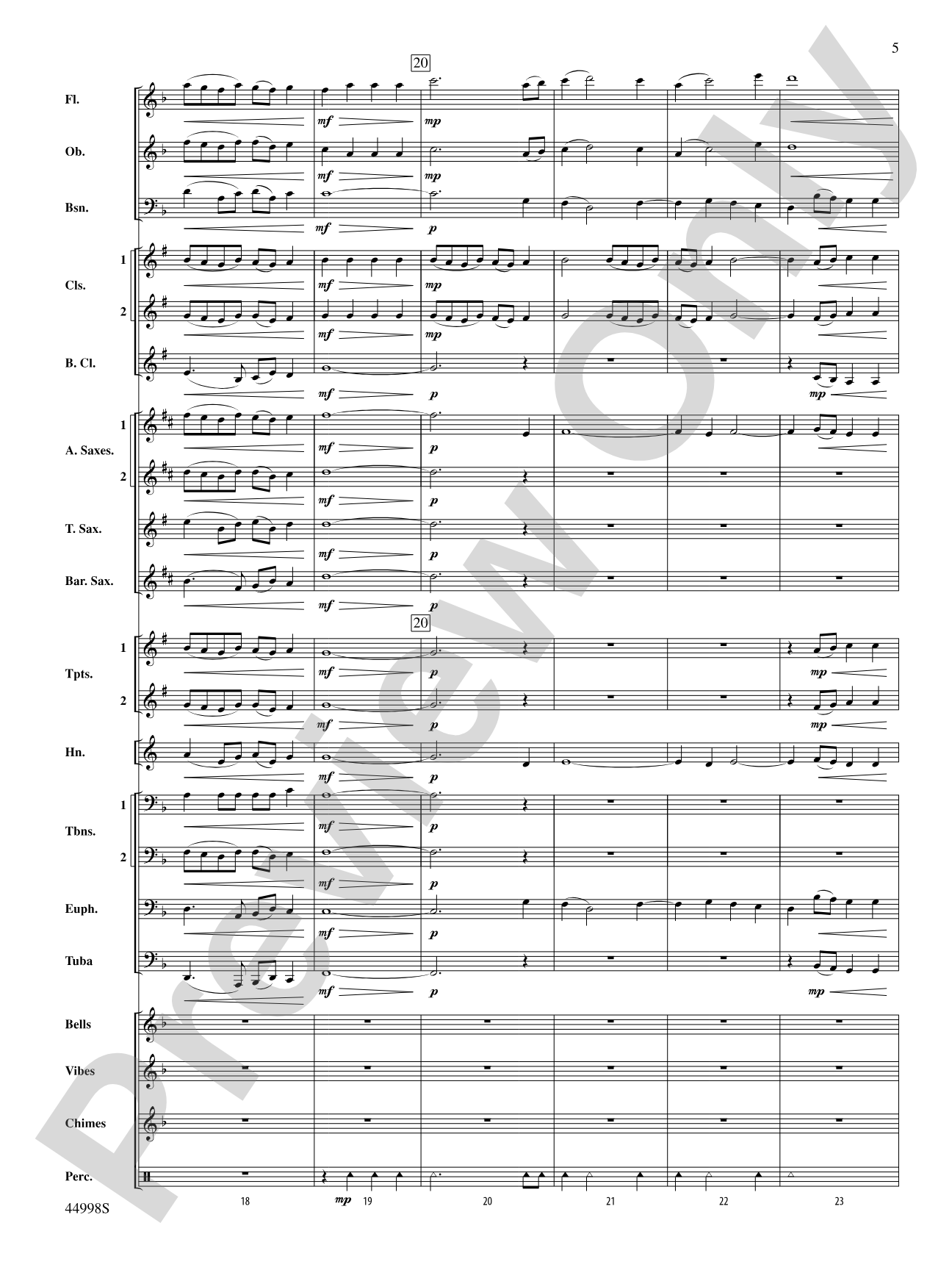
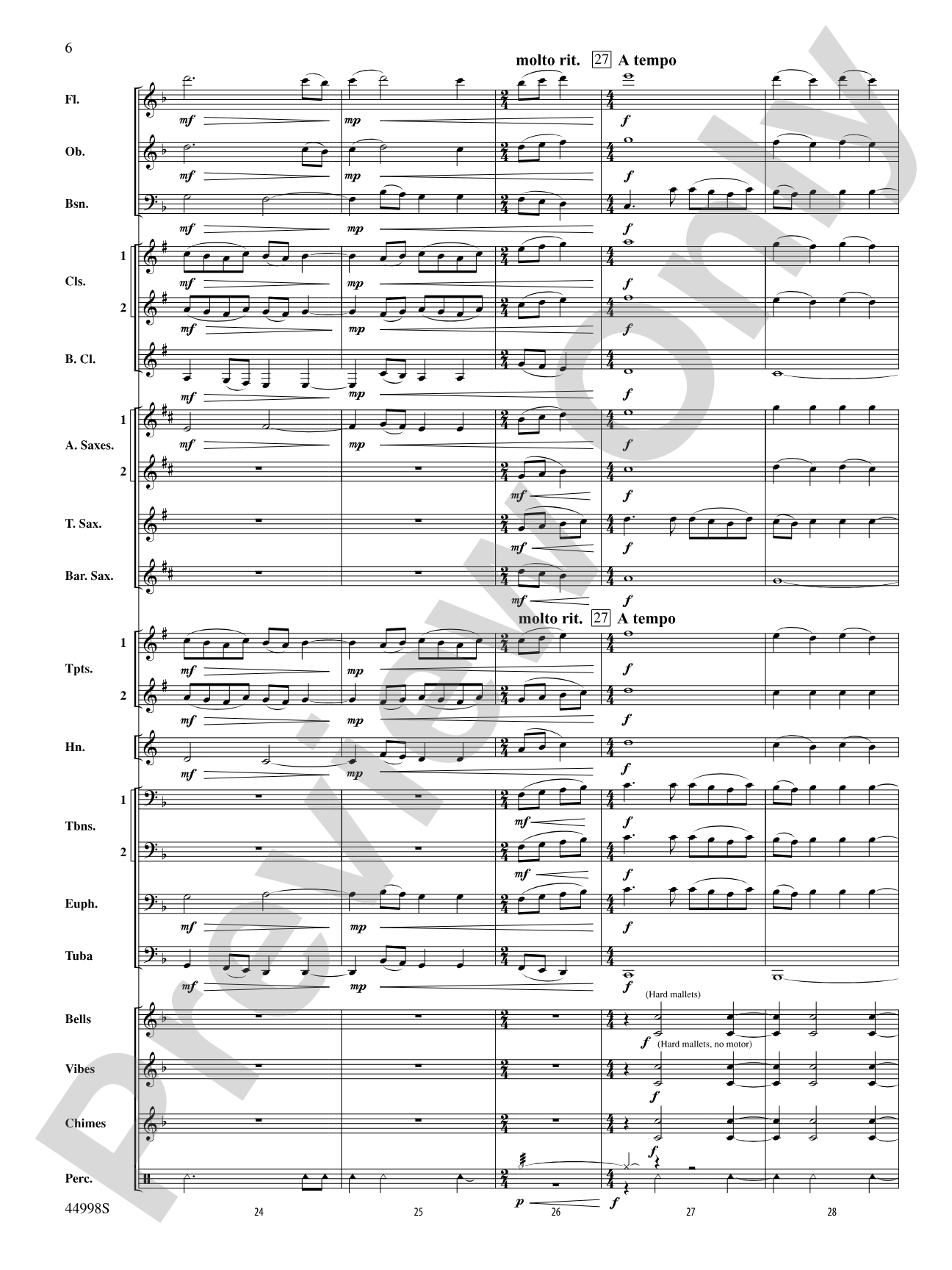
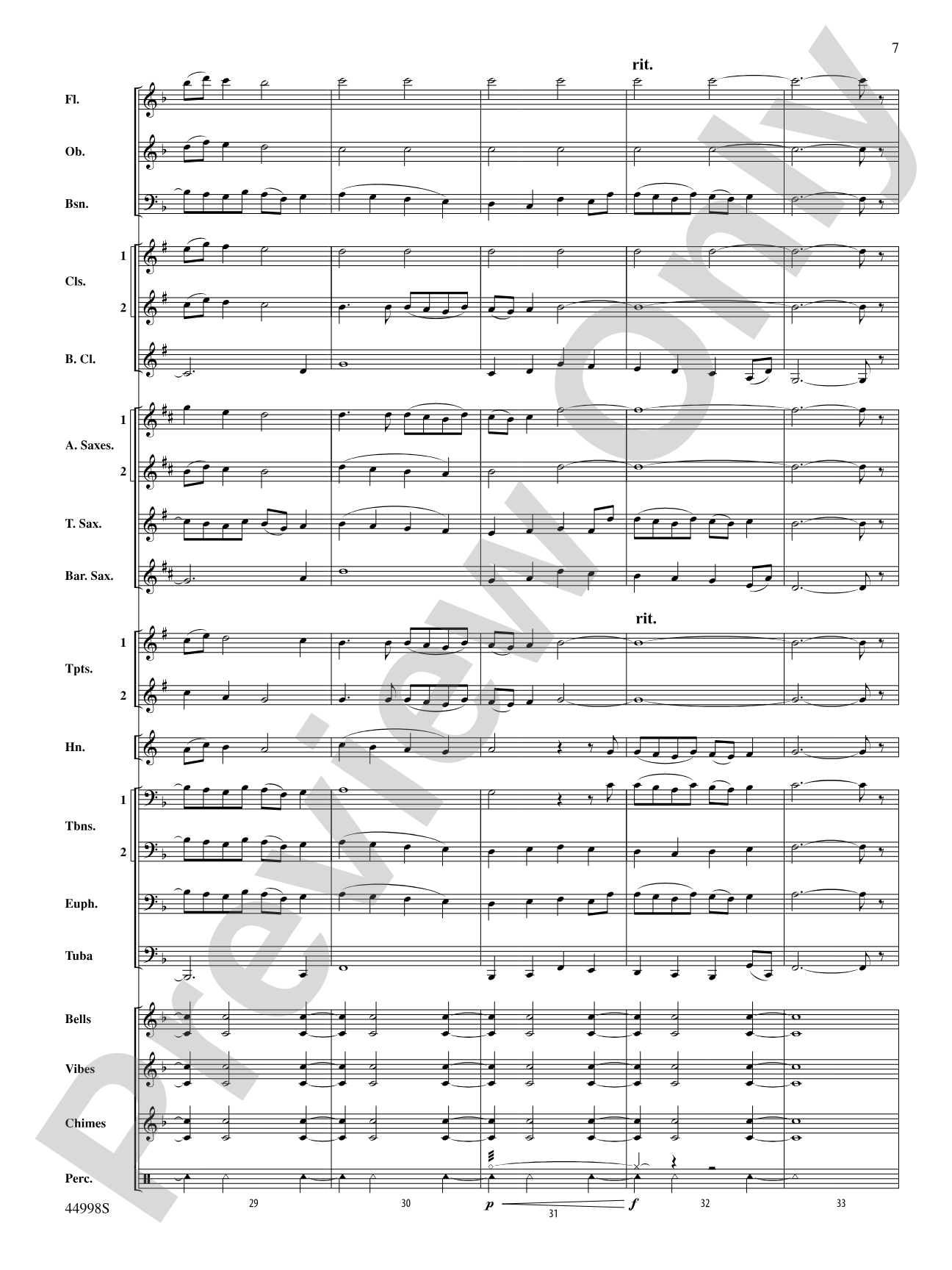
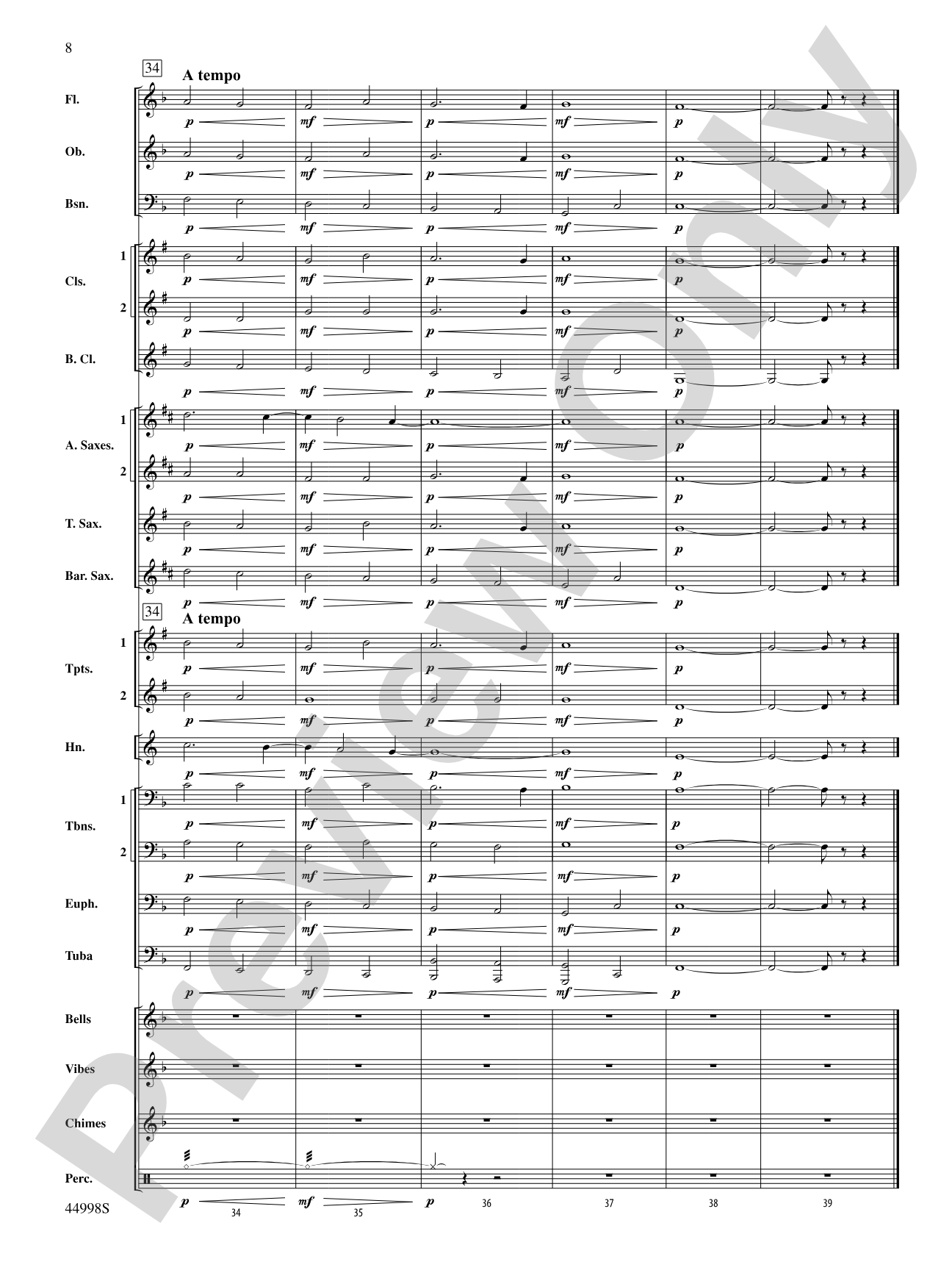

Ave Maria: Score
From Vespers (All-Night Vigil)
By Sergei Rachmaninov / arr. Brian Beck
Grade: 2 (Medium Easy)
Item: 00-PR-0005742
$8.00
Pickup currently not available
Description
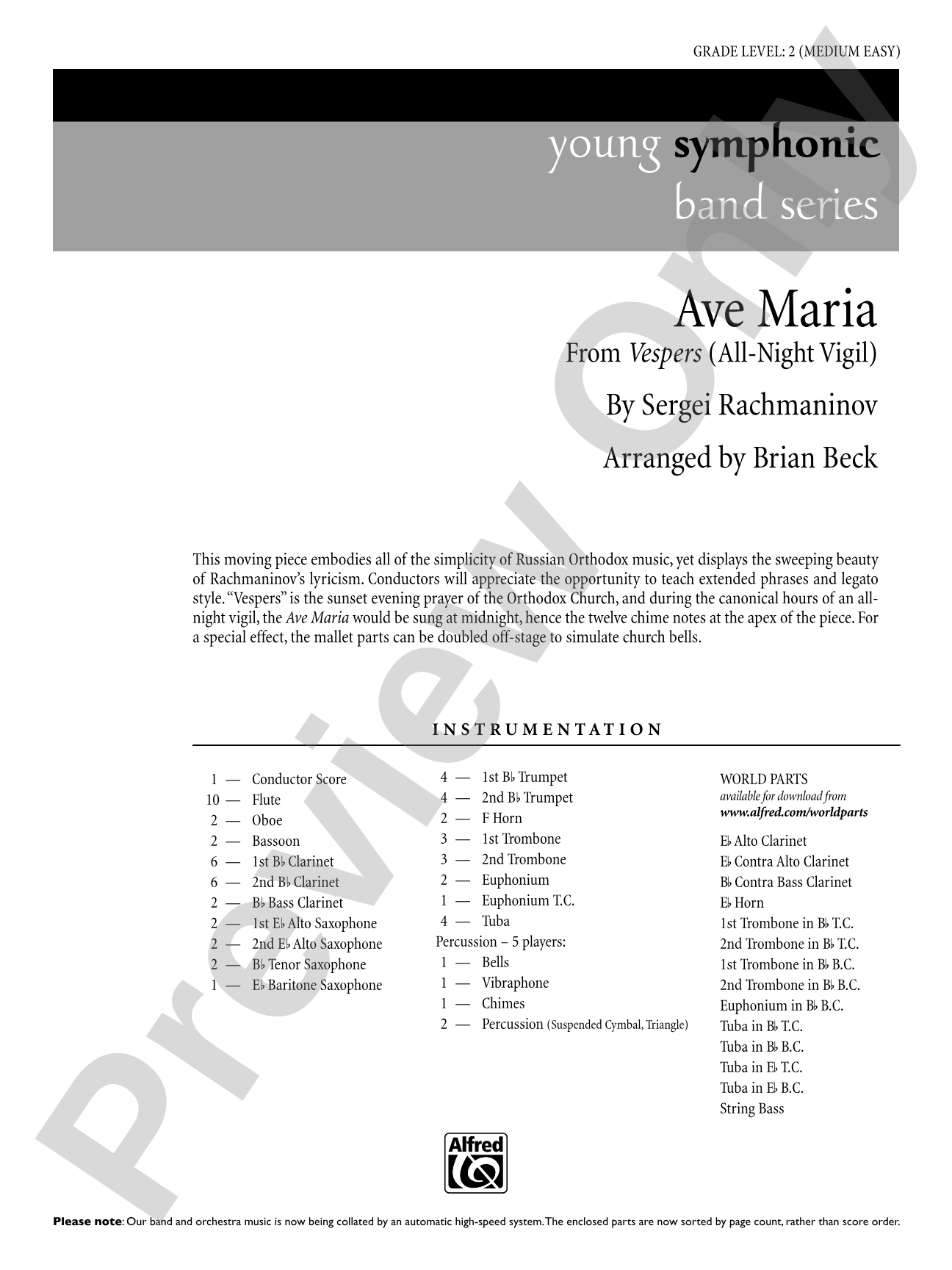
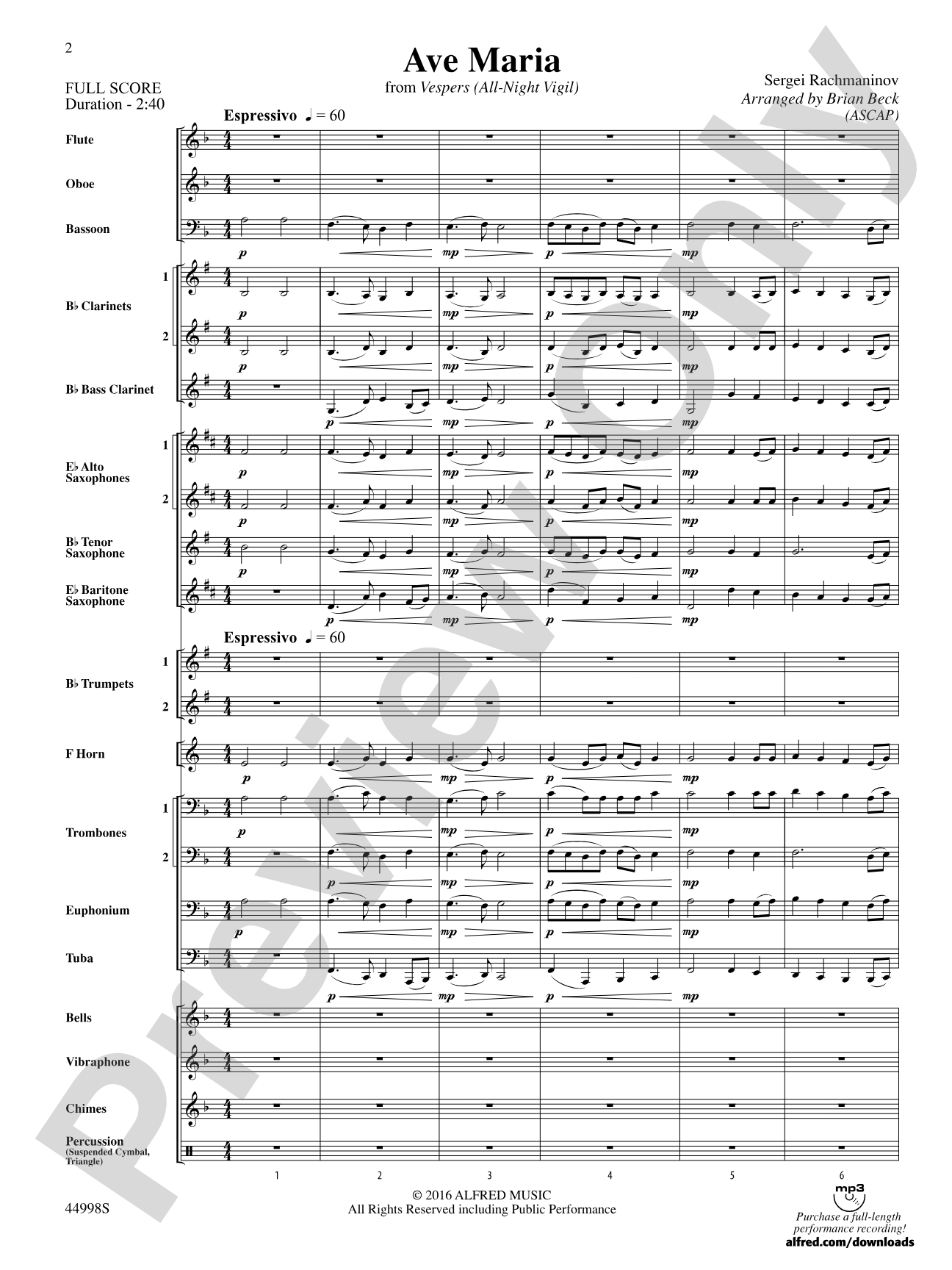
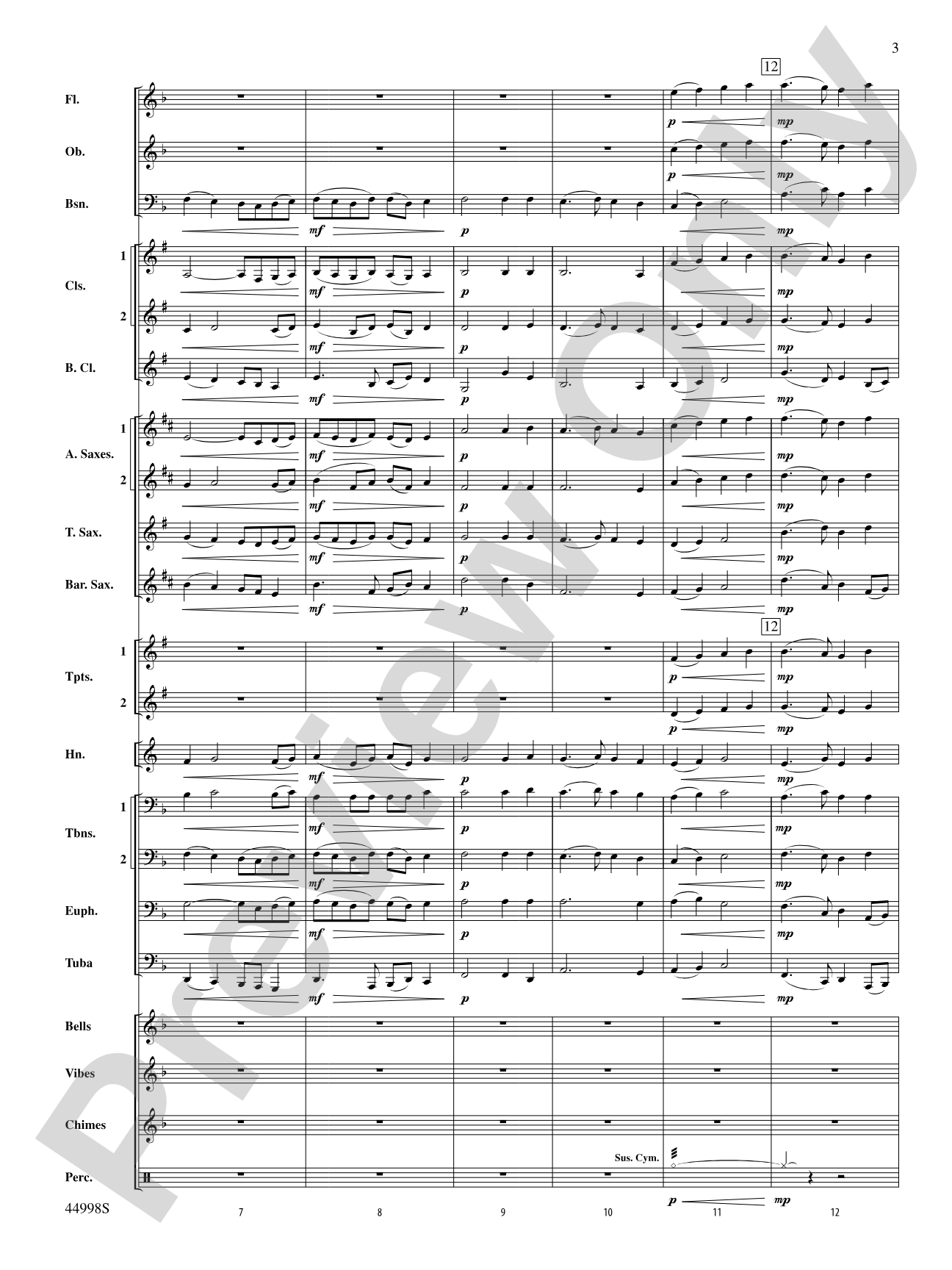
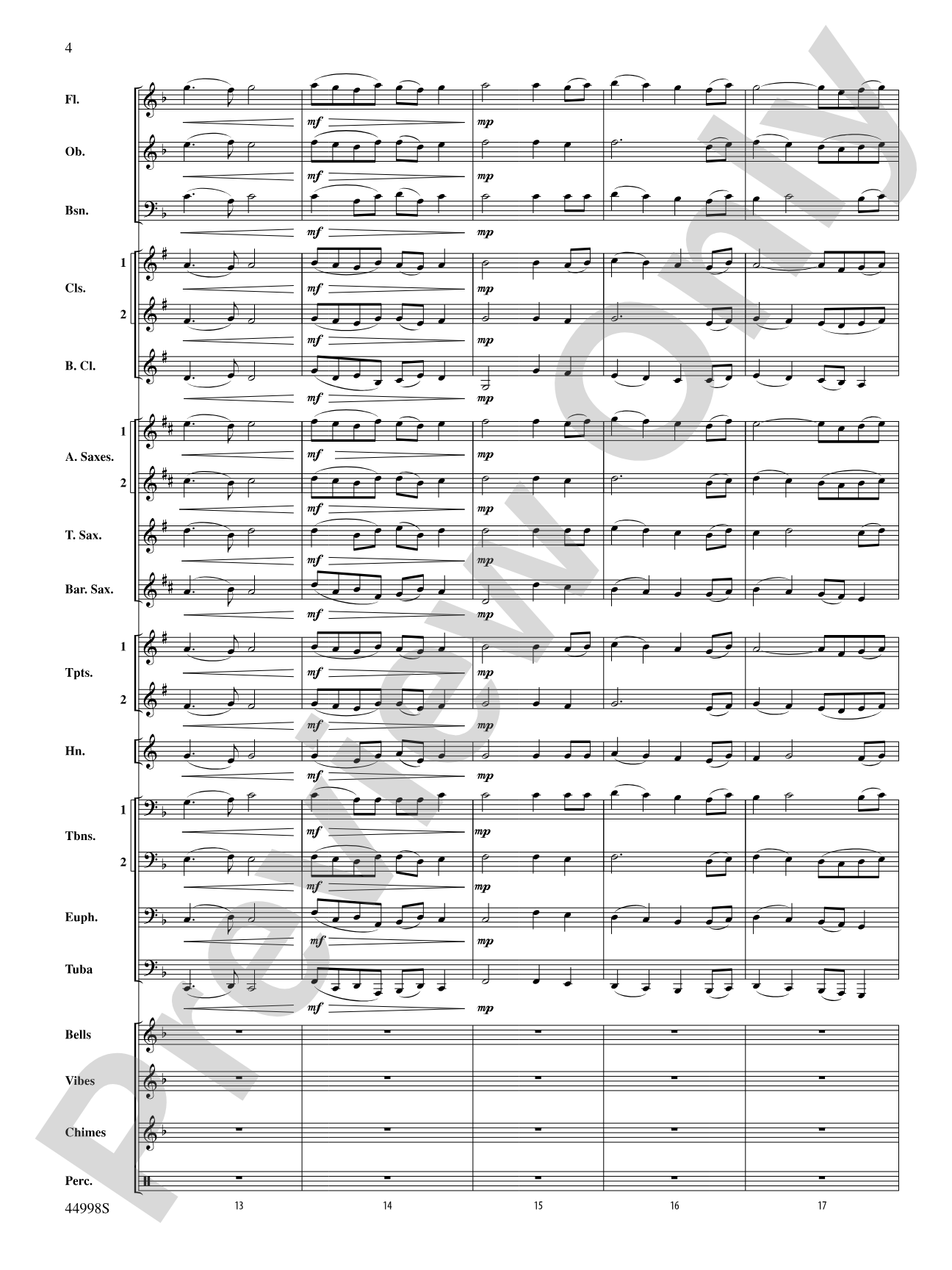
This moving piece embodies all the simplicity of Russian Orthodox music, yet displays the sweeping beauty of Rachmaninov's lyricism. Conductors will appreciate the opportunity to teach extended phrases and legato style. "Vespers" is the sunset evening prayer of the Orthodox Church, and during the canonical hours of an all-night vigil, the "Ave Maria" would be sung at midnight, hence the 12 chime notes at the apex of the piece. For a special effect, the mallet parts can be doubled off-stage to simulate church bells. (2:40)


Don't just read it, hear it, play along with it, and watch your students grow with it. In MakeMusic Cloud, Ave Maria: Score comes alive with professional accompaniment, adjustable tempo, and built-in practice tools that turn solo practice into real progress.
Open in the Player
Jump straight in and assign it today.
Start Your Free Trial
Open this title and explore the full library in minutes.
Sample Audio
1
Audio File
--:--
0:00
0:00
Sample Video
Additional Details
Series:
Young Symphonic
Publisher:
Alfred Music
Page Count:
126
SKU:
00-PR-0005742
More about this title
About the Composer: Sergei Rachmaninov
Sergei Rachmaninov (1873–1943) stands as one of the last great Romantic composers, bridging the 19th and 20th centuries with music of profound lyricism and emotional depth. A virtuoso pianist and conductor as well as a composer, Rachmaninov created works that demanded both technical mastery and interpretive sensitivity from performers, establishing standards for expressive playing that shaped multiple generations of musicians.
His sacred choral works, including the All-Night Vigil from which this Ave Maria is drawn, reveal a deep engagement with Russian Orthodox liturgical tradition. These compositions showcase his gift for long, singing melodic lines and rich harmonic language, making them enduring favorites in both concert halls and educational settings where students encounter masterwork writing at an accessible level.
Why we love this
Brian Beck's arrangement opens Rachmaninov's sacred vision to young concert bands without sacrificing the work's profound character. The piece delivers everything a conductor wants to teach: sustained legato phrasing, dynamic control across extended passages, and the interpretive sensitivity required to honor a liturgical context. The 12 chime notes at the piece's apex and the optional off-stage mallet effect create a moment of genuine musical theater that transforms rehearsal into an experience rather than a task.
What to expect
This piece unfolds with the quiet reverence of an Orthodox midnight prayer service, its long melodic lines evoking candlelight and silence. The arrangement's gradual build toward the bell chimes creates a moment of transcendence, followed by a gentle return to contemplation, leaving performers and listeners with a sense of spiritual calm.
Who it's for
Young concert bands at the Grade 2 level, particularly those ready to explore sacred literature and develop control over extended legato passages. This arrangement works equally well for groups preparing concert repertoire and those training for festival performances where a thoughtfully chosen masterwork demonstrates musical maturity.
How to get the most out of it
- Shape the principal melody with a long, unbroken line rather than allowing section breaks to interrupt the phrase. Think of the entire hymn tune as one extended statement, even where it passes between instrumental families.
- Balance the mallet and bell effects carefully so the 12 chimes at the climax land with authority without overwhelming the surrounding texture. If doubling these parts off-stage, coordinate carefully with your pit section to ensure both groups play with identical articulation and dynamics.
- Allow the slower harmonic rhythm in Rachmaninov's original to anchor the emotional weight of the piece. Resist rushing through quiet passages; stillness and space are as important as the singing melody itself.
- Treat dynamic transitions with gradual intensity. Rachmaninov's swells are rarely sudden; they emerge organically from the harmonic movement, so begin your crescendos early and let them develop naturally.
How to use it
Program this as the closing work on a concert to signal a shift in tone and create a memorable final impression. It pairs well with other shorter pieces earlier on the program, allowing you to conclude with sustained, serious music that sends audiences home thoughtfully. The piece also serves as an excellent festival selection where a carefully crafted arrangement of a major compositional voice demonstrates your ensemble's interpretive range.
Skills your students will build
- Sustaining long, uninterrupted melodic lines without sacrificing tuning or tone quality
- Balancing independent section work within a unified harmonic texture
- Reading and executing dynamic gradations over extended phrase structures
- Coordinating mallet/percussion effects with full ensemble sound