Ave Maria (Schubert): Piano Digital Sheet Music

Ave Maria (Schubert): Piano Digital Sheet Music

Franz Schubert

Item: 00-PS-0004448

Digital Download
$3.99
Description

Ave Maria (Schubert): Piano Digital Sheet Music isn't in MakeMusic Cloud just yet...but it could be. Let us know you'd like to see it, and you'll help shape what comes next. In the meantime, start a free trial and dive into thousands of interactive titles your students can play along with today.

Sample Audio
No sample audio found.
Sample Video
Additional Details
SKU: 00-PS-0004448

More about this title

About the Creator: Franz Schubert

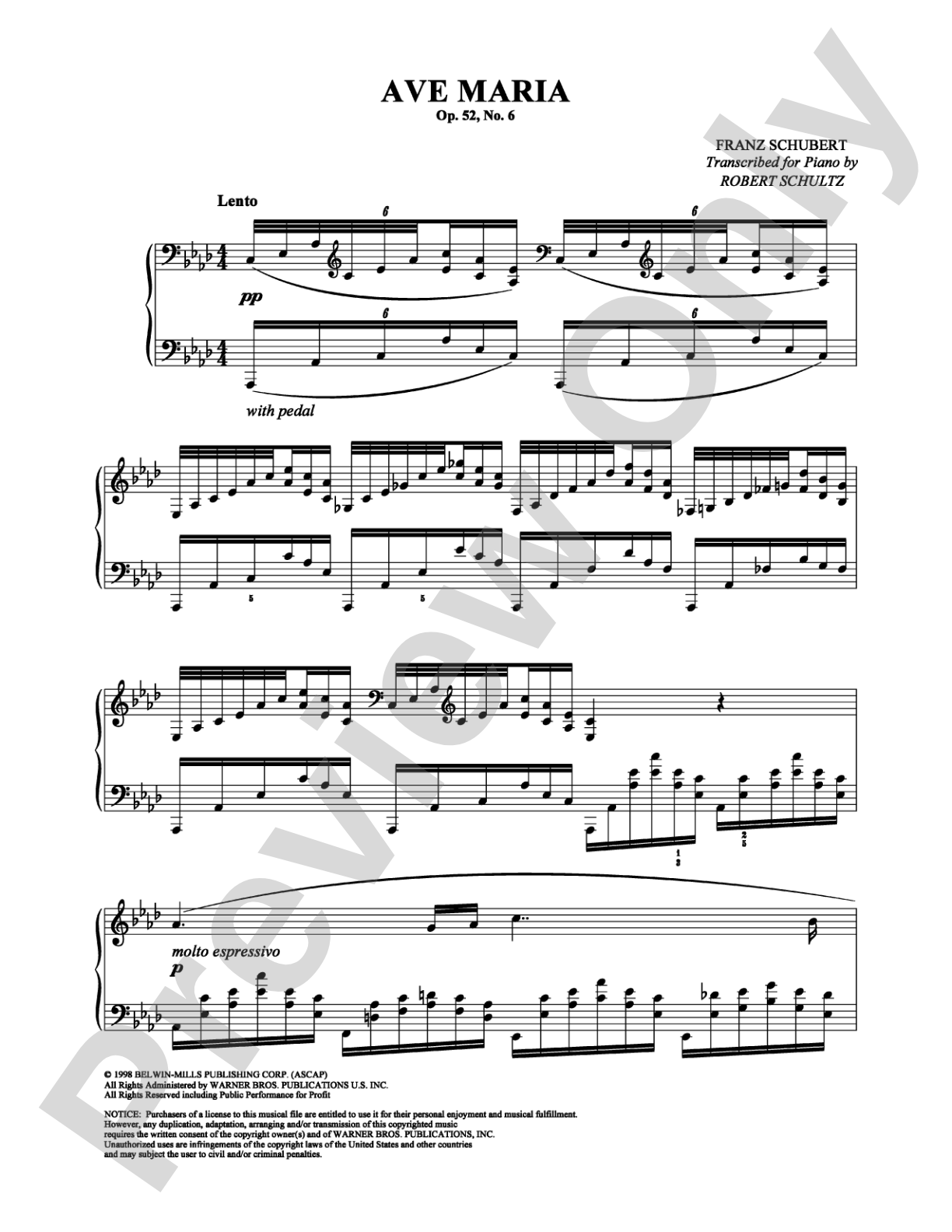
Franz Schubert composed Ave Maria in 1825, setting Sir Walter Scott's poem (in German translation) to music that has become one of the most performed sacred works in the Western repertoire. Writing during the final decade of his life, Schubert created a piece that strips spirituality down to its essentials: a gentle melody, a flowing accompaniment, and harmonic warmth that feels both intimate and universal.

Why we love this

This arrangement offers pianists an undeniable advantage: the accompaniment pattern is intuitive enough for solid intermediate players to execute cleanly, yet the melody carries enough lyrical weight to hold a room's attention. It's one of those rare pieces where simplicity never reads as simplistic.

What to expect

Devotional without heaviness, tender without sentimentality. The piece unfolds like a prayer that knows exactly what it wants to say and says it without any wasted gesture. A single melodic line floats above rippling accompaniment, creating the sense that you're listening to something meant for a quiet moment.

Who it's for

Pianists at the intermediate level who want to build comfort with lyrical solo repertoire will find this piece manageable and rewarding. It's equally suited to students preparing for recitals or those seeking gentle material for weddings and contemplative settings.

How to get the most out of it

  • Sustain the broken chord accompaniment with evenness in the left hand; any unevenness in rhythm will undermine the meditative quality.
  • Shape the melody phrase by phrase rather than note by note, allowing the natural arcs to breathe without forcing expression.
  • Keep the overall tempo unhurried but moving; stagnation kills the piece faster than a touch of forward momentum.

How to use it

Pair this with other Romantic-era piano works for a focused recital section, or feature it as a standalone prelude to a larger concert. It also works beautifully as a teaching piece when you want students to understand how much musical weight a simple form can carry.

Skills your students will build

  • Sustained legato in melody while maintaining rhythmic precision in accompaniment
  • Control of dynamic nuance within a narrow dynamic range
  • Phrasing across longer melodic arcs without unnecessary breath
  • Left-hand independence and evenness in broken chord patterns

You May Also Like