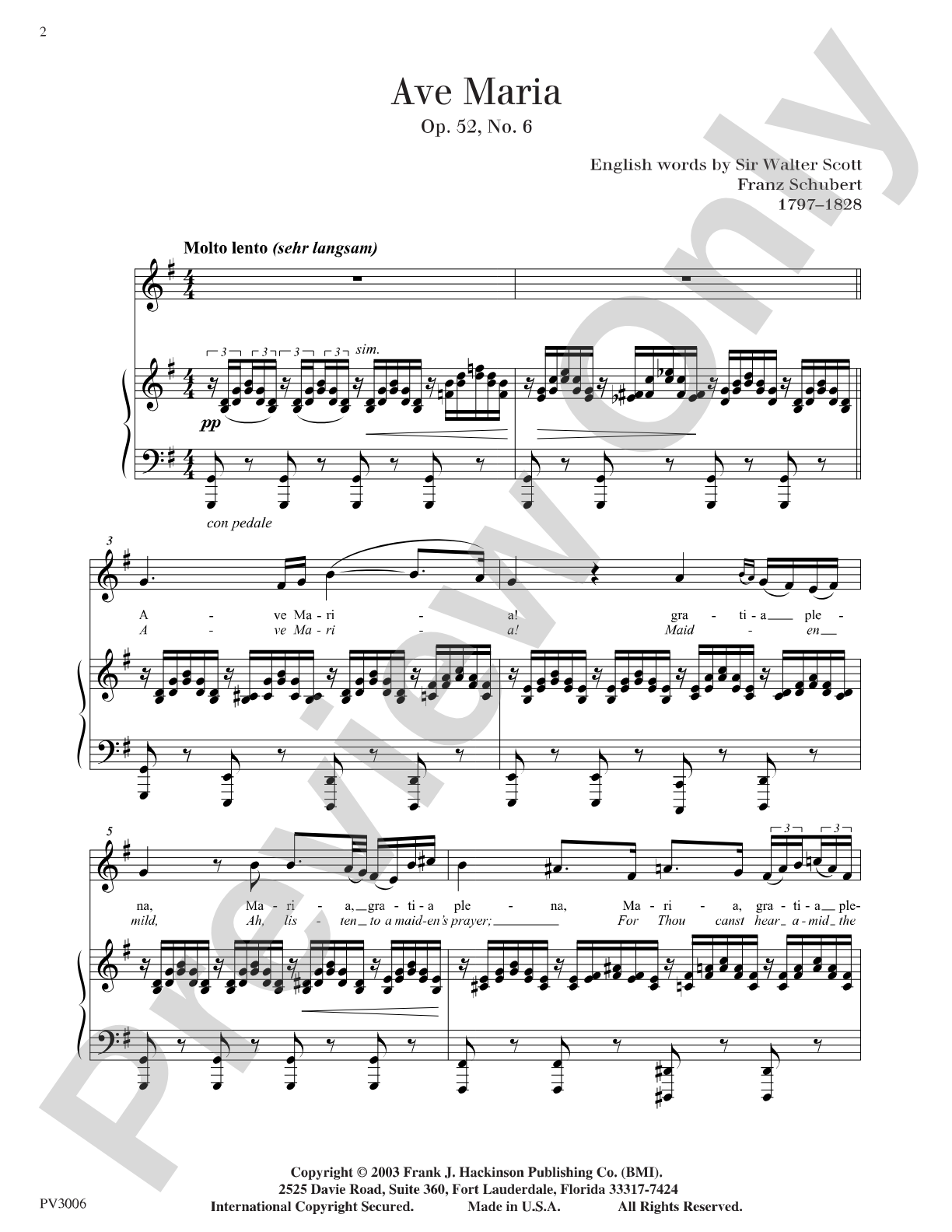
Ave Maria Op. 52, No.6, For High Voice and Piano Sheet Music Preview

Ave Maria Op. 52, No.6, For High Voice and Piano: Piano/Vocal

By Franz Schubert

Item: 98-DPV3006

Digital Download
$3.50
Description
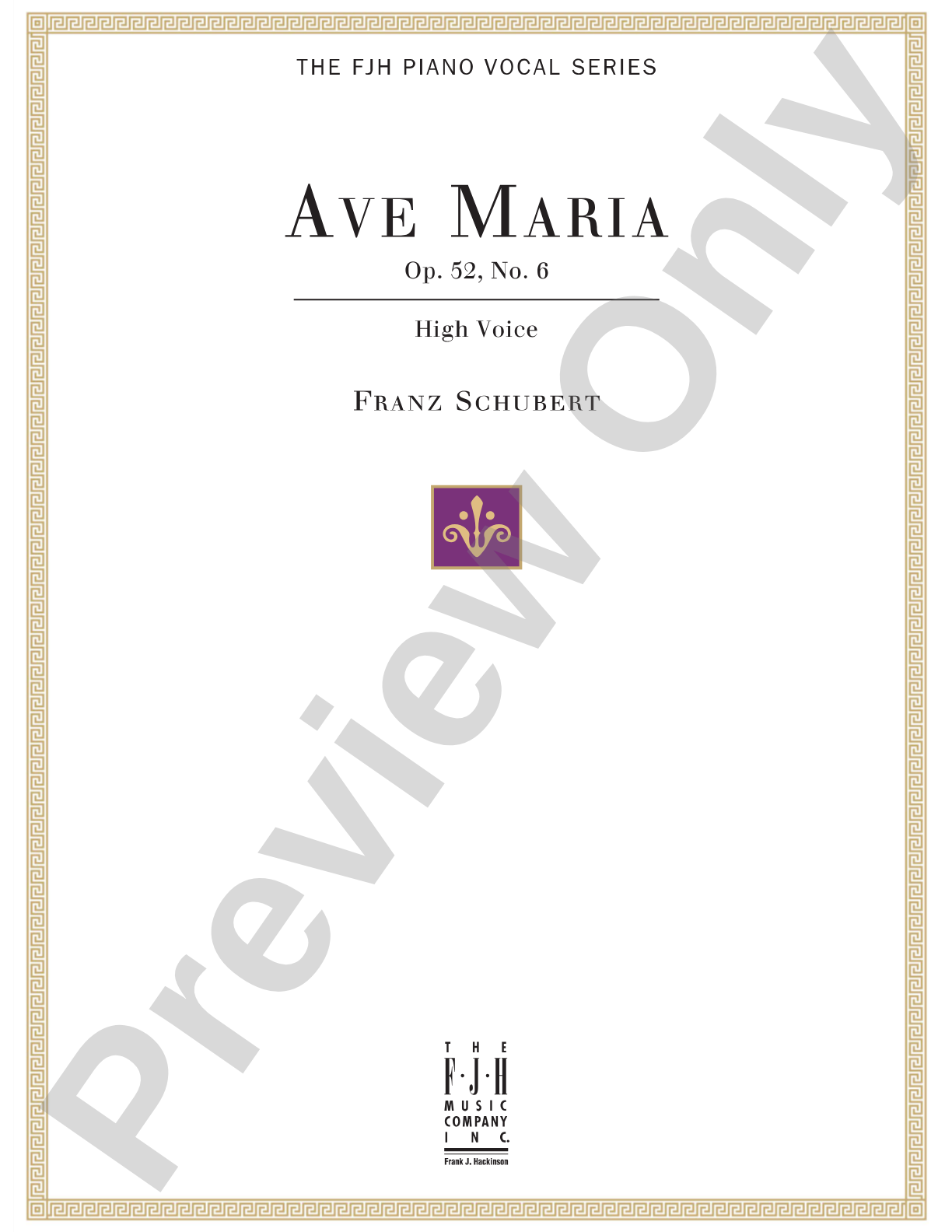
For High Voice and Piano - An extremely expressive and beautiful piece, Ave Maria has been a standard at weddings for generations. This timeless masterpiece by Schubert is presented in high voice; lyrics are in Latin, English, and German.

Ave Maria Op. 52, No.6, For High Voice and Piano: Piano/Vocal isn't in MakeMusic Cloud just yet...but it could be. Let us know you'd like to see it, and you'll help shape what comes next. In the meantime, start a free trial and dive into thousands of interactive titles your students can play along with today.

Sample Audio
No sample audio found.
Sample Video
Additional Details
Series: The FJH Piano Vocal Series
Publisher: The FJH Music Company, Inc.
SKU: 98-DPV3006

More about this title

About the Composer: Franz Schubert

Franz Schubert (1797-1828) transformed the art song into a vehicle for profound emotional expression. Though he died at 31, he composed over 600 lieder, chamber works, and symphonies that bridge Classical form and Romantic sensibility.

Ave Maria stands among his most enduring compositions, transcending its original context as an operatic interlude to become synonymous with reverent solemnity and spiritual yearning. Schubert's gift for melody and harmonic innovation shaped an entire tradition of song composition that continues to define vocal repertoire.

Why we love this

Schubert's harmonies and melodic contour create an accessible yet sophisticated entry point into Romantic-era vocal literature. High voices can inhabit the soaring tessitura comfortably while the accompaniment remains manageable for intermediate pianists, making it genuinely singable in real rehearsal conditions rather than requiring extensive technical gymnastics.

What to expect

The piece unfolds with reverent spaciousness, each phrase emerging from hushed accompaniment like candlelight in a cathedral. Schubert's harmonic language creates a sense of suspension between earthly and transcendent, never rushing, always deepening.

Who it's for

High soprano and mezzo-soprano soloists preparing for recitals, weddings, or concert performances will find this edition invaluable. Intermediate to advanced pianists accompanying vocal study will appreciate the accompaniment's musical substance and the opportunity to work with a canonical Romantic-era piece.

How to get the most out of it

  • Approach the opening phrase with restraint; the beauty emerges from simplicity and long vocal lines rather than dramatic intensity. Let the accompaniment's gentle arpeggios establish the harmonic foundation before the voice enters.
  • Sustain the legato line throughout, even across breath marks. Schubert's phrasing often extends naturally across what appear to be resting points, and the architectural integrity of the piece depends on forward momentum.
  • Shape the dynamics around the text, whether you're singing in Latin, English, or German. The emotional arc should reflect the meaning rather than following the notation mechanically.
  • Balance the vocalist and piano as equal partners. The accompaniment is not merely supportive; its harmonic shifts carry narrative weight and should remain audible throughout.

How to use it

Program this as a centerpiece for recital programs featuring Romantic vocal literature or as part of a thematic concert exploring settings of sacred texts. Its emotional weight and widespread recognition also make it suitable for memorial services, formal ceremonies, and vocal competitions where classical standards carry particular resonance.

Skills your students will build

  • Sustaining legato lines across extended phrases
  • Interpretation of text underlay in multiple languages
  • Shaping dynamics and phrasing in Romantic vocal style
  • Collaborative musicianship between vocalist and pianist
  • Understanding harmonic language of the nineteenth-century lied

You May Also Like