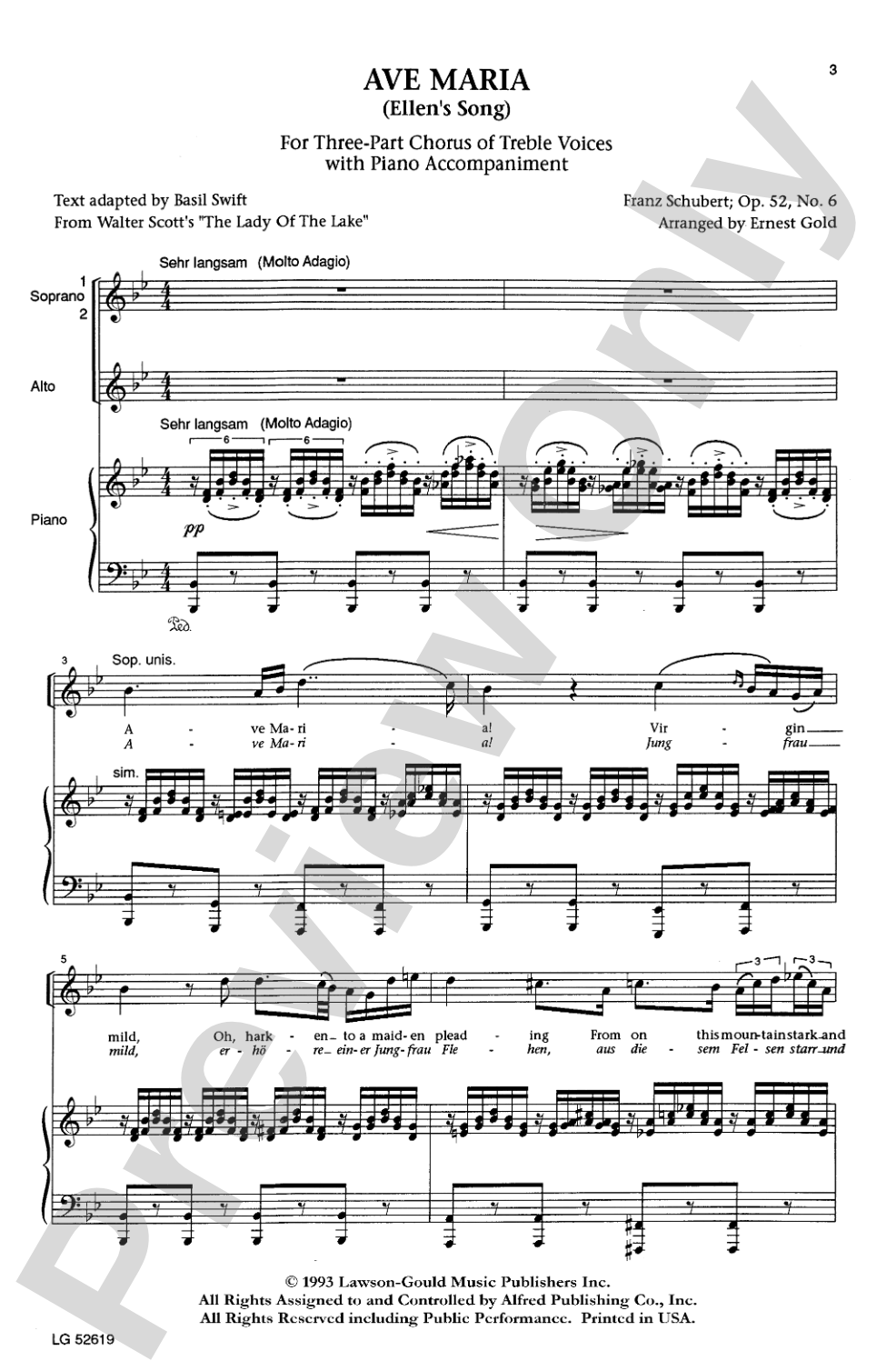
Ave Maria (Op. 52, No. 6) Sheet Music Preview

Ave Maria (Op. 52, No. 6): SSA Choral Octavo

By Franz Schubert / arr. Ernest Gold

Item: 00-PO-0005076

Digital Download
$2.25

Minimum order quantity: 20 copies

Description

Ave Maria (Op. 52, No. 6): SSA Choral Octavo isn't in MakeMusic Cloud just yet...but it could be. Let us know you'd like to see it, and you'll help shape what comes next. In the meantime, start a free trial and dive into thousands of interactive titles your students can play along with today.

Sample Audio
No sample audio found.
Sample Video
Additional Details
Series: Alfred Archive Edition: Lawson-Gould Music Publishers
Publisher: Alfred Music
Page Count: 12
SKU: 00-PO-0005076

More about this title

About the Composer: Franz Schubert

Franz Schubert (1797-1828) composed over 600 works across all genres during his short life, yet many of his most enduring pieces emerged from deep engagement with lyric poetry and sacred texts. His gift for melody and harmonic innovation shaped the Romantic era, and his sacred works continue to anchor choral repertoires worldwide because they balance profound spiritual content with singable, emotionally direct writing.

Schubert's Ave Maria stands as perhaps his most universally recognized choral work. Written during a period of remarkable productivity, it demonstrates his ability to transform a single, soaring melodic idea into something that feels both intimate and transcendent. The piece has been arranged countless times because its fundamental beauty survives reharmonization and adaptation.

Why we love this

Ernest Gold's SSA arrangement opens this masterpiece to treble choirs while preserving the emotional core that makes Schubert's original so compelling. The 12-page score provides enough musical substance to engage singers without overwhelming them, making it ideal for programs that need a brief, sacred moment with immediate impact.

What to expect

Ave Maria unfolds with quiet reverence, the melody rising and falling like a gentle prayer. The harmonic language feels both timeless and intimate, creating a soundworld that seems to exist outside of time. Singers often describe performing it as meditative, an experience of shared devotion rather than technical display.

Who it's for

Treble choirs at intermediate to advanced levels will find this arrangement accessible yet musically satisfying. Directors seeking repertoire that combines recognizable spiritual beauty with singable voicing will appreciate how Gold's writing respects both Schubert's original and the practical needs of an SSA ensemble.

How to get the most out of it

  • Balance the soprano line as the primary voice, but ensure alto parts have enough resonance to support the harmonic foundation. Too thin an alto section will expose the accompanimental writing rather than enhance it.
  • Shape the phrase with long, connected breath lines. Schubert's melodies demand legit singing; avoid choppy articulation even at moderate tempos.
  • Pay attention to dynamic contrast within each phrase. The piece gains depth when you shape smaller waves of intensity rather than holding one static dynamic throughout.
  • Use the second soprano part to add warmth to the texture. If you have strong singers on this line, it prevents the arrangement from feeling top-heavy.

How to use it

This works beautifully as a concert closer, especially in mixed-genre programs where its stillness provides needed contrast. It also functions well in sacred concert settings or as a moment of reflection within a longer choral work. Consider pairing it with contrasting treble repertoire from the same era to show range without sacrificing coherence.

Skills your students will build

  • Sustaining long, legit phrases without tension or breath interruption
  • Balancing soprano and alto roles within a three-part texture
  • Shaping melody through subtle dynamic contour rather than relying on text stress
  • Singing unaccompanied or with minimal harmonic support (if used with piano reduction)
  • Responding to harmonic movement and voice leading cues

You May Also Like