
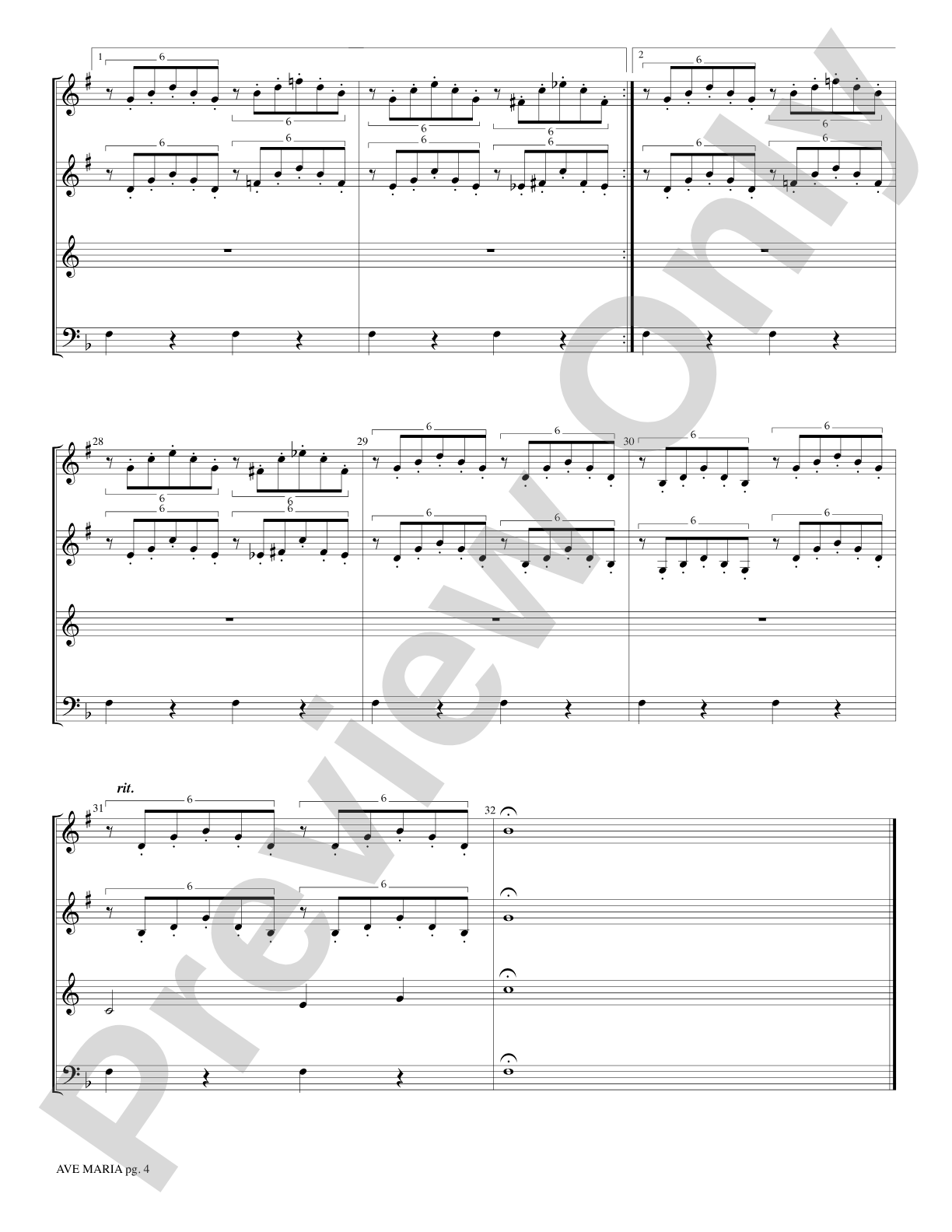




Ave Maria: Brass Quartet Score & Parts
By Franz Schubert / arr. David Marlatt
Item: 81-PK-0000005
$12.00
One moment…
Description
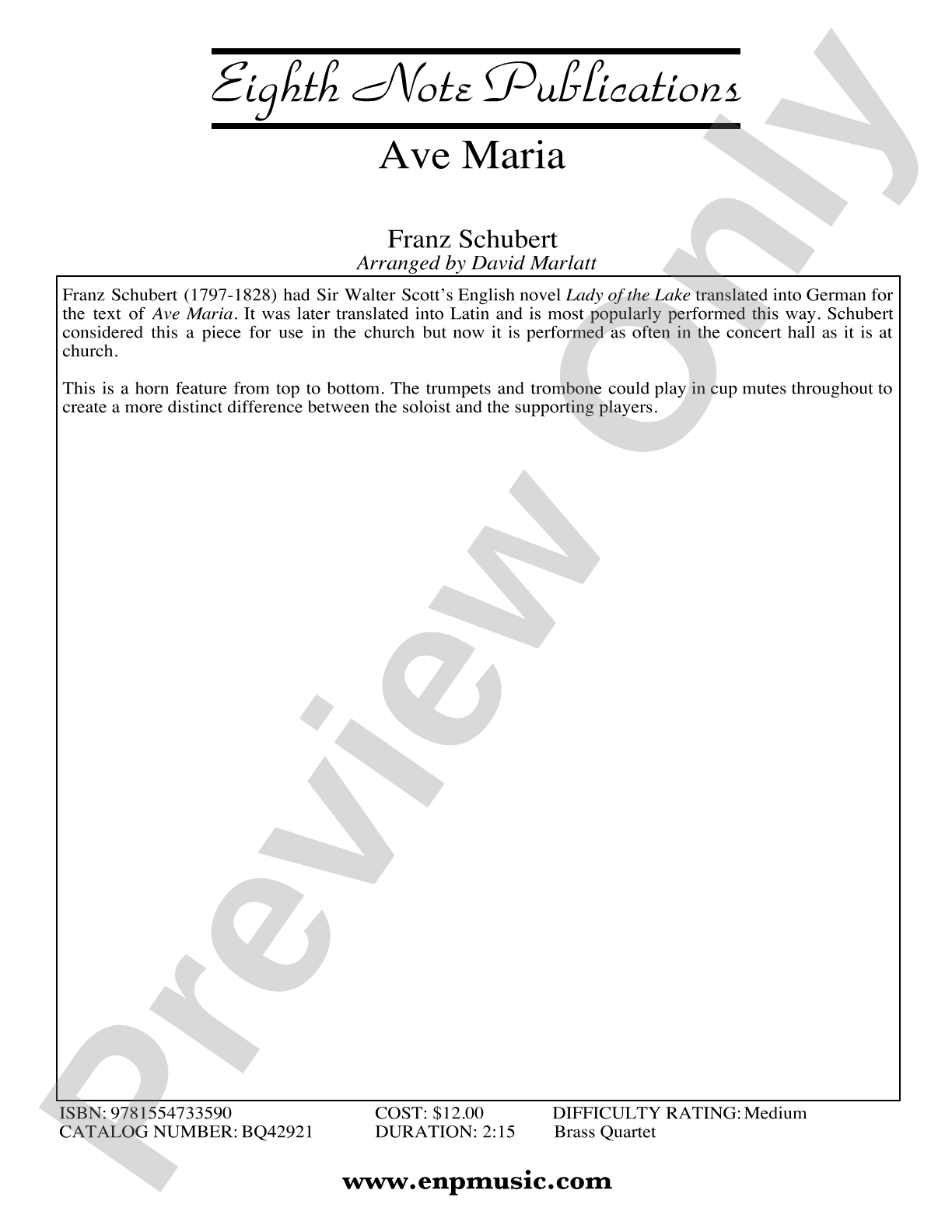
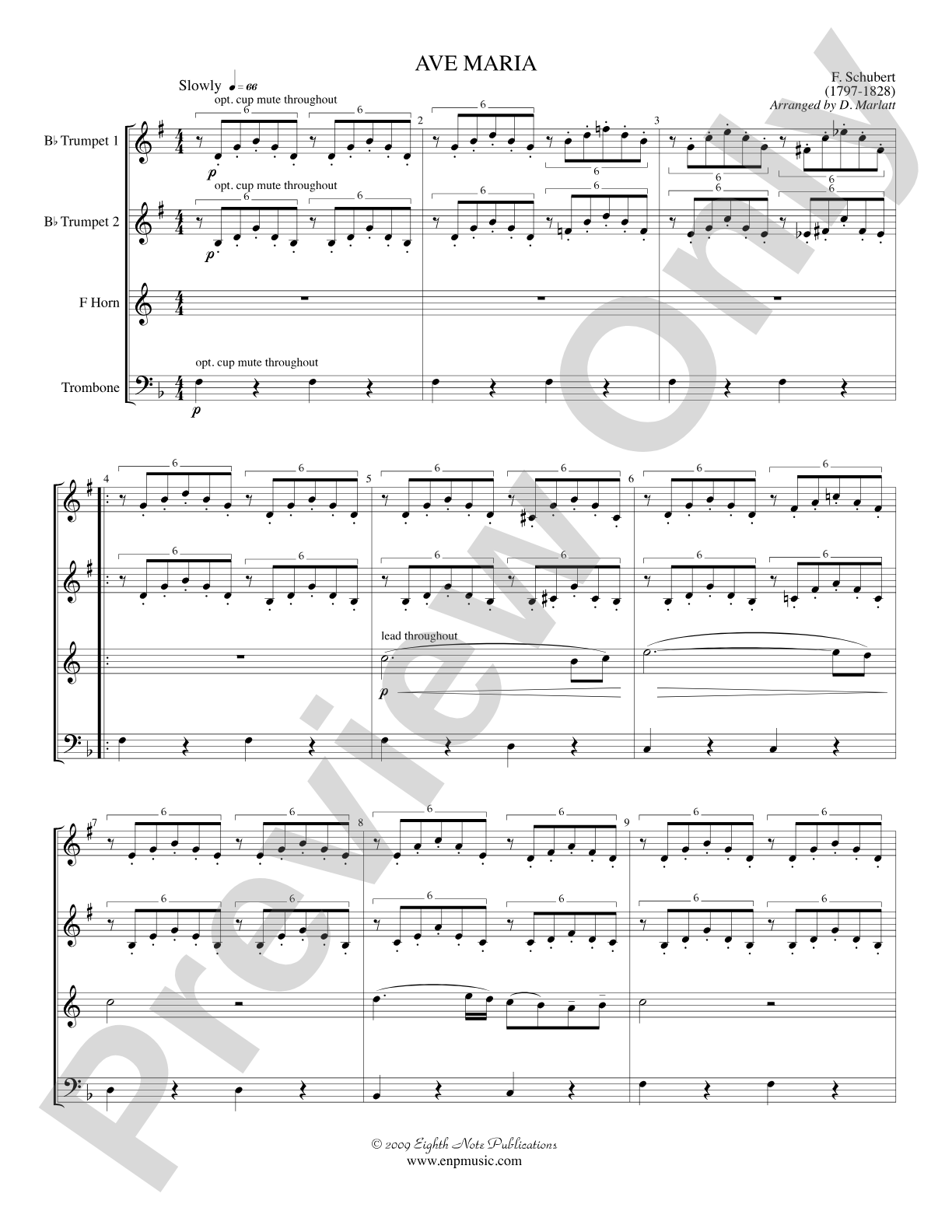
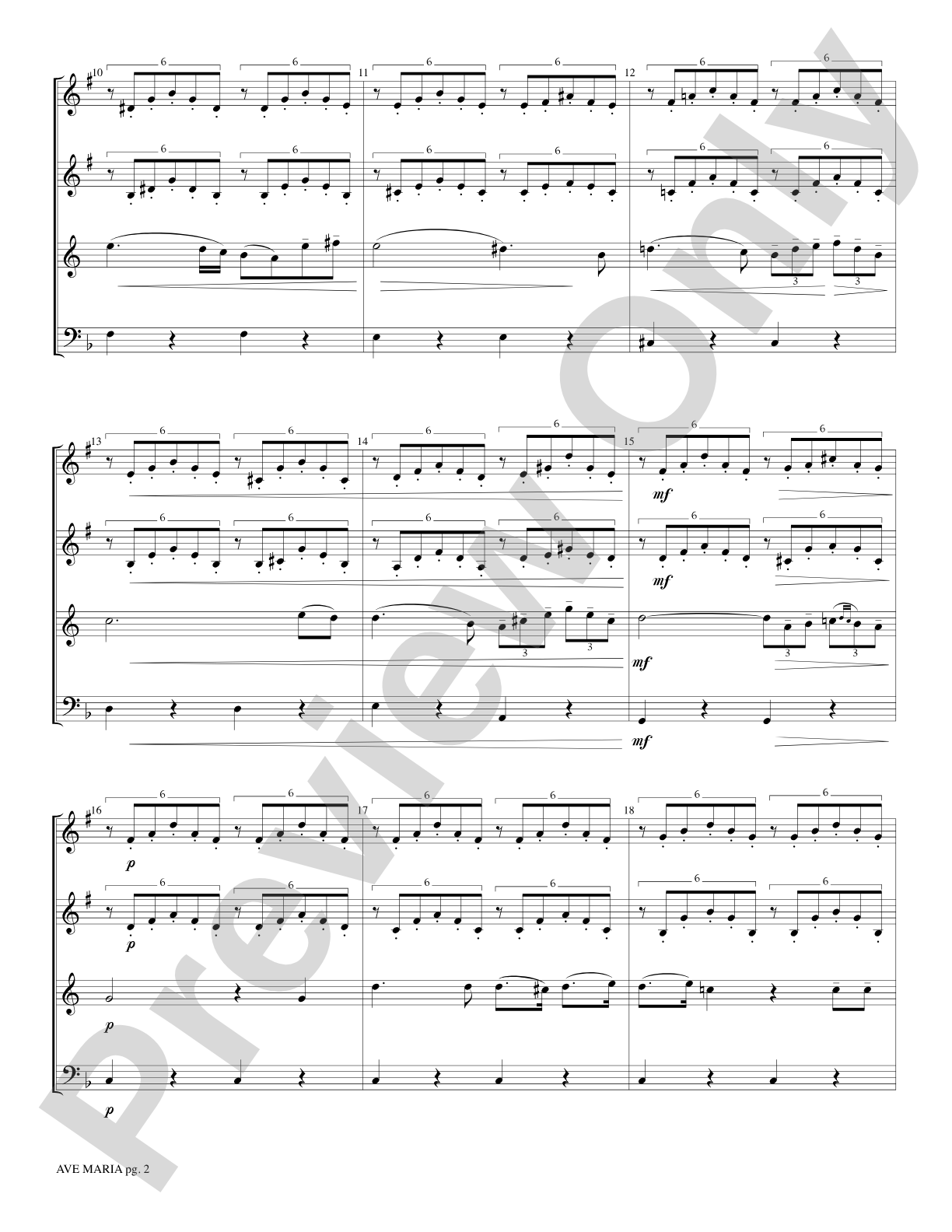
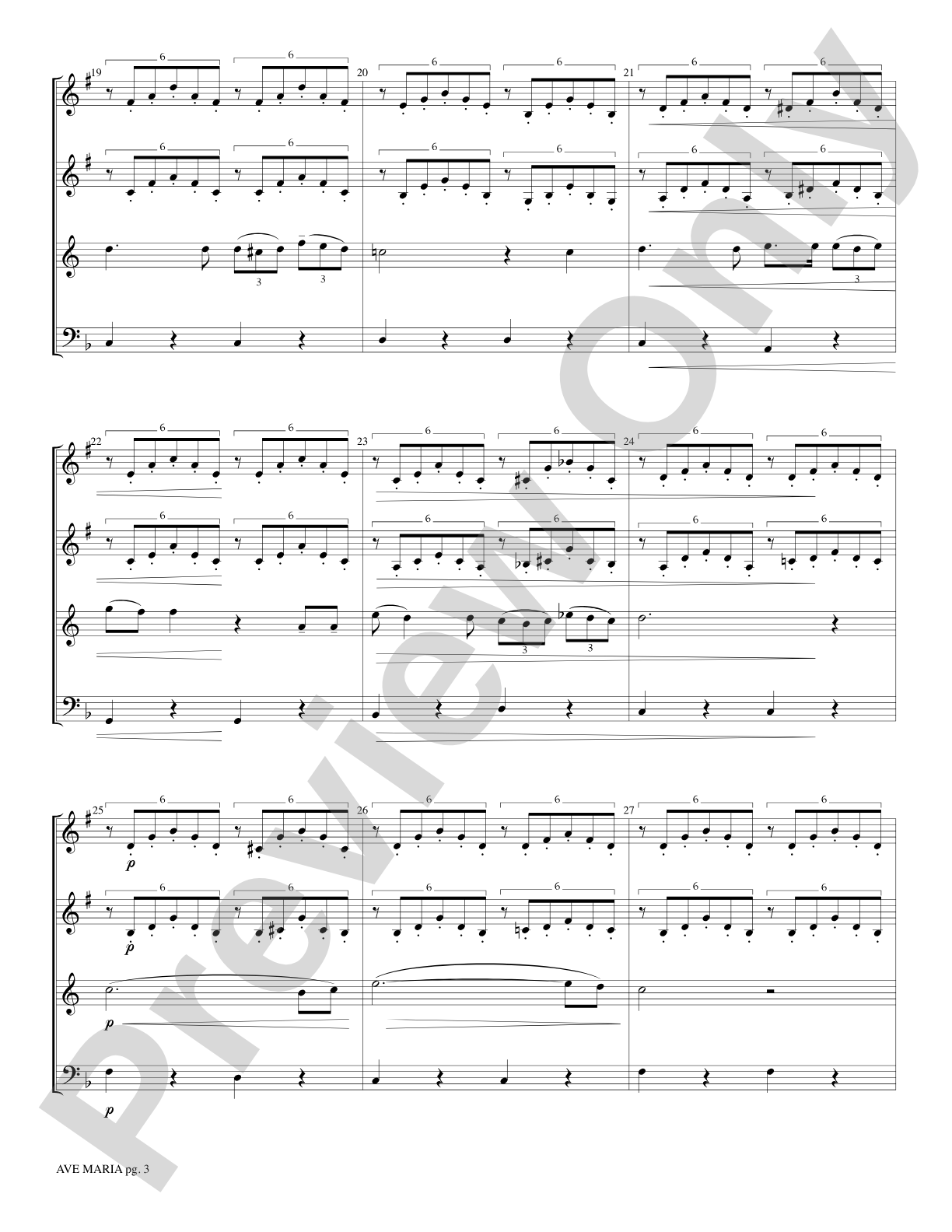
This is among the most popular and often used pieces at weddings and recitals. The simple accompaniment combined with the famous flowing melody makes Ave Maria a great choice to feature the horn player throughout.


Ave Maria: Brass Quartet Score & Parts isn't in MakeMusic Cloud just yet...but it could be. Let us know you'd like to see it, and you'll help shape what comes next. In the meantime, start a free trial and dive into thousands of interactive titles your students can play along with today.
Request This Title
Tell us you want it.
Start Your Free Trial
Explore everything that's ready to play right now.
Sample Audio
1
Audio File
--:--
0:00
0:00
Sample Video
No sample videos found.
Additional Details
Series:
Eighth Note Publications
Publisher:
Eighth Note Publications
Page Count:
8
SKU:
81-PK-0000005
Instrumentation:
Brass Quartet
More about this title
About the Composer: Franz Schubert
Franz Schubert (1797-1828) was an Austrian composer whose gift for melody shaped Romantic music across every genre he touched. Though he died at 31, he produced nearly 1,000 works, including nine symphonies, 15 string quartets, and over 600 songs. His melodies flow with natural grace and emotional directness, qualities that made his lieder (art songs) foundational to the vocal tradition and his instrumental works enduringly popular with performers and audiences alike.
Why we love this
David Marlatt's arrangement strips away the piano entirely and lets the brass do what it does best: sustain and blend. The horn carries the iconic melody throughout, giving a single player ownership of one of the world's most recognizable tunes while the other three voices maintain harmonic warmth. At 8 pages with modest technical demands, it fits perfectly into wedding programs, recital sets, and festival competitions without requiring virtuosic solists.
What to expect
Serene and devotional, with the horn's sustained legato over warm harmonic support creating an intimate, reverent atmosphere. The simplicity of the writing lets the purity of Schubert's melody speak, and the modest technical demands mean players can focus entirely on sustaining beautiful tone and thoughtful interpretation.
Who it's for
Horn players with solid musicianship who are ready to carry a substantial melodic responsibility, alongside three capable brass colleagues who can provide secure, balanced accompaniment. Brass quartets preparing for recitals, weddings, or festival performances will find this arrangement both rewarding to learn and immediately effective in performance.
How to get the most out of it
- Shape the opening phrase with gentle dynamic swell rather than mechanical shaping; let the melody breathe as naturally as a singer would phrase it.
- Balance the horn's melody against the accompaniment voices by having the supporting players pull back dynamically, especially in passages where thick harmony could obscure the tune.
- Keep vibrato subtle and tasteful to honor the hymn-like reverence of the original; restrained use preserves clarity and spiritual character.
- Attend closely to intonation in the sustained chords; even small adjustments in the middle voices ensure the harmonic foundation sits cleanly beneath the horn line.
How to use it
Program this as a bridge between opening works and more elaborate pieces, or use it to anchor a sacred music set. It works equally well as a standalone feature for the horn soloist at weddings and formal events, and its familiarity makes it an effective closer for community and educational performances.
Skills your students will build
- Sustaining legato phrasing across multiple phrases
- Supporting a melodic line with balanced harmonic accompaniment
- Controlling dynamics and vibrato in a reverent, hymn-like context
- Ensemble intonation and blend in four-part brass writing