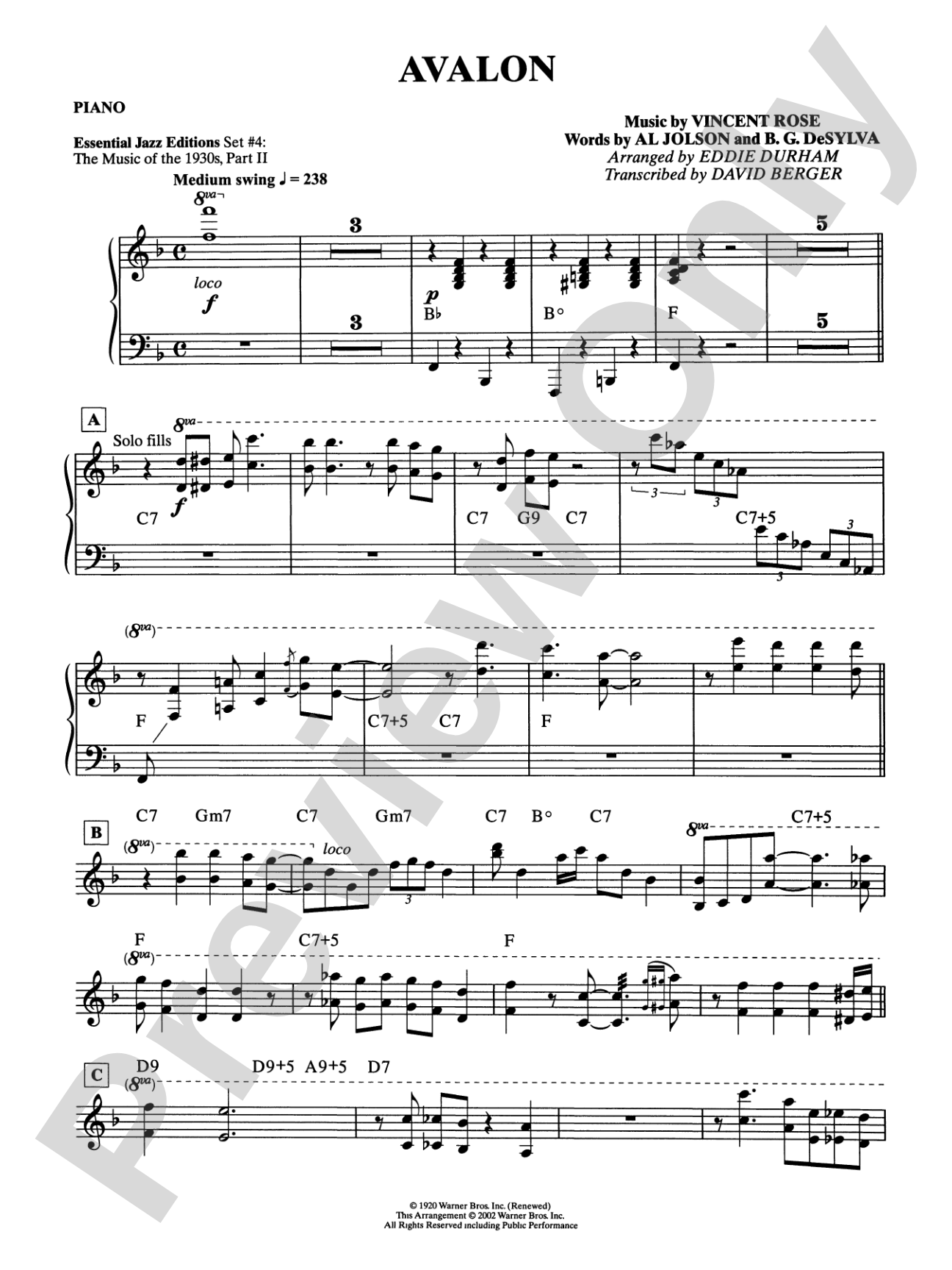
Avalon: Piano Accompaniment Sheet Music Preview

Avalon: Piano Accompaniment

Composed by Giacomo Puccini, adapted by Al Jolson and Vincent Rose / arr. Eddie Durham

Grade: 3.5 (Medium)

Item: 00-PC-0014705_K

Digital Download
$3.00
Description
From Essential Jazz Editions, Set #4: Music of the 1930s, Part II.

Don't just read it, hear it, play along with it, and watch your students grow with it. In MakeMusic Cloud, Avalon: Piano Accompaniment comes alive with professional accompaniment, adjustable tempo, and built-in practice tools that turn solo practice into real progress.

Sample Audio
No sample audio found.
Sample Video
Additional Details
Series: Essential Jazz Editions (Jazz at Lincoln Center)
Publisher: Alfred Music
Page Count: 76
SKU: 00-PC-0014705_K

More about this title

About the Composer: Giacomo Puccini

Giacomo Puccini (1858-1924) was an Italian opera composer whose gift for melody and dramatic storytelling shaped late Romantic musical theatre. Though he composed primarily for the operatic stage, his melodies have endured across genres and arrangements, proving their universal appeal and harmonic richness.

Why we love this

This arrangement brings a Puccini melody into the swinging vernacular of 1930s jazz, creating a compelling cultural bridge that lets students experience how great melodies transcend their original context. The Grade 3.5 scoring makes the piece accessible to developing jazz ensembles while maintaining the sophistication needed to engage serious musicians.

What to expect

Lyrical and warm, with the dreamy, romantic quality of Puccini's original melody now given a gently swinging heartbeat. The arrangement honors both the composer's sense of soaring line and the conversational, call-and-response nature of ensemble jazz.

Who it's for

Jazz ensemble directors teaching intermediate to upper-intermediate musicians who want to explore how classical masterworks connect to jazz history. Students benefit from playing an emotionally direct, melody-centered piece that illustrates the jazz arranging tradition of the Depression and swing eras.

How to get the most out of it

  • Establish the swing feel early in rehearsal by isolating the rhythm section and locking the walking bass with the drummer's ride cymbal pattern before adding horns.
  • Balance the melody across lead trumpet and saxophone sections so the beautiful Puccini line cuts through without forcing; let the arrangement's voicing do the work.
  • Shape the legato passages with subtle dynamic shaping rather than strict metering; the 1930s style values rubato and breath over mechanical precision.
  • Listen to a reference recording of the original arrangement to catch the period idiom and understand how the piano comping sits within the overall texture.

How to use it

Program this alongside other Essential Jazz Editions to build a concert around jazz standards and their classical roots, or use it as a bridge piece between your ensemble's classical repertoire and jazz studies. It works well in the second half of a concert where audiences expect both sophistication and accessibility.

Skills your students will build

  • Jazz articulation and phrasing in swing style
  • Reading and executing jazz ensemble voicings (saxophones and brass sections)
  • Balancing melody and accompaniment in mid-size ensemble textures
  • Understanding jazz arrangement principles applied to classical material
  • Stylistic interpretation of 1930s ensemble jazz idioms

You May Also Like