
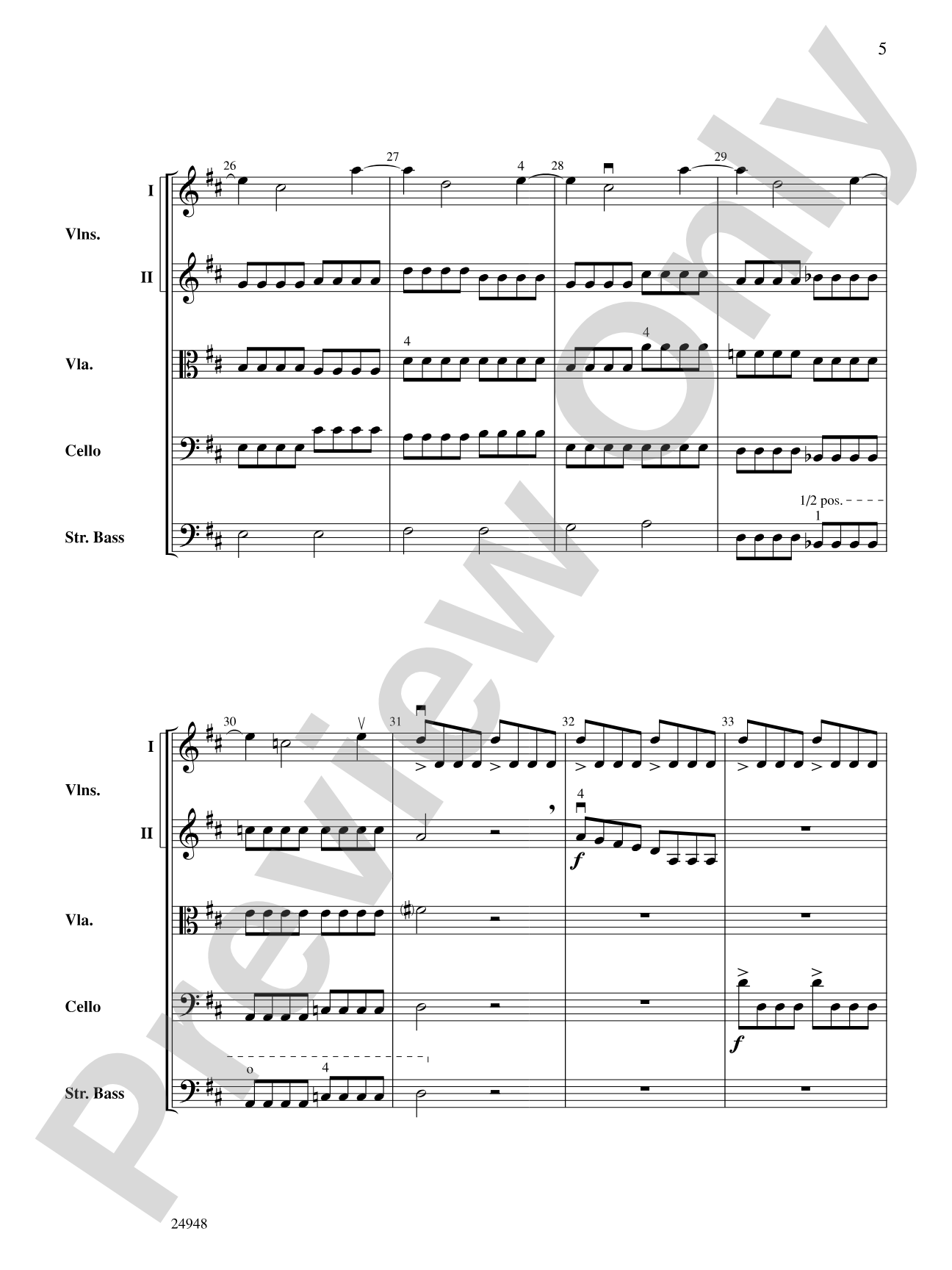
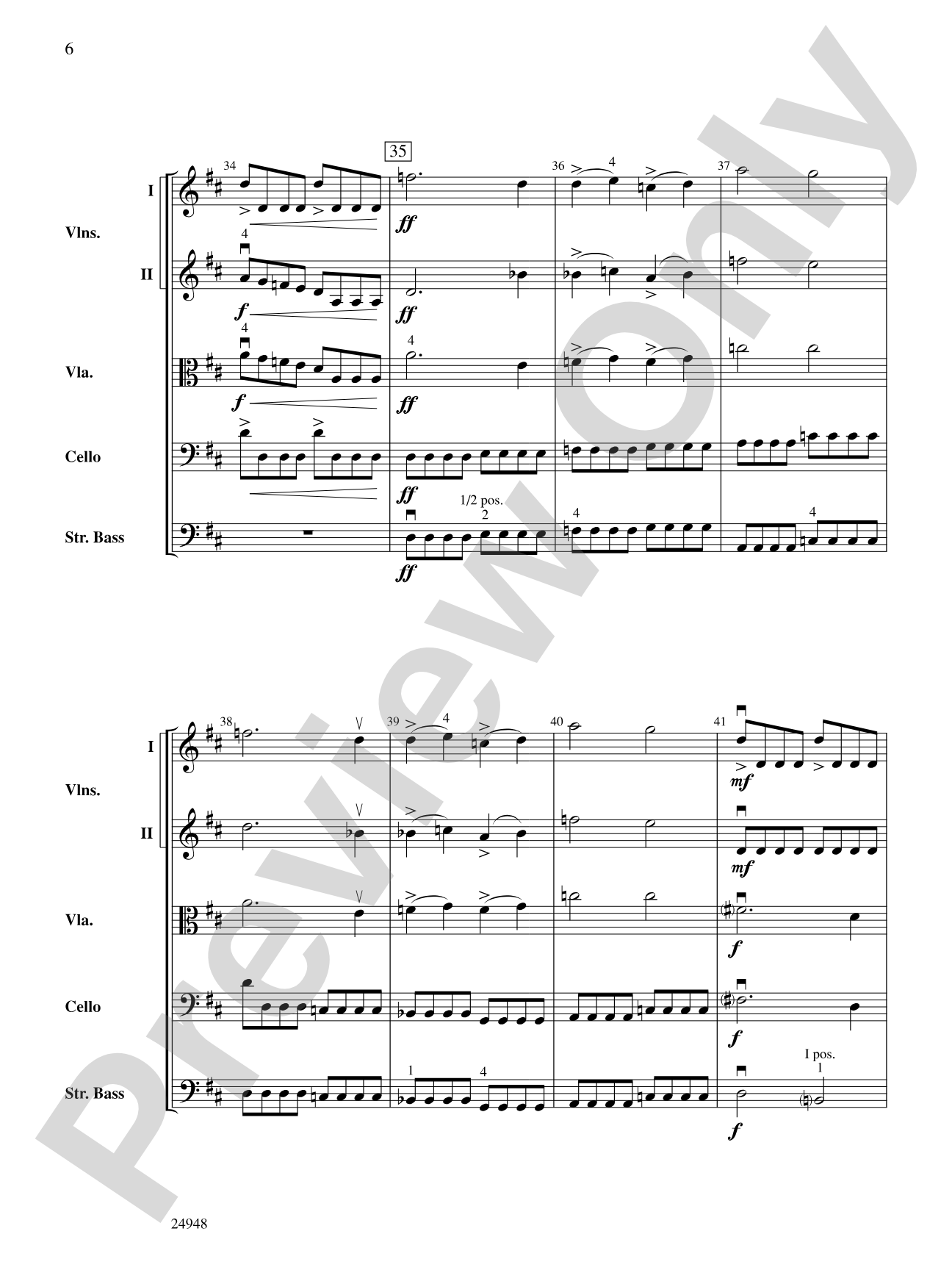
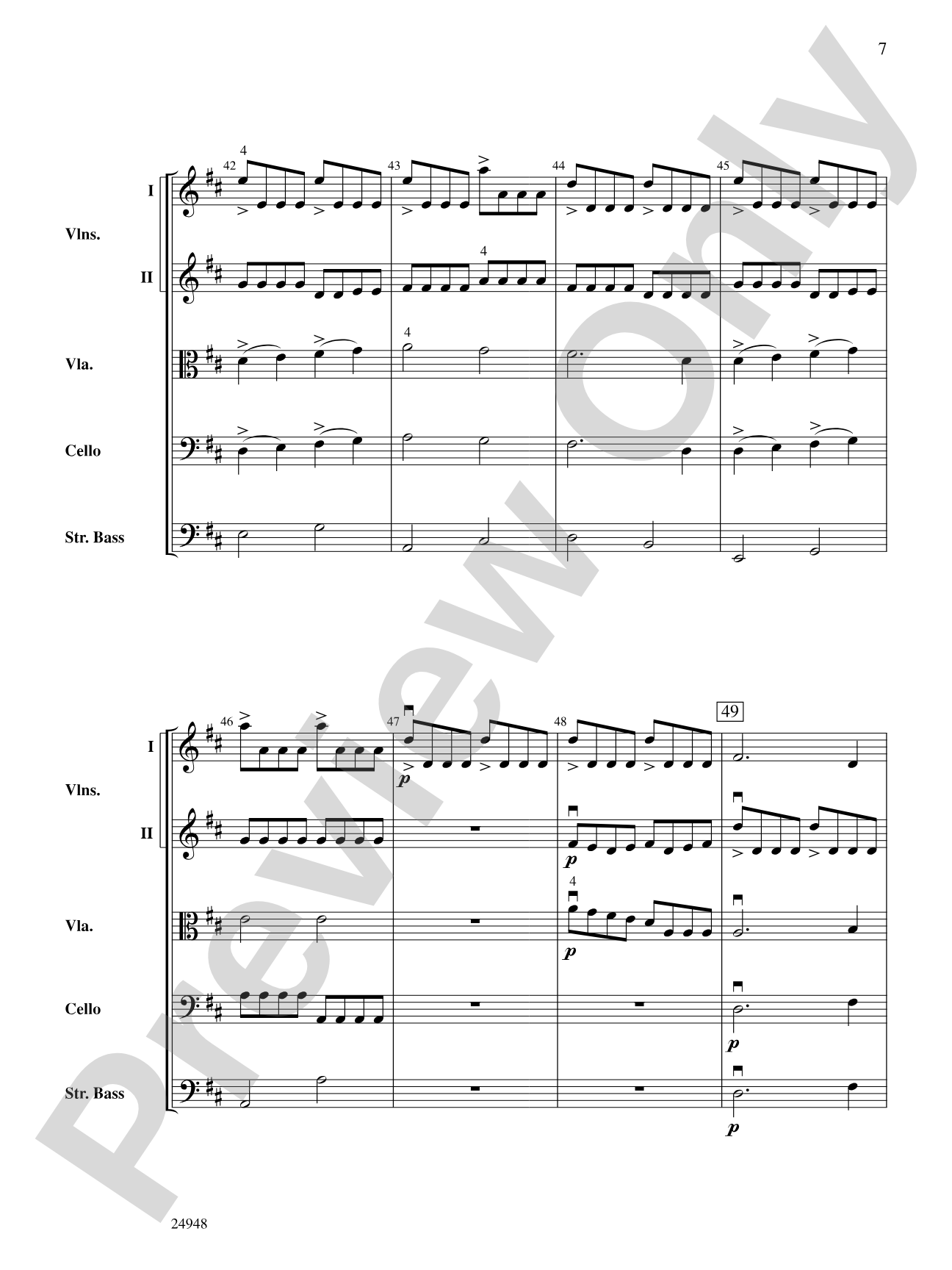
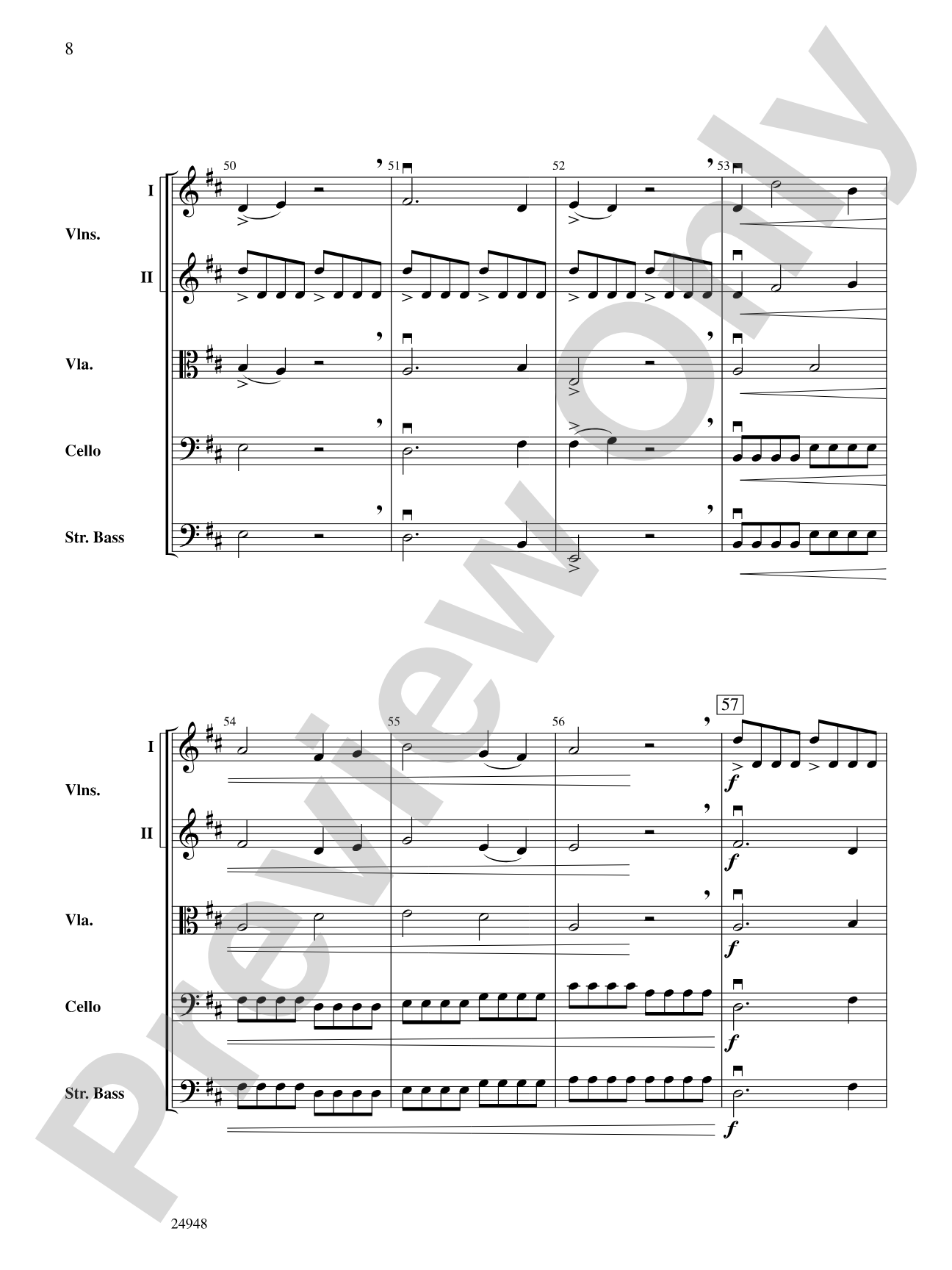

Avalanche: String Orchestra Conductor Score & Parts
By Michael Hopkins
Grade: 1.5
Item: 00-PK-0000948

$49.00
Pickup currently not available
Buy Extra Parts (Digital PDF Download)
| Product | Price | Quantity |
|---|---|---|
| Avalanche: Score | $9.00 | |
| Avalanche: 1st Violin | $5.99 | |
| Avalanche: 2nd Violin | $5.99 | |
| Avalanche: Viola | $5.99 | |
| Avalanche: Cello | $5.99 | |
| Avalanche: String Bass | $5.99 |
Parts Added to Cart!
Description
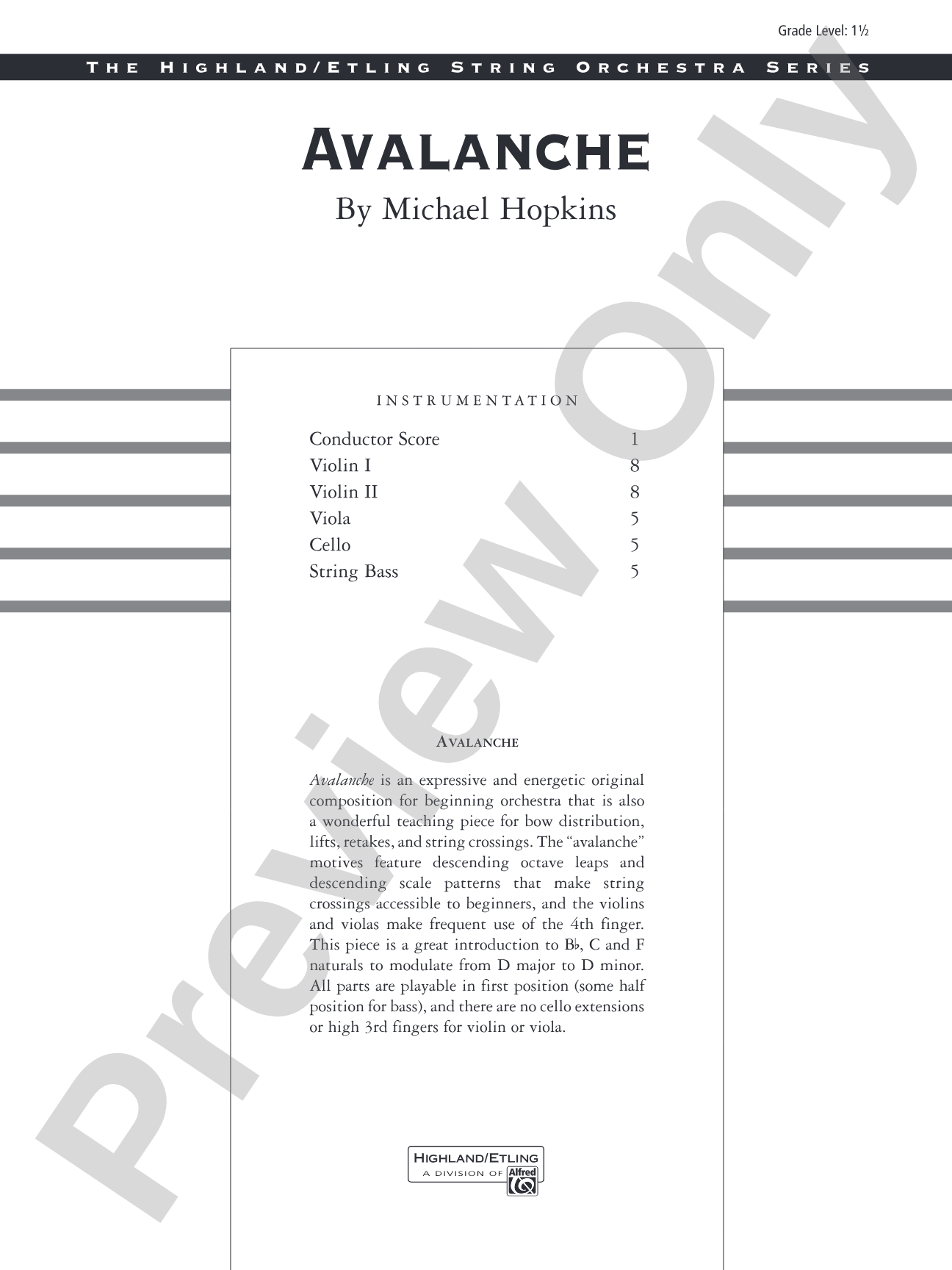
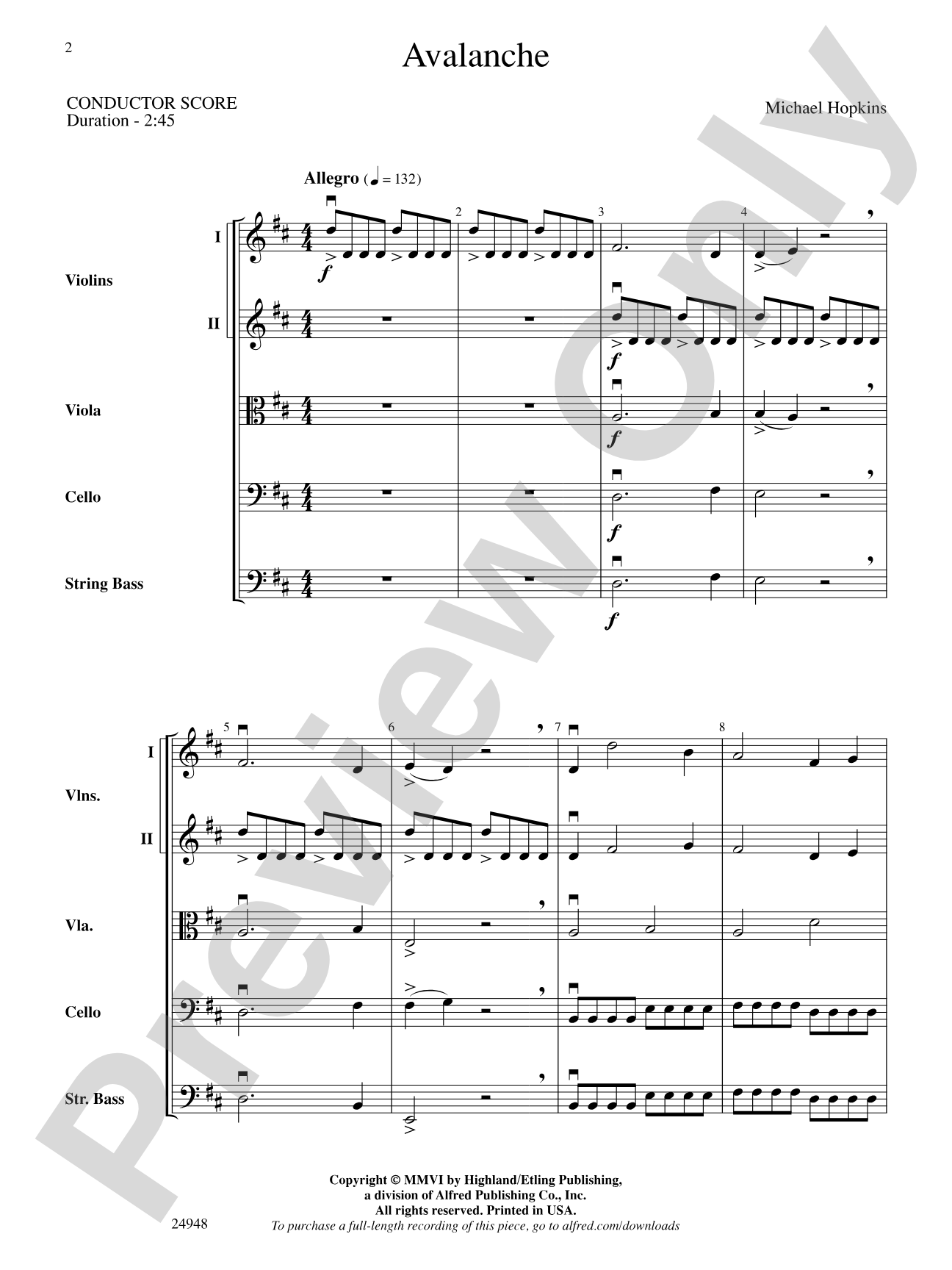
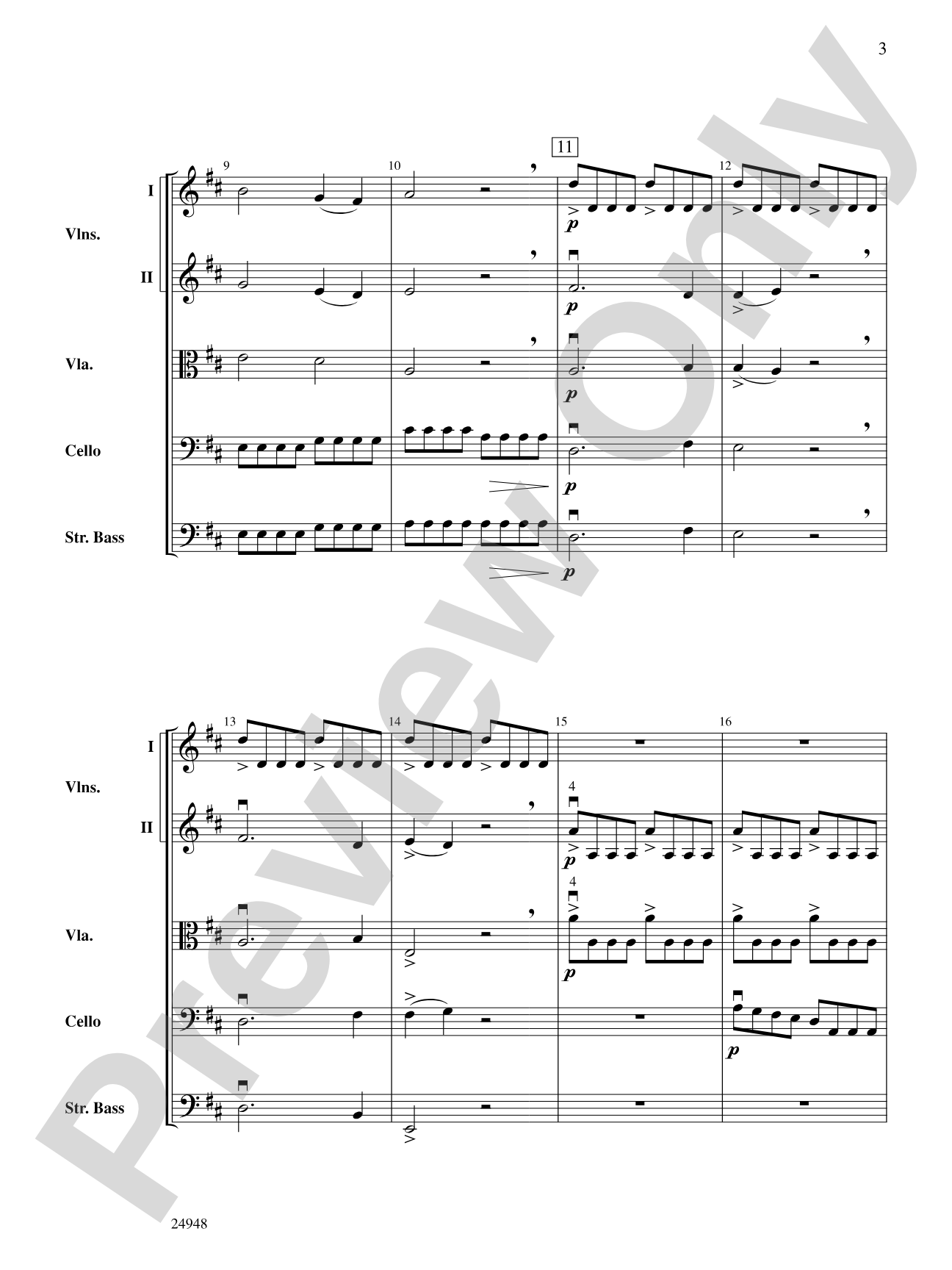
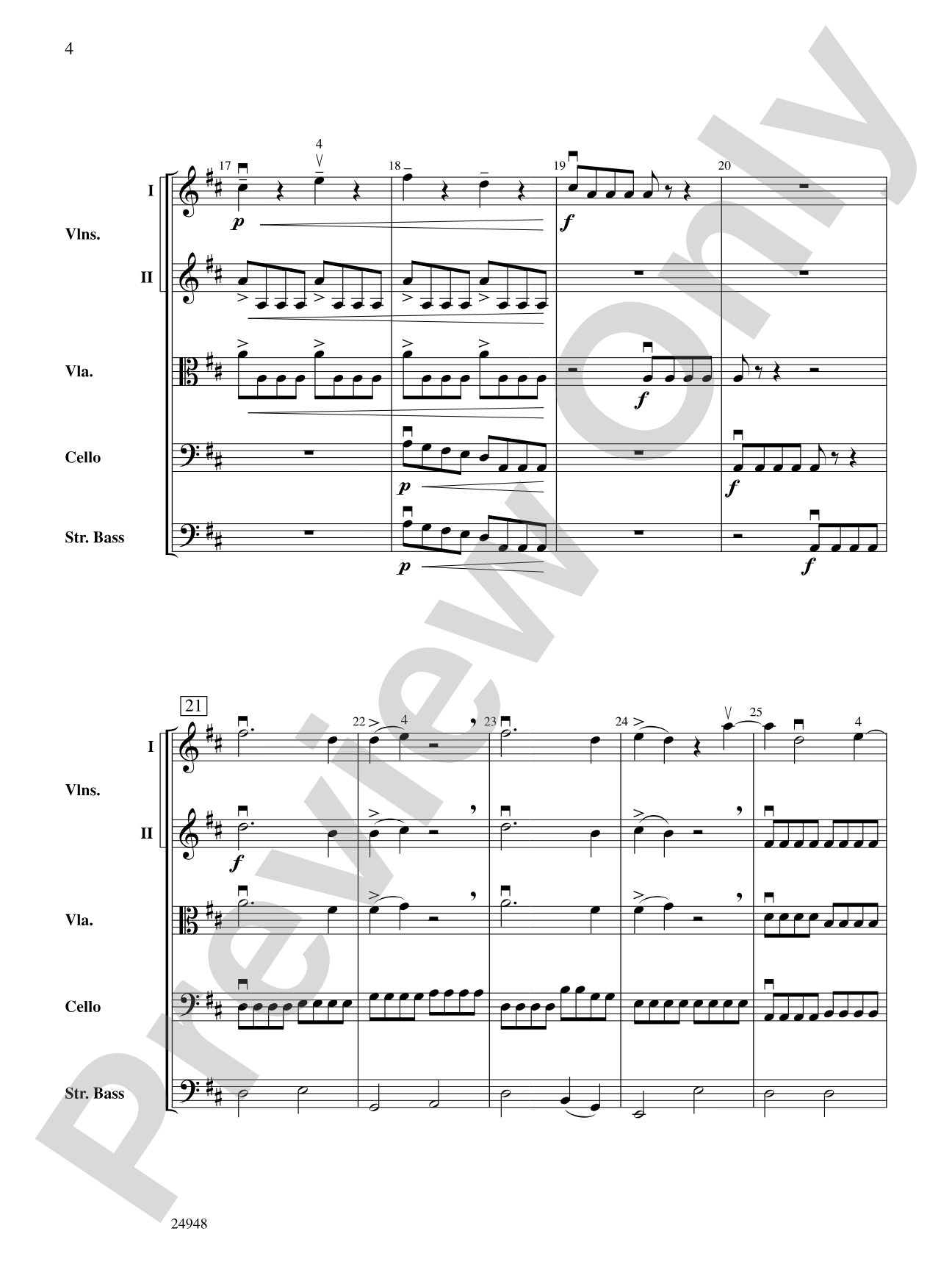
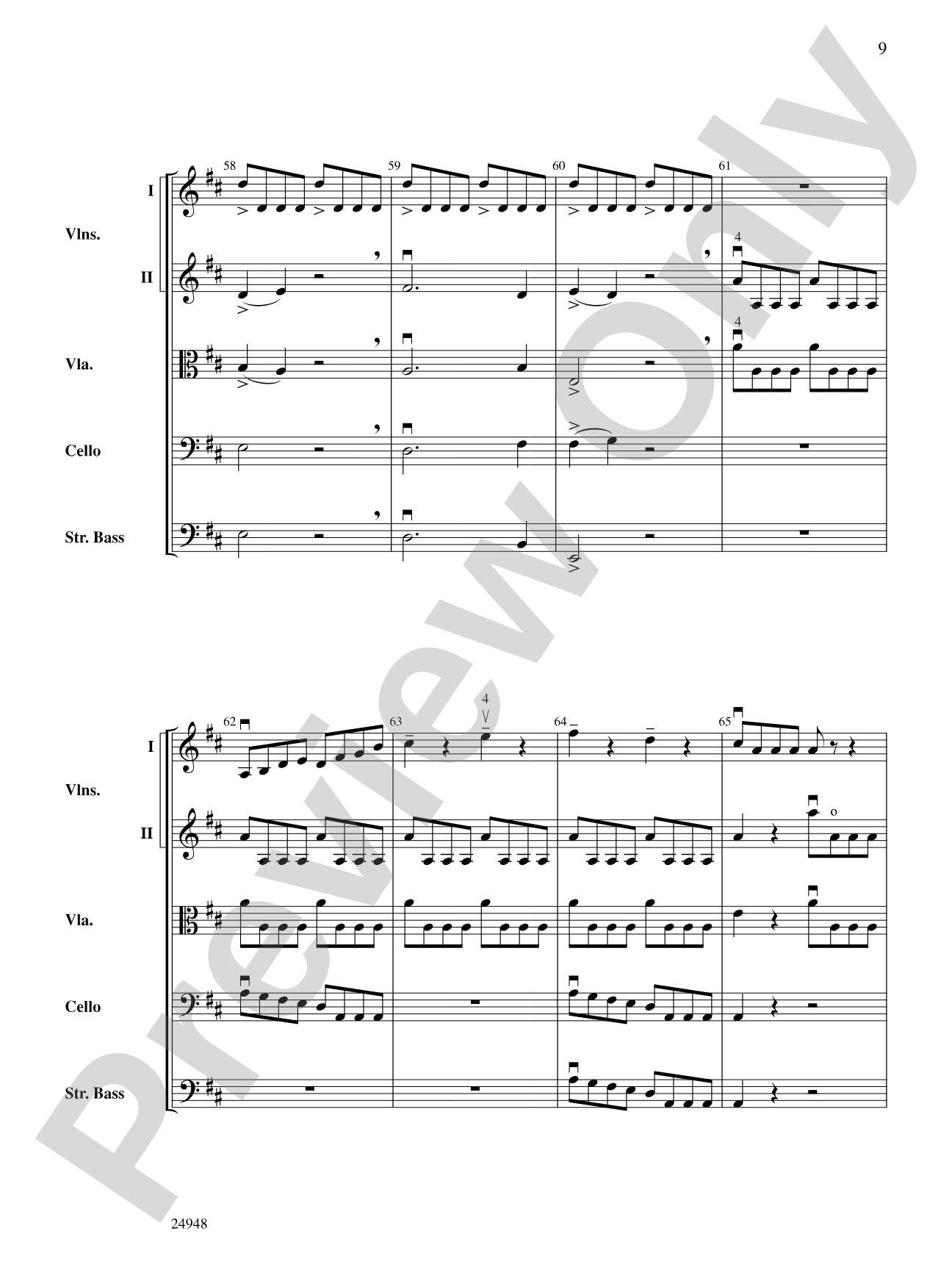
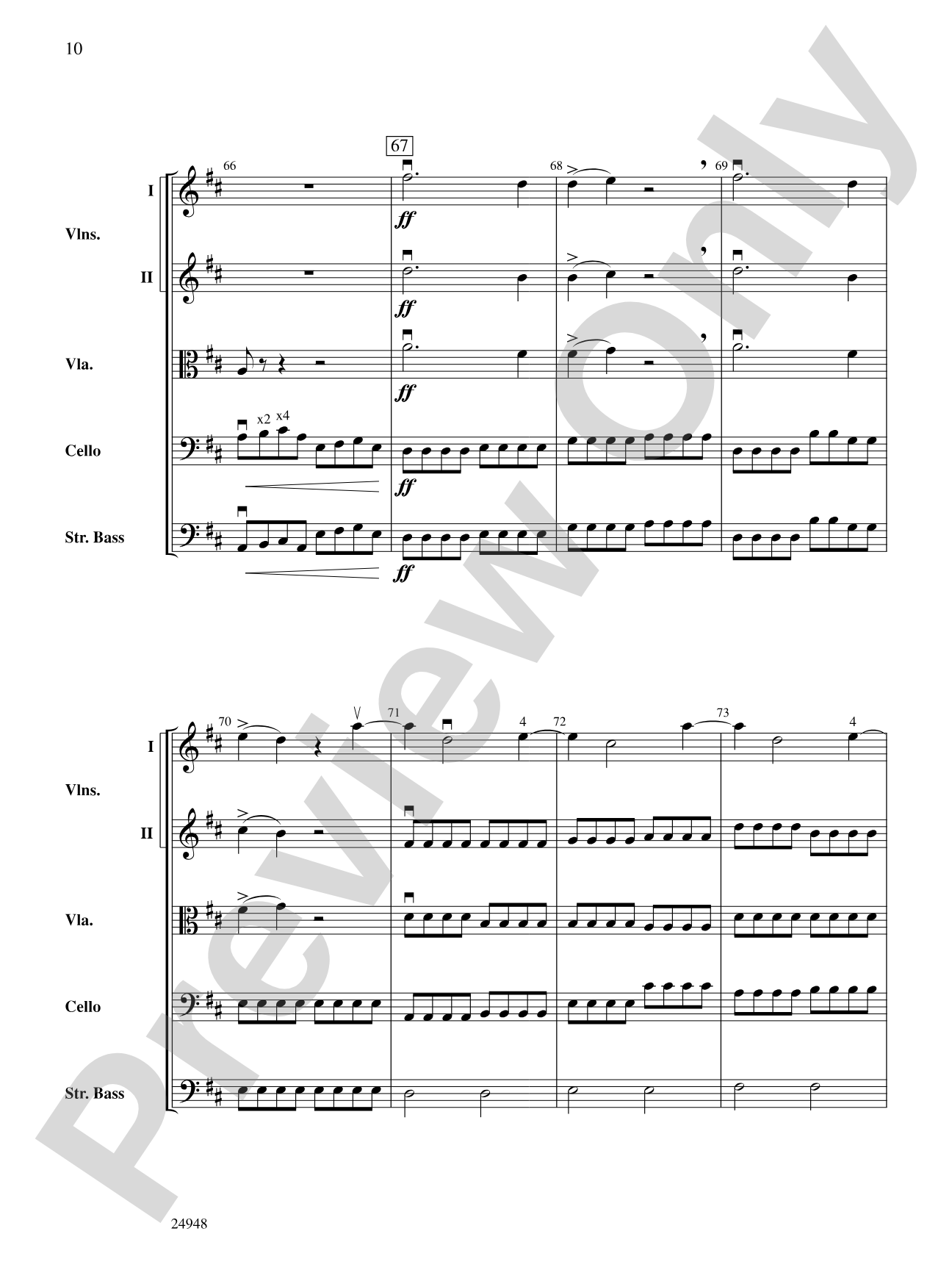
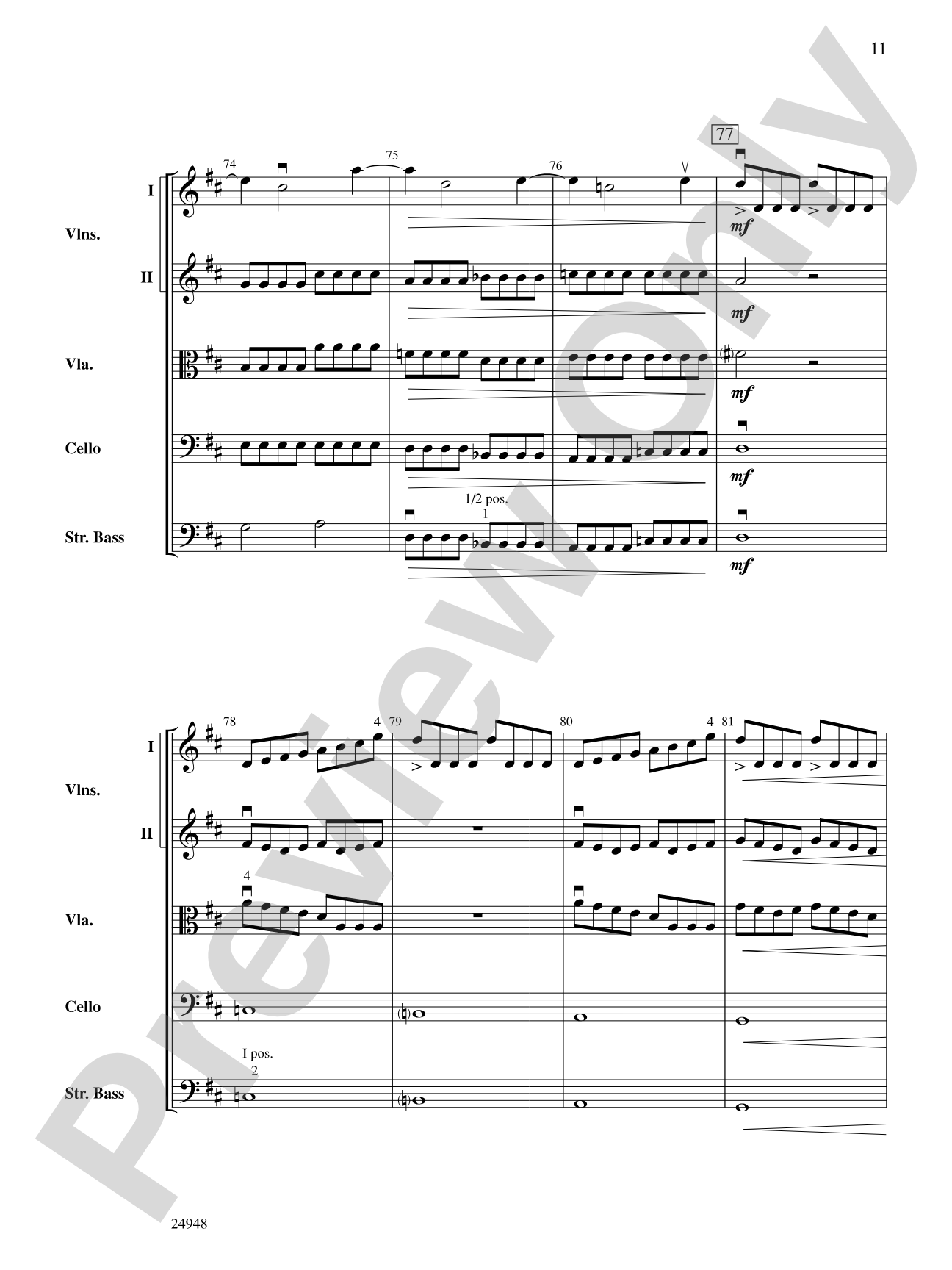
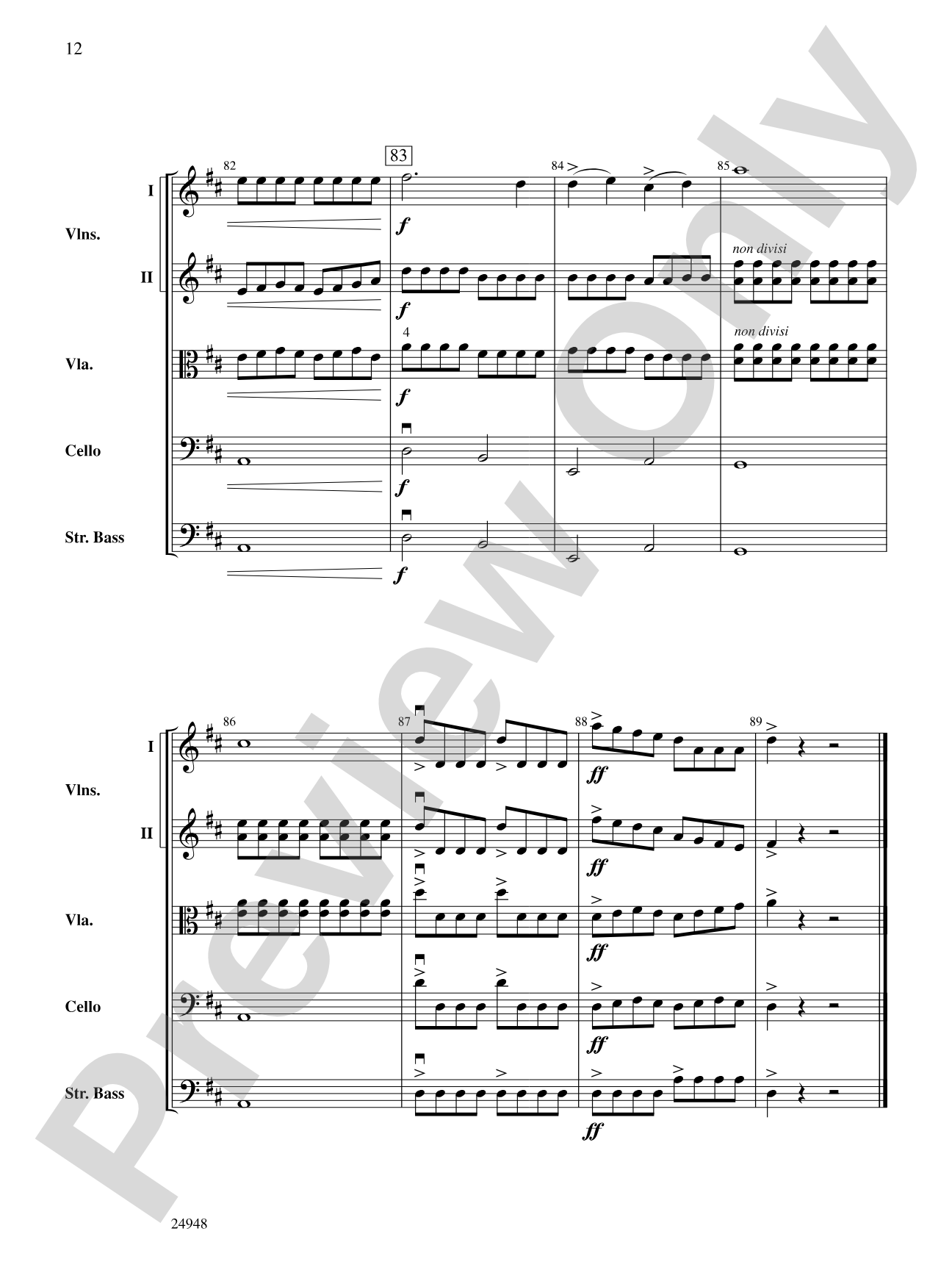
Avalanche is an expressive and energetic original composition for beginning orchestra that is also a wonderful teaching piece for bow distribution, lifts, retakes, and string crossing. The 'avalanche' motifs feature descending octave leaps and descending scale patterns that make string crossings accessible to beginners. Violins and violas make frequent use of the 4th finger. The piece is a great introduction to B-flat, C and F naturals to modulate from D major to D minor. All parts are playable in first position (some half position for bass), and there are no cello extensions or high 3rd fingers for violin or viola. (2:40)


Don't just read it, hear it, play along with it, and watch your students grow with it. In MakeMusic Cloud, Avalanche: String Orchestra Conductor Score & Parts comes alive with professional accompaniment, adjustable tempo, and built-in practice tools that turn solo practice into real progress.
Open in the Player
Jump straight in and assign it today.
Start Your Free Trial
Open this title and explore the full library in minutes.
Sample Audio
1
Audio File
--:--
0:00
0:00
Sample Video
Additional Details
Series:
Highland/Etling String Orchestra
Publisher:
Alfred Music
Page Count:
124
SKU:
00-PK-0000948
More about this title
About the Composer: Michael Hopkins

Michael Hopkins leads the music education program at the University of Michigan, where he teaches string pedagogy, orchestra methods, and music psychology. His career spans conducting university orchestras in Vermont and directing student orchestras across Colorado, Michigan, and Vermont, alongside founding the Burlington Chamber Orchestra and appearing as guest conductor at over 100 festivals and clinics nationwide.
Hopkins has established himself as a voice in string education through more than 60 conference presentations on string techniques and music technology, published articles in the Journal of Research in Music Education, American String Teacher, and Music Educators' Journal, and his pedagogical book The Art of String Teaching (GIA Publications). He has composed and arranged over 70 works for orchestra, grounding his writing in direct classroom and rehearsal experience.
Why we love this
Hopkins writes with genuine understanding of what beginning string players can accomplish and where they need support. Avalanche manages the rare feat of being both musically satisfying to perform and genuinely useful for addressing bow technique and string crossing at the exact level where students need it most, without the piece feeling like pedagogical busywork.
What to expect
Energetic and vivid, with descending lines that tumble forward like a mountain slide. The piece balances rhythmic drive with moments of melodic clarity, creating a sense of motion without demanding virtuosity.
Who it's for
Beginning orchestras (Grade 1.5) ready to tackle expressive phrasing and intermediate bowing techniques. This piece serves directors who want to teach string crossing and bow distribution within a satisfying musical context rather than through disconnected exercises.
How to get the most out of it
- Shape the avalanche motifs by thinking of each descending leap as part of a single musical gesture, not isolated notes. This helps students understand bow direction and weight as tools for phrasing.
- Establish lift technique early in rehearsal using the repeated octave figures. Lifting the bow cleanly between descending patterns prevents trailing tone and sharpens ensemble articulation.
- Work string crossing patterns hands-on with your section leaders first. Once violins and violas understand the mechanics in the opening measures, the crossings that follow become intuitive.
- Balance the modulation from D major to D minor by highlighting the B-flat, C, and F natural entrances. These shift the harmonic color noticeably if the ensemble hears them as intentional inflections rather than random accidentals.
How to use it
Feature Avalanche early in a concert to establish energy and engagement, or pair it with a lyrical piece to showcase range within a single rehearsal block. Its modest length (2:40) makes it ideal for festival programs or as the centerpiece of a student concert focused on technique fundamentals.
Skills your students will build
- String crossing between adjacent and non-adjacent strings
- Bow lifts and retakes that articulate descending figures
- Bow distribution across extended scalar passages
- Modulation between D major and D minor using accidental context
- First position facility on all string instruments with selective half position for bass
- Fourth finger extension on violin and viola