

Autumn Vesper: 2-Part (Opt. SSA) Choral Octavo
Words by Emily Brontë, music and additional words by Audrey Snyder
Level: Moderately Easy
Item: 00-PO-0003543
$2.05
Minimum order quantity: 20 copies
Pickup currently not available
Related Items
Autumn Vesper: PianoTrax Digital Audio Download |
$9.99
|
View | |
Autumn Vesper: SATB Choral Octavo |
$2.05
|
View | |
Autumn Vesper: 3-Part Mixed Choral Octavo |
$2.25
|
View | |
Autumn Vesper: SATB Choral Octavo |
$2.05
|
View | |
Autumn Vesper: 3-Part Mixed Choral Octavo |
$2.25
|
View | |
Autumn Vesper: 2-Part (Opt. SSA) Choral Octavo |
$2.05
|
View |
Description
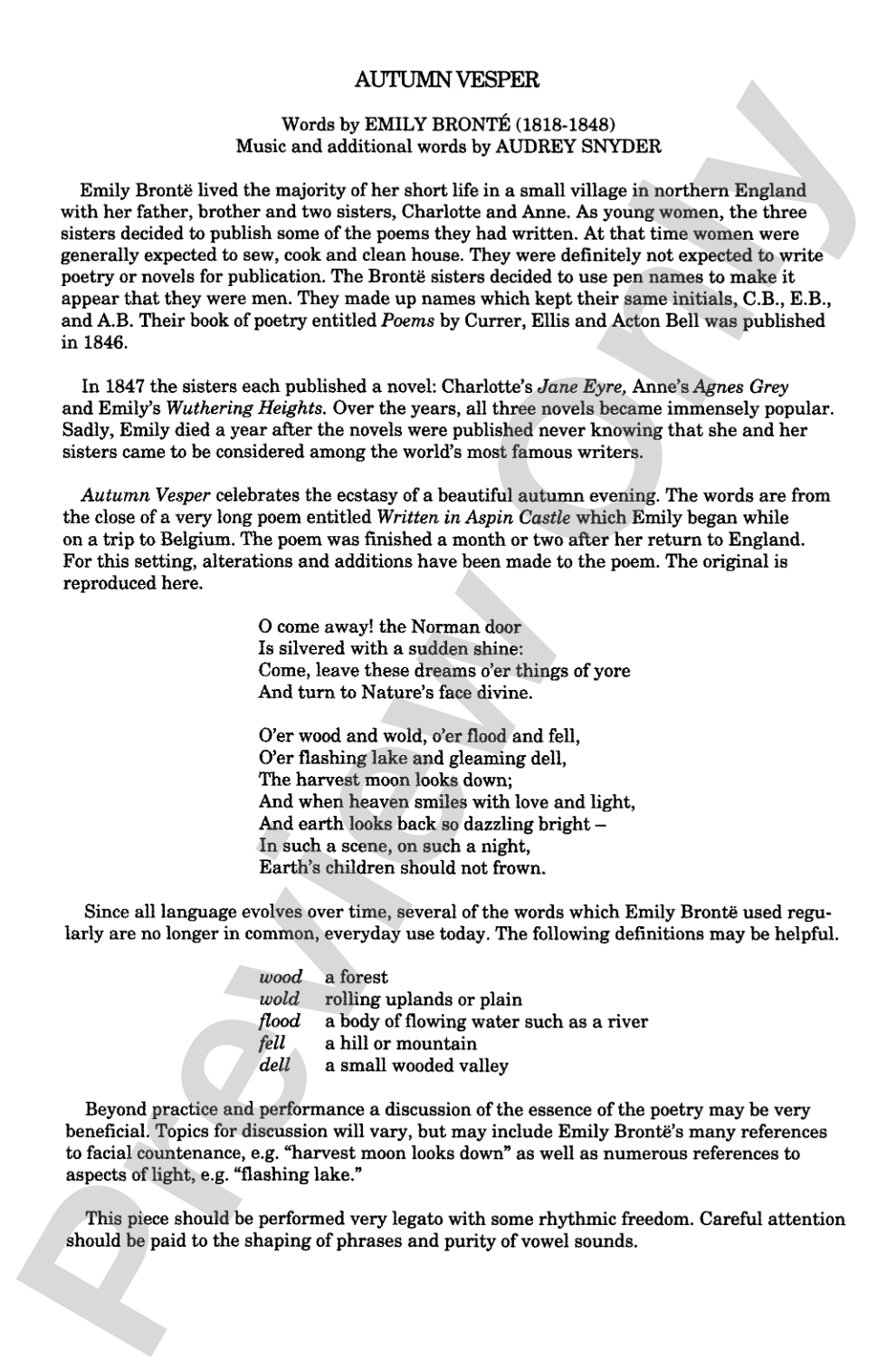
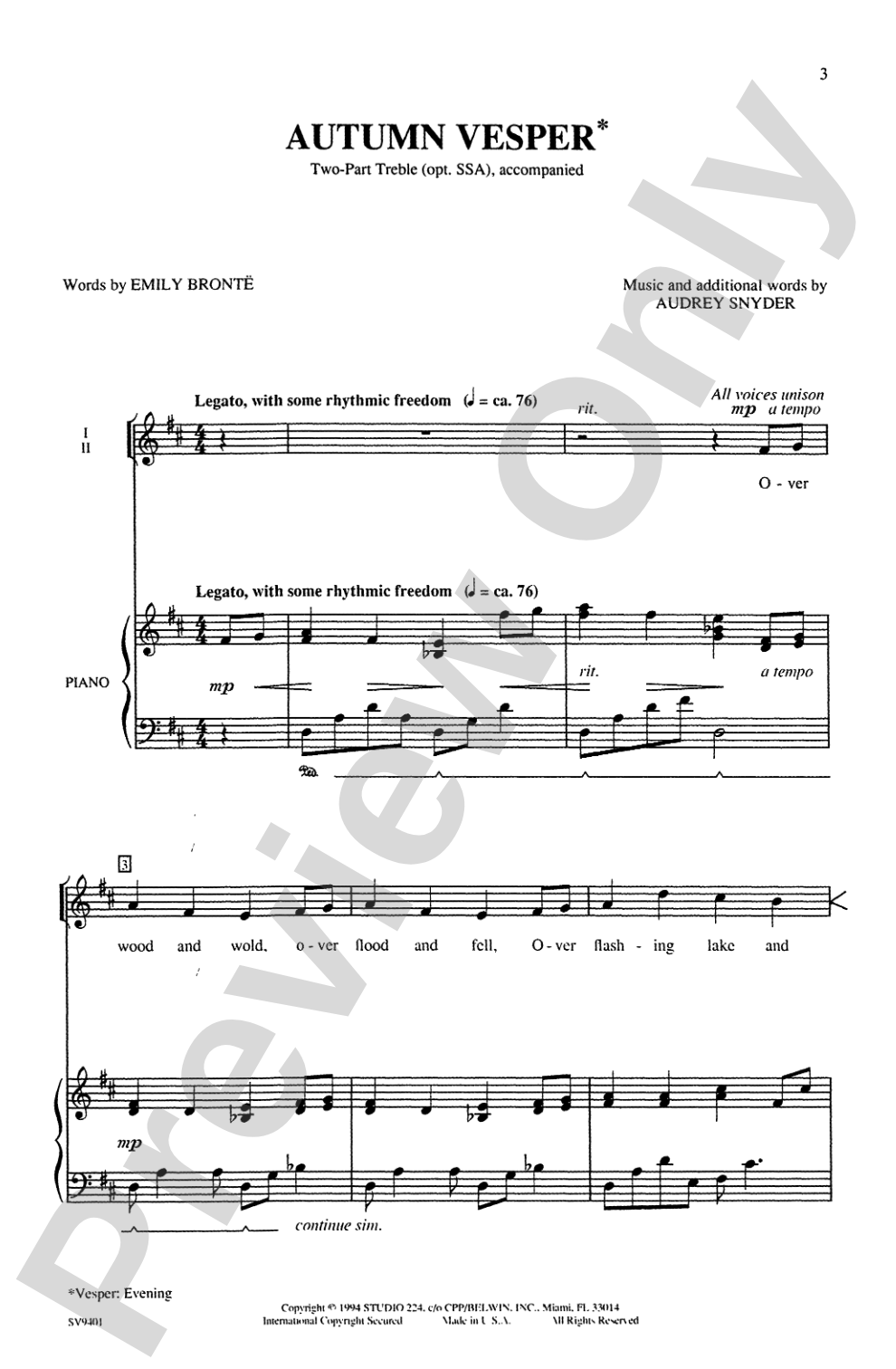
Emily Brontë's poetry is superbly set in a lyric song style. The musical painting of an autumn evening is superbly accomplished in flowing lines and a supportive accompaniment. Vivid harmonic colors offer the ensemble many opportunities for expressive singing.


Autumn Vesper: 2-Part (Opt. SSA) Choral Octavo isn't in MakeMusic Cloud just yet...but it could be. Let us know you'd like to see it, and you'll help shape what comes next. In the meantime, start a free trial and dive into thousands of interactive titles your students can play along with today.
Request This Title
Tell us you want it.
Start Your Free Trial
Explore everything that's ready to play right now.
Sample Audio
No sample audio found.
Sample Video
No sample videos found.
Additional Details
Series:
Belwin Festival Series
Publisher:
Alfred Music
Page Count:
8
SKU:
00-PO-0003543
More about this title
About the Composer: Audrey Snyder
Audrey Snyder is a prolific composer of choral music for educational and professional ensembles, known for her ability to match lyric, accessible writing to literature of genuine poetic merit. Her works span secular and sacred genres, with particular strength in setting poetry that appeals to young singers and allows them to grow as interpreters of text and music together.
Snyder's compositions consistently balance musical sophistication with singability, a quality that has made her a fixture in festival and concert programming across middle school, high school, and community choirs. Her arrangements and original works demonstrate a keen ear for harmonic color and an understanding of what voices at different levels can accomplish musically.
Why we love this
This setting of Emily Brontë captures something genuinely atmospheric without requiring complex part-writing or technical demands that distract from the poetry. The optional SSA divisi gives you flexibility to use it with multiple grade levels or changing roster sizes across the season, and the flowing melodic lines make the piece feel larger and more polished than its modest technical requirements suggest.
What to expect
Autumn Vesper evokes a quiet, introspective moment at dusk, with the accompaniment creating a gentle harmonic cushion that feels both nostalgic and contemplative. The flowing vocal lines and vivid harmonies paint the fading light of evening without drama, instead inviting singers and listeners into a moment of stillness.
Who it's for
This octavo suits emerging choirs that have solid rhythmic foundation and basic part-independence but need repertoire that builds confidence through a rewarding musical experience. It works equally well for groups new to two-part singing and for more experienced choirs looking for a brief, beautiful seasonal addition without significant rehearsal demand.
How to get the most out of it
- Shape the phrasing to follow the natural cadence of Brontë's text rather than the bar lines; this keeps the poetry the focus and prevents rhythmic chopiness that would undermine the lyric quality.
- Use the supportive accompaniment as a model for balance. The harmonic colors should complement the vocal line without overwhelming it, so keep the piano proportional and let the voices lead the sound.
- Attend to vowel color shifts across the range of each part. The optional second soprano line sits higher than the melody, so unified vowel shaping between the parts helps them blend as a single harmonic texture rather than competing lines.
How to use it
This piece excels as a concert opener or closer during fall programming, particularly in a set of seasonal or thematically linked choral works. Its brevity (eight pages) and moderate difficulty also make it ideal for a festival or competition entry that doesn't consume extensive rehearsal time but demonstrates careful musical work and artistic intention.
Skills your students will build
- Sustaining legato lines and blending vowels across two-part textures
- Interpreting poetic text through vocal nuance and phrasing
- Reading and balancing optional divisi parts (SSA divisi notation)
- Responding to harmonic color and understanding how accompaniment supports vocal line