Autumn Scenes: Viola Sheet Music Preview

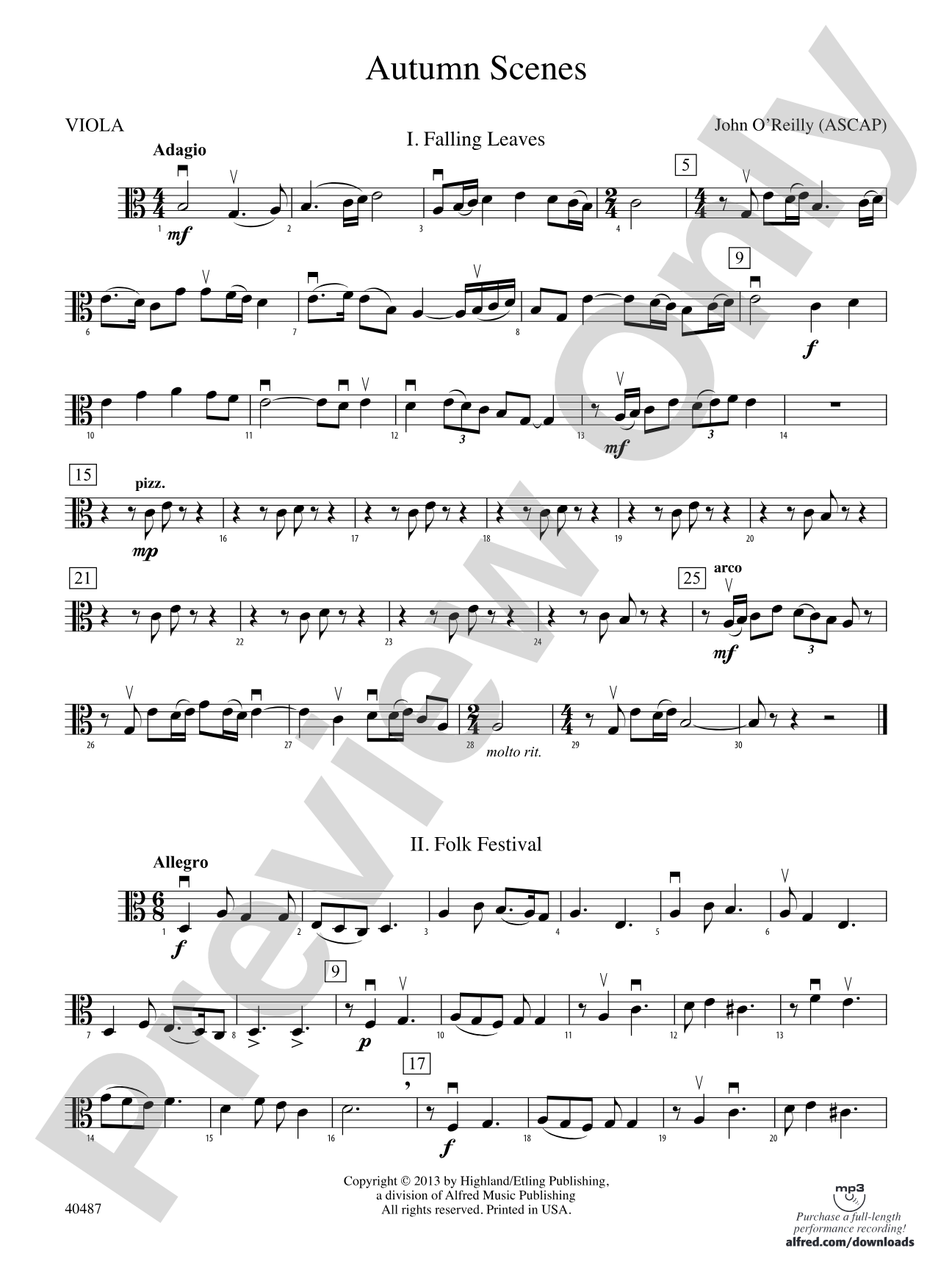
Autumn Scenes: Viola

By John O'Reilly

Grade: 3

Item: 00-PC-0016019_VA1

Digital Download
$5.99
Description
With two contrasting movements that reflect vignettes of fall, this piece will delight players and audiences. Flowing melodies and colorful harmonies give way to a rollicking jig and evoke the beauty, color, and excitement of harvest time. Violins, violas, and cellos share the melody.

Don't just read it, hear it, play along with it, and watch your students grow with it. In MakeMusic Cloud, Autumn Scenes: Viola comes alive with professional accompaniment, adjustable tempo, and built-in practice tools that turn solo practice into real progress.

Sample Audio
0:00
0:00
Sample Video
Additional Details
Series: Highland/Etling String Orchestra
Publisher: Alfred Music
Page Count: 124
SKU: 00-PC-0016019_VA1

More about this title

Why we love this

O'Reilly writes string music that respects young players without talking down to them. The two-movement structure gives you genuine contrast within a single piece, making it work equally well as a concert showcase or festival selection without feeling like filler.

What to expect

The opening movement paints autumn as serene and contemplative, with warm harmonies flowing like leaves on water. The second movement bursts into celebration, all dancing energy and harvest joy, giving audiences a complete emotional arc from quiet beauty to exuberant fun.

Who it's for

Grade 3 string orchestras ready to tackle two contrasting musical ideas in a single piece. Players at this level can handle the melodic sharing between different instruments while maintaining ensemble cohesion and character.

How to get the most out of it

  • Balance the shared melodic material between violin sections and violas/cellos carefully during rehearsals; mark parts so every player understands when they carry the tune versus when they support it.
  • The jig movement asks for rhythmic precision and articulation control. Practice the accompaniment figures separately at slow tempo to lock the groove before bringing the full ensemble in.
  • Use the conductor score to map dynamic and color changes between movements; the shift from flowing to rollicking needs clear gestural communication so players feel the character change, not just a tempo shift.

How to use it

Program this as a concert opener to set a seasonal mood, or save it for a fall festival where its two movements let you show range within a single selection. It works equally well as a warmup before heavier repertoire or as a satisfying closer if you want to end on an upbeat note.

Skills your students will build

  • Melodic responsibility across multiple instrument families (violin, viola, cello)
  • Harmonic awareness and balance in supporting roles
  • Character and style contrast between lyrical and rhythmically active sections
  • Articulation and rhythmic precision in jig-style figures
  • Dynamic shaping and phrasing across flowing melodic lines

You May Also Like