Autumn Nocturne Sheet Music Preview

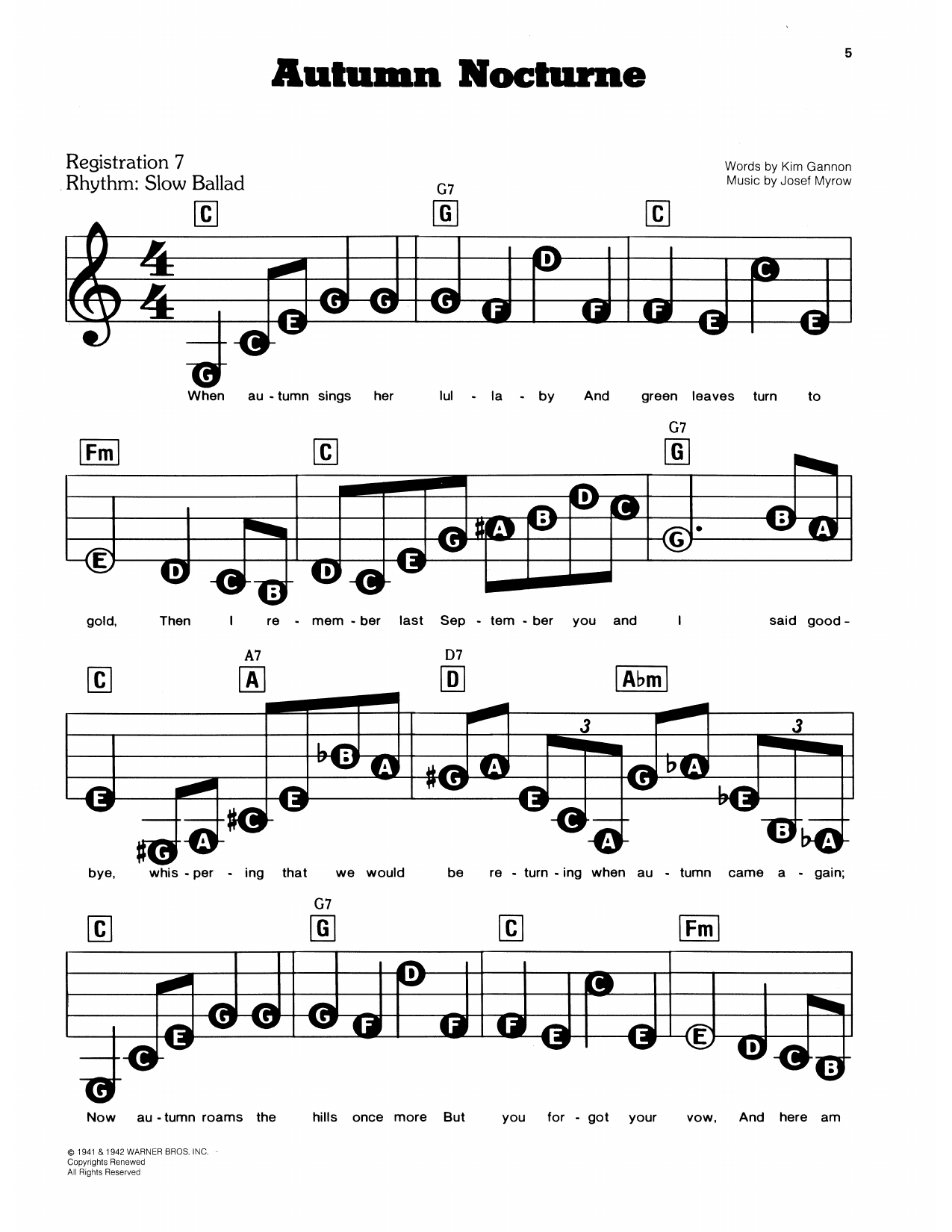
Autumn Nocturne: E-Z Play Today

As performed by Henry Mancini

Item: 35-DS01914481

Digital Download
$4.99

One moment…

Description

Autumn Nocturne: E-Z Play Today isn't in MakeMusic Cloud just yet...but it could be. Let us know you'd like to see it, and you'll help shape what comes next. In the meantime, start a free trial and dive into thousands of interactive titles your students can play along with today.

Sample Audio
No sample audio found.
Sample Video
Additional Details
Publisher: Hal Leonard
Page Count: 3
SKU: 35-DS01914481

More about this title

About the Artist: Henry Mancini

Henry Mancini shaped the sound of American film and television through his prolific compositions and arrangements. His gift for melody combined with sophisticated harmonic language made him one of the most recorded composers of the 20th century, influencing generations of musicians across classical, jazz, and popular idioms.

Why we love this

Mancini's piano writing sits in a sweet spot between accessibility and sophistication. Students engage with genuine jazz vocabulary and film scoring technique without navigating dense harmonies or virtuosic demands, making this piece particularly rewarding for pianists building confidence with jazz repertoire.

What to expect

Twilight and reflection settle into the music the moment you begin playing. Mancini's nocturne evokes quiet sophistication, with warm harmonies and a gentle melodic line that feels both melancholic and sophisticated. The piece invites introspection without heaviness.

Who it's for

Piano students who are ready to explore jazz idioms and film score aesthetics in a manageable format. Teachers seeking accessible Mancini repertoire for recitals, student performances, or units on film music will find this E-Z Play arrangement provides authenticity without overwhelming younger players.

How to get the most out of it

  • Lean into the rubato subtly; Mancini's nocturnes benefit from gentle tempo flexibility that follows the melodic contour rather than strict metronomic precision.
  • Balance the left hand accompaniment so it supports rather than competes with the melody. This three-page arrangement likely features the tune prominently, and the harmonic foundation should remain understated.
  • Pay attention to dynamic nuance within phrases. A nocturne's intimacy comes from careful shaping of single lines and chord voicings, not broad contrast.

How to use it

Feature this on a recital dedicated to film and television music, where it can sit alongside other accessible Mancini selections or lighter jazz arrangements. It also works well as a transition piece or encore that showcases a student's growing musicality and rubato control.

Skills your students will build

  • Jazz chord voicing interpretation
  • Rubato and phrase shaping
  • Melodic balance between hands
  • Film scoring style and aesthetics
  • Jazz vocabulary through listening and playing

You May Also Like