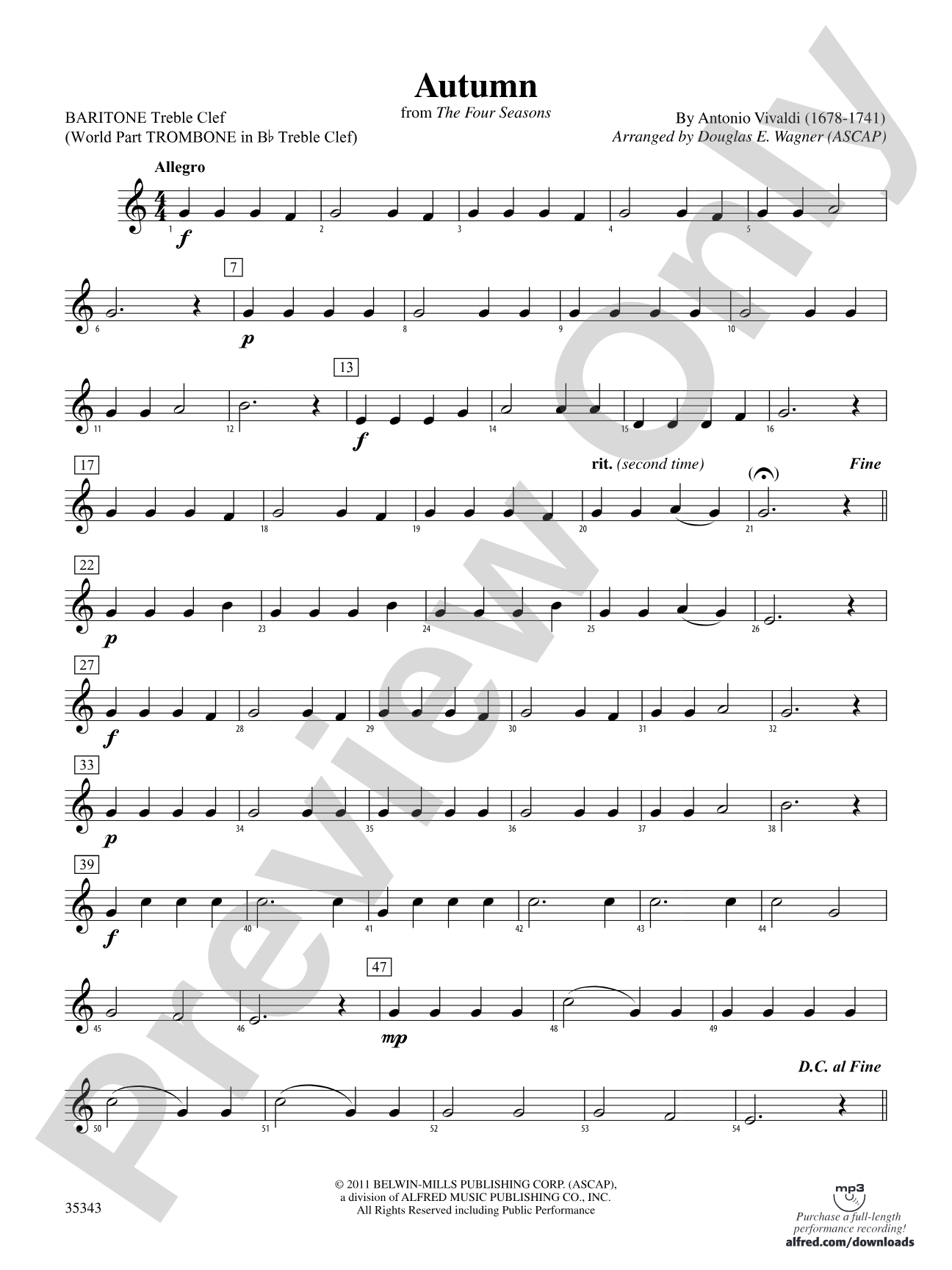
Autumn (from The Four Seasons): (wp) Baritone T.C. Sheet Music Preview

Autumn (from The Four Seasons): (wp) Baritone T.C.

By Antonio Vivaldi / arr. Douglas E. Wagner

Grade: 1 (Very Easy)

Item: 00-PC-0014898_wpBTC1

Digital Download
$3.00
Description
One of the best-known themes from the third movement of Antonio Vivaldi's innovative Four Seasons (Opus 8) suite, L'autunno (Autumn) is a natural choice for young players. Reminiscent of the fall season, this theme's text celebrates the joys of harvest time. Though the arrangement has been scored with the limited range and instrumentation of the beginning level in mind, the composer's festive mood and intent remains undiminished.

Don't just read it, hear it, play along with it, and watch your students grow with it. In MakeMusic Cloud, Autumn (from The Four Seasons): (wp) Baritone T.C. comes alive with professional accompaniment, adjustable tempo, and built-in practice tools that turn solo practice into real progress.

Sample Audio
0:00
0:00
Sample Video
Additional Details
Series: Belwin Beginning Band
Publisher: Alfred Music
Page Count: 130
SKU: 00-PC-0014898_wpBTC1

More about this title

About the Composer: Antonio Vivaldi

Antonio Vivaldi (1678-1741) was a Venetian composer and virtuoso violinist who fundamentally shaped Baroque instrumental music. His prolific output includes over 500 concertos, numerous sacred works, and operas, but he remains best known for The Four Seasons, a set of four violin concertos that became the foundation for modern program music. Vivaldi's ability to capture vivid imagery through orchestral color and rhythmic vitality made his music accessible to performers and audiences alike, a quality that has kept it central to music education for centuries.

Why we love this

Young bands respond immediately to Vivaldi's rhythmic energy and clear melodic lines, and this Wagner arrangement preserves that infectious joy while respecting the technical realities of first-year players. The harvest-celebration theme gives your ensemble an authentic Baroque masterwork without the instrumentation or range demands that would frustrate beginners. Programming this early in the season builds confidence and delivers the kind of recognizable, rewarding repertoire that keeps students engaged in band.

What to expect

Autumn radiates the warmth and celebration of harvest time through its bright, dancing melody and steady rhythmic momentum. The piece feels alive and joyful, inviting rather than intimidating, making it a natural fit for young musicians encountering a genuine masterwork for the first time.

Who it's for

This arrangement is ideal for first-year concert bands and mixed groups of young players who benefit from recognizable, melodically strong material. It works equally well for beginning bands preparing for early-season festivals or concerts where confidence-building repertoire is essential.

How to get the most out of it

  • Shape the melody with light, bouncy articulation that reflects the festive harvest character; avoid heavy tonguing that would rob the theme of its buoyant character.
  • Balance tutti sections so the primary melody voice projects clearly; clarify who carries the main theme in each phrase and ensure that part is never buried by accompaniment.
  • Maintain a steady, energetic pulse throughout; the regular rhythmic patterns are essential to the Baroque style and help young players stay locked together.
  • Use dynamic contrast between sections to sustain interest; shifts from forte to mezzo-forte will highlight phrase structure without demanding extreme dynamic range.

How to use it

Pair this with other accessible seasonal or celebration-themed pieces to create a themed concert, or program it early in the year to establish your band's ability to tackle great music. The piece also fits naturally into a Baroque-focused educational concert or a repertoire survey that introduces students to music across different eras.

Skills your students will build

  • Reading straightforward rhythmic patterns in 4/4 time
  • Maintaining ensemble balance between melody and accompaniment
  • Baroque articulation and phrasing with light, clear tonguing
  • Basic dynamic control and musical shaping
  • Playing part-independence within a full band texture

You May Also Like