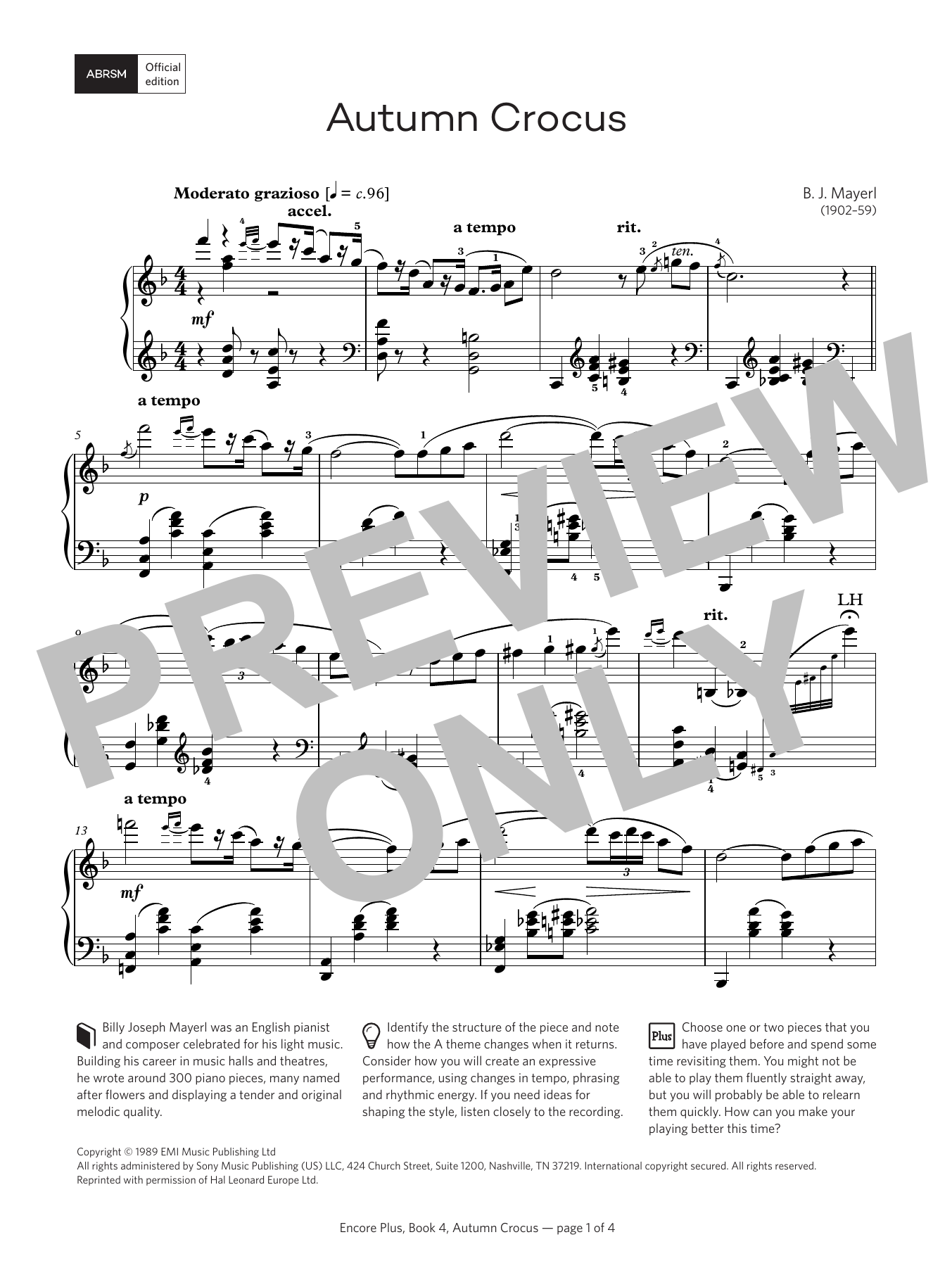
Billy Mayerl (1902-1959) was a British composer and pianist who bridged the worlds of classical music and popular entertainment with remarkable facility. His prolific output included piano solos, light orchestral works, and film scores that demonstrated his gift for melody and harmonic sophistication, making him a significant figure in early-to-mid twentieth-century British music.
Why we love this
Mayerl's writing here strikes an elegant balance between technical interest and genuine musicality. Advanced pianists appreciate the refined harmonic language and character development, while the four-page length keeps the piece manageable for recital programming without sacrificing substance.
What to expect
A contemplative walk through fading light and shifting seasons. Mayerl crafts an introspective mood through gentle harmonic movement and a melody that unfolds with quiet restraint, capturing the poignant beauty of autumn's transition.
Who it's for
Grade 8 pianists ready to engage with early twentieth-century compositional language without the demands of Romantic virtuosity. This works well for students preparing for festivals, recitals, or examinations who want repertoire with genuine artistic substance.
How to get the most out of it
Shape the melodic line with clear phrase breathing. Mayerl's themes deserve the same attention to arc and pacing you would give a vocal line.
Balance accompaniment figures carefully so the supporting texture never overwhelms the principal voice. Listen for transparency in the lower registers.
Attend to the harmonic rhythm and allow it to guide your tempo choices; minor shifts in rubato can illuminate the voice-leading.
Explore the full range of the keyboard's sonorities through pedal work. The autumnal character benefits from warm, blended colors in transition passages.
How to use it
Pair this alongside other twentieth-century miniatures for a recital that explores modernist sensibilities in accessible form. It also serves as a strong choice for student competitions where judges value musical maturity and stylistic awareness over flashy display.
Skills your students will build
Interpreting early twentieth-century harmonic language and voice-leading
Balancing melody against accompaniment texture
Shaping longer musical phrases with rubato and dynamic control
Understanding period-appropriate pedal technique
Developing sensitivity to harmonic color and emotional nuance
You May Also Like
Scan to Complete Your Purchase
Use your phone's camera to scan the code below
You'll log in on your phone and the order will be added to your account